

The IndyCar community is reacting to two very different developments this week, with former Formula 1 driver Yuki Tsunoda reportedly preparing to test with Meyer Shank Racing and Jack Harvey receiving an outpouring of support following a personal health update involving cancer.
While Tsunoda’s potential arrival raises questions about Honda’s future driver lineup, the physical demands of IndyCar, and the possibility of another recognizable Formula 1 personality joining the grid, Harvey’s announcement has brought the racing community together around something far more important than competition.
Both stories have generated considerable discussion, although for entirely different reasons.
Yuki Tsunoda Expected to Test With Meyer Shank Racing at Barber
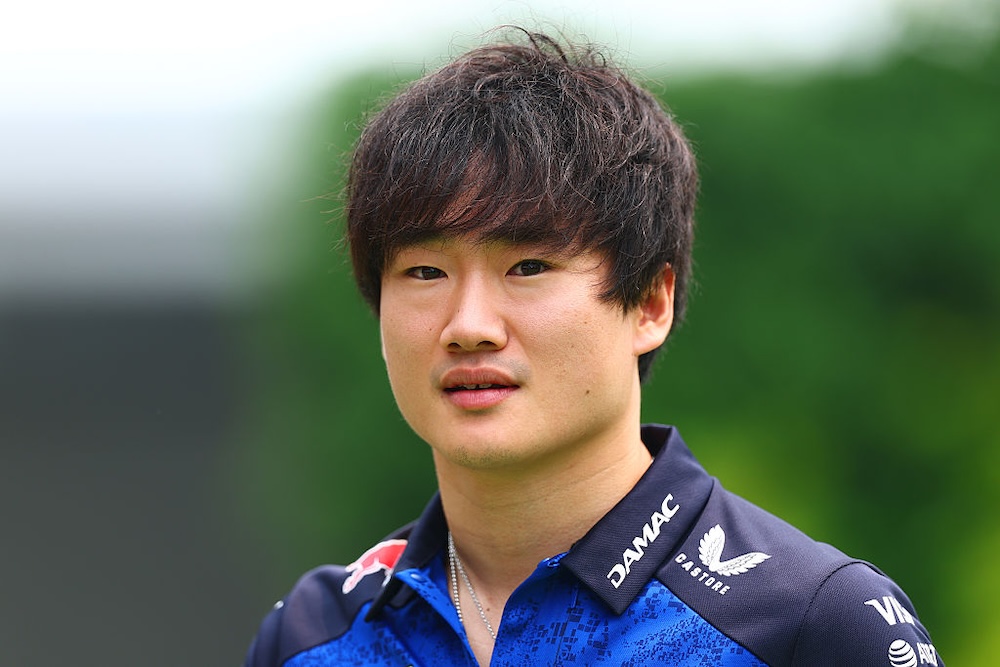
According to a report from Marshall Pruett, Yuki Tsunoda is expected to participate in an upcoming IndyCar evaluation test at Barber Motorsports Park with Meyer Shank Racing.
The development immediately raises the possibility that Tsunoda could eventually transition from Formula 1 to American open-wheel racing, potentially giving IndyCar another internationally recognized driver with an established fan base. However, an evaluation test is not the same as a confirmed race seat, and there has been no indication in the information currently available that Tsunoda has finalized any agreement to compete in the series. For now, the reported test represents an opportunity for both driver and team to assess whether a future partnership makes sense.
Tsunoda’s Formula 1 career has been a subject of considerable debate, particularly following his difficult stint with Red Bull. His performances with AlphaTauri and RB demonstrated flashes of speed, but his subsequent experience alongside Max Verstappen proved more challenging. That history has created competing interpretations of his potential. One argument is that Tsunoda’s reputation has sometimes exceeded his results. While he has demonstrated speed, IndyCar would require him to prove himself in a different environment against drivers already accustomed to the series’ distinctive challenges.
The alternative perspective is that Tsunoda’s aggressive driving style, willingness to attack, and experience competing at Formula 1’s highest level could translate particularly well to IndyCar. Unlike Formula 1, where car performance differences can significantly shape the competitive order, IndyCar could offer Tsunoda a different opportunity to demonstrate his abilities.
That does not automatically make him a championship contender, but it does make the prospect of seeing him in an IndyCar particularly interesting.
Barber Could Be a Demanding Introduction to IndyCar
The choice of Barber Motorsports Park is particularly noteworthy because it could provide a physically challenging introduction to the series.
Barber is widely regarded as a demanding circuit, and the physical characteristics of an IndyCar differ substantially from those of a Formula 1 machine. Perhaps the most important distinction is the absence of power steering. Although Tsunoda has maintained the conditioning required to compete in Formula 1, that fitness does not necessarily translate directly into the upper-body strength and endurance required to drive an IndyCar over extended periods.
The steering demands are different, and smaller drivers can face additional challenges when adapting to the physical workload. That makes the reported test an opportunity to assess more than outright speed. Tsunoda would need to become comfortable with the steering effort, understand how the car responds through Barber’s corners, and begin adjusting to a driving experience that differs significantly from Formula 1.
There is also some relevant prior experience. Tsunoda previously drove an IndyCar during a Honda demonstration in Las Vegas, meaning the upcoming evaluation would not necessarily represent his first time behind the wheel of one of the cars. However, a demonstration and a proper evaluation test are very different experiences. A competitive test at Barber would provide a much more meaningful opportunity to understand his adaptation to the machinery.
It would also allow observers to compare his performance against other drivers participating in the test, although lap times would need to be interpreted carefully given potential differences in experience, setup, and testing objectives.
Is Yuki Tsunoda Too Short for IndyCar?
One of the more unusual discussions surrounding Tsunoda’s potential arrival concerns his height.
Tsunoda is commonly listed at approximately 5 feet 2 inches, making him shorter than many drivers competing in major international racing championships. However, IndyCar has a history of accommodating relatively short drivers. Danica Patrick, for example, was also approximately 5 feet 2 inches tall.
Other drivers frequently mentioned in this discussion include Takuma Sato, Santino Ferrucci, and Devlin DeFrancesco, who have been described as standing around 5 feet 4 inches. Zach Veach and Cristiano da Matta have also been cited as examples of shorter drivers who competed in American open-wheel racing. The broader point is that height alone should not prevent Tsunoda from making the transition.
In fact, smaller stature can be advantageous when fitting into a compact racing cockpit. Taller drivers can encounter their own difficulties with seating position, legroom, and packaging. The more relevant question is whether Tsunoda can develop the specific strength and endurance necessary to operate an IndyCar comfortably and consistently. His Formula 1 background provides a strong physical foundation, but the demands of driving without power steering would still require adaptation.
Ultimately, the reported Barber test should offer a much better indication of his suitability than comparisons based on height.
Honda Could Be the Key to Tsunoda’s IndyCar Future
Beyond his driving ability, Tsunoda’s relationship with Honda may be one of the most important factors in determining whether he eventually joins IndyCar.
Tsunoda has long been closely associated with the Japanese manufacturer, and Meyer Shank Racing’s Honda connections make the reported evaluation particularly intriguing. There is already speculation that the test could represent an early assessment for a potential opportunity in 2028. That timeline is significant because it suggests the evaluation may be about longer-term planning rather than an immediate driver replacement.
From Honda’s perspective, Tsunoda could offer several advantages. He brings Formula 1 experience, an existing international following, and strong recognition among Japanese motorsports fans. His arrival could also strengthen the manufacturer’s promotional opportunities within IndyCar. For Meyer Shank Racing, the opportunity to evaluate a driver with that background could be worthwhile even without a confirmed vacancy.
However, the Honda connection also raises questions about other Japanese drivers seeking opportunities in the championship. One name that has emerged prominently is Kakunoshin Ohta. Ohta’s performances in Super Formula have attracted attention, with discussion surrounding his championship prospects and the possibility of eventually moving to IndyCar.
The concern is that Tsunoda’s established Formula 1 profile and Honda relationship could make him a more attractive option for a limited number of available seats. That would create an interesting dilemma. Should Honda prioritize a recognizable Formula 1 driver looking for a new opportunity, or a rising talent building his reputation through Japanese single-seater racing? There is no indication that the manufacturer has made such a decision, but the possibility illustrates how Tsunoda’s evaluation could have implications beyond his own career.
Ideally, the series could find room for both drivers.
Could Tsunoda Help IndyCar Expand Its Appeal in Japan?
Tsunoda’s potential arrival has also revived discussion about IndyCar’s relationship with Japan.
Takuma Sato has been one of the championship’s most recognizable Japanese competitors, and the prospect of another Japanese driver joining the grid has generated enthusiasm. Tsunoda would arrive with a different kind of profile. His years in Formula 1 have made him familiar to audiences who may not regularly follow IndyCar, potentially creating an opportunity to introduce those fans to American open-wheel racing.
His personality could also be an asset. Tsunoda has developed a reputation for being outspoken and emotional, qualities that could make him a compelling figure in a championship where driver personalities play an important role in attracting viewers. There is also a broader commercial opportunity.
A competitive Japanese driver supported by Honda could strengthen interest in the possibility of IndyCar eventually returning to Japan. Such a move remains speculative, and there is no confirmed race announcement associated with Tsunoda’s reported test. Nevertheless, the combination of Tsunoda, Ohta, and Honda creates an interesting foundation for discussions about the championship’s international ambitions. For a series that has already been exploring opportunities beyond its traditional North American footprint, Japan would be a natural market to consider.
The challenge, as always, would be turning that interest into a commercially and logistically viable event.
Could Red Bull or Ford Eventually Become Involved in IndyCar?
Tsunoda’s reported evaluation has also prompted speculation about whether Red Bull could eventually develop a presence in IndyCar.
The energy drink company already has a significant motorsports portfolio, and its sponsorship relationship with Shane van Gisbergen in NASCAR demonstrates that its involvement in American racing does not necessarily require operating a team. That distinction matters. A potential Red Bull presence in IndyCar could take the form of sponsorship rather than a factory-backed racing operation.
There has also been discussion about whether Ford’s relationship with Red Bull could eventually create opportunities involving drivers associated with its Formula 1 program. However, Tsunoda’s longstanding Honda ties make a Honda-powered opportunity appear more natural than a hypothetical Ford-related arrangement. Other names raised in these discussions include Nikola Tsolov, Sebastián Montoya, and Daniel Ricciardo.
Tsolov and Montoya represent possible examples of drivers who could seek opportunities outside Formula 1 if the available seats do not align with their career trajectories. Ricciardo presents a different situation. His popularity and personality would undoubtedly attract attention, but there are questions about whether he would want to return to full-time competition or participate in oval racing.
A one-off IndyCar appearance has been suggested as a possibility, although that would still require Ricciardo to demonstrate genuine interest. His relationship with Ford has also led to speculation about other racing opportunities, including endurance racing. For now, none of these possibilities should be confused with an actual IndyCar commitment. The immediate development remains Tsunoda’s expected evaluation with Meyer Shank Racing.
Still, the discussion illustrates how the possibility of one former Formula 1 driver testing an IndyCar can quickly expand into questions about manufacturers, sponsorship, and the future driver market.
Would Tsunoda Actually Be Competitive in IndyCar?
The most interesting question may be whether Tsunoda’s driving style would translate successfully.
There are reasons to be optimistic. His willingness to attack, confidence in wheel-to-wheel situations, and experience with high-performance single-seater machinery could provide a useful foundation. IndyCar also offers a competitive environment where drivers have opportunities to demonstrate their abilities across a variety of circuits.
However, success is far from guaranteed. Tsunoda would need to adapt to the physical demands of the car, unfamiliar racing procedures, different tire characteristics, and the championship’s approach to race strategy. Oval racing would represent another substantial challenge.
His Formula 1 experience would provide useful preparation, but it would not eliminate the learning curve. There is also a tendency to assume that any driver with recent Formula 1 experience should immediately perform well in IndyCar. That assumption overlooks the depth of talent already competing in the championship.
Drivers who have spent years mastering IndyCar’s machinery, circuits, and racing style would have a considerable advantage over a newcomer. Tsunoda’s initial results would therefore need to be evaluated within the context of his experience. The Barber test could provide an early indication of his pace and adaptability, but it would not definitively establish his prospects across an entire season.
Nevertheless, the potential combination is appealing. Tsunoda has the speed, personality, and international recognition to become an interesting addition to IndyCar.
Whether that potential develops into a full-time opportunity will depend on what happens after the evaluation.
Jack Harvey Receives Widespread Support Following Cancer News
Away from the speculation surrounding future driver lineups, the IndyCar community has rallied around Jack Harvey following a personal health update involving cancer.
The news has prompted an emotional response from racing fans, many of whom have shared their own experiences with the disease or described how cancer has affected their families. The overwhelming reaction has been one of encouragement, concern, and hope for Harvey’s recovery. Some of the most moving responses have come from individuals currently undergoing cancer treatment themselves.
One fan described reading Harvey’s news while sitting in a waiting room for their own treatment, expressing solidarity and determination to continue fighting. Others who have survived cancer offered encouragement based on their personal experiences. One supporter who overcame the disease in 2025 expressed confidence that Harvey could do the same.
Another looked forward to the possibility of welcoming both Harvey and a fellow patient into the community of cancer survivors. These reactions illustrate how quickly a racing story can become something much more personal. For fans dealing with cancer themselves, Harvey’s announcement is not simply news about a driver. It reflects an experience they understand firsthand.
The same is true for supporters whose family members are battling the disease. One fan described visiting an aunt diagnosed with terminal cancer, explaining that Harvey’s news was especially difficult to process given their family’s circumstances.
The response demonstrates how deeply the subject resonates beyond the racing world.
Harvey’s Character Leaves a Lasting Impression
The reaction has also highlighted the personal connections Harvey has built with IndyCar supporters.
Fans have described him as approachable, gracious, and genuinely likable. One supporter recalled meeting Harvey at the Last Row Party in May and being struck by how welcoming he was. That kind of interaction can leave a lasting impression.
While racing drivers are often judged primarily by their results, the relationships they establish with fans can be just as meaningful. Harvey’s reputation among supporters appears to extend beyond his performances behind the wheel. The widespread encouragement also demonstrates how the IndyCar community can come together when one of its own faces a serious personal challenge.
The discussion has been filled with messages urging Harvey to keep fighting, expressions of hope for positive news, and racing-inspired encouragement. Some supporters have even adapted familiar motorsports language into messages of solidarity, invoking full attack and purple sectors as metaphors for the battle ahead. Although the circumstances are serious, that familiar racing language offers a way for fans to communicate encouragement through a shared passion.
It is a reminder that the community surrounding IndyCar extends well beyond what happens on race weekends.
Harvey’s Health Update Also Sparks Discussion About Medical Checkups
Another important theme emerging from the reaction is the value of taking personal health seriously.
One supporter, reflecting on having recently completed an annual medical examination, emphasized the importance of regular checkups. Harvey’s situation has encouraged some fans to consider their own health and the importance of seeking medical attention when necessary. Of course, regular examinations cannot prevent every cancer diagnosis, and the available information does not establish the specific circumstances of Harvey’s diagnosis.
Nevertheless, the broader message is valuable. Paying attention to changes in one’s health, following appropriate screening recommendations, and seeking medical advice when concerns arise are important considerations regardless of age or profession.
For a community that spends much of its time discussing speed, performance, and competition, Harvey’s announcement has brought attention to an entirely different set of priorities.
Questions Remain About Harvey’s Racing Future
Some supporters have also discussed Harvey’s potential racing plans, including hopes that he could participate in next year’s Indianapolis 500.
However, without additional details from Harvey’s statement, it would be premature to draw conclusions about how his health situation might affect those ambitions. His diagnosis, treatment requirements, and recovery outlook should not be inferred from his racing aspirations or the optimism expressed by supporters. For now, the focus is understandably on his health. The enthusiasm surrounding a potential return to competition reflects how much fans want to see Harvey back in a race car, but those hopes remain secondary to his well-being.
There will be time to discuss his racing future when more information becomes available.
Two Stories Reflect Different Sides of the IndyCar Community
The developments involving Tsunoda and Harvey offer a contrast between the competitive and personal sides of motorsports.
Tsunoda’s expected test with Meyer Shank Racing represents the kind of speculation that makes the IndyCar offseason compelling. It introduces questions about future driver lineups, manufacturer relationships, international talent, and the possibility of a recognizable Formula 1 personality finding a new home in American racing. His reported appearance at Barber could become an important early step toward a future IndyCar career, particularly if Honda sees value in bringing him into the championship.
At the same time, the test should be treated as an evaluation rather than confirmation of a future race seat. Harvey’s situation, meanwhile, has shifted attention away from competition entirely. The messages from cancer patients, survivors, family members, and racing supporters demonstrate the personal connections that exist within the sport.
While fans will continue debating whether Tsunoda belongs in IndyCar and how quickly he might adapt, there is little disagreement about the hopes surrounding Harvey. The IndyCar community wants to see him healthy, supported, and able to pursue whatever comes next. For Tsunoda, the immediate question is whether a promising opportunity at Barber could open the door to a new chapter in his racing career. For Harvey, the hope is much simpler: positive health news and a successful recovery.
And on that second point, the racing community is firmly united.