

Max Verstappen finished ninth at Portimão. That result tells very little of the story.
In approximately 45 minutes behind the wheel, Verstappen charged from 24th to ninth in the GT World Challenge race, producing the kind of overtaking display that makes the finishing position feel almost incidental. There were moves through traffic, a lively exchange with Arthur Leclerc, and enough speed in clear air to leave a substantial question hanging over the afternoon: how far forward could this entry have finished without its earlier penalty?
Alex Brundle offered an unusually emphatic assessment.
“This is the best drive ever I’ve seen from Verstappen. And it’s over P9 at the moment! The race craft on display is outrageous.”
Calling any performance Verstappen’s best is a considerable statement. His career provides plenty of competition for that distinction. But Portimão offered something different from an F1 victory built around controlling the race from the front. This was an extended demonstration of judgment, positioning, commitment, and the ability to keep finding opportunities in traffic. The result was ninth. The driving deserved considerably more attention than that number usually receives. Verstappen’s recovery came after a race that had already become complicated before his stint began. A drive-through penalty for Chris Lulham disrupted the entry’s progress, while the timing of the penalty and the driver change added another layer to the strategy.
That makes it tempting to reconstruct an alternative race in which everything falls neatly into place. A cleaner afternoon could have put a much stronger finish within reach. Turning that possibility into a guaranteed podium or victory, however, goes further than the evidence allows. Verstappen’s clear-air pace was impressive, including laps matching or beating the leading No. 17 Mercedes. But comparing a recovering car with a leader requires care. The driver ahead may be managing a gap, protecting equipment, or responding only when necessary. A rapid recovery establishes that more was possible; it does not establish precisely where the car would have finished. What needs no hypothetical reconstruction is the quality of the racing.
The sequence presented as a triple overtake captured Verstappen’s willingness to attack several opportunities in quick succession. His exchange with Arthur Leclerc also supplied an important part of the spectacle: resistance. Leclerc fought back, making this a contest rather than a procession through cars unable to respond. Those battles were the substance of the drive. Verstappen had to read other drivers, place the car decisively, and make progress without allowing one difficult exchange to consume the remaining stint. There is also no need to embellish the performance with the idea that he arrived almost completely unfamiliar with Portimão or GT3 machinery. His preparation and testing belong in the assessment. Familiarity does not diminish the execution, but it does prevent an excellent drive from being turned into an unnecessary myth about succeeding without preparation.
Nor should the performance become an excuse to dismiss the regular GT field. Competing outside Formula 1 does not mean competing against drivers who should automatically yield to an F1 name. The challenge has value precisely because the discipline has its own specialists, demands, and established standards. Verstappen’s afternoon demonstrated how effectively his skills translated into that environment. It also illustrated why his willingness to race outside F1 is so compelling. Sharing a car means accepting that the final result will depend on more than his own stint. A teammate’s penalty, a disrupted change, or the timing of a Safety Car can reshape the race before he takes over. That uncertainty is part of the attraction. An F1 driver entering another category cannot control the narrative simply by turning up. He has to accept the competition on its own terms.
Portimão was a reminder that an afternoon can be memorable without ending on the podium. A dominant victory might have delivered a cleaner result, but the recovery supplied a succession of moments worth watching individually.
Anthony Hamilton’s presence in Verstappen’s garage added a warmer dimension to the occasion.
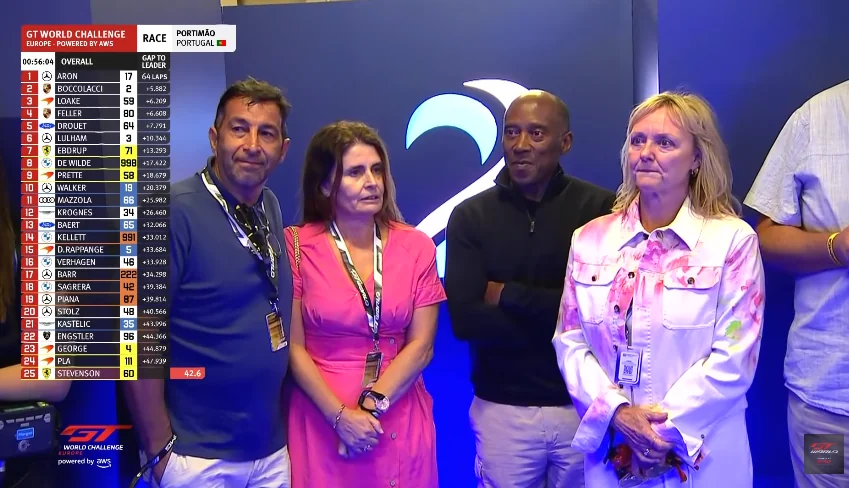
There is no need to invent a hidden explanation for the sight of Lewis Hamilton’s father watching a rival’s GT effort. His presence showed how easily an interest in racing can extend beyond the boundaries of an F1 rivalry.
That should not be especially surprising given the sportsmanship he has displayed before. His congratulations to the Verstappens after Abu Dhabi in 2021 and his support for Isack Hadjar after the rookie’s formation-lap crash in Australia stand out because they acknowledged the people involved at emotionally difficult moments. Those gestures do not erase competition or require anyone to reinterpret the races themselves. They demonstrate that fierce sporting disagreement can coexist with kindness. The image of Anthony in the garage fits that pattern. Formula 1’s rivalries occupy an enormous amount of attention, but they do not have to dictate every relationship around the drivers.
Elsewhere, Christian Horner’s comments about Formula 1’s budget cap raised a different question about what the sport’s headline numbers actually tell us.

“Teams are spending $500 or $600m,” Horner said in calling for a rethink.
The essential distinction is between a team’s total expenditure and the spending covered by the cap. They are different measures. A large overall bill does not, by itself, establish that the cap has been breached or that it serves no purpose. The exclusions matter. Driver salaries and the salaries of the three highest-paid employees sit outside the cap under the framework described here, while most employee salaries count toward it. Consequently, the cap is not a ceiling on every dollar associated with operating an F1 organization. That distinction should be central to any assessment of Horner’s argument. If the concern is that the sport still requires enormous overall resources, total expenditure is relevant. If the question is whether teams can outspend one another without restraint on the activities covered by the regulations, the capped figure is the more useful measure.
Combining those questions produces a dramatic headline but an incomplete explanation. There is a serious workforce issue within the structure, too. When most salaries and car development compete for room under the same limit, retaining staff and improving their pay become part of the competitive calculation. Restricting the ability of a wealthy team to employ an overwhelming number of engineers is a defensible objective. It reduces the advantage available simply through scale. But that does not remove the pressure on the people working within the system.
A team can value an employee and still face a difficult choice about where its next increment of spending goes. Over time, that creates a risk that experienced people will find better opportunities elsewhere. The appropriate question is whether the regulations can preserve spending discipline while allowing teams to retain and reward the workforce responsible for building the cars. The financial benefits of restraint deserve equal consideration. A sport in which teams can build sustainable businesses is better positioned to retain competitors and attract investment than one in which survival repeatedly depends on finding another benefactor.
That does not justify claiming that every team is profitable. The figures and definitions supplied here do not support such a sweeping conclusion. Operating results, facility investment, ownership contributions, and the wider marketing value of an entry are distinct considerations. Profitability and competitive fairness are also separate tests. The budget cap can improve the business model while still needing refinement. What should be avoided is treating hypothetical accounting tricks as proof of actual misconduct. Suggestions involving outside consultancies, unrelated businesses, or development hidden in another project raise questions about oversight. They do not establish that a particular team has evaded the rules.
A credible spending limit depends on credible scrutiny of the work and money behind it. That is a stronger basis for evaluating the system than assuming every adjacent engineering project is concealed F1 development.
The same distinction between an appealing idea and its practical requirements applies to the prospect of a Ferrari Safety Car.
There is an obvious visual attraction. Ferrari road cars leading a Formula 1 field would provide a striking image, and a broader selection of manufacturers could give the role more variety.
But the Safety Car assignment is also an operational and commercial commitment. The suitability of the vehicle, the support behind it, the necessary equipment, and the terms of the arrangement matter alongside appearance. The Medical Car adds another consideration. A manufacturer’s most exciting sports car does not answer every requirement associated with supplying both roles. A rotating regional selection is an entertaining possibility: a Corvette in the United States, a European performance car at European rounds, and a locally distinctive choice elsewhere. Yet the more frequently the machinery changes, the more complicated the operation becomes.
Bernd Mayländer would have to adapt to different cars, while the following F1 drivers would encounter different performance characteristics. Cameras, communications equipment, and signaling systems would also need to be accommodated. Consistency has value when the job involves controlling a field of racing cars. That does not mean a Ferrari could never perform the role. It means the case for one has to extend beyond how good it would look. Broadcast technology presents a similar balance between spectacle and execution.
The high-speed FPV drone footage shared from GT racing demonstrates the appeal of a camera capable of following cars through multiple corners. A continuous moving shot can show how a battle develops across a sequence rather than dividing it among several fixed viewpoints. That can make positioning and commitment more immediate. It can also provide a different impression of speed. The technique needs restraint, however. A camera that constantly changes direction and perspective can make the relative positions of the cars harder to follow. A spectacular shot is not necessarily the clearest shot for explaining an overtake.
The strongest use of drone coverage would serve the racing: follow a developing battle when the moving perspective adds something, then return to another angle when that better communicates the situation. Safety belongs in that judgment as well. Keeping flight paths alongside the circuit is a sensible principle, but positioning alone does not answer every question about equipment failure or debris. Those possibilities need to be assessed as part of the operation. There is room to appreciate the footage and expect the technology to be introduced carefully. Neither requires assuming that every concern is insurmountable or that an exciting picture makes the concern irrelevant.
Formula 1’s changing geographic balance raises another question about what makes an expansion successful.
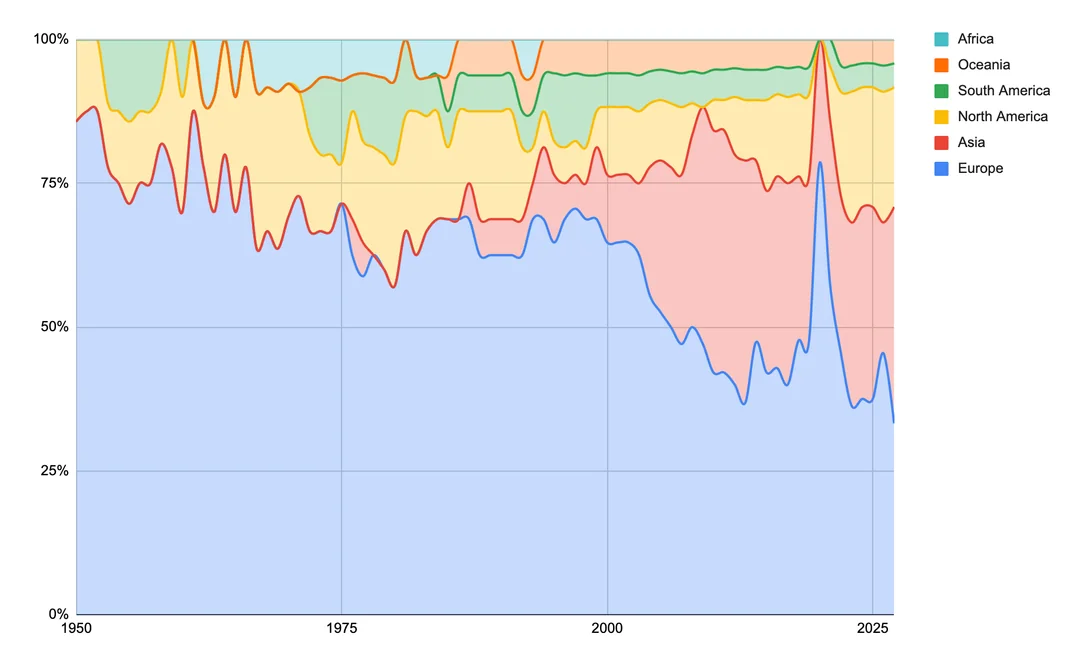
Under the supplied classification, which counts Istanbul and Baku as Asian venues, Asia will have more tracks than Europe in 2027 for only the second time.
The classification matters, as does the distinction between the number of races and their share of the calendar. A continent’s percentage can change because its own schedule expands or because racing elsewhere contracts. More broadly, an increasingly international championship is a reasonable direction for a sport with global ambitions. Europe’s central place in F1 history does not require it to retain the same proportion of races indefinitely. But growth deserves a more demanding assessment than counting continents. The quality of the circuits, the racing they produce, and the strength of the connection with local audiences all matter. An increase concentrated in the Middle East also tells a different story from one spread across a wider range of Asian markets. Both may increase Asia’s total, but they do not represent the same pattern of development.
The question is what each addition contributes to the championship. Geographic reach is valuable; so is a calendar that remains varied, competitive, and connected to the places it visits.
The retrospective on Jos Verstappen’s career offers a final reminder to look beyond a simple headline.
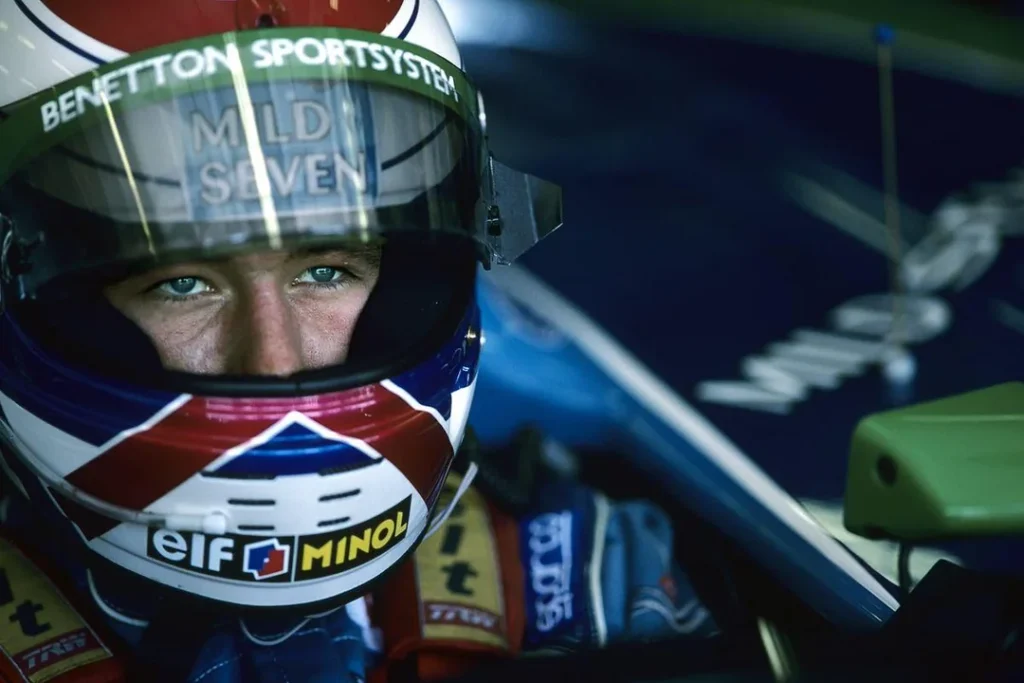
There were standout performances, particularly Canada in 2000 and Malaysia in 2001, that demonstrated why his ability attracted attention. Difficult machinery, unreliable cars, and unstable team circumstances form an important part of the context surrounding his results.
His introduction at Benetton also placed him alongside Michael Schumacher, an exceptionally demanding benchmark for an inexperienced driver. Those circumstances deserve consideration. They do not explain every limitation. Qualifying weaknesses, mistakes, and performances against teammates also belong in the assessment. An occasional exceptional race does not automatically establish that a driver would have become a regular winner with better equipment.
The fairer picture allows both things to be true: Jos had more ability than a dismissive reading of his results suggests, and his career contained shortcomings that cannot all be attributed to bad luck.
Finally, Ruth Buscombe’s personal reflection supplied the most consequential perspective of all.

“This should have been the Last Photo. But it’s just another photo. And I’m so grateful,” she wrote, explaining that a speeding drunk driver hit her 18 years ago.
Now 36, she marked the anniversary with gratitude and a reference to her heart having beaten long enough since then to celebrate with champagne. Her own account is powerful enough without adding speculative medical details. Buscombe’s work as a former strategist for Ferrari, Haas, and Sauber, and now as an F1TV analyst and presenter, gives her an important place in the sport’s coverage. Her experience helps explain the decisions that can otherwise seem mysterious from outside the pit wall.
That is one of the strengths of broadcasting built around people who have done the work: they can identify the considerations behind a decision, explain the alternatives, and disagree on the merits. Her reflection also reaches far beyond broadcasting. The time of day does not make impaired driving more or less unacceptable. The consequences fall on people who never agreed to take that risk.
Buscombe’s words brought the day’s racing stories back to something more personal: the gratitude of being here to tell the story at all.