

Formula 1’s off-track narrative continues to evolve in three very different directions: Max Verstappen’s growing influence beyond the grid, Haas unexpectedly capturing fan momentum, and Aston Martin facing intensifying scrutiny over driver safety and performance.
Verstappen Sim Racing Signals a Bigger Vision
The rebranding of Team Redline into Verstappen Sim Racing marks more than just a name change—it reinforces a long-anticipated shift toward building a broader racing ecosystem around Max Verstappen.
As Atze Kerkhof put it, the move represents “the next step in an era where sim racing is a true breeding ground for real world talent,” framing the project as both developmental and forward-looking.
That framing aligns closely with how fans are interpreting the move. There’s a growing sense that this isn’t a side project—it’s infrastructure. The rebrand is being read as a deliberate step toward creating a pipeline that could outlast Verstappen’s own F1 career, with sim racing positioned as a legitimate entry point into professional motorsport.
At the center of that discussion is accessibility. The cost of karting continues to be cited as a major barrier, with even entry-level participation quickly escalating into five-figure commitments once equipment, logistics, and consumables are factored in. Against that backdrop, sim racing is increasingly viewed not just as a supplement, but as a viable alternative path—one that lowers the financial threshold while still surfacing raw talent.
There’s also a growing body of anecdotal validation behind that idea. Examples ranging from sim-first drivers to hybrid development paths are repeatedly cited as proof that the skill transfer is real, even if the pipeline remains narrow. The prevailing sentiment is not that sim racing replaces traditional development, but that it expands the funnel—making it easier to identify talent before financial constraints eliminate it.
At the same time, fans recognize the limitations. The financial barriers don’t disappear entirely once drivers transition into real-world series, and feeder categories like F2 and F3 still require significant backing. But the shift in narrative is notable: sim racing is no longer treated as a novelty—it’s increasingly seen as a legitimate first step.
The rebrand also reinforces Verstappen’s long-term alignment with Red Bull beyond just F1. His broader racing identity—across sim racing, potential endurance ambitions, and brand-building—appears deeply intertwined with that ecosystem. For many, this helps explain his continued commitment to Red Bull, even amid on-track uncertainty.
And while much of the discussion is serious, the fanbase hasn’t lost its sense of humor. The announcement triggered a wave of exaggerated naming jokes—stacking sponsors, manufacturers, and branding into absurdly long team titles—highlighting just how synonymous Verstappen has become with modern F1 branding culture.
“Haaszilla” Ignites Unexpected Momentum
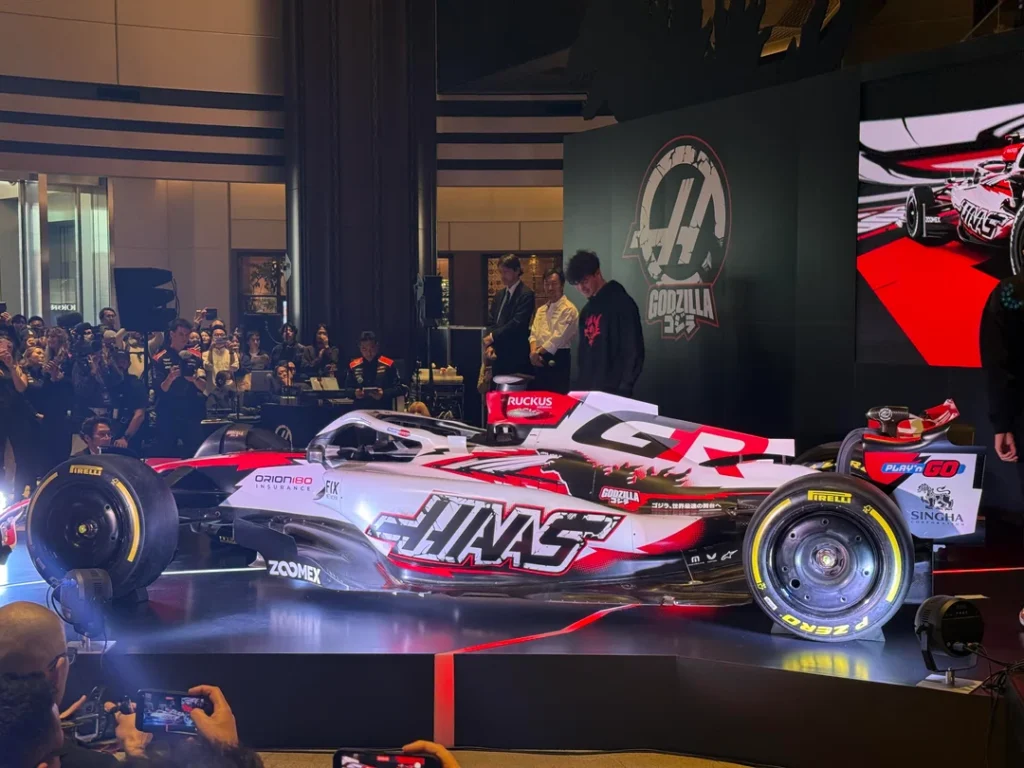
If Verstappen’s project represents long-term vision, Haas is currently winning the short-term narrative battle—largely thanks to a livery.
The newly revealed “Godzilla” Haas design, quickly dubbed “Haaszilla,” has resonated immediately. The reaction has been overwhelmingly positive, with fans leaning fully into the concept—turning the name into a running joke, a meme, and ultimately a brand identity of its own.
What starts as visual appreciation quickly evolves into something more telling: a shift in perception. Haas, long viewed as a backmarker or inconsistent midfield presence, is suddenly being discussed with genuine enthusiasm.
The livery acts as a catalyst, but the underlying sentiment goes deeper. There’s a growing belief that Haas is becoming… credible. Consistent points finishes, strong visual identity, and the emergence of Oliver Bearman as a legitimate performer are all contributing to that shift.
Bearman’s standing—highlighted by his position ahead of both Red Bull and McLaren drivers in the championship—has become a key talking point. It reinforces the idea that Haas isn’t just improving aesthetically; there are tangible results backing it up.
At the same time, not everything is viewed positively. Esteban Ocon’s form is being questioned heavily, with fans increasingly framing him as the weak link in an otherwise upward-trending team. The contrast between drivers is sharpening the narrative around Haas’ performance ceiling—and what it might achieve with a fully aligned lineup.
There’s also an undercurrent of curiosity about the team’s future structure. References to external influence, potential partnerships, and driver pipeline dynamics suggest that Haas is now being taken seriously enough for fans to speculate about its long-term trajectory rather than just its survival.
Perhaps most telling is the shift in identity: fans are openly questioning whether they’ve become Haas supporters. What was once an ironic or niche following is starting to feel more legitimate—something reflected in the tongue-in-cheek rallying cry to “join the Haasterplan.”
Aston Martin’s Situation Raises Real Concerns
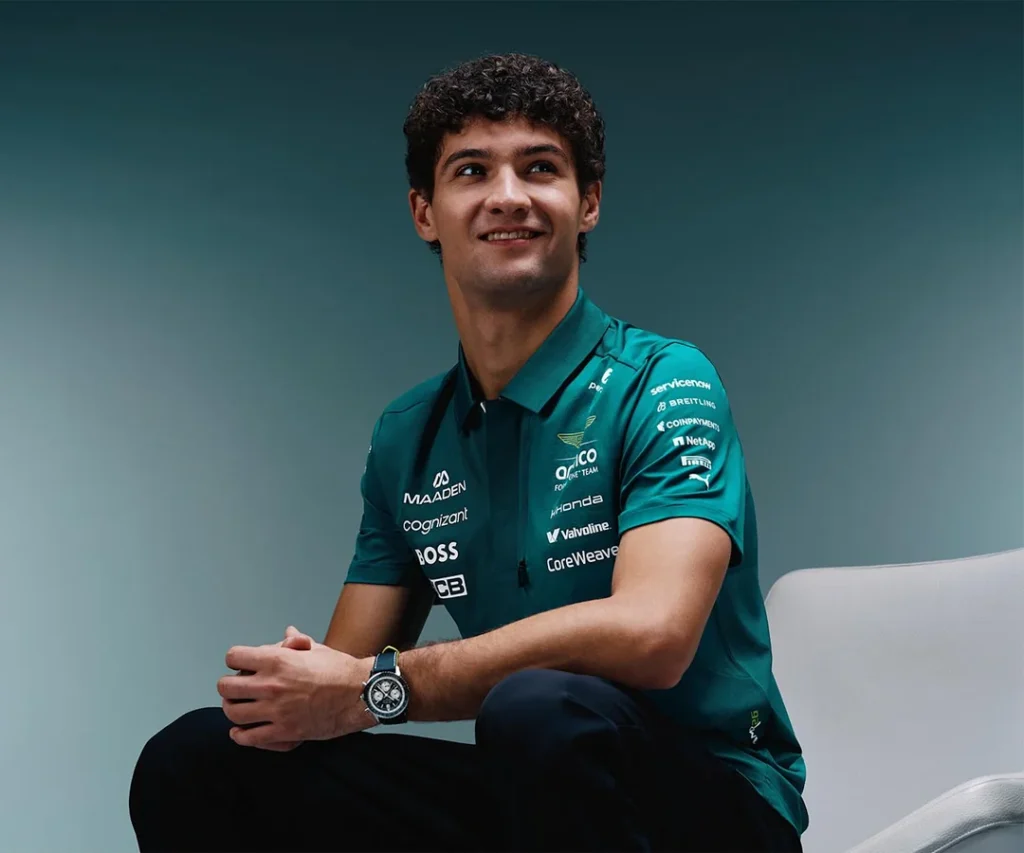
In stark contrast to Haas’ rising momentum, Aston Martin’s situation is generating a very different kind of attention—and far more concern.
The announcement that Jak Crawford will take part in FP1 at the Japanese Grand Prix has been met with skepticism, but not because of the opportunity itself. Instead, the reaction is centered almost entirely on the car he’ll be driving.
There is a growing perception that Aston Martin’s current package is not just uncompetitive, but physically punishing. Observations of on-board footage—particularly drivers struggling to maintain control or appearing visibly uncomfortable—have fueled concerns about whether the car is safe to drive over a full race distance.
That concern has escalated into broader questions about regulatory oversight. There is increasing speculation around how far conditions would need to deteriorate before intervention occurs, with some suggesting that the threshold for action feels uncomfortably high.
The discussion has also intersected with technical constraints. With homologation rules in place, any significant changes require regulatory pathways such as ADUO, though reliability-based fixes may offer a workaround. This has led to a degree of uncertainty about how quickly Aston Martin can realistically address the issue.
Within that context, the FP1 outing for Crawford is being interpreted pragmatically. Some see it as a way to fulfill mandatory rookie session requirements during a period where the team has little to lose competitively. Others frame it more bluntly: spreading exposure to a difficult car rather than placing the burden solely on race drivers.
The tone of the reaction, however, remains uneasy. Even when framed humorously—referring to the car as a “shake shack” or suggesting that “the only way is up after this”—the underlying concern is clear. There is a sense that Aston Martin’s struggles have crossed from performance issues into something more serious.
Three Teams, Three Directions
Taken together, these three storylines highlight how differently teams are navigating the current moment in Formula 1.
Verstappen is building for the future—expanding influence and redefining how talent might enter the sport. Haas is capitalizing on the present—combining performance, identity, and momentum into a rare wave of fan support. Aston Martin, meanwhile, is facing immediate pressure—grappling with issues that extend beyond results and into driver welfare.
It’s a reminder that in Formula 1, progress isn’t linear across the grid. While some teams are redefining what comes next, others are still trying to stabilize what’s happening now.