

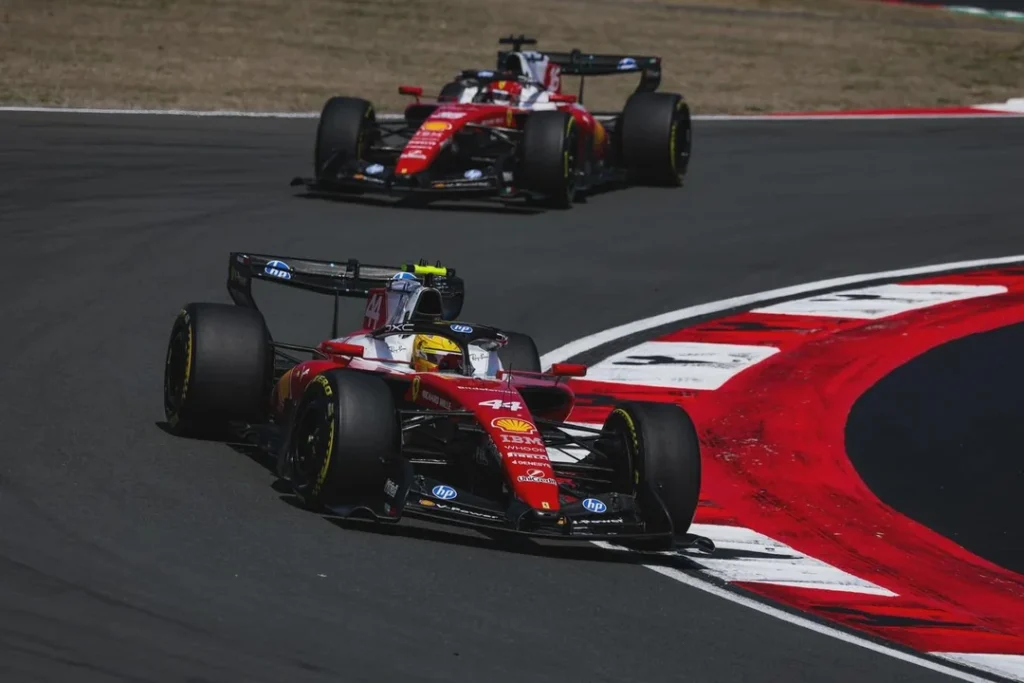
Formula 1’s 2026 season has taken an unexpected turn after the FIA confirmed that the Bahrain and Saudi Arabian Grands Prix will not take place in April, citing the ongoing situation in the Middle East. The announcement introduces a sudden gap in the early-season calendar while simultaneously amplifying the ongoing technical narrative surrounding engine performance, particularly the growing scrutiny of Mercedes’ apparent power unit advantage and Ferrari’s efforts to respond.
The FIA confirmed the decision in an official statement:
“It has been confirmed today that, after careful evaluations, due to the ongoing situation in the Middle East region, the Bahrain and Saudi Arabian Grands Prix will not take place in April. While several alternatives were considered, it was ultimately decided that no substitutions will be made in April. The FIA Formula 2, FIA Formula 3 and F1 Academy rounds will also not take place during their scheduled times. The decision has been taken in full consultation with Formula One Group, local promoters and our Member Clubs in the region.”
The wording of the announcement immediately drew attention. Rather than declaring the races canceled outright, the FIA specified they would not take place in April, a phrasing that strongly suggests the possibility of postponement rather than full cancellation.
From a logistical standpoint, the distinction matters. A postponement leaves open the possibility that the races could be slotted back into the calendar later in the year, whereas cancellation would close the door entirely. That nuance has led to widespread speculation that Formula 1 is deliberately keeping its options open while monitoring the situation in the region.
The careful phrasing may also reflect contractual and financial realities. Race promoters, sponsors, and broadcasters often operate under agreements tied to a fixed number of events. Labeling a race as postponed rather than canceled can significantly affect how those agreements are handled, particularly when it comes to refunds, sponsorship obligations, and insurance coverage. By maintaining the possibility of rescheduling, Formula 1 and the promoters retain flexibility while avoiding immediate contractual consequences.
At the same time, the practical challenges of rescheduling two races into an already dense calendar remain significant. The modern Formula 1 schedule is tightly structured, with regional groupings and limited travel windows designed to manage logistics and costs. Adding two additional rounds later in the season could require substantial adjustments, potentially extending the season or forcing a reshuffle of existing race weekends.
Even if Formula 1 were able to find space for the events later in the year, climate considerations present another complication. Racing in Bahrain or Saudi Arabia during the peak summer months would introduce extreme temperatures that could make hosting a Grand Prix difficult, limiting potential windows to later in the calendar.
The decision also impacts Formula 1’s support series. The scheduled FIA Formula 2, FIA Formula 3, and F1 Academy rounds tied to those events will no longer take place as planned. For junior categories with significantly shorter calendars, losing two race weekends has a far greater effect than it does in Formula 1. In particular, the disruption introduces a long gap in competition for drivers attempting to build momentum during their seasons.
While the calendar reshuffle dominates headlines, the technical battle between engine manufacturers continues to simmer in the background.
Reports from Italy indicate that Ferrari engineers in Maranello are working on upgrades to their power unit aimed at stabilizing the engine’s compression ratio at a level above the current 16.0:1. The goal is straightforward: eliminate the performance gap that Mercedes is believed to hold with its current power unit configuration.
The development effort centers on compression ratio—a fundamental property of an internal combustion engine. In simple terms, the compression ratio describes how much the air–fuel mixture is compressed inside the cylinder before ignition. A higher compression ratio generally allows the engine to extract more energy from the fuel, improving efficiency and power output.
In Formula 1’s tightly regulated engine formula, however, even small changes can have major consequences. Stabilizing the compression ratio at a higher level could provide Ferrari with incremental performance gains while remaining within regulatory limits. The underlying report referred to 16.0:1, the current compression ratio Ferrari is working to improve slightly.
That distinction matters. Moving from 16.0:1 to a marginally higher figure may sound insignificant, but at the cutting edge of Formula 1 engine development, even fractions of a ratio point can translate into measurable gains on track.
The development push also underscores how closely the paddock is watching Mercedes’ current power unit. Mercedes has already acknowledged that its engine maintains compression performance under extreme conditions where other designs begin to lose efficiency due to thermal expansion. If Ferrari can replicate or counter that advantage, it could significantly reshape the competitive balance of the season.
For now, the sport finds itself balancing two very different storylines. On one side is a geopolitical reality that has abruptly disrupted the early-season calendar. On the other is the familiar technical arms race between Formula 1’s engine manufacturers.
Whether the Bahrain and Saudi Arabian Grands Prix ultimately return later in the year remains uncertain. What is clear is that the 2026 season is already evolving in unexpected ways, both on the track and far beyond it.