

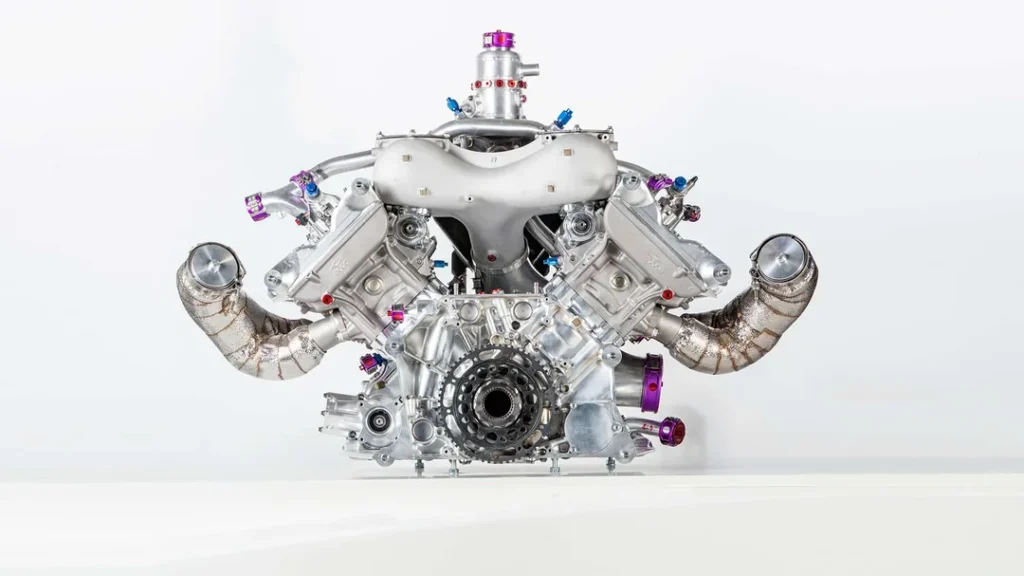
The mere suggestion of a return to a 2.4L V8—potentially turbocharged—for the 2031 Formula 1 regulations has sparked a familiar but deeply divided debate: performance versus emotion, relevance versus nostalgia, and innovation versus identity. But as the discussion unfolds, one thing becomes clear—fans aren’t even convinced this is real yet.
At the most basic level, skepticism dominates the conversation. The lack of concrete confirmation around future engine rules has led many to dismiss the discussion entirely. The idea of a new engine formula feels premature, even speculative, with little tangible direction to evaluate. That uncertainty alone has shaped much of the early reaction—before even getting into the technical arguments.
Sound vs Substance: The Core Divide
If there’s one consistent throughline, it’s the emotional pull of naturally aspirated engines. The appeal is immediate and visceral: the sound. For many, the return of a V8—particularly a naturally aspirated one—represents a restoration of Formula 1’s identity. But even within that, the discussion becomes more nuanced than simple nostalgia.
The assumption that naturally aspirated engines inherently “sound better” is challenged. Some point out that sound is not just about aspiration type, but about engine architecture—crankshaft design, firing order, and cylinder configuration all play defining roles. The difference between even and odd firing engines, or how similar engines can produce dramatically different acoustic profiles, complicates the narrative. A V8 alone doesn’t guarantee a specific sound; how it’s engineered matters just as much.
Others push back even further, arguing that the current turbo-hybrid V6 engines are not as poor-sounding as widely perceived. The issue, they suggest, is less about the engines themselves and more about external factors—lower RPM ceilings compared to historical eras, and even how sound is captured and broadcast on TV. In person, these engines reportedly carry far more presence than their “vacuum cleaner” reputation suggests.
Still, the gap in perceived intensity remains undeniable. Comparisons to previous eras—where engines produced dramatically higher decibel levels—highlight just how much the sensory experience has shifted.
Turbocharging: Performance, Efficiency, and Reality
While naturally aspirated engines dominate the emotional side of the debate, turbocharging wins decisively in practicality. Across the discussion, there is broad acknowledgment that modern automotive engineering—both in racing and road cars—has moved firmly toward turbocharged solutions.
The reasons are straightforward: turbos offer better packaging, improved efficiency, and greater performance potential from smaller displacement engines. They are also more aligned with the direction of consumer vehicles, which matters heavily to manufacturers involved in F1. The idea that engine regulations should reflect road-relevant technology continues to underpin much of the sport’s decision-making.
That said, not everyone agrees this alignment is still meaningful. Some argue that F1’s hybrid era has become more about marketing relevance than actual technological transfer. The focus on battery systems—particularly rapid charge and discharge—has been identified as one of the few areas with real-world crossover, but even that is debated in terms of its true necessity or impact.
The Cost and Complexity Problem
Any discussion about future engines inevitably runs into the same constraint: cost.
There is clear resistance to returning to the extremes of past eras, particularly the high-revving V10 period. The engineering required to sustain engines at 18,000–20,000 RPM—extreme materials, vibration control, and short component lifespans—is widely recognized as prohibitively expensive and unsustainable under modern cost controls.
Instead, there is a growing expectation that any future formula will prioritize durability and efficiency over outright peak power. Lower specific output, more manageable engine stress, and longer lifespans are seen as critical to keeping budgets under control. The idea of pushing toward 1500 horsepower is largely dismissed as unrealistic in the current financial and regulatory environment.
At the same time, simplifying the power unit architecture—particularly after the complexity of previous hybrid systems—emerges as a key priority. The struggles manufacturers faced in developing competitive and reliable hybrid engines over the past decade remain a cautionary example. A future engine that teams can understand, build, and optimize more quickly is seen as essential to maintaining competitive balance.
The Identity Crisis: What Is F1 Trying to Be?
Beyond the technical debate lies a more fundamental question: what is Formula 1 supposed to represent?
There is a growing sense that the sport is trying to satisfy too many competing priorities—manufacturers, engineers, drivers, and fans—without a clear directional identity. Should F1 prioritize cutting-edge, road-relevant technology? Or should it lean into its role as an entertainment product, delivering spectacle, sound, and excitement?
Some argue that the shift toward turbo-hybrid engines—and potentially further electrification—has already moved F1 away from its traditional identity. Others counter that without close racing and modern relevance, the sport risks losing its competitive edge entirely.
The possibility of a V8 hybrid—combining turbocharging with a simplified electrical system—emerges as a potential middle ground. It represents a compromise between performance, efficiency, cost, and fan appeal. But even that solution raises further questions about how much emphasis should be placed on each element.
A Debate Without a Conclusion—For Now
For all the technical analysis and passionate opinions, the most telling aspect of this debate is how unresolved it remains.
There is no consensus on what the “right” engine formula looks like. Naturally aspirated engines offer emotional appeal but lack modern relevance. Turbocharged hybrids align with industry trends but struggle to capture the imagination in the same way. Cost constraints limit how far innovation can go, while fan expectations pull the sport in a different direction entirely.
And underlying all of it is a simple reality: there is still nothing concrete.
Until there is, the debate will continue to evolve—driven less by confirmed direction and more by what fans believe Formula 1 should be.