

With the season getting closer to starting, this week in Formula 1 became about signals: early hardware glimpses, regulatory fault lines, and the cultural baggage teams are already carrying into 2026. None of it is definitive. All of it is revealing.
Cadillac’s First Running: Silence, Symbolism, and a Culture Clash
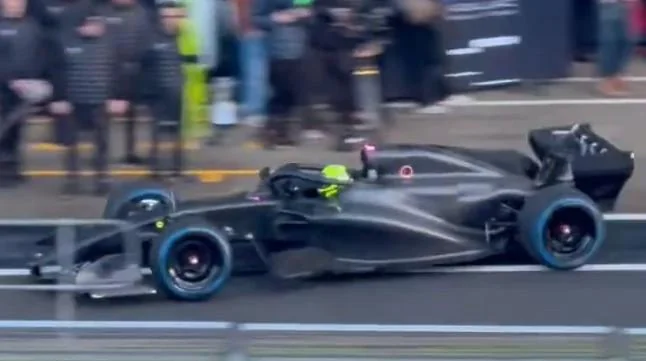
The first circulating videos of Cadillac’s Formula 1 car running with a Ferrari power unit were never going to be informative in a conventional sense. The car spent most of the footage off-throttle, prompting immediate jokes about lift-and-coast and Ferrari engines practicing LiCo before they’ve even entered a race. Expectations of thunder were always misplaced, but the reaction mattered more than the sound itself.
Almost instantly, the discussion pivoted away from hybrids and into history. Why not a big American V8? That question reopened a long-running transatlantic debate about displacement, efficiency, and era context. The 1970s oil crisis, detuned compression ratios, and misleading SAE gross horsepower figures resurfaced as reminders that huge engines once made shockingly modest power. At the same time, defenders of American engineering pointed to the LS7 as proof that when priorities align, the results are world-class: compact, light, naturally aspirated, brutally effective, and successful at the highest levels of competition.
The subtext was unavoidable. Formula 1 is no longer the arena for emotional engine theater. With the MGU-H gone, expectations around sound may rise slightly, but the modern hybrid era is defined by integration, not noise. Cadillac’s first public moment reflected that reality perfectly, anticlimactic, technically opaque, and culturally loaded.
A Clearer Look, a Familiar Debate: Cadillac and the 2026 Cars
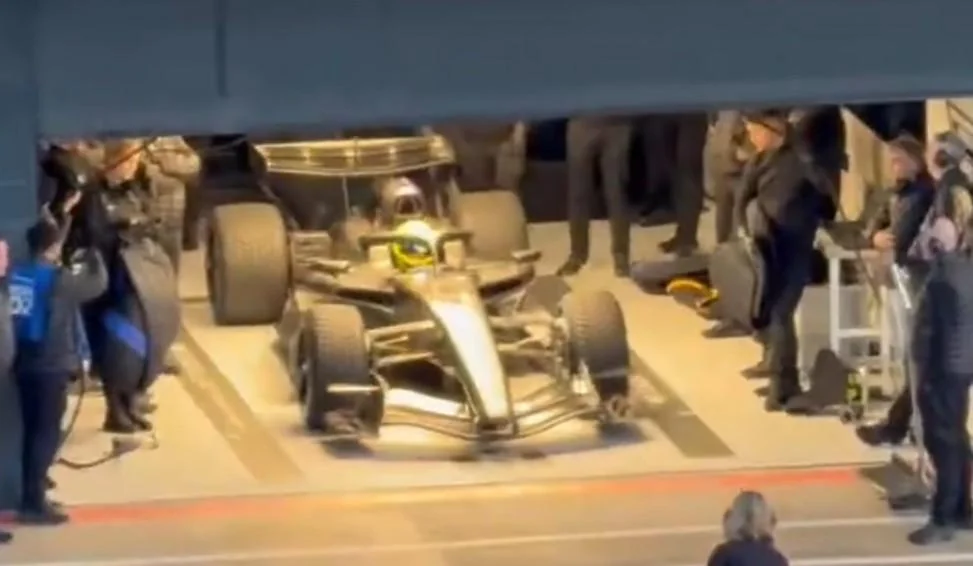
Higher-quality images of the Cadillac prototype shifted the conversation again, this time toward the 2026 regulations themselves. The early verdict was consistent: even in this crude, undeveloped form, the new cars look aggressive. Leaner. Meaner. More purposeful than the original 2022 ground-effect concepts ever did.
That praise came with a heavy dose of déjà vu. Fans remember 2022 well. Better racing to watch, yes, but a nightmare to drive. Porpoising defined the early seasons and never fully disappeared, fundamentally altering how drivers interacted with the cars. Some shrugged that off. Others argued that racing is always better when drivers actually enjoy driving the machinery.
Wheel and tire proportions became a focal point. The oversized rear tires drew comparisons to dragsters, dune buggies, and 1970s Formula 1 cars, nostalgic for some, awkward for others. The nuance often lost online resurfaced here: downsizing wheels is not the same as downsizing tires. While 2026 tires will be slightly smaller, many believe the regulations were originally conceived around even smaller rims before compromises set in.
Almost everyone agreed on one thing: this Cadillac is not a real aero car yet. The front wing looks like a placeholder. The bodywork is basic. This is a mechanical shakedown, not a performance statement. And that, at this stage, is exactly what it should be.
Ferrari and Hamilton: Ending a Mismatch Before It Hardens
Ferrari’s confirmation that Lewis Hamilton will have a new race engineer in 2026 landed without shock. The prevailing view was that this pairing never truly clicked, and that fit, not competence, was the issue.
Language sat at the center of the discussion, but not in a simplistic way. The problem wasn’t Italian versus English; it was where translation friction existed. The driver-engineer interface is the least forgiving place for nuance to be lost. Many argued that if a language barrier must exist, it should sit further down the chain, between engineer and team, where there is time and emotional bandwidth to manage it.
Riccardo Adami’s ability was not seriously questioned. His style, however, is fixed, directive, and communication-heavy, traits that worked better with drivers like Sebastian Vettel and Carlos Sainz than with Hamilton, who needs dialogue, not instruction. Hamilton is a veteran who spent his entire winning career with one primary engineer. Expecting either side to fundamentally change at this stage was always unrealistic.
Beneath the memes, the decision was interpreted as something Ferrari rarely does: listening. Whether that leads to improvement remains an open question, but acknowledging a mismatch rather than forcing it to continue was widely seen as progress.
Albon Makes It Official, and the Grid Turns Inward

Alex Albon’s understated announcement, “I guess we’re stuck with each other now,” sparked a very different kind of conversation. With Alex Albon joining Charles Leclerc in the officially-committed category, attention immediately shifted to who might be next.
Speculation swirled around Max Verstappen and George Russell, with cultural nuance doing much of the heavy lifting. Max’s casual use of “father-in-law” reignited debate around engagement and marriage, quickly corrected by European fans noting that “in-law” carries no legal prerequisite in many countries.
The broader realization was striking: very few drivers on the grid are married. A historically young grid, relentless travel, and extreme lifestyle demands make long-term stability difficult. Against that backdrop, Albon’s news landed warmly. Genuine. Low-drama. A reminder that not every F1 story needs politics or performance to resonate.
Alpine: Light Early, Written Off Too Quickly
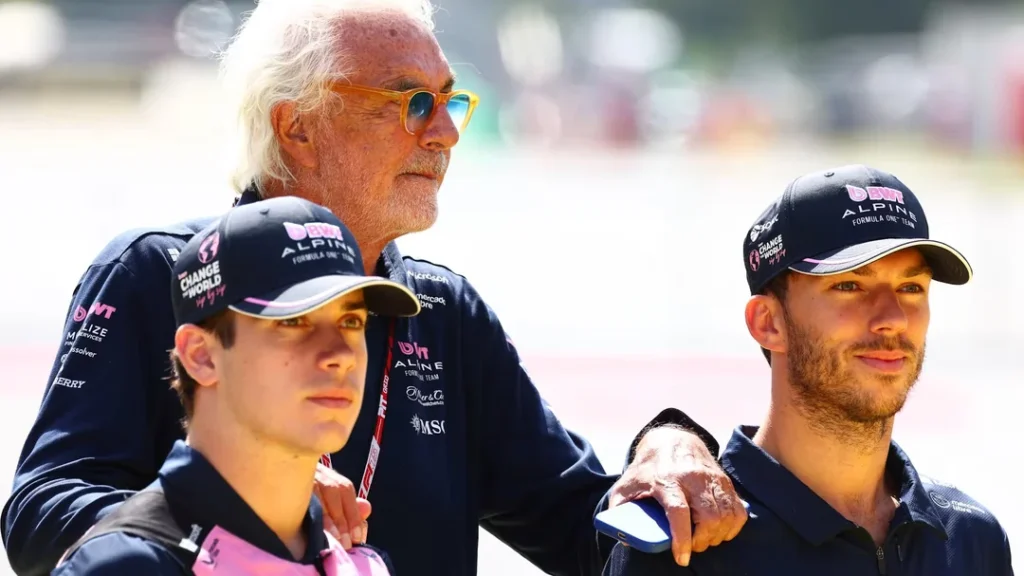
Reports that the Alpine A526 has already hit the 768 kg minimum weight quietly changed the tone around Alpine F1 Team. Skepticism remains, but outright dismissal softened.
Enstone’s credibility resurfaced as the key counterpoint. Alpine spent much of the current regulation cycle as a solid midfield team while running the weakest engine on the grid. The chassis was rarely the fundamental problem. Development choices, regulatory timing, and engine limitations were.
They were hit hard by FIA interventions: heavier floors in 2022 until others were allowed lighter solutions, then flexi-wing reliance in 2025 before those were banned. Meanwhile, the Renault power unit carried an acknowledged deficit, estimated around 15 horsepower, at a time when the field was compressed enough for that shortfall to be decisive.
Reliability rules boxed them in further. Other manufacturers pushed hard pre-freeze and clawed back durability later. Alpine, constrained by budget, turned the engine down to survive. Durable, but slow.
That is why weight matters. If Alpine truly arrive in 2026 with one of the lightest cars, maximum wind tunnel allocation, and a Mercedes power unit, they finally remove the anchor that defined the last era. It guarantees nothing, but it gives them a clean starting point they haven’t had in years.
Ferrari’s SF-26: Red, White, and the HP Problem
Leaks suggesting the Ferrari SF-26 will feature a lighter red with white inserts reopened a debate Ferrari can never escape: what a Ferrari should look like. The 2017 car remains a favorite for its clarity. Others still champion the 2022 SF-22, helped enormously by the inconvenient fact that it was fast.
Finish mattered as much as color. The loudest plea was simple: gloss red. Matte finishes may be practical, but they have never felt right for Ferrari. Recent paint rules pushing teams toward fuller coverage raised hopes that gloss liveries might return across the grid.
Hovering over everything was HP. Better integration was promised. Few were convinced. Blue logos on red paint remain deeply unpopular, and past merchandise experiments have not inspired confidence.
Ferrari Merch and the HP Identity Crisis
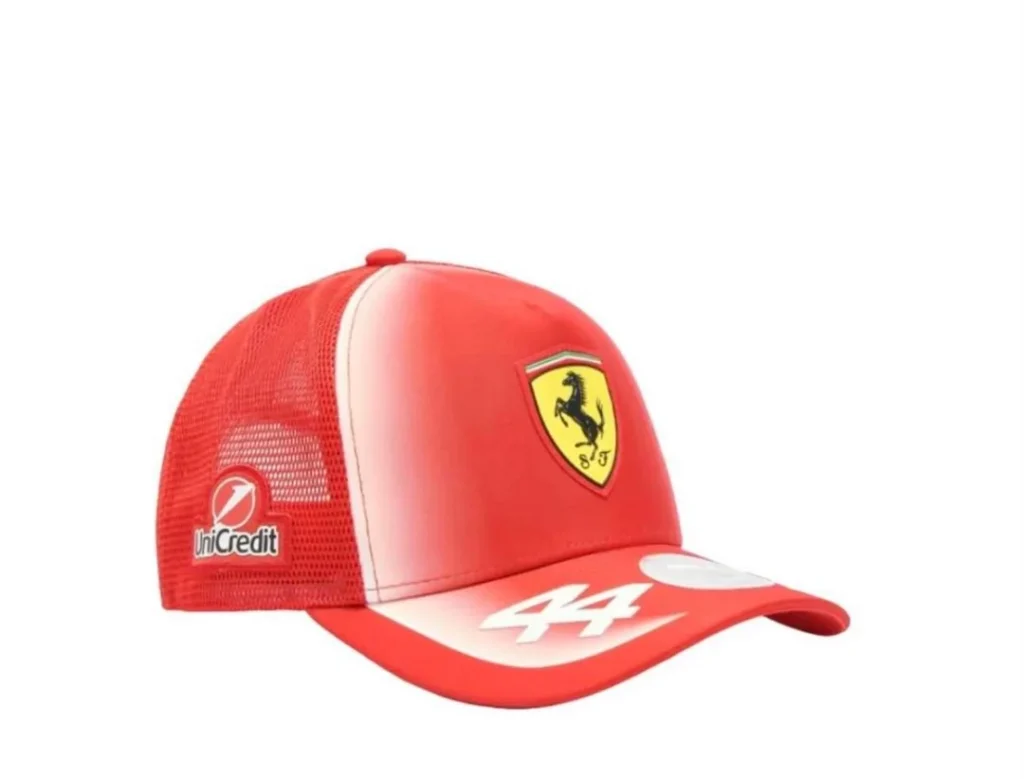
Leaked 2026 Ferrari merchandise only amplified those fears. From behind, several joked, it looks like HP fan gear with a Ferrari logo added as an afterthought. Debates spiraled into HP’s laptops, printers, hinges, ink subscriptions, and brand variants, none of which helped the aesthetic case.
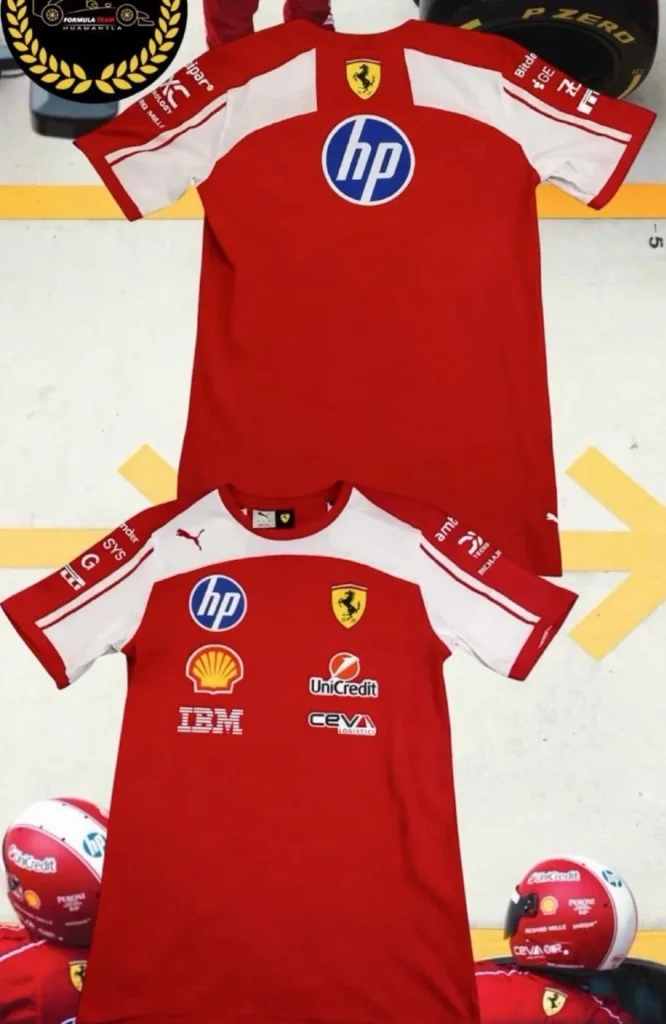
Some questioned the authenticity of the leaks. Others argued mock-ups often lag branding updates. Either way, the verdict was harsh: sloppy execution, mismatched logos, and another missed opportunity to blend sponsorship with heritage. The irony is that decades later, people still praise Marlboro-era Ferraris, not because of cigarettes, but because the design worked.
Red Bull’s Warning: Aero Is the Real 2026 Risk
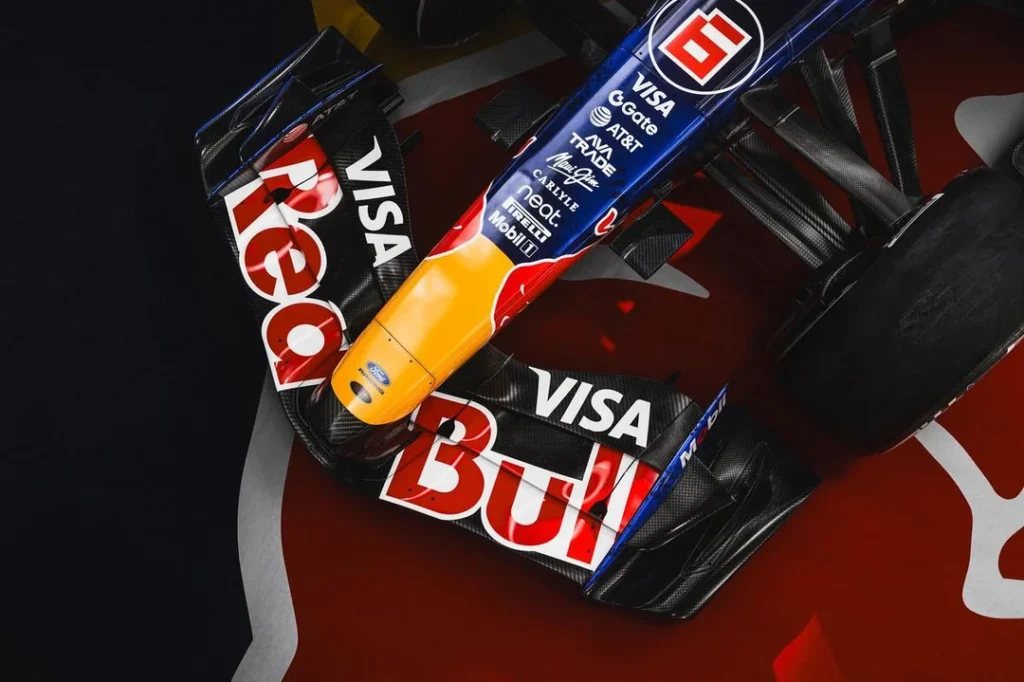
Red Bull’s view that aerodynamics, not engines, pose the biggest risk of 2014-style dominance resonated widely. The 2026 power units are evolutions, not revolutions. The MGU-H is gone. Hybrid systems are well understood. Development pathways are less restrictive.
Fifteen horsepower now causes uproar. In 2014, fifty-plus was normalized.
Engines will still matter, reliability, fuel efficiency, and energy deployment software will differentiate early, but most expect convergence by 2027. Aero, by contrast, remains proprietary, conceptual, and expensive to unwind if you miss early.
If dominance comes, it is far more likely to be quiet and corner-speed-based than loud and straight-line-defined.
Bottas and the Most Niche Grid Penalty in F1 History
Finally, confirmation that Valtteri Bottas will serve a five-place grid penalty at the 2026 Australian Grand Prix became the perfect off-season footnote. The rule preventing such carryovers was introduced later and is not retroactive. Legally clean. Logically sound. Hilariously specific.
There was little sympathy. Bottas knew the rules when the incident occurred. Cadillac F1 Team hired him fully aware of it. Practically, it changes nothing. A debut team’s priorities are finishing, learning, and stress-testing operations—not starting position.
If Bottas’ grid drop is the most dramatic thing about Cadillac’s first race weekend, they will likely consider that a win.
The Shape of What’s Coming
Taken together, this week didn’t answer questions, it framed them. The 2026 era is already revealing its fault lines: aero versus power, heritage versus sponsorship, process versus optics. Some teams look wounded but not broken. Others look confident but constrained.
Nothing here guarantees success or failure. But the patterns are forming. And in Formula 1, recognizing the shape of an era early often matters almost as much as mastering it later.