

Formula 1 has a way of revealing its personality before the season even starts. A single quote can frame the tone. A testing whisper can spiral into championship predictions. A geopolitical tremor can reshape an entire calendar.
As 2026 looms, the sport feels simultaneously sharp, unsettled, and very aware of itself.
“The Beautiful Thing Is There’s No Way of Handling Me”
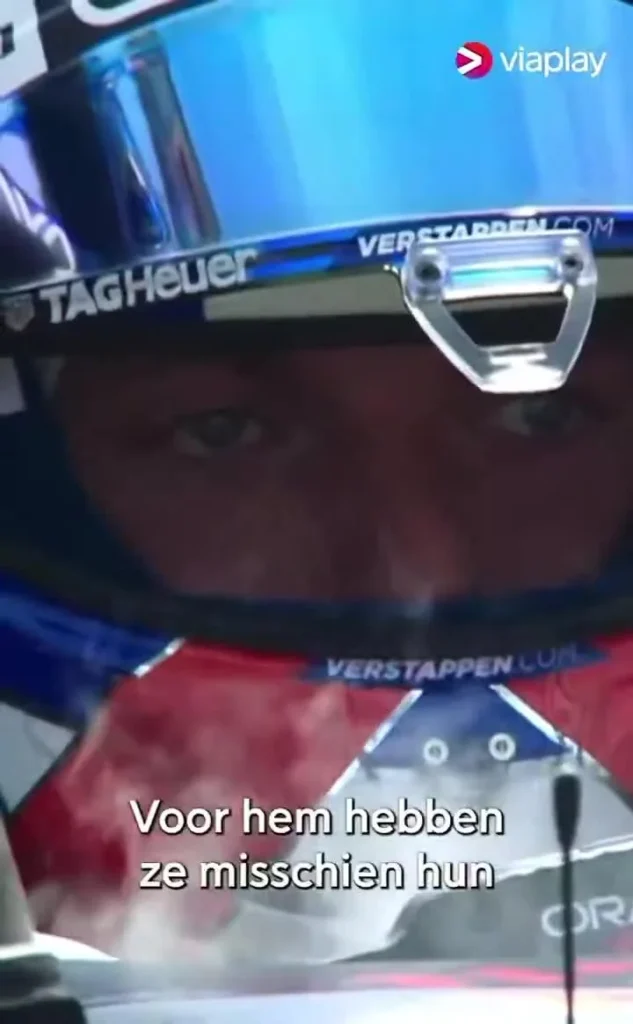
When Max Verstappen said, “I’m sure I’ve been mentioned a lot also to the drivers, on how to maybe deal with me or handle me in a race weekend. The beautiful thing is there’s no way of handling me,” it was a perfectly distilled version of the Verstappen mentality.
Confident. Confrontational. Unbothered.
The reaction, predictably, split between admiration and absurdity.
Has anyone tried promising to give him a cat if he lets them through?
Give the win first, THEN cat.
He’ll keep the cat and still not let them through.
Dude is a cat. This is cat behaviour.
Some imagined a rival dangling a cat out of their cockpit mid-battle, Verstappen giving it a critical once-over before deciding if it’s worth lifting. Others suggested the only way to distract him is with something sparkling on a string.
Beneath the humor sits a sharper truth. The Verstappen approach hasn’t changed: if you want the corner, you’re going to have to take it. And if you want to “handle” him, you may need to accept that collisions sometimes become part of the calculus. The iRacing special, as one bluntly put it.
There’s a reason drivers talk about managing Max. There’s also a reason many conclude there isn’t a blueprint for it.
Lando’s “Number One” and the Championship Discourse Spiral
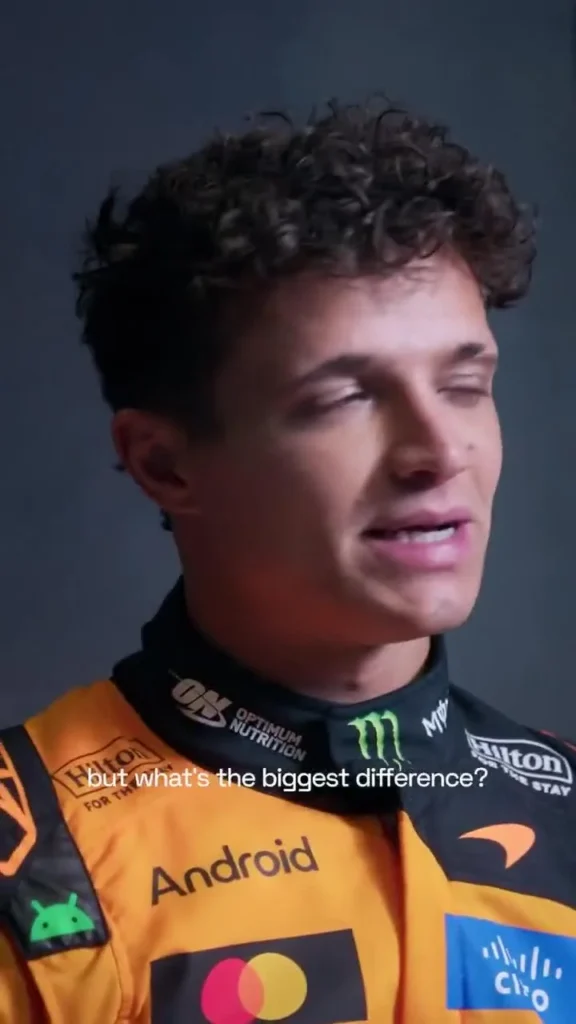
At the other end of the grid narrative spectrum sits the reigning champion.
Asked what the biggest difference is this season, Lando Norris replied:
“I have a number one on my car, instead of a number four.”
Deadpan. Obvious. Intentionally literal.
It’s the kind of answer that would make Kimi Räikkönen proud. Name three corners at Monza? One, two, and three. Name three Tom Hanks movies? Toy Story 1, 2 and 3.
And yet, somehow, it triggered outrage.
Some labeled it the worst thing they’d ever heard. Others said it soured the moment. Many pointed out that critics likely didn’t watch the full clip and ignored the delivery entirely. Swap “Lando” for “Max” and the reaction probably flips to “what a legend.”
The broader tension around Norris remains fascinating. For some, he’s an underwhelming champion, pointing to 2024’s missed opportunity in the best overall car and arguing 2025 never felt fully dominant. For others, that framing is revisionist at best and selective at worst.
He’s now the most tenured McLaren driver in team history by race count, and still in the younger half of the grid by age and experience. The perception gap between résumé and reputation continues to widen.
And then there’s the phrase that refuses to die: Papaya rules.
Some want it retired forever. Others suggest McLaren should weaponize it, undercutting? Papaya rules. Weather call? Papaya rules. Why did you pit? Papaya rules.
If Ferrari surge, we may be in for “tomato rules” instead.
Formula 1 thrives on shorthand narratives. Sometimes they stick far longer than the original moment deserved.
Mercedes the “Favorite”? Sandbagging, ADUO, and the Power Unit Chessboard
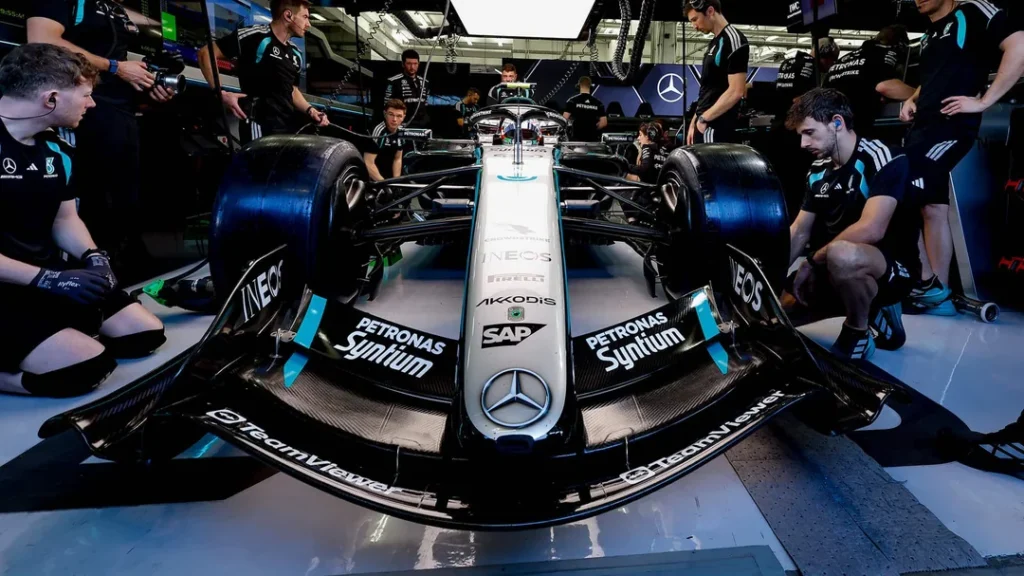
Meanwhile, AMuS has declared Mercedes the favorite heading into Australia.
According to their reporting, voices across the grid believe Mercedes are holding back significantly, close to sandbagging levels, and will reveal their true pace in Melbourne.
Naturally, skepticism followed.
Mercedes are always AMuS’ favorite.
Vintage sensationalism.
Is sandbagging even still real?
AMuS themselves suggested the term is outdated, not like the 90s, but that Mercedes right now are as close as it gets in the modern era.
The engine conversation complicates everything.
With the ADUO trigger sitting at a 2% deficit and checkpoints at races 6, 12, and 18, managing a power advantage becomes a strategic exercise. Maintain the edge without crossing thresholds. Reveal performance when needed. Avoid triggering regulatory responses.
But that raises obvious questions.
Would Williams really pay millions for an engine they can’t use at full power?
Would McLaren deliberately drop points to protect a margin?
Would any midfield team accept running below maximum output while fighting for championship prize money?
Others counter that shared engine maps prevent exclusive “party modes.” Mercedes customers aren’t flying blind, especially not McLaren, who reportedly ran an older-spec Mercedes engine during testing.
There’s also the development narrative. McLaren have been aero-strong for multiple seasons and historically excellent at mid-season recovery. Two years ago they looked like a lost cause, then Silverstone upgrades transformed them.
Mercedes, by contrast, struggled to fully unlock the aero side of the previous generation. That doesn’t automatically predict failure now, but it tempers blind confidence.
Some argue works-team integration will matter enormously again after the PU freeze era. Designing a car without seamless engine collaboration is, as one described it, like building blind with a plug-and-play unit.
Others point out McLaren’s heavy data-sharing agreement with Mercedes. They are not flying blind whatsoever.
Plot twist: Alpine dominance.
Until lights out in Melbourne, everything is projection layered over partial data.
Calendar Uncertainty and Real-World Risk
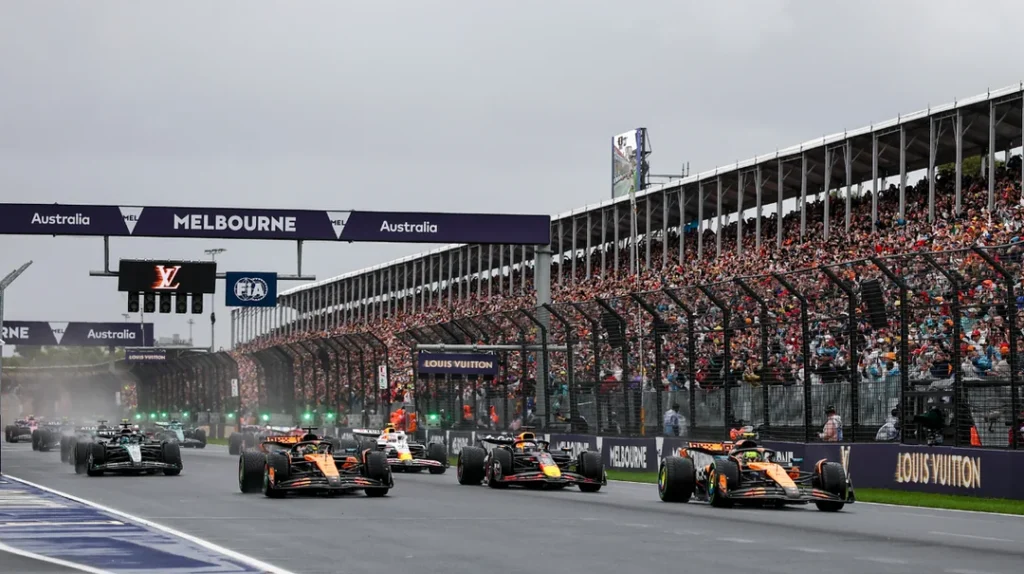
All of this plays out under a far more serious backdrop.
Formula One bosses are “closely monitoring” the Middle East situation ahead of the Australian Grand Prix. For many, that phrase alone doesn’t inspire confidence.
Drivers and fans aren’t flying into airspace with active missiles and drones.
Logistics operate on tight timelines, once Australia packs down, freight heads to Saudi.
If you’re making changes, you need to decide now.
Some believe contingency plans are already being drafted quietly. Others argue replacement venues are nearly impossible on short notice. Permits, infrastructure, team requirements, these things aren’t movable in days.
Sepang immediately entered the chat. Fuji. Double Suzuka. Autopolis. Malaysia. Quadruple European headers.
Stay in Australia and run circuits forwards, backwards, mirrored.
Humor is coping. The underlying concern is real. What happens if airspace closes mid-transport? What if key personnel are stranded? What if safety shifts from theoretical to immediate?
Even if races proceed, would everyone show up? Would teams risk it? Would fans?
The calendar has always been political. It now feels fragile.
Sponsors, Optics, and Identity in 2026
Off-track presentation matters more than ever.
Mastercard’s minimal visual presence on the McLaren, despite title sponsor status, has sparked curiosity. But exposure may not be the point. If Mastercard effectively underwrites financial stability, branding placement becomes secondary to balance-sheet strength.
Some associate the two brands instantly, the red and orange circles blending naturally with papaya. Others note how far McLaren have come from eras where internal stopgaps filled sponsor slots.
Elsewhere, Williams and Audi’s sponsor presentations drew praise for clarity and cohesion. Aston Martin’s lower-quality slide became a punchline. In a season where regional instability is a headline, optics matter.
Money, identity, geography, they all intersect in modern F1.
Lego Helmets and the Micro-Detail Obsession
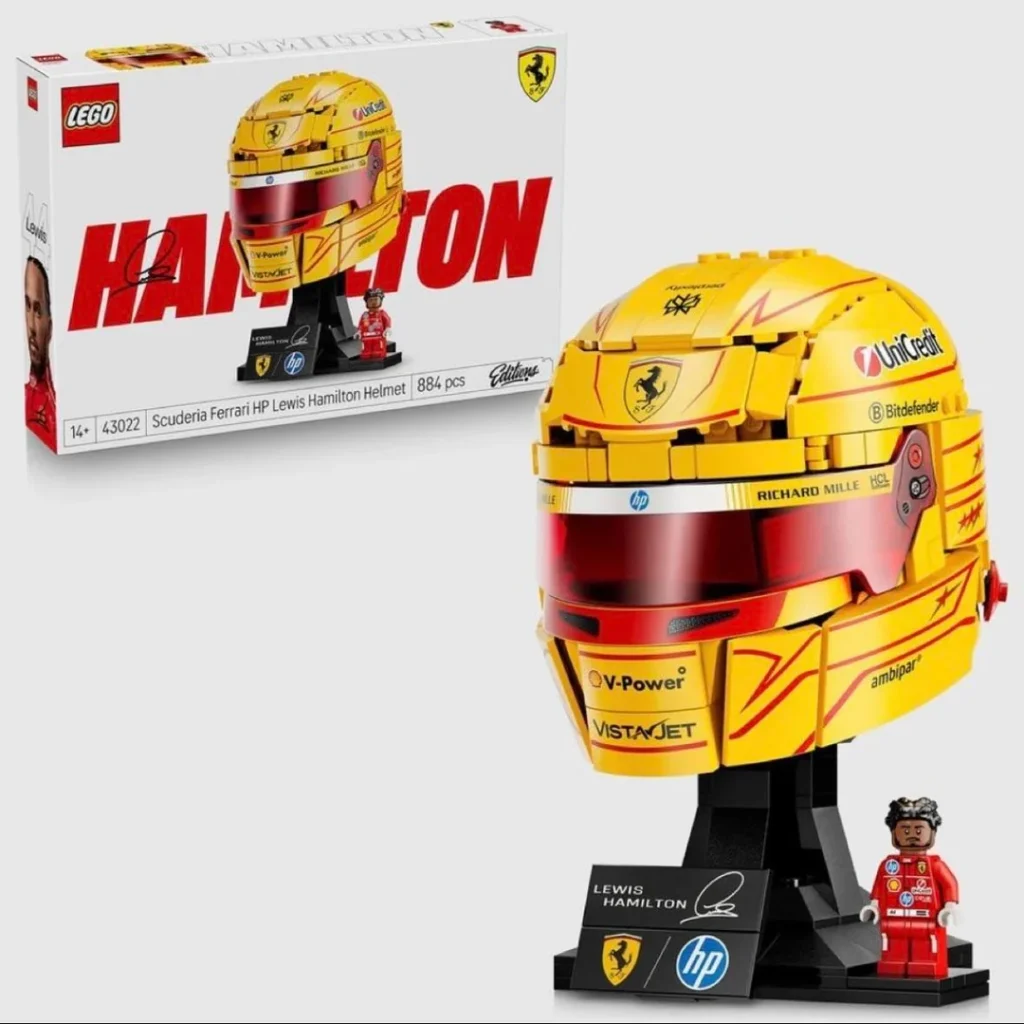
And because this is Formula 1, even Lego helmet sets trigger technical debate.
Lewis and Charles’ sets prompted sticker discourse immediately.
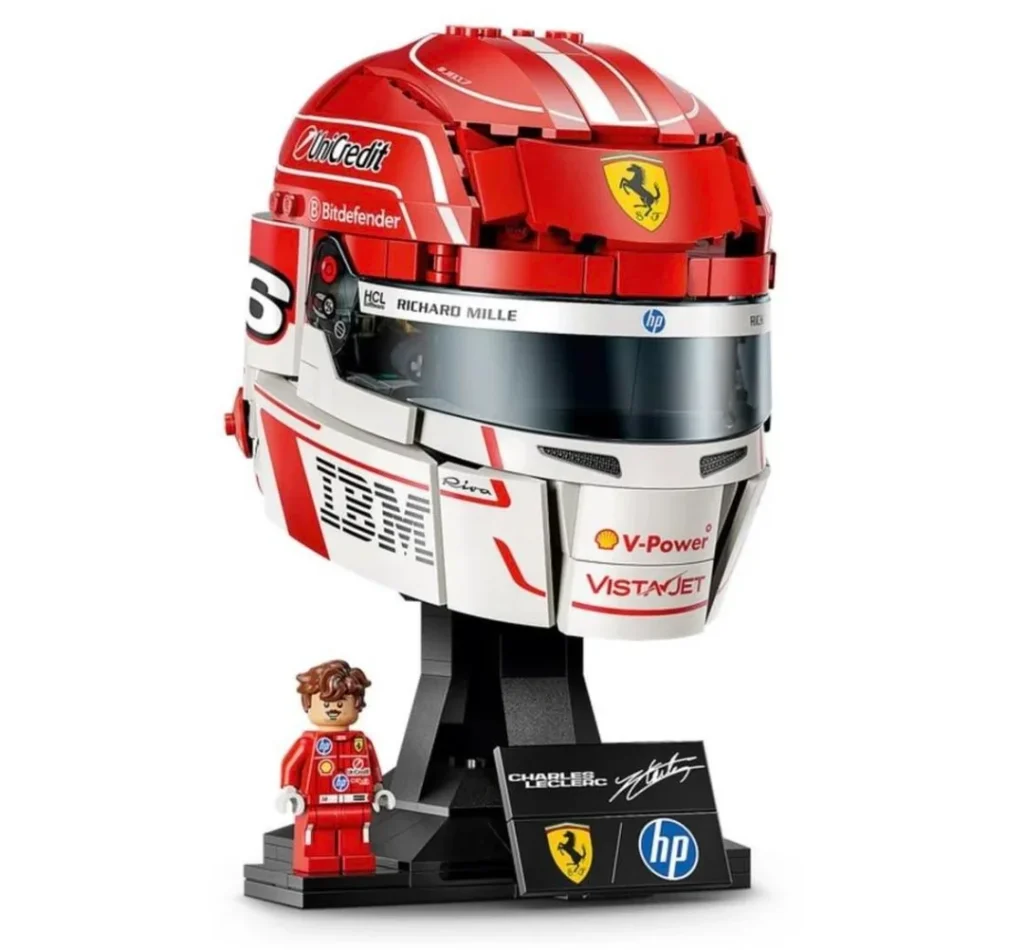
Holy stickers.
Most look printed.
Zero sticker edges visible in high-res renders.
There’s really no excuse.
Some plan to omit sponsor logos entirely for a cleaner look. Others are financially overwhelmed by the pace of Lego drops. Lewis’ helmet allegedly resembles an NFL guardian cap. Charles apparently looks like a young Chef Boyardee.
It’s absurd. It’s hyper-specific. It’s entirely on brand.
From Verstappen’s refusal to be “handled,” to the lingering ghost of 2021, to Mercedes’ alleged sandbagging, to Lando’s understated championship swagger, to geopolitical tension reshaping the calendar, the sport once again feels like it’s sitting on the edge of something.
We may never recreate the fever pitch of 2021. But if Formula 1 has proven anything, it’s this:
When two titans collide, when politics bleed into performance, when anticipation builds week after week, you don’t need to fabricate drama.
It writes itself.