

The early days of the 2026 Formula 1 cycle have delivered exactly what they always do: cars that aren’t really cars yet, testing plans that look dramatic until you read the fine print, and debates that say as much about fan psychology as they do about engineering reality. From floor struts and front wings to testing “delays,” chocolate cars, and experience charts, the same truth keeps resurfacing, very little of what we’re seeing now is meant to be taken at face value.
The Floor Strut Debate: Solution, Stopgap, or Distraction?
The appearance of prominent floor support struts immediately triggered speculation about whether they represent a genuine performance direction or a temporary workaround. One camp argues that no team would introduce a component it doesn’t intend to keep. The other counters that early floors are often built conservatively, with added support acting as insurance while stiffness targets are validated.
There’s also a broader reminder here: display cars and early iterations are rarely representative. Entire sidepods have vanished between launch and testing in the past, and some features exist simply because they’re already built and usable for shakedowns. Whether the strut survives will depend on trade-offs between mass, stiffness, and aero impact, and even then, any version that remains is likely to be integrated far more cleanly.
History reinforces the caution. Floor bracing appeared rapidly during the porpoising era as teams scrambled to manage flex. Some concepts stayed, others disappeared, and a few evolved into something unrecognizable. The same applies here: cars are in perpetual development, and reading too much into launch hardware risks repeating old mistakes.
Aston Martin’s “Delayed” Testing That Isn’t
Aston Martin’s AMR26 testing plan quickly became a headline, despite boiling down to a simple reality: teams can only run three of five available days, and Aston, like Ferrari and McLaren, has chosen not to include Monday. That’s not lost time, just allocation.
Weather complicates the optics. With rain forecast, concerns naturally shift to lost aero learning. Dry running is always preferable, especially under major regulation changes, but wet sessions still allow for critical system, integration, and reliability checks. In fact, rain on day one is often preferable to rain on the final day, when expectations are higher and risk tolerance lower.
The broader point is strategic rather than reactive. Some see value in starting earlier to maximize post-run analysis. Others argue that more preparation before the first lap makes limited track time more efficient. Without internal visibility, calling this anything more than a run-plan choice feels more like clickbait than substance.
Haas, Ferrari DNA, and the Toyota Question
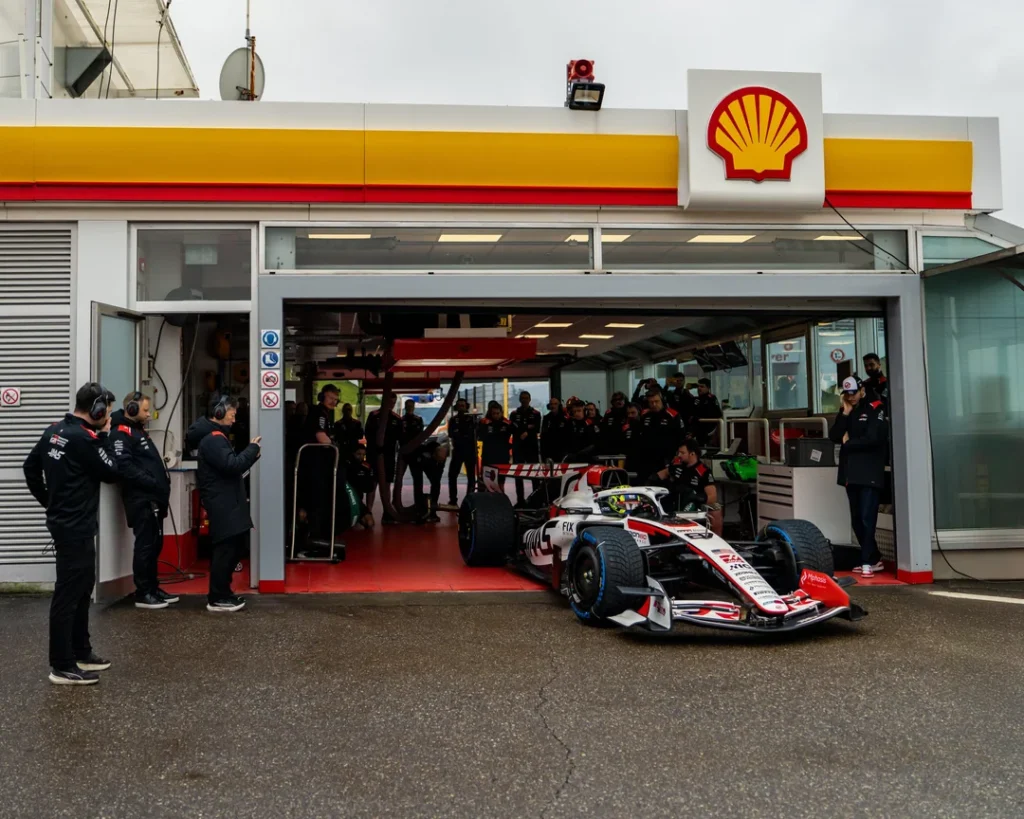
Haas confirming the VF-26 is “alive” at Fiorano reignited a familiar argument about identity. The car ran at a Ferrari facility, which led, once again, to claims of Haas being a Ferrari kit car. Counterarguments followed just as quickly, pointing out that shared components don’t equate to shared philosophy, and that visual similarity has often been overstated in the past.
Toyota’s growing involvement adds intrigue without yet changing the fundamentals. Simulator funding and TPC programs are meaningful, but they don’t transform Haas into a Toyota works outfit. For now, Haas remains closer to Ferrari than anything else, even if the jokes write themselves.
Expectations remain measured. There’s optimism around leadership, drivers, and incremental infrastructure gains, tempered by the reality that new regulations usually favor manufacturer teams early on. As always, much will hinge on the Ferrari engine, and until cars line up on the grid, restraint remains the only sensible position.
Mercedes vs Ferrari: Same Rules, Different Front Wings
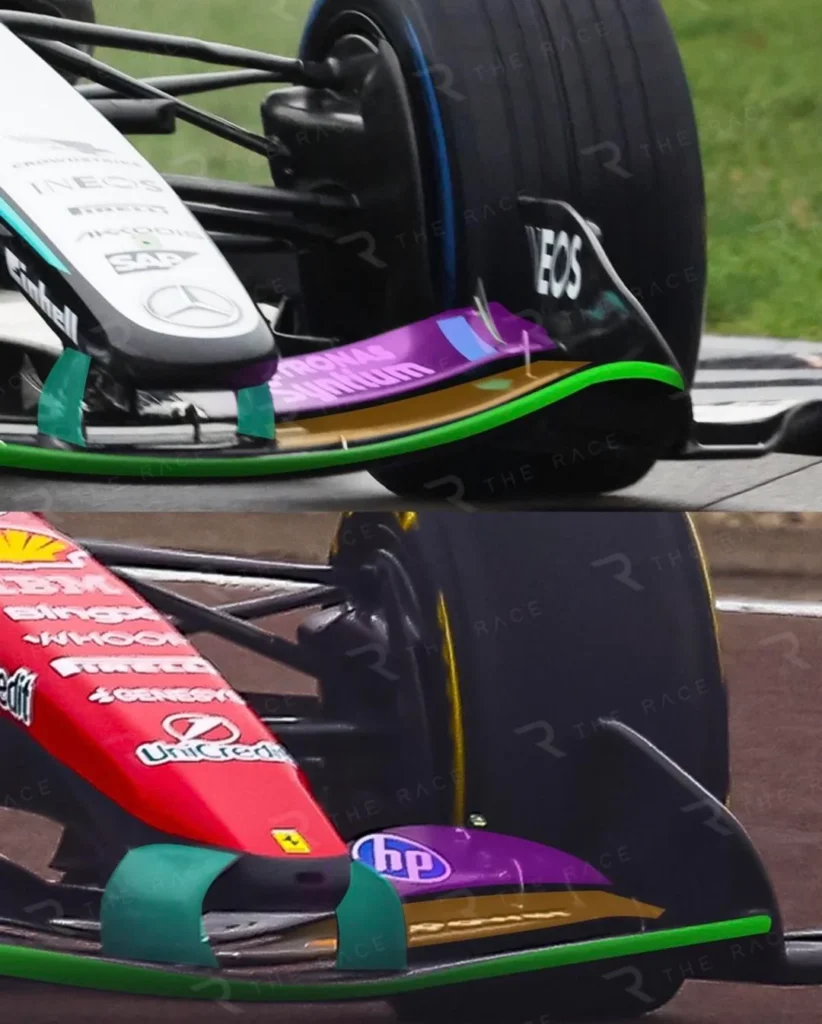
Few images captured attention like the contrast between Mercedes and Ferrari front wings. Two teams, one rulebook, radically different solutions. To some, Mercedes looks further along; to others, Ferrari simply looks more honest about how unfinished things still are.
The real argument isn’t about which wing is “right,” but whether teams would ever run a fundamentally different philosophy to hide their true intent. One side insists that what we see now is largely what will race. The other points to Mercedes’ 2022 zero-pod gamble as proof that secrecy, and misdirection, are absolutely on the table, even if they fail.
Both views have precedent. Some teams show their hand early; others reveal almost nothing until Melbourne. Convergence will come, by race five, shapes usually begin to align, but deeply interconnected concepts can take years to reconcile, and some never fully do. If anything, identical solutions at this stage would be the real red flag.
Hamilton, Ferrari, and a Moment Bigger Than the Car
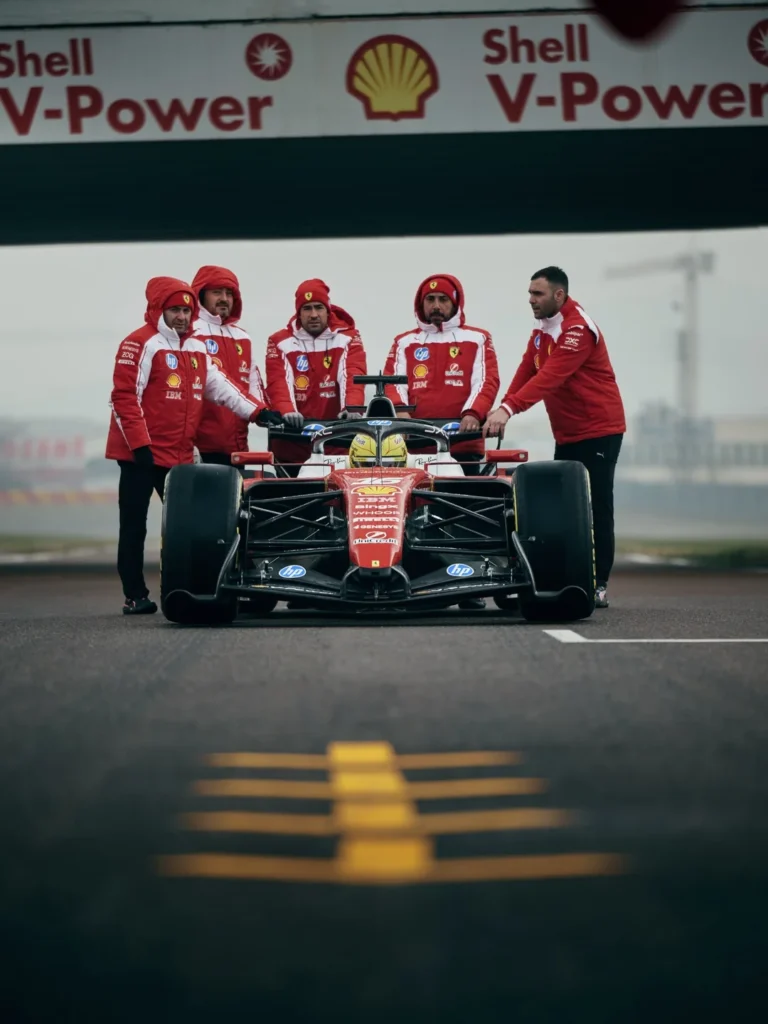
Lewis Hamilton’s first Ferrari launch message was optimistic, familiar, and heavy with symbolism. Gratitude to the team, energy from the tifosi, a new drive, but the same mission. After a bruising end to 2025, the hope is simple: less misery, fewer painful early exits, and a reset that feels meaningful.
The cultural ripple mattered too. Hamilton’s MF DOOM soundtrack choice sparked admiration, nostalgia, and then discomfort as discussion turned to the artist’s past lyrics and interviews. Persona versus belief, provocation versus accountability, there was no consensus, only the reminder that moments of celebration can quickly evolve into broader reckoning when icons overlap.
Even Fiorano became part of the conversation: a historic circuit that feels like a museum, made more frustrating by modern limits on testing. Symbolism everywhere, opportunity tightly rationed.
KitKat’s Chocolate Car and the Business of Attention
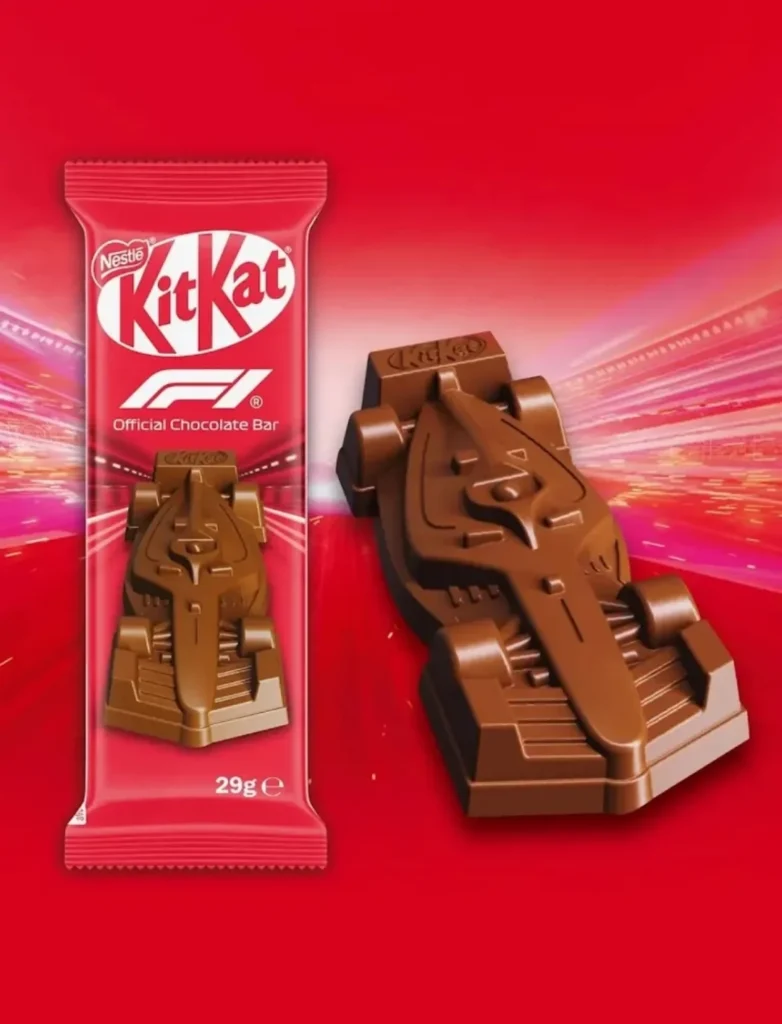
If any reveal understood its role perfectly, it was KitKat’s chocolate F1 car. Planned 2026 race activations, social media experiences, exclusive merchandise, limited products, and Drive to Survive tie-ins made the intent clear: this is about reach, not lap time.
The reactions landed exactly as expected. Jokes about compliance, livery simplicity, wafer ratios, and the inevitable “released before Williams” punchline followed immediately. Criticism of Nestlé wasn’t subtle, but neither was the engagement. The car worked, not because it convinced anyone, but because it dominated attention.
This wasn’t motorsport engineering. It was marketing doing what it does best.
Experience, Perception, and Identity on the 2026 Grid
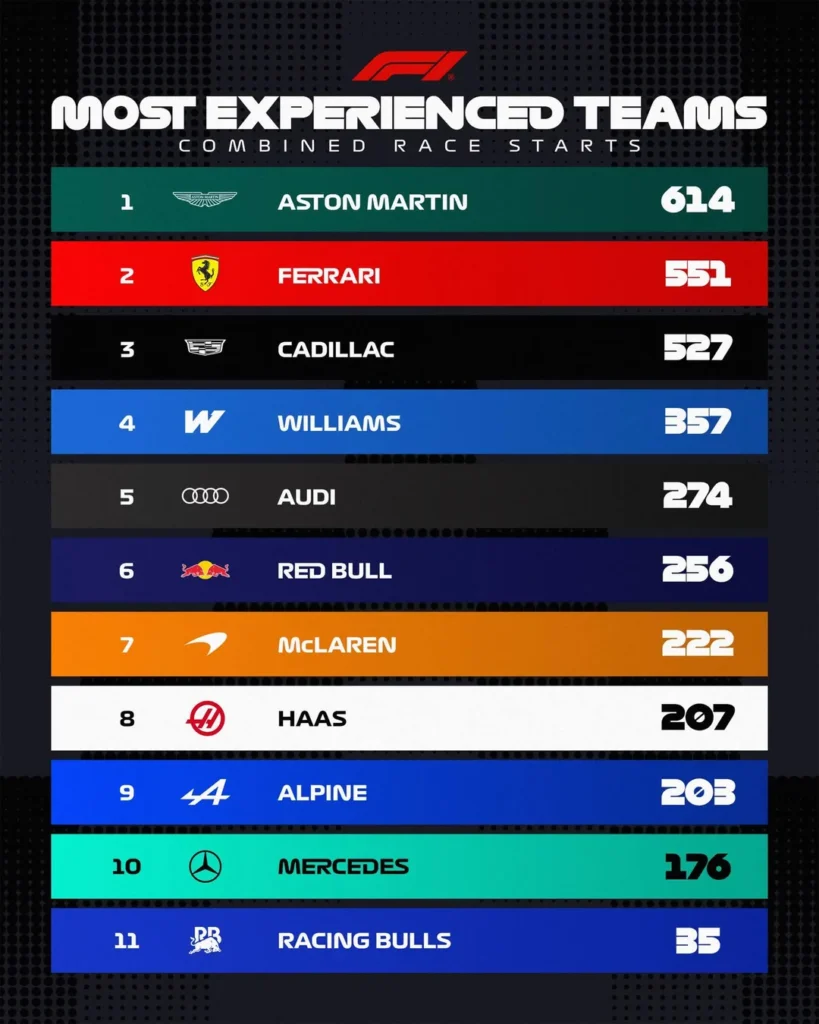
Cadillac’s driver pairing adds real weight to the 2026 grid, with 527 combined race starts, placing them behind only Aston Martin and Ferrari. For a new entrant, that experience matters, especially under new regulations.
Few stats challenge intuition more than Lance Stroll’s. Younger than Leclerc, entering his 10th F1 season, and already exceeding Jackie Stewart’s entire career length. His 2017 Baku podium at 18 years and 239 days still feels unreal, particularly when contrasted with where other drivers were at the same age.
Modern careers are increasingly non-linear. Lawson’s 35 starts didn’t come from continuity, but from staggered opportunities across multiple seasons. Time moves differently now.
And then there’s color. Too much blue. Too much black. Trackside, liveries matter more than graphics, and many feel the grid is drifting toward unnecessary visual confusion. Calls for Alpine to go full pink, Audi to lean into maroon or silver, and Cadillac to reclaim color all stem from the same frustration: identity is being flattened by minimalism.
The Only Consistent Theme: Don’t Overcommit to the First Impression
Across every reveal, test plan, and debate, the pattern is consistent. Early cars are provisional. Testing narratives are fragile. Philosophies evolve. Marketing hijacks attention. Experience charts impress but don’t decide championships. And what looks obvious now often isn’t.
The 2026 season hasn’t begun, but the ritual already has, and once again, Formula 1 is reminding us that the space between appearance and reality is where most of the story lives.