

SEMA’s opening-day reveals gave me plenty of reasons to stop walking. A modern Mustang brought back a familiar Foose name, Ringbrothers disguised thousands of hours of fabrication beneath classic Pontiac proportions, and a battered piece of Fast & Furious history returned to the spotlight.
Working through the November 3 displays, I kept finding different approaches to the same challenge: how do you change a recognizable car while keeping what made people care about it in the first place?
Some builders worked carefully around the original shape. Others took the idea much further.
Chip Foose brings the Stallion into a new generation
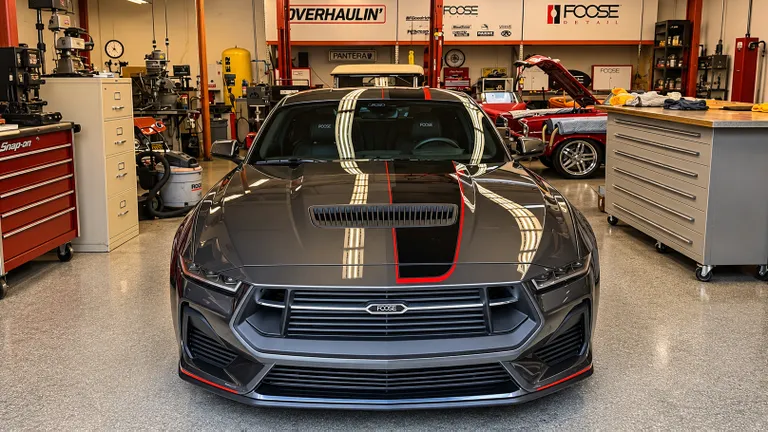
Chip Foose’s new Stallion Mustang GT was a good place to start.
Based on a 2026 Mustang GT, the build revisits the original Foose Stallion from 2007. The connection gives the project some history, but the treatment is tailored to the current Mustang: custom fender flares, revised upper and lower grilles, a new hood vent, quarter-window scoops, a rear spoiler, and Foose-designed wheels. The smaller details matter, too. Chrome trim, custom graphics, and a reworked Mustang corral incorporating the Foose name carry the design across the car. Together, they give the Stallion a distinct identity without losing the Mustang underneath. What interested me was the balance between the large changes and the finishing touches. Wider fenders establish the stance, but the grille, trim, and graphics are what make the design feel connected.
The reveal also introduced Foose Detail, his new car-care line, with an associated giveaway for a cosmetically matching Stallion. The display car establishes the design that the giveaway vehicle will follow.
Ringbrothers’ BILLIE hides its biggest changes
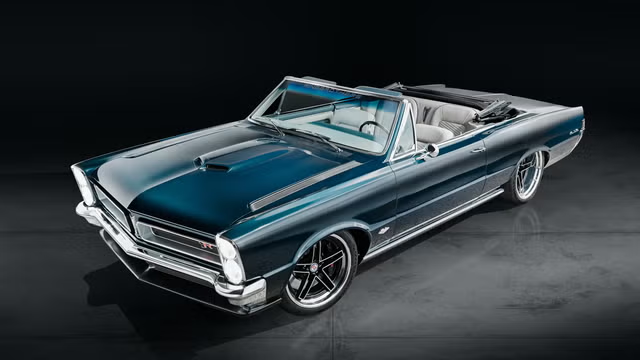
Ringbrothers’ BILLIE takes a different approach to getting noticed.
The 1965 Pontiac convertible has been widened five inches, with extensive fabrication and carbon-fiber work contributing to a build that consumed approximately 5,500 hours. The goal was to preserve the familiar GTO shape while giving it a substantially broader stance. That is the detail I keep coming back to. Five inches is a major change to a car’s proportions, yet the design asks you to appreciate the whole Pontiac before examining how it was altered. The starting vehicle was a 1965 Tempest convertible, transformed into a GTO tribute. Underneath the classic appearance sits a supercharged LT4 V8 producing 650 horsepower, paired with a 10-speed automatic.
At the Gentex display, BILLIE offered a particularly strong example of the work behind a restrained custom. Keeping a recognizable shape convincing after changing its dimensions requires a consistent approach across the body. The result makes the engineering and fabrication part of the discovery.
Onyx brings another approach to classic Chevrolet muscle
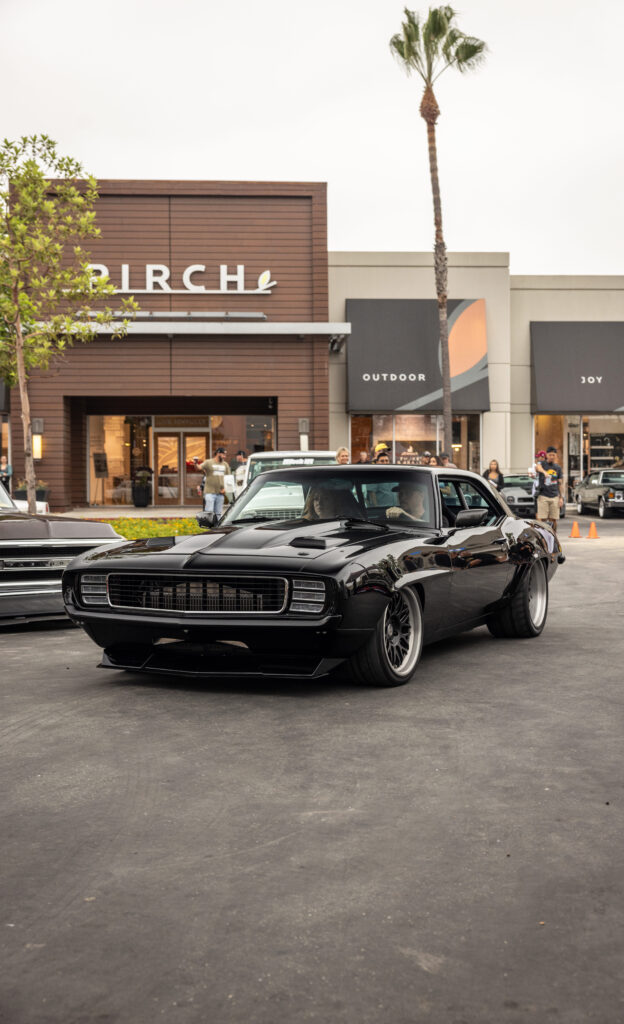
Nostalgia Hot Rods’ Onyx added a 1970 Chevelle to the mix at Dapper Lighting.
The build combines pro-touring style, big-block power, and modern performance. Its reveal appeared on the opening-day schedule alongside Black Widow at Dapper’s booth. The Chevelle fits naturally into this group of cars because its original identity already carries so much weight. The challenge is deciding how to develop that identity through the stance, mechanical package, and details.
Alongside the Foose Mustang and Ringbrothers Pontiac, Onyx helped show the range within American performance builds. There is room for a contemporary interpretation of a familiar name, a carefully reshaped classic, and a big-block Chevelle built around the pro-touring idea—all within the same walk through the show.
“2 Fast 2 Broken” gives a movie survivor another chapter
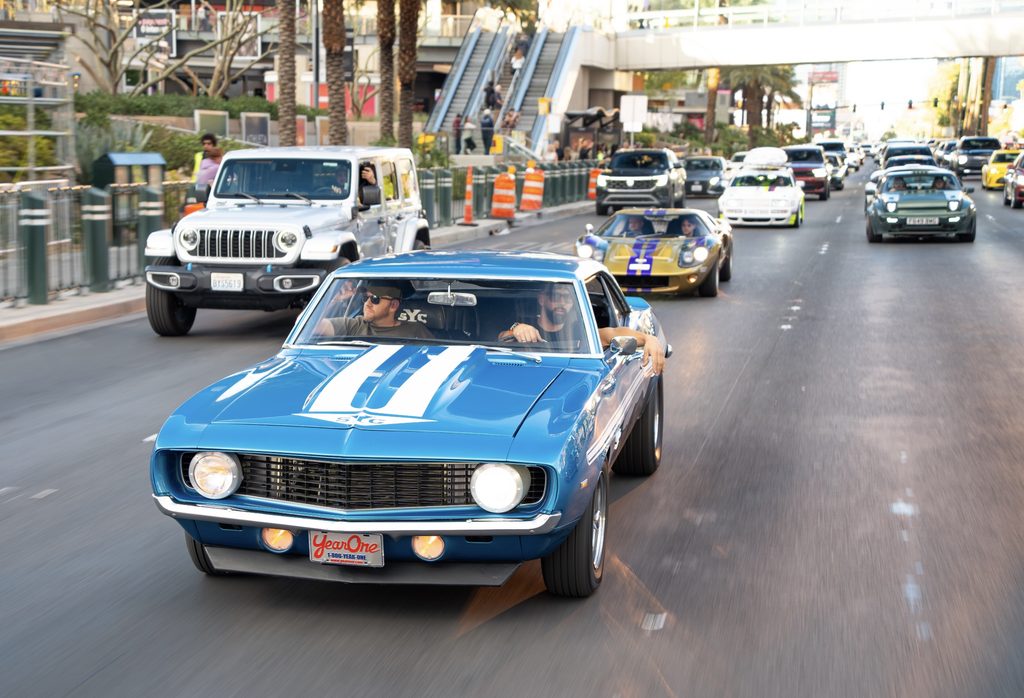
The Camaro at ACES Fuel Injection brought a very different kind of history.
Sam Hard and the Hard Up Garage team restored a screen-used 1969 Chevrolet Camaro from 2 Fast 2 Furious. Hard identifies it as a car Paul Walker drove before it performed stunt duties in the film’s yacht sequence. By the time Hard first encountered it in Georgia in 2019, the front end was crushed and the engine was missing. Securing the car took persistence. Getting it ready for SEMA then required a 15-day rebuild at Tavarish’s Florida workshop, with Famous Dave and Mr. Wiggles joining the effort. The project’s name, 2 Fast 2 Broken, captures the starting point pretty well. There is an important distinction in its identity: the movie’s Camaros were built to portray Yenko cars. They were not original Yenko examples. Hard’s restoration plans included bringing the engineering closer to that screen identity.
For me, the appeal is the connection between the surviving car and a scene so many enthusiasts remember. A fresh replica can recreate the appearance. This project’s story centers on recovering a damaged participant in the film and giving it a future.
Rob Dahm’s Miata takes the conversation somewhere else entirely
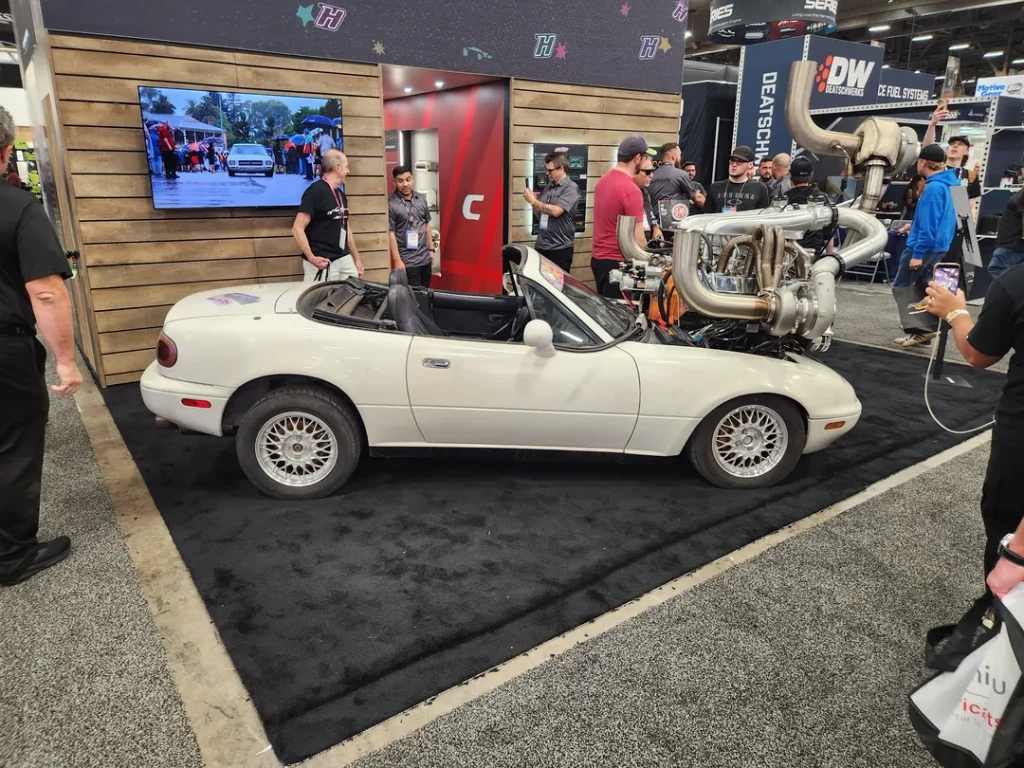
Then there was Rob Dahm’s Miata at Haltech.
SEMA introduced the display with a combination that demands an explanation: 13 rotors and four turbos packed into a Miata. Dahm’s reveal video leaned into that description with the title “Unveiling the 13 ROTOR Miata at SEMA!! It runs… kinda.”
That last qualification is part of the story. This is a project to approach with curiosity about how the configuration works and how far its development has progressed. A rotor count alone does not explain the engineering. It also made a fitting change of pace after the restored and reimagined classics. Foose and Ringbrothers explored recognizable forms through carefully considered design changes. Hard Up Garage brought a movie car back from years of damage and storage. Dahm’s Miata put an unusual mechanical experiment at the center of the display.
Those different motivations made the opening-day walk interesting. The cars gave me reasons to stop; the decisions behind them gave me reasons to stay.