

Formula 1 is preparing for another major transformation, with a new African Grand Prix confirmed for Rwanda, plans to bring V8 engines back in 2030, and further technical restrictions already taking shape for 2027.
These developments come at a particularly interesting moment for the championship. The 2026 regulations have introduced a new generation of cars, but questions remain about the balance between electrical and combustion power, the difficulty of extracting performance, and the consequences of increasingly restrictive aerodynamic rules. Lando Norris has described his McLaren as extraordinarily difficult to drive, while Red Bull’s recent development progress has been accompanied by news that one of its aerodynamic solutions will be restricted next season. Meanwhile, Max Verstappen’s dominant Singapore Grand Prix performance has highlighted the gap between measurable results and subjective driver evaluations, and Liam Lawson’s uncertain future raises questions about how Red Bull evaluates talent within its driver development program.
Together, these developments illustrate Formula 1’s central challenge: expanding into new markets, improving its racing product, encouraging engineering innovation, and preserving the characteristics that make the championship distinctive.
Formula 1 Confirms Its Return to Africa With a 10-Year Rwanda Agreement

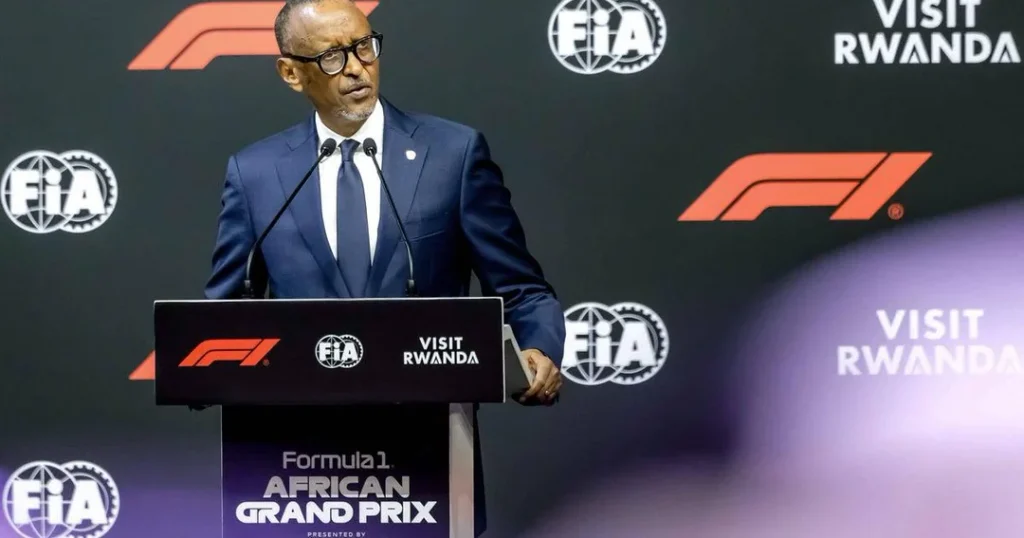
Formula 1 has announced a 10-year agreement to bring the African Grand Prix to Rwanda in the early 2030s, marking the championship’s return to the continent for the first time since 1993.
The race will take place at a purpose-built circuit in Bugesera, on the outskirts of Rwanda’s capital, Kigali, and will officially be known as the African Grand Prix presented by Visit Rwanda. An exact inaugural date has not been confirmed. If the event begins in 2030, it would mark 37 years since Formula 1 last raced in Africa, when the South African Grand Prix was held at Kyalami. Africa is currently the only continent without a Formula 1 race. Its return represents an important milestone in the championship’s international expansion, particularly as Formula 1 has increasingly concentrated on developing its presence in Asia and North America.
However, the choice of Rwanda also raises questions about how Formula 1 selects new venues and what a Grand Prix should contribute to its host country.
Why Rwanda Instead of South Africa?

South Africa’s Kyalami circuit has long appeared to be the most obvious candidate for Formula 1’s return to Africa.
Unlike Rwanda’s proposed facility, Kyalami already has Formula 1 history and an established motorsport identity. However, the circuit currently holds FIA Grade 2 certification and would require further work to meet the Grade 1 standards necessary to host a Grand Prix. Funding has also remained a significant obstacle. Rwanda, meanwhile, is proposing an entirely new facility and has secured a long-term hosting agreement.
The distinction highlights an increasingly important characteristic of modern Formula 1: an established motorsport culture and historic circuit do not necessarily provide the strongest commercial proposition. A country willing to invest in a new venue and commit to a long-term agreement can become a more attractive host than an established racing nation struggling to finance the event. Germany and France are absent from the current calendar, while Zandvoort is set to disappear and Spa is losing its status as a permanent annual fixture.
The financial requirements of staging Formula 1 have become difficult to justify even in countries with substantial motorsport traditions. Nevertheless, existing racing heritage should not be the sole consideration when awarding a Grand Prix. Requiring every prospective host to demonstrate decades of motorsport history would make it extremely difficult for emerging markets to establish themselves. Rwanda cannot develop a Formula 1 legacy without first having the opportunity to host the championship.
The more important question is whether the new circuit and its associated investment can support a sustainable motorsport ecosystem rather than simply hosting an annual international event.
Why Call It the African Grand Prix?
The event’s official name is another interesting aspect of the announcement.
Rather than adopting the Rwandan Grand Prix designation, Formula 1 has chosen the African Grand Prix. Continental naming conventions have historical precedent. The European Grand Prix was previously used for races in countries that already hosted another Formula 1 event, while Baku’s inaugural race in 2016 also carried the European Grand Prix title. However, Rwanda’s circumstances are different.
The country does not already host a Grand Prix, and Africa consists of numerous nations with distinct identities and histories. The African Grand Prix name emphasizes the significance of Formula 1’s return to the continent, potentially providing a broader international marketing platform and appealing to corporate partners with operations across multiple African countries. However, it also creates the possibility that Rwanda’s individual identity becomes secondary to the broader continental narrative.
Bahrain’s arrival on the Formula 1 calendar, for example, was not branded as the Gulf Grand Prix simply because it marked an expansion into the Middle East. There is no confirmed explanation for the naming decision in the announcement.
What is clear is that the inclusion of Visit Rwanda in the official title positions the event as a major destination-marketing opportunity.
The Economic Challenge: Who Actually Benefits?
The most important questions surrounding the Rwanda Grand Prix concern its economic impact and accessibility.
Hosting Formula 1 can generate international exposure, tourism spending, hospitality revenue, employment opportunities, and infrastructure development. However, those benefits are not automatic, nor are they necessarily distributed evenly throughout the local economy. A permanent circuit requires substantial investment, while supporting infrastructure and the annual costs of staging the race add further financial commitments.
For a developing economy, the opportunity cost of such expenditure deserves careful consideration. The success of the event should therefore be measured not only by attendance figures or international television exposure but also by the lasting benefits delivered to the surrounding communities. Will the circuit generate meaningful employment outside the Grand Prix weekend? Can it support other sporting and commercial events? Will improvements in transport and infrastructure benefit residents throughout the year?
Accessibility is equally important. Formula 1 has become increasingly expensive even in established markets. At Circuit of the Americas, attending an entire Grand Prix weekend has become a growing financial commitment, with some spectators finding that a Friday practice ticket is the only affordable way to experience the event. If affordability is already a problem in Austin, it becomes an even more significant consideration for a Grand Prix in Rwanda.
A race celebrating Formula 1’s return to Africa should ideally create opportunities for local residents to experience the championship rather than functioning predominantly as an exclusive destination for wealthy international visitors. There are also political and ethical considerations. Rwanda’s government has faced scrutiny concerning human rights and regional conflicts, particularly involving the Democratic Republic of Congo. The specific allegations and their implications require independent examination rather than assumptions based on the hosting announcement.
Formula 1’s responsibility is to apply consistent standards when evaluating prospective hosts. The championship already competes in countries whose governments have attracted international criticism. The existence of those events does not eliminate the need to examine the circumstances of new agreements.
Ultimately, the return of Formula 1 to Africa is a significant achievement. Whether Rwanda proves to be the right long-term home for that return will depend on the event’s economic sustainability, accessibility, and wider impact.
V8 Engines Set for 2030: Will Formula 1 Finally Address Its Power-Unit Problems?

FIA President Mohammed Ben Sulayem has announced plans for V8 engines to return in 2030, aligning with the anticipated period for the African Grand Prix’s debut.
The announcement represents a potentially substantial change in direction for Formula 1, particularly given the investment manufacturers have made in the current generation of hybrid power units. However, the return of eight cylinders does not automatically mean a return to the characteristics of Formula 1’s previous V8 era.
The critical details will be the engine configuration, hybrid requirements, weight, and overall technical philosophy.
The Sound of Formula 1 Could Change Again
Formula 1’s previous naturally aspirated V8 engines were an important part of the championship’s identity.
Used before the introduction of the turbo-hybrid era in 2014, they produced a high-revving soundtrack that was dramatically different from today’s V6 power units. Earlier V10 and V12 engines delivered an even more distinctive experience. However, engine sound is determined by considerably more than cylinder count.
Turbocharging, engine speed, exhaust configuration, fuel-flow restrictions, and hybrid systems all influence the final result. A turbocharged V8 operating under modern technical restrictions would not necessarily sound anything like a naturally aspirated V8 from 2013. Turbochargers extract energy from exhaust gases, altering the sound produced by the engine. Restrictions on RPM and fuel flow can further change its character. Consequently, the proposed 2030 engines may deliver a different sound without recreating the distinctive high-pitched noise of the previous V8 generation.
Until the detailed specifications are established, expectations about the soundtrack remain speculative.
The More Important Question Is the Hybrid Power Split
The fundamental criticism of the current power units concerns their reliance on electrical energy.
The 2026 regulations introduced an approximately equal contribution from combustion and electrical power, substantially increasing the importance of energy recovery and deployment. That has affected how drivers approach both qualifying laps and races. Rather than concentrating entirely on maximizing cornering speed and acceleration, drivers must account for the available electrical energy and how it will be deployed throughout the lap.
Energy management has always been part of modern Formula 1, but the current regulations place an unusually significant emphasis on it. A future formula that shifts the balance toward combustion power could reduce the influence of battery management on driving technique. Potential arrangements involving a 70/30 or 80/20 combustion-to-electrical split would represent a significant departure from the current approach, although neither has been confirmed as the intended specification.
This distinction is essential. A V8 engine with substantial electrical requirements could retain many of the characteristics that make the current regulations controversial. Conversely, reducing electrical dependence could fundamentally change the driving experience even if the engine’s sound remained relatively restrained.
The success of the 2030 regulations will depend on the complete power-unit architecture, not simply the number of cylinders.
Could Formula 1 Cars Become Smaller and Lighter?
Reducing the electrical contribution could also create opportunities to simplify the power unit.
Smaller energy-storage requirements and associated systems could help reduce overall vehicle weight. That would be particularly valuable as Formula 1 continues to address concerns about the size and agility of its cars. However, an eight-cylinder combustion engine is not inherently lighter than a six-cylinder equivalent.
Any weight savings from reducing hybrid components would need to be considered alongside changes to the combustion engine and its supporting systems. The overall design will determine whether the 2030 regulations produce lighter machinery.
A reduction in weight could improve braking, cornering, and responsiveness, but those benefits cannot be guaranteed from the engine announcement alone.
Audi and Cadillac Face Another Potential Regulatory Reset
The timing of the proposed changes creates a significant complication for Formula 1’s newest manufacturers.
Audi has invested heavily in developing its power-unit program under the 2026 regulations. Cadillac is also working toward introducing its own engine, with 2029 identified as its anticipated debut. If a new formula takes effect in 2030, Cadillac could potentially have only one season operating its original power unit before another major redesign becomes necessary.
Audi would face a similarly compressed development cycle compared with the scale of investment required. Manufacturers commit to Formula 1 based partly on the expected duration and technical relevance of the regulations. A major change only four years into the current power-unit cycle could affect the financial assumptions underpinning those commitments. Simpler engines may ultimately reduce costs and encourage additional manufacturers to participate, but the immediate expense of developing an entirely new power unit cannot be ignored.
Formula 1 must therefore balance the desire to improve its racing product with the need to provide manufacturers with a stable technical environment.
Lando Norris Says McLaren’s 2026 Car Is Almost Impossible to Drive Consistently
While Formula 1 considers major changes for 2030, Lando Norris is facing a more immediate problem.
The McLaren driver has described his current car as exceptionally difficult to control, with a narrow operating window that makes extracting its maximum performance physically and mentally demanding.
“It’s just on a knife edge on every single corner,” Norris explained.
“You’ve just got to drive it within an exact percent, and you have to force the car in every single way. You can’t let the car do any work. You can’t just let the front do the work, or the rear do the work. You have to force the front; you’ve got to force the rear.”
Norris also emphasized the concentration required.
“You’ve got to drive it in a way that takes so much concentration and so much ability. It’s just full-on and mentally draining because of how hard you have to work behind the wheels.”
The difficulty becomes particularly pronounced in qualifying.
“It’s just too difficult and it makes it impossible to put laps together in qualifying, which just shows how good of a job we were able to do when we were getting on pole and things like that and how rewarding that felt.”
The underlying handling problems reportedly cannot be fully addressed until 2027, when more substantial changes to the car’s design become possible.
Have McLaren’s Upgrades Made the Car Worse?
McLaren’s recent development program presents an interesting contradiction.
Earlier in the season, the team possessed a car capable of winning races and securing pole positions. Norris converted two pole positions into victories before the Baku upgrades. Since then, McLaren has appeared less competitive relative to its leading rivals. Red Bull has made substantial progress, while Mercedes and Ferrari have also remained in contention.
However, a decline in relative competitiveness does not necessarily establish that McLaren’s upgrades have failed. There are two separate measurements of development success: whether an upgrade delivers the performance predicted by the engineering team, and whether that improvement is sufficient to keep pace with competitors. A team can achieve the first objective while failing at the second.
McLaren team principal Andrea Stella has maintained that the upgrades worked as intended. That could mean the components delivered their expected aerodynamic performance without necessarily improving McLaren’s competitive position. There is also a distinction between a car’s maximum theoretical performance and the performance a driver can consistently extract.
An upgrade might increase aerodynamic load while making the car more sensitive to ride height, setup changes, or driver inputs. In that situation, the theoretical improvement can become difficult to realize across an entire qualifying lap or race stint.
Norris’s description of the car suggests this is an important consideration.
Norris and Piastri May Be Experiencing Different Cars From Behind the Wheel
The contrast between Norris and Oscar Piastri also requires careful interpretation.
Two drivers can experience the same car very differently because of their preferred driving techniques. A car with a narrow operating window may reward one driver’s approach while requiring another to make constant adjustments. That does not necessarily mean the team has developed the car specifically for one driver.
Nor does it establish that an upgrade has made the car slower. An improvement in predictability or balance for Piastri could allow him to extract more performance without Norris necessarily experiencing an equivalent benefit. Similarly, Norris’s difficulties may reflect characteristics that have existed throughout the season rather than problems introduced exclusively by the Baku package. The available information does not establish that McLaren deliberately prioritized one driver or that its upgrades directly caused the team’s recent decline.
The larger challenge is developing a car that delivers competitive performance consistently rather than only when its operating conditions are nearly perfect.
Red Bull’s Development Progress Makes McLaren’s Position More Difficult
McLaren’s struggles have coincided with a particularly effective development period for Red Bull.
The team has improved its competitiveness despite operating with an older wind tunnel, demonstrating that successful development is not simply a matter of having the newest facilities. Mercedes has also encountered difficulties with the operating window of its upgrades. Kimi Antonelli has indicated that recent developments offer additional potential while making the car more sensitive to setup.
His Singapore performance nevertheless demonstrated that the package can be competitive. This highlights the importance of allowing sufficient time to understand new components. A development package may require several race weekends before engineers can consistently extract its benefits. For McLaren, however, the more immediate concern is that Norris believes the fundamental handling characteristics cannot be fully corrected until next season.
That leaves the team facing the prospect of continuing to optimize a car whose underlying limitations may remain in place.
FIA Restricts Red Bull’s Sidepod Innovation for 2027
Red Bull’s recent technical progress has been accompanied by another significant development.
The FIA is preparing to restrict a floor-support configuration used by Red Bull and reportedly adopted by Audi. The design enables more aggressive geometry around the lower section of the sidepods, potentially creating aerodynamic advantages. Under the planned 2027 regulations, the relevant support will be limited to 5 mm, requiring the affected teams to redesign that area of their cars.
The change highlights one of Formula 1’s recurring technical challenges: distinguishing legitimate engineering innovation from an interpretation that circumvents the intended restrictions.
How Does the Design Work?
The configuration involves a support positioned near the lower sidepod and floor region.
A conventional floor stay provides structural support, helping control floor movement and deformation. However, Red Bull’s arrangement reportedly allows engineers to create a more aggressive bodywork shape than would otherwise be possible. The critical advantage may not be the aerodynamic effect of the support itself.
Instead, the support can potentially alter how the surrounding bodywork satisfies the geometric requirements of the regulations. That permits a tighter curvature around the lower sidepod, changing how airflow travels toward the rear of the car. The precise aerodynamic benefit has not been established in the supplied information.
However, the distinction between a structural component and one that enables a different aerodynamic shape is central to understanding why the FIA would seek to restrict it.
Innovation and Loopholes Are Not the Same Thing
Formula 1 engineering is fundamentally about finding performance within a defined set of restrictions.
Teams continuously examine the regulations for opportunities to achieve results that competitors have overlooked. Some innovations involve entirely new mechanical or aerodynamic concepts. Others involve interpreting existing rules in ways that permit designs the regulators did not originally anticipate.
Mercedes’ dual-axis steering system and Brawn GP’s double diffuser are prominent examples of how engineering interpretations can produce competitive advantages. However, there is an important difference between developing a new solution within the intended technical framework and using a component’s classification to bypass restrictions elsewhere. If a floor support exists primarily to allow otherwise prohibited bodywork geometry, the FIA has a stronger basis for clarifying the rules. On the other hand, the fact that engineers identify an unintended opportunity does not automatically make their work illegitimate.
The rules define what is permissible, and it is the regulator’s responsibility to address interpretations it no longer wishes to allow.
Why Restrict a Design Used by a Team Outside the Championship Lead?
Red Bull’s position in the Constructors’ Championship makes the timing noteworthy.
However, a team’s competitive standing should have no bearing on whether a technical interpretation remains permissible. Regulatory decisions must apply consistently across the grid. A design developed by a midfield team can be just as relevant to the regulations as one introduced by a championship leader.
The reported adoption of Red Bull’s configuration by Audi also demonstrates how quickly an engineering concept can spread. If other teams begin developing similar solutions, the FIA may prefer to establish a clear restriction before the approach becomes widespread. There may also be wider aerodynamic considerations.
Designs that increase outwash or disturb airflow behind a car can undermine efforts to improve close racing. Similarly, unexpectedly rapid increases in aerodynamic performance can place additional demands on tires and other components. Those considerations provide context for Formula 1’s ongoing technical restrictions, although they have not been confirmed as the specific justification for this change.
Importantly, the new limit is intended for 2027 rather than the remainder of the current season. That allows Red Bull and Audi to continue using their existing configurations while preparing redesigned bodywork for next year.
The broader challenge is ensuring that Formula 1 remains a competition in which creative engineering is rewarded without allowing the regulations’ underlying objectives to become irrelevant.
Verstappen Earns a Perfect 10 Following His Dominant Singapore Grand Prix

Max Verstappen received a perfect 10.0 in Formula 1’s Aramco Power Rankings following his Singapore Grand Prix performance.
The Red Bull driver topped sprint qualifying, won the sprint, secured Grand Prix pole position, and won the race. It was an exceptionally complete weekend, making the maximum rating understandable. The full top 10 was:
| Position | Driver | Rating |
|---|---|---|
| 1 | Max Verstappen | 10.0 |
| 2 | Liam Lawson | 9.0 |
| 3 | Charles Leclerc | 8.8 |
| 4 | Nico Hülkenberg | 8.6 |
| 5 | Kimi Antonelli | 8.2 |
| 6 | Oliver Bearman | 8.0 |
| 7 | Lewis Hamilton | 7.2 |
| 8 | Oscar Piastri | 7.0 |
| 9 | Carlos Sainz | 7.0 |
| 10 | Pierre Gasly | 6.0 |
However, the rankings should be understood as subjective performance evaluations rather than conventional statistics.
A lap time measures an observable result. A championship point is awarded according to a defined scoring system. A driver rating attempts to quantify performance through human judgment. That distinction matters because the numerical format creates an appearance of precision that may not reflect the underlying methodology.
Verstappen delivered similarly dominant weekends during 2023 without consistently receiving maximum scores. If the evaluation standards change between seasons, the ratings also become difficult to compare historically.
The rankings can provide a useful framework for evaluating performances beyond finishing position, but they are not an objective measurement of driving ability.
Liam Lawson’s Future Remains Uncertain Despite Strong Performances
Lawson’s second-place rating is particularly significant given that his Formula 1 future remains unresolved.
His performances have demonstrated that he can deliver competitive results in the midfield, but Red Bull’s driver development structure creates considerations beyond immediate performance. Racing Bulls operates both as a competitive Formula 1 team and as a development pathway for potential Red Bull Racing drivers. Consequently, its driver decisions must balance experience, current results, long-term potential, and the availability of emerging talent.
Lawson provides a useful benchmark for younger drivers, particularly Arvid Lindblad. He has accumulated more experience and demonstrated greater consistency, while Lindblad remains at an earlier stage of his Formula 1 development. One head-to-head comparison places Lawson ahead 10-4 in Grands Prix and 4-1 in sprints, with several of Lindblad’s stronger results occurring during weekends affected by mechanical problems or other complications for Lawson.
Those figures strengthen the case for retaining Lawson, although they do not provide a complete assessment of either driver’s potential. Lindblad’s age and limited experience remain important considerations. A young driver may require more than one season to reach a consistent level, particularly under a new set of technical regulations.
Nikola Tsolov’s progress through the junior categories creates another potential decision for Red Bull. Promoting younger talent too aggressively risks losing an established benchmark before the replacement is ready. However, retaining experienced drivers indefinitely can also limit opportunities for the next generation.
For Lawson, the problem is that strong performances do not necessarily guarantee a place in a program designed to identify future championship contenders.
How Good Is the Racing Bulls Car?
Evaluating Lawson’s season also requires separating driver performance from the competitiveness of his machinery.
Racing Bulls has frequently been among the strongest midfield teams, although Alpine has demonstrated comparable or superior pace at certain circuits. The difference between qualifying and race performance is particularly important. A car can perform exceptionally well over a single lap on fresh soft tires but struggle to maintain that performance over a race distance.
Alpine has demonstrated competitive qualifying pace, but tire management and technical problems have sometimes compromised its race results. Racing Bulls appears to offer a more consistent overall package, allowing Lawson to capitalize on opportunities. Audi presents a different challenge.
Nico Hülkenberg’s strong Singapore ranking reflects the quality of his performance, but the team’s season has also been affected by reliability issues and difficult starts. Audi’s underlying pace has at times been closer to Alpine and Racing Bulls than its championship position might suggest. Haas provides another useful comparison.
The team capitalized on opportunities earlier in the season but has struggled to maintain its relative competitiveness as development progressed. This demonstrates why championship standings do not always provide an accurate ranking of car performance. A team with greater peak pace may score fewer points because of reliability problems or inconsistent results. Conversely, a slower but dependable car may deliver better championship outcomes.
The midfield is therefore better understood as a group of teams with different strengths, weaknesses, and development trajectories rather than a fixed hierarchy.
Why Formula 1 Driver Performance Is So Difficult to Measure
The contrast between Verstappen’s dominance, Lawson’s midfield performances, and Norris’s difficulties at McLaren illustrates a broader issue in Formula 1.
Driver ability cannot be evaluated independently of the machinery. Even an exceptional driver cannot consistently overcome a substantial performance deficit. A driver competing in a slower car may deliver an outstanding performance without scoring points, while another in superior machinery may achieve a stronger result despite making more mistakes.
Teammate comparisons provide additional information, but they are not definitive. Drivers can respond differently to the same car because of their driving techniques, experience, setup preferences, and confidence in particular handling characteristics. Reliability and development differences can also distort comparisons.
Lance Stroll’s career provides another example of why financial circumstances and driving ability should not be treated as mutually exclusive. His family connection to Aston Martin ownership is an important part of his Formula 1 circumstances, but it does not establish that he has never demonstrated racing ability. The same principle applies to drivers whose careers have benefited from substantial financial backing.
Funding can create opportunities that other talented drivers do not receive, but financial support alone does not establish a lack of talent.
Jack Doohan’s Suzuka Incident Demonstrates the Importance of Technical Context
Jack Doohan’s Suzuka DRS incident illustrates how easily a complicated technical situation can be reduced to an inaccurate explanation.
The incident has sometimes been characterized as Doohan forgetting to close DRS or deliberately attempting a corner with the system open. However, the account provided concerning his preparation indicates that Doohan had been using a light brake application to close DRS during simulator sessions. That method had also reportedly been used in an earlier Formula 1 practice session.
Anthony Davidson was said to have demonstrated the technique during Sky’s coverage, while The Race was cited as having reported on the circumstances surrounding Doohan’s preparation. According to that account, the expected DRS response did not occur during the Suzuka session, leaving Doohan uncertain about what had happened. These details provide an alternative explanation to the assumption that the incident resulted from a simple driving mistake.
They do not independently establish every technical or organizational circumstance involved, but they demonstrate why assigning responsibility without understanding the systems and preparation involved can be misleading.
Comparing Drivers Across Generations Requires More Than Raw Statistics
Evaluating drivers from different eras presents an even greater challenge.
Modern Formula 1 drivers benefit from advanced simulators, specialized physical training, sports science, and structured development programs. Many begin karting as young children and accumulate extensive experience before reaching Formula 1. Earlier generations followed very different pathways.
James Hunt, for example, entered organized racing much later than the typical modern Formula 1 prospect. Drivers from the 1950s and 1960s also competed in machinery with radically different mechanical characteristics and under considerably more dangerous conditions. Placing a historic driver directly into a modern Formula 1 car without equivalent preparation would not provide a meaningful assessment of talent.
The reverse would be equally problematic. Modern drivers would face enormous challenges adapting to the braking systems, handling characteristics, and physical risks of much older cars. Fernando Alonso and Lewis Hamilton demonstrate how exceptional drivers can remain competitive through multiple regulatory generations. Michael Schumacher’s longevity provides another example of the importance of adaptation.
The most meaningful assessment of greatness therefore considers how a driver performed against contemporary competition and the challenges presented by that era.
Is Formula 1 Still a Laboratory for Road-Car Technology?
The proposed V8 regulations also raise questions about the relationship between Formula 1 engineering and consumer vehicles.
Manufacturers often emphasize the technological benefits of participating in the championship. However, the transfer of technology between Formula 1 and road cars is not always as direct as it appears. Formula 1 has contributed to the development, refinement, and wider recognition of important automotive technologies, but it is not responsible for every innovation commonly associated with racing.
For example, Formula 1 uses carbon-carbon braking systems rather than the carbon-ceramic brakes fitted to some high-performance road cars. Modern Formula 1 gearboxes are also different from conventional dual-clutch transmissions. Carbon-fiber construction provides another useful distinction.
Composite materials were already being developed and used in aerospace applications before becoming established in Formula 1. The championship helped demonstrate their effectiveness in high-performance automotive engineering, but widespread adoption does not necessarily mean the underlying technology originated in the sport. Technology transfer can also operate in both directions.
Developments in consumer automotive engineering can benefit Formula 1 just as racing expertise can contribute to production-car research. That is particularly relevant when considering hybrid systems. Formula 1’s energy-recovery technology demonstrates impressive engineering capabilities, but not every component is directly applicable to mass-market vehicles.
The value of Formula 1 participation also extends beyond technology transfer. Manufacturers benefit from brand recognition, international marketing exposure, commercial relationships, and technical prestige. Consequently, the justification for future engine regulations should not rest entirely on claims of road relevance.
Formula 1 is a specialized racing championship, and its technical direction must also serve the quality of the competition.
The 2026 Cars Prove Formula 1 Can Improve Its Appearance Without Recreating the Past

Despite criticism of the current power-unit regulations, the appearance of the 2026 cars represents a more successful aspect of the technical changes.
Their reduced dimensions and cleaner proportions address some of the visual characteristics that made previous generations appear excessively large and complicated. The designs also demonstrate how different aerodynamic philosophies can create distinctive cars within the same regulatory framework. McLaren’s front-wing configuration and Audi’s sidepod design are particularly interesting examples.
The current cars also invite comparisons with some of Formula 1’s most recognizable historical designs. The early 1990s produced some of the championship’s cleanest and most elegant machinery. The Jordan 191 remains an outstanding example of how relatively simple aerodynamic shapes can create a distinctive racing car.
The Benetton B194 and the Williams designs of that period also demonstrated the appeal of compact proportions and uncluttered bodywork. The late 1960s offered a very different aesthetic, with exposed mechanical components and comparatively simple body shapes. The 2010–2013 generation introduced more aggressive aerodynamic proportions, including distinctive high noses and narrow rear wings.
The 2017 cars combined wider bodywork with a more imposing stance, creating another recognizable design era. Each generation reflected the technical priorities and regulations of its time. The 2026 cars do not need to reproduce those older designs to be successful.
Their more compact dimensions and streamlined appearance show that Formula 1 can move toward a different technical philosophy while retaining a strong visual identity. That is an important distinction as the championship considers its next regulatory changes.
Improving the engines, reducing excessive energy management, and creating better racing do not necessarily require abandoning the visual progress achieved with the current cars.
Formula 1’s Next Challenge Is Making Its Changes Work Together
Formula 1 is entering another period of significant change.
The Rwanda Grand Prix represents an important step toward restoring the championship’s presence in Africa, but its long-term success will depend on economic sustainability, accessibility, and meaningful benefits beyond the race weekend. The proposed return of V8 engines provides an opportunity to reconsider the balance between combustion and electrical power. However, a change in cylinder count alone will not solve the problems associated with energy management, vehicle weight, or the driving characteristics of the current generation. The FIA’s planned restriction on Red Bull’s floor-support configuration highlights the continuing challenge of encouraging technical innovation while maintaining the objectives of the regulations.
Meanwhile, Norris’s difficulties at McLaren demonstrate that additional theoretical performance does not always translate into a car that is easier to drive or more competitive. Verstappen’s Singapore performance and Lawson’s uncertain future further illustrate how individual results must be understood within the broader context of machinery, team priorities, and development opportunities. These issues are interconnected.
Engine regulations influence vehicle weight and packaging. Aerodynamic restrictions affect how closely cars can race. Development rules shape the competitive order, while commercial agreements determine where the championship competes and who can afford to experience it. Formula 1’s future should therefore be judged by the combined effect of its decisions rather than the appeal of individual announcements. A new African Grand Prix, a return to V8 engines, and another generation of technical regulations are all significant developments.
The real measure of success will be whether they produce better racing, reward engineering excellence, preserve manufacturer confidence, and make Formula 1 more accessible without sacrificing the qualities that define the championship.