

George Russell delivered a statement lap in the final practice session ahead of the 2026 Australian Grand Prix, topping Free Practice 3 with a commanding margin as Mercedes finally appeared to reveal its true pace around Albert Park.
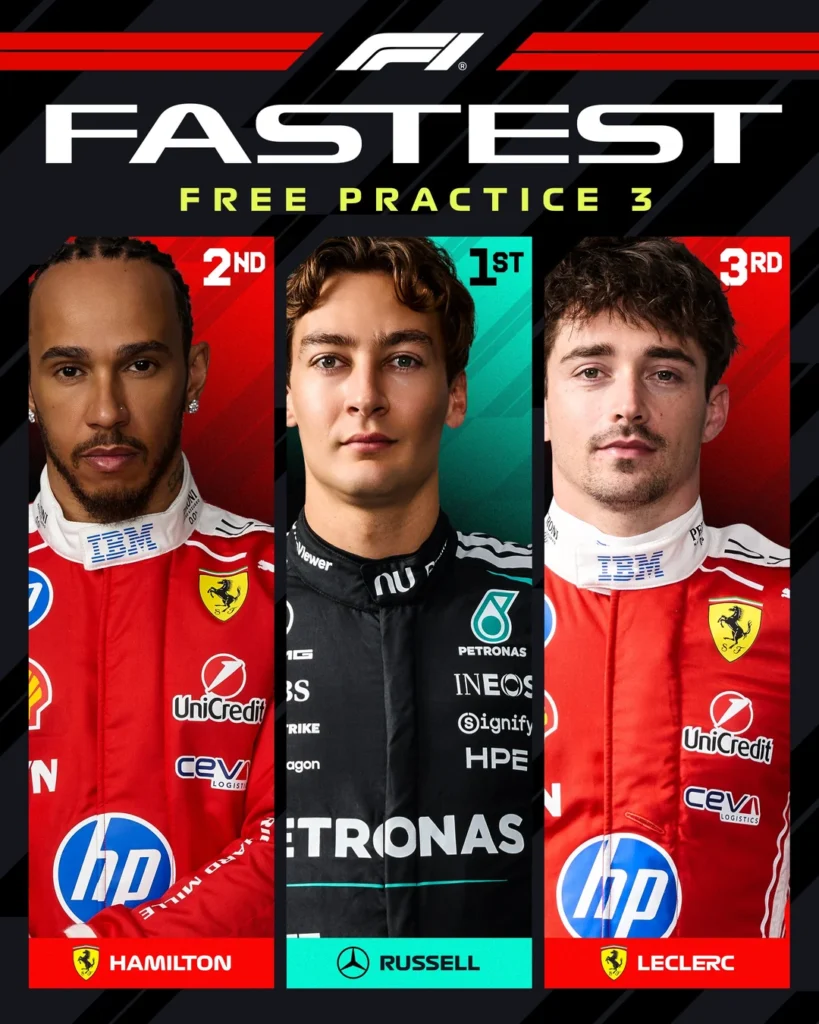
Russell set a 1:19.053 to finish the session fastest, with Lewis Hamilton second and Charles Leclerc third, forming a top three that immediately raised eyebrows in the paddock and across the fanbase. Behind them, Oscar Piastri, Isack Hadjar, Max Verstappen, Kimi Antonelli, Lando Norris, Gabriel Bortoleto, and Oliver Bearman rounded out the top ten.
But the headline story was the gap.
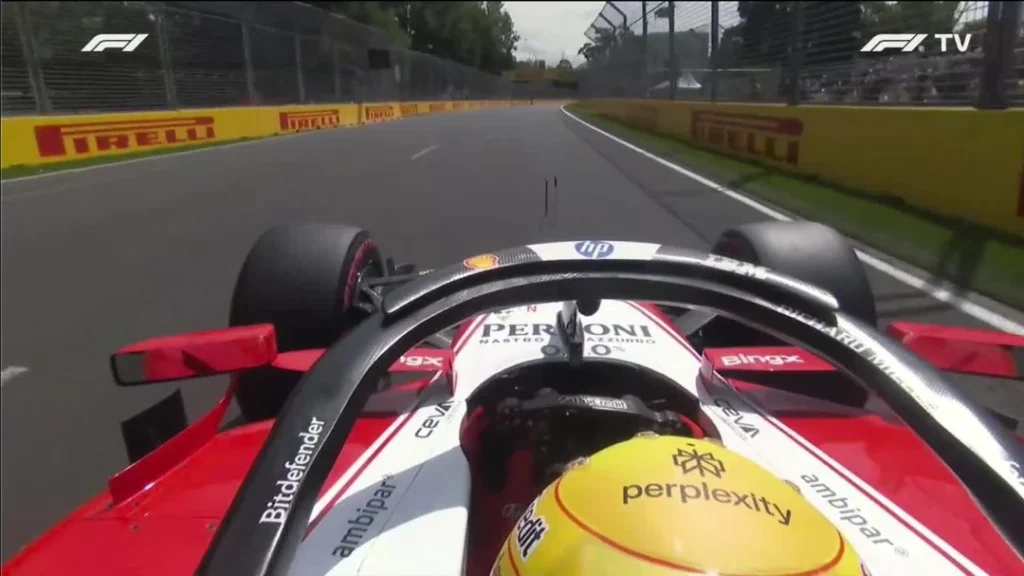
Russell’s lap was six tenths faster than Hamilton, a margin that appeared to come from incremental gains across the entire circuit rather than one standout sector. When Hamilton asked on the radio where the time had been found, his engineer calmly broke it down: two tenths in each sector. The explanation was simple, but the implication was not—Mercedes looked quick everywhere.
From the outside, it looked like the moment Mercedes finally stopped hiding its pace. Russell had spent much of the session circulating outside the top positions before suddenly delivering a blistering lap once the final runs began. The timing made the performance feel even more dramatic, with observers joking that the team had finally taken the “sandbags” off its car.
The data only fueled that narrative.
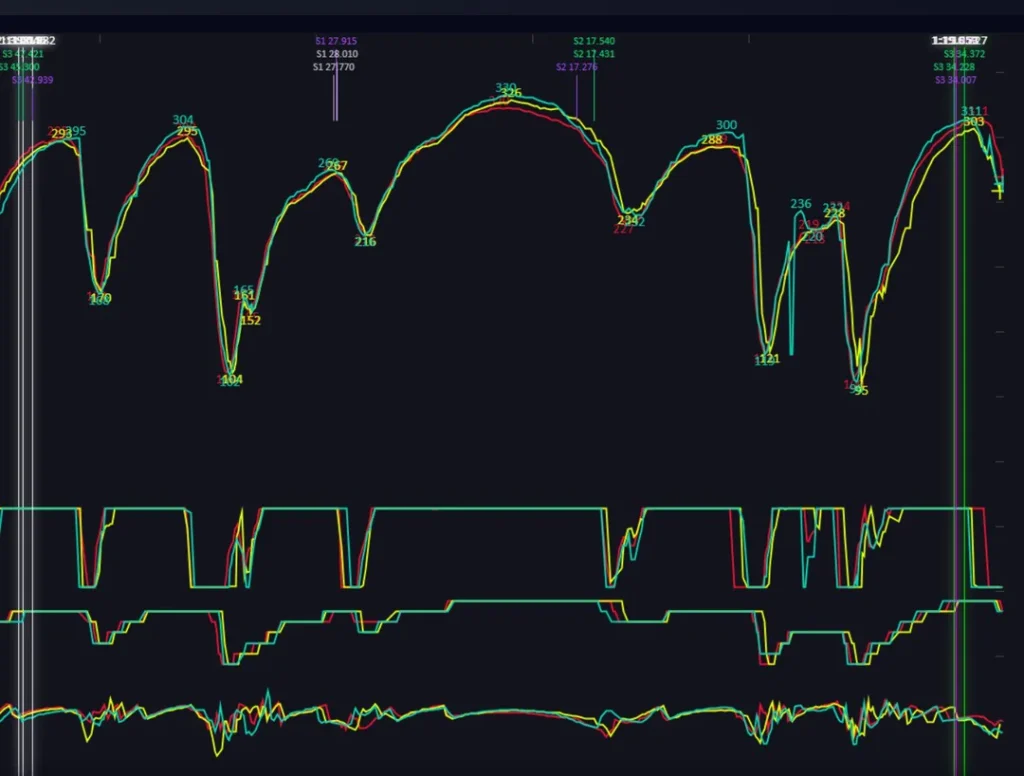
Telemetry comparisons from Russell’s lap appeared to show a significant advantage in straight-line speed and energy deployment. The Mercedes consistently reached higher top speeds and appeared to harvest less energy than rival cars, suggesting the team could deploy power more effectively across the lap. In simple terms, the car looked capable of maintaining speed at the end of straights without the energy limitations other teams were encountering.
That sparked plenty of speculation about whether Mercedes had uncovered a power unit advantage in the new regulations. Some analysis pointed to how the works team may simply understand the integration of its own engine better than customer teams, particularly when it comes to deployment strategies and software control.
Whatever the reason, Russell’s lap immediately shifted the tone heading toward qualifying. The performance had some comparing the situation to previous eras of Mercedes dominance, with concerns that the grid might be witnessing another period where the Silver Arrows start the season a step ahead of the field.
Antonelli Crash Halts Session
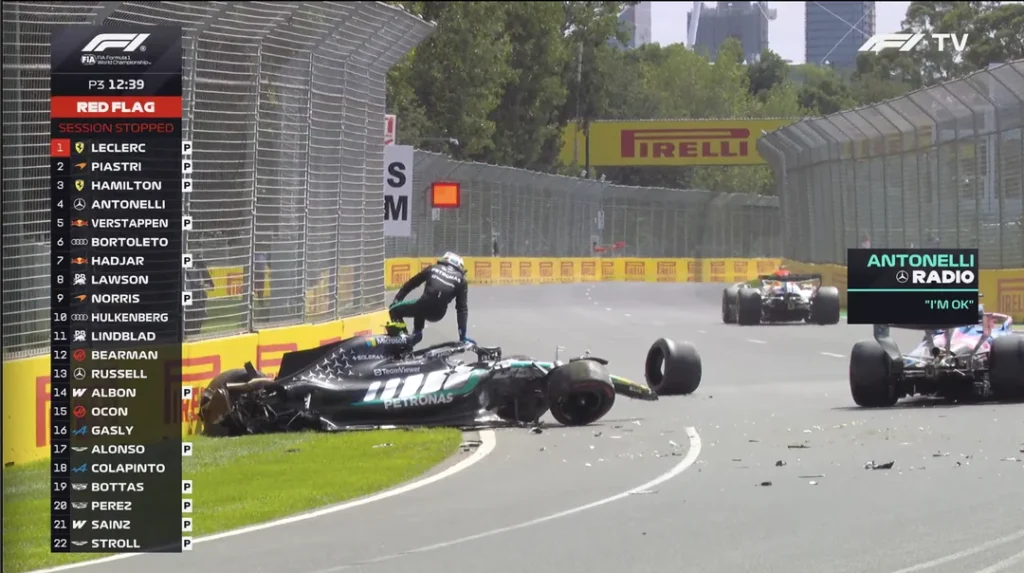
The session’s biggest interruption came when Kimi Antonelli crashed, bringing out a red flag late in the session.
The Mercedes driver confirmed over the radio that he was OK after the incident, but the car suffered heavy damage. The timing was particularly painful for Russell, who had been improving again when the red flag came out, with early sector times suggesting he might have gone even faster.
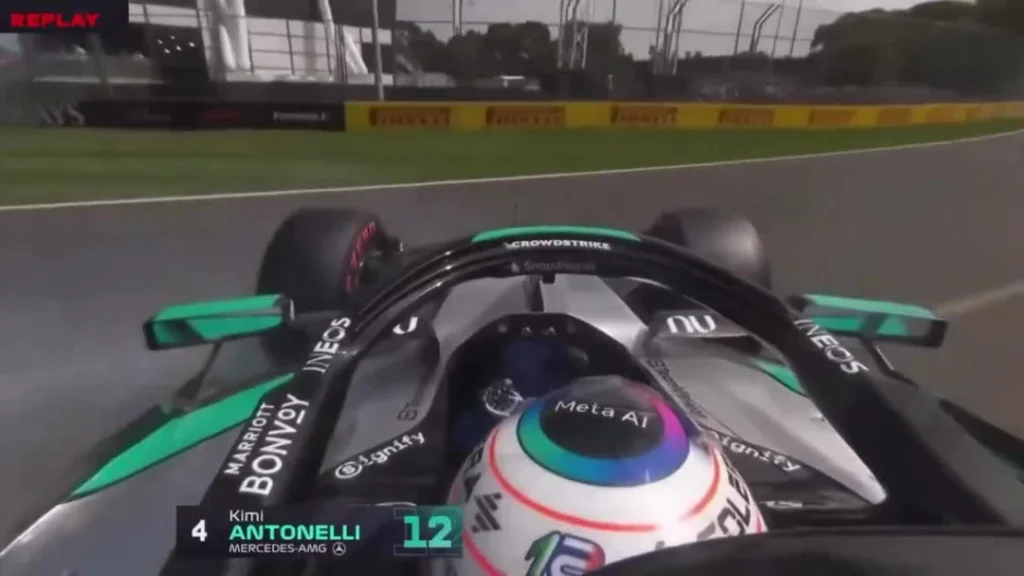
Antonelli’s crash also denied rivals the chance to respond to Russell’s benchmark lap, leaving the Mercedes time standing comfortably clear at the top of the order.
Despite the setback, Antonelli still ended the session seventh overall, though the extent of the damage raised questions about whether the team could fully repair the car before qualifying.
Hamilton Close Behind
Hamilton’s second-place result marked another encouraging session for Ferrari, with the seven-time world champion continuing to run near the front throughout the weekend.
While the six-tenths deficit to Russell looked dramatic on paper, the Ferrari still appeared competitive relative to the rest of the field. From a broader perspective, Hamilton’s pace suggested Ferrari could still play a role in the fight, particularly if race conditions tighten the margins.
At the same time, the scale of Russell’s advantage raised concerns about whether Mercedes might already have the fastest package over a single lap.
Aston Martin’s Difficult Start Continues
Elsewhere, Aston Martin endured another difficult session, with Lance Stroll unable to take part in FP3 due to a suspected internal combustion engine issue.
The Canadian’s weekend running has been extremely limited so far:
- FP1: 3 laps
- FP2: 13 laps
- FP3: 0 laps
With so little track time, Stroll entered qualifying preparation severely compromised. The lack of running also sparked discussion around the 107% rule, as Stroll had yet to complete a competitive lap anywhere close to the session leaders.
The reliability problems added to what has already been a challenging start to the season for the team.
Mercedes Sets the Tone
As the session ended, the story was difficult to ignore.
Mercedes looked fast, very fast.
Russell’s lap was not simply quick in one corner or sector. It was quick everywhere. Combined with the telemetry indications of a power and deployment advantage, it immediately triggered comparisons to previous seasons where Mercedes opened a regulation cycle with a decisive edge.
Whether that advantage holds once qualifying begins remains to be seen. Practice sessions can often exaggerate performance differences, and rivals may still have more to show.
But for now, the message from FP3 was clear.
Mercedes may have just revealed its hand, and the rest of the grid suddenly has a lot of work to do.