

Qualifying for the 2026 Australian Grand Prix delivered immediate chaos under Formula 1’s new regulations, producing one of the most dramatic opening sessions in recent memory. George Russell ultimately secured pole position for Mercedes, with teammate Kimi Antonelli alongside him on the front row and Isack Hadjar completing a surprising top three.
The result capped a session defined by crashes, mechanical issues, and unexpected performances throughout the field.
Mercedes Delivers After Preseason Doubts
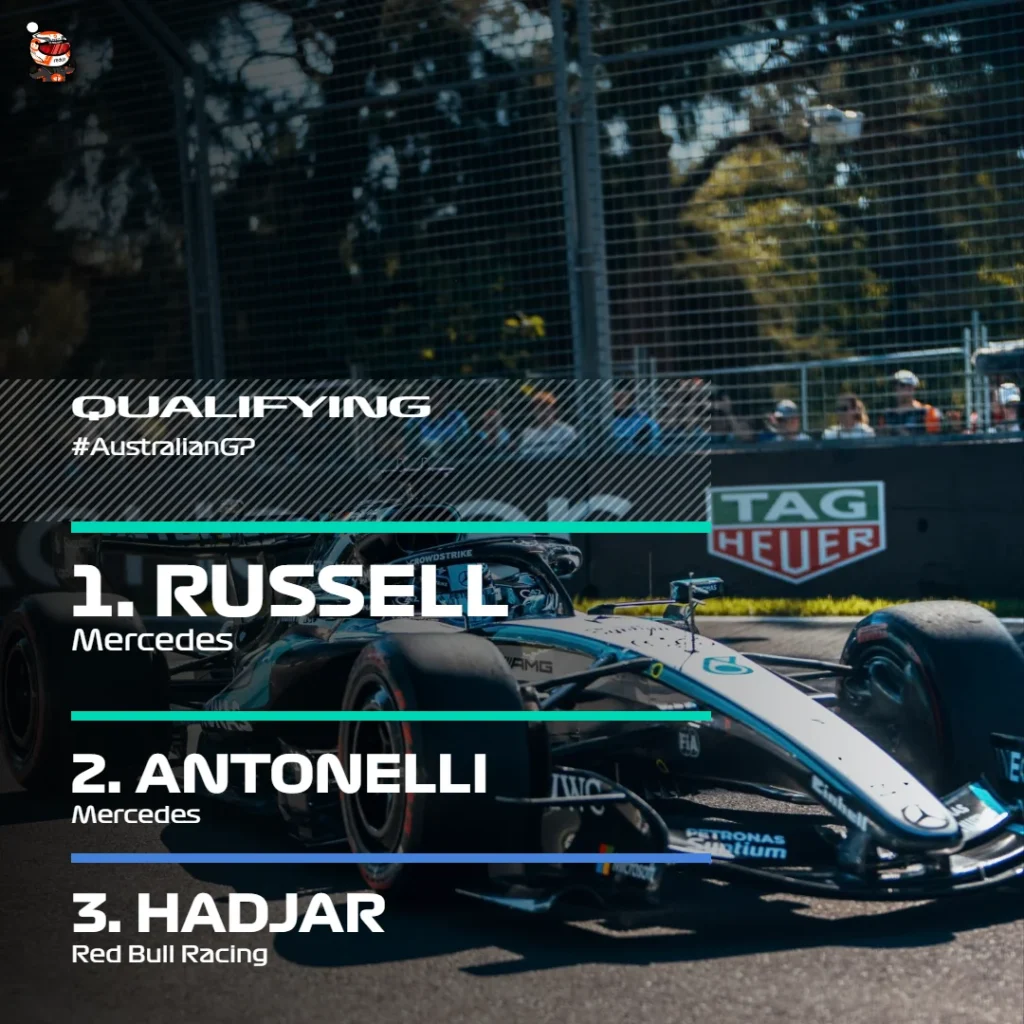
Mercedes’ pace had been questioned throughout testing and practice, but qualifying told a very different story. Russell delivered a dominant lap to secure pole while Antonelli completed a front-row lockout.
The turnaround fueled immediate speculation that Mercedes had simply been holding performance back earlier in the weekend. Russell’s performance, combined with the team’s straight-line advantage, reinforced the impression that Mercedes may have more in reserve than previously suggested.
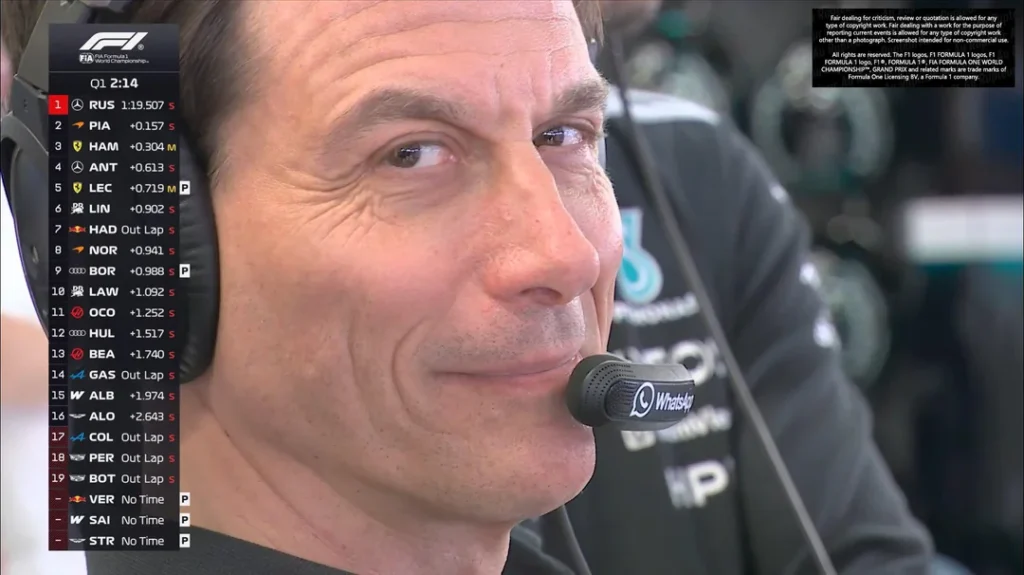
Even before the final runs in Q3, Russell looked confident. When Antonelli briefly threatened with a provisional pole lap despite running wide in places, Russell responded immediately with an even quicker effort featuring three purple sectors.
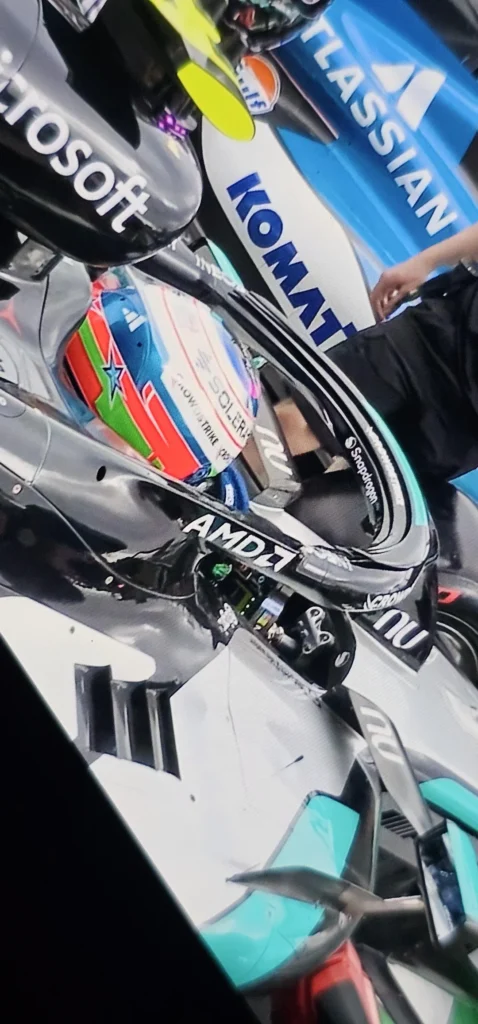
Antonelli’s session was impressive for another reason: he nearly missed qualifying entirely. Earlier damage had left his car requiring major repairs, but Mercedes mechanics managed to rebuild it in time for him to rejoin the session. The red flag caused by Verstappen’s crash ultimately gave the team the extra time they needed to complete the work.
The combination of garage execution and outright pace left the impression that Mercedes may have arrived in Melbourne far stronger than their earlier messaging suggested.
Verstappen Crashes Out in Q1
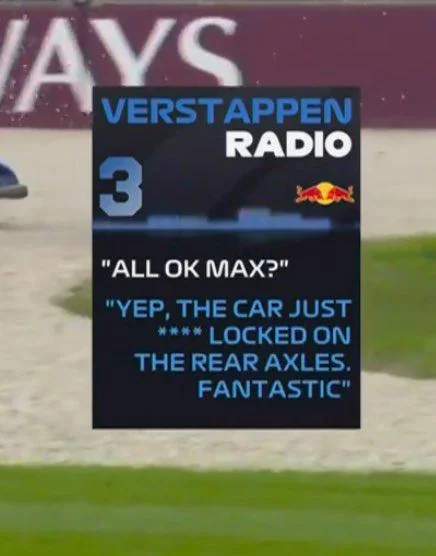
The biggest shock of the session came in Q1 when Max Verstappen crashed out at Turn 1.
Verstappen reported over team radio that the rear axle suddenly locked under braking, sending the car into a spin and into the barrier.
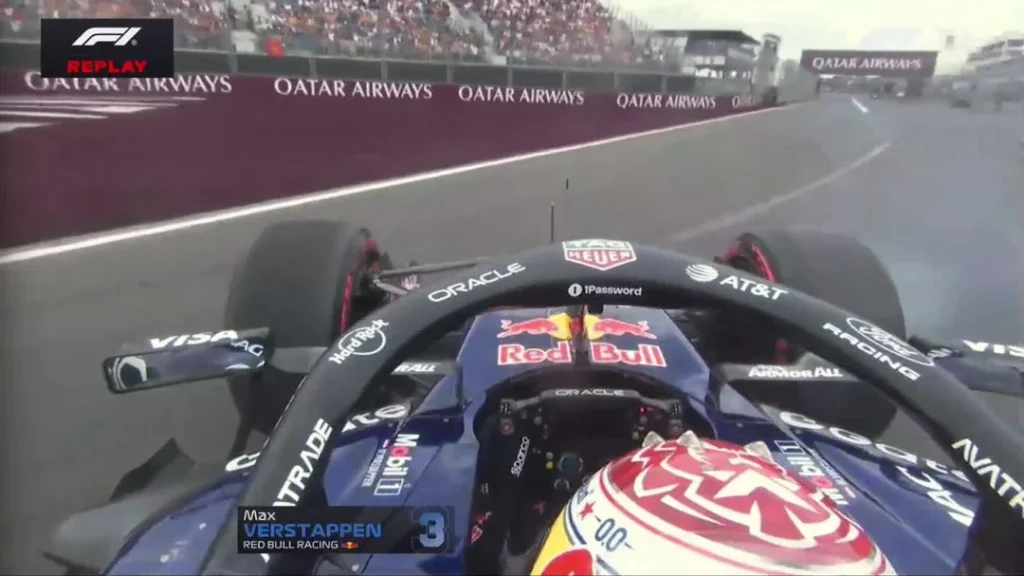
The loss of control was immediate and violent, with onboard footage showing the rear snapping suddenly as if the brakes had locked completely. Observers pointed to the possibility that aggressive energy recovery under braking contributed to the instability.
The crash ended Verstappen’s qualifying session immediately, leaving him without a representative lap time and placing him at the back of the grid for Sunday’s race.
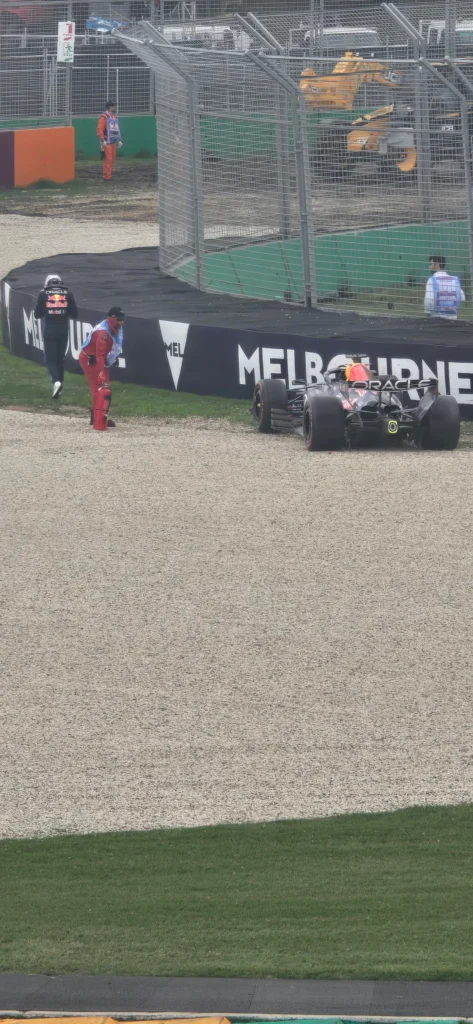
The incident also raised brief concerns about Verstappen’s health. He reported pain in his hand after the crash and visited the medical center for evaluation. However, checks confirmed there was no serious injury, and he returned to the paddock shortly afterward.
The crash also played an unexpected role in the rest of the session. The resulting red flag stopped the clock and gave Mercedes the time they needed to complete repairs on Antonelli’s car, indirectly shaping the final outcome of qualifying.
Hadjar Steps Up for Red Bull
While Verstappen endured one of the worst qualifying sessions of his career, Red Bull still found a headline result through Isack Hadjar.
Hadjar delivered a brilliant performance to qualify third, capping a weekend in which he had shown strong pace throughout practice.
The result was particularly striking given Verstappen’s absence from the top of the order. For a team that has long relied heavily on Verstappen to carry the results, Hadjar’s performance suggested Red Bull may finally have a driver capable of delivering when the team leader falters.
Hadjar’s calm and consistent approach across the weekend reinforced the sense that this was not a one-off lap but the culmination of steady performance.
Ferrari and McLaren Close Behind
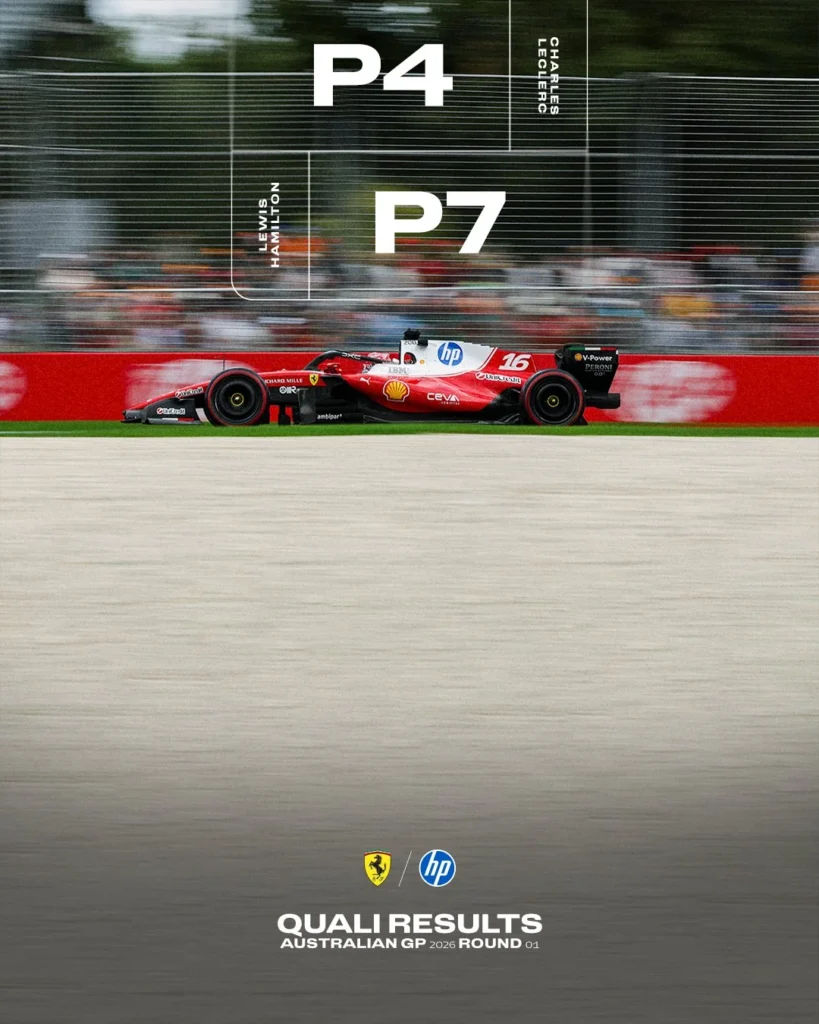
Behind the top three, the expected contenders filled out the next rows of the grid.
Charles Leclerc qualified fourth for Ferrari, ahead of Oscar Piastri and Lando Norris for McLaren. Lewis Hamilton placed seventh.
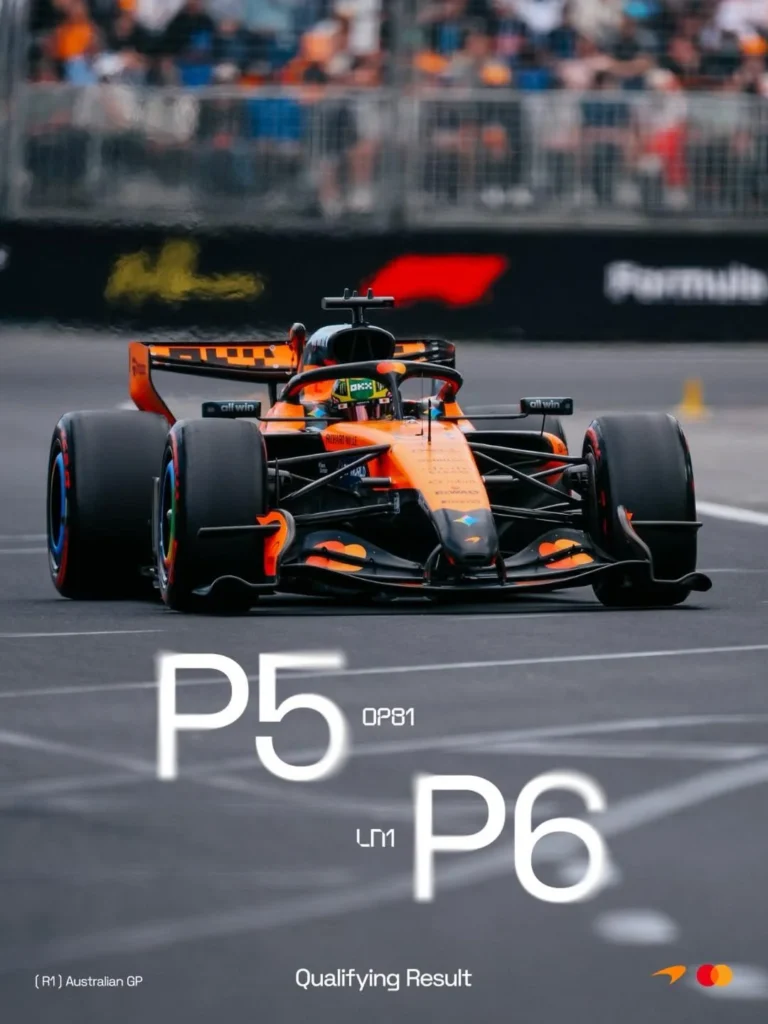
Ferrari’s session was complicated by power deployment issues during Hamilton’s runs. The seven-time champion reported repeatedly running out of power mid-lap, suggesting teams are still wrestling with the complexities of energy deployment under the new power unit regulations.
Across the grid, drivers were seen managing battery charge carefully, sometimes lifting earlier on straights to preserve energy for key sections of the lap.
These early issues highlighted just how sensitive the new systems appear to be. Even small errors in energy harvesting or deployment can dramatically affect performance.
A Chaotic Session Full of Incidents
Qualifying in Melbourne featured several unusual moments beyond the headline results.
At one point, Lando Norris ran over a Mercedes cooling fan that had been left on track. The fan shattered dramatically on impact, scattering debris and raising questions about how the equipment had been left on the circuit.
Elsewhere, Carlos Sainz did not take part in qualifying at all. Williams confirmed the team was unable to repair his car in time due to a power unit issue, forcing him to sit out the session despite attempts to prepare the car.
The session also included multiple red flags across practice and qualifying, contributing to a stop-start rhythm throughout the day.
Audi Impresses in First Qualifying With New Power Unit
One of the quieter success stories of the session came from Audi.
In the team’s first qualifying appearance with its own power unit, both cars showed competitive pace, reaching Q2 and securing positions around the edge of the top ten.
That result exceeded many expectations for the new manufacturer and suggested the team may already be capable of fighting in the midfield battle.
Final Starting Grid (Top 10)
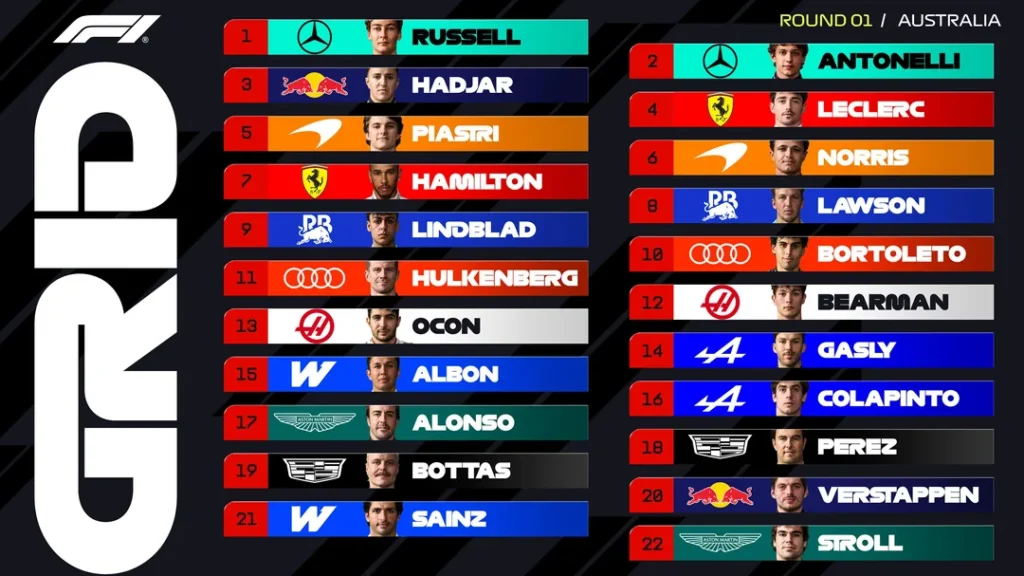
- George Russell
- Kimi Antonelli
- Isack Hadjar
- Charles Leclerc
- Oscar Piastri
- Lando Norris
- Lewis Hamilton
- Liam Lawson
- Arvid Lindblad
- Gabriel Bortoleto
A Dramatic Start to the 2026 Season
If qualifying in Melbourne is any indication, the new Formula 1 era may deliver unpredictability from the very beginning.
Mercedes appear to have arrived with formidable pace. Red Bull showed both brilliance and vulnerability in the same session. Meanwhile, new power unit systems are already creating technical challenges that teams are still learning to manage.
And with Verstappen starting from the back after his crash, Sunday’s race already promises a dramatic recovery drive to watch.