

Chinese Grand Prix delivered an eventful Sprint race at the Shanghai International Circuit, with early drama, technical talking points, and plenty of intrigue about the competitive order under the new 2026 regulations.
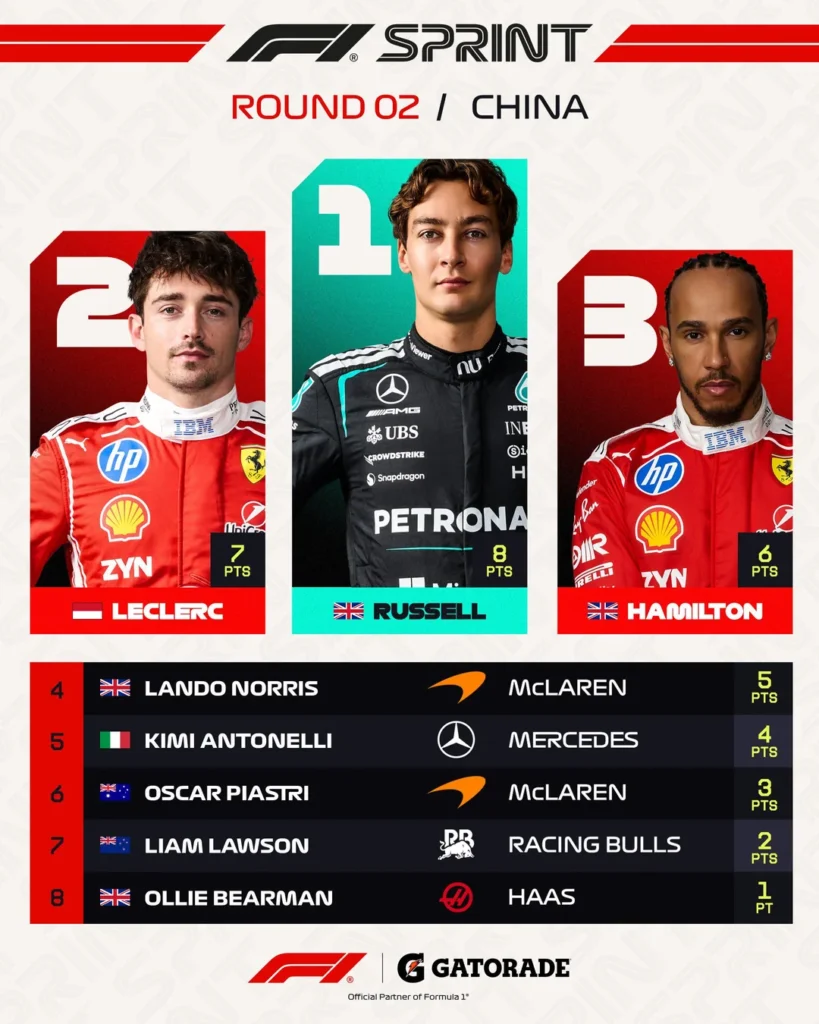
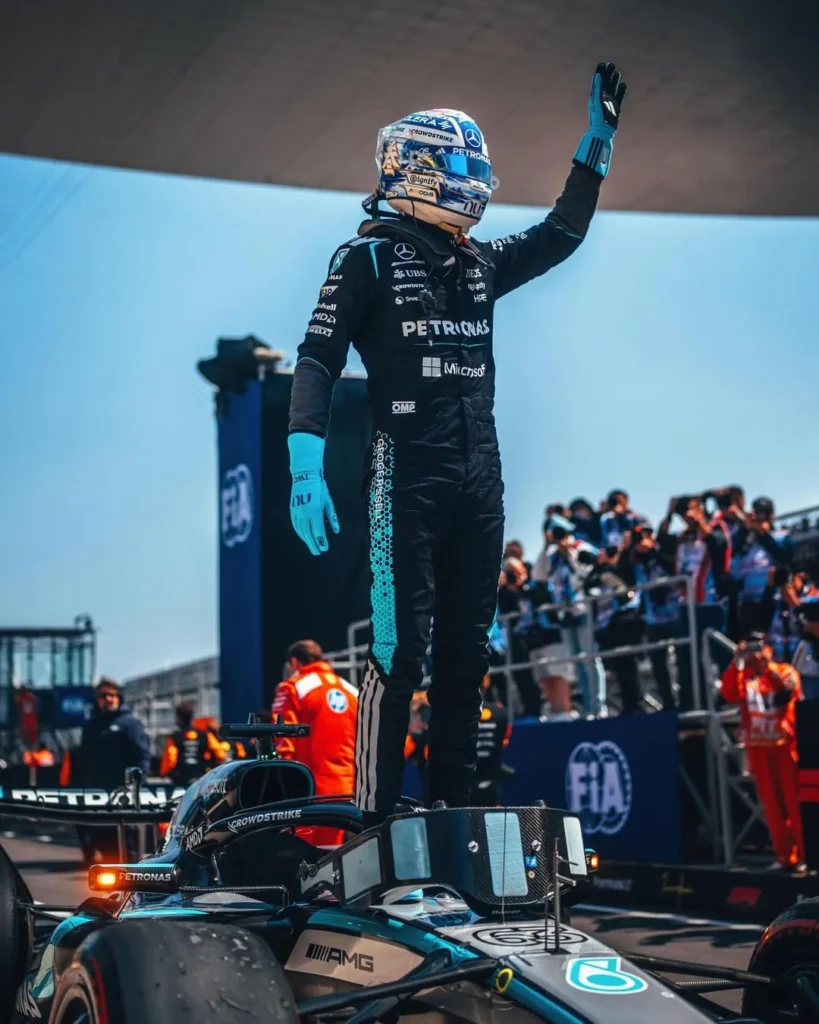
When the dust settled, it was George Russell who emerged on top, claiming his first Sprint win of the season and becoming only the fifth driver in Formula 1 history to record multiple Sprint victories.
Russell Leads a Mercedes Statement
The Sprint classification ultimately saw Russell take victory ahead of Charles Leclerc and Lewis Hamilton, with Lando Norris, Andrea Kimi Antonelli, and Oscar Piastri rounding out the next group of finishers.
Further down the points positions were Liam Lawson, Oliver Bearman, Max Verstappen, and Esteban Ocon.
The victory marked Russell’s second career Sprint win. Only four drivers have won more in the format’s history: Verstappen (13), Norris (3), Piastri (3), and Valtteri Bottas (2).
Russell reflected on the race afterward, highlighting both the start and the intensity of the opening laps.
“First Sprint race win of the season. Really fun few opening laps too! Well done team.”
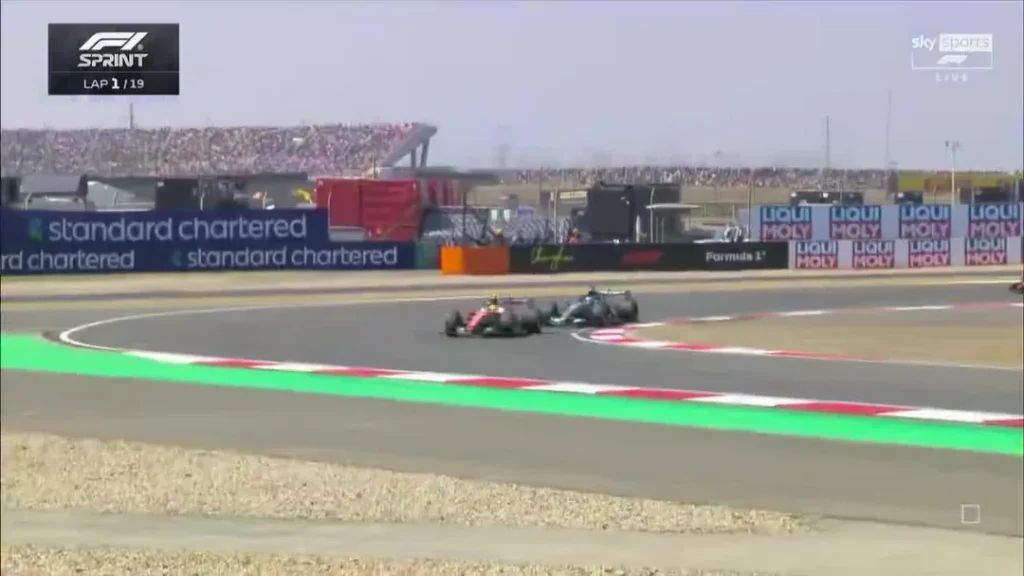
The first corners were particularly decisive. Russell initially held the lead off the line with a strong getaway, although Hamilton briefly threatened to challenge as the field charged toward Turn 1.
A Costly Start Error for Antonelli
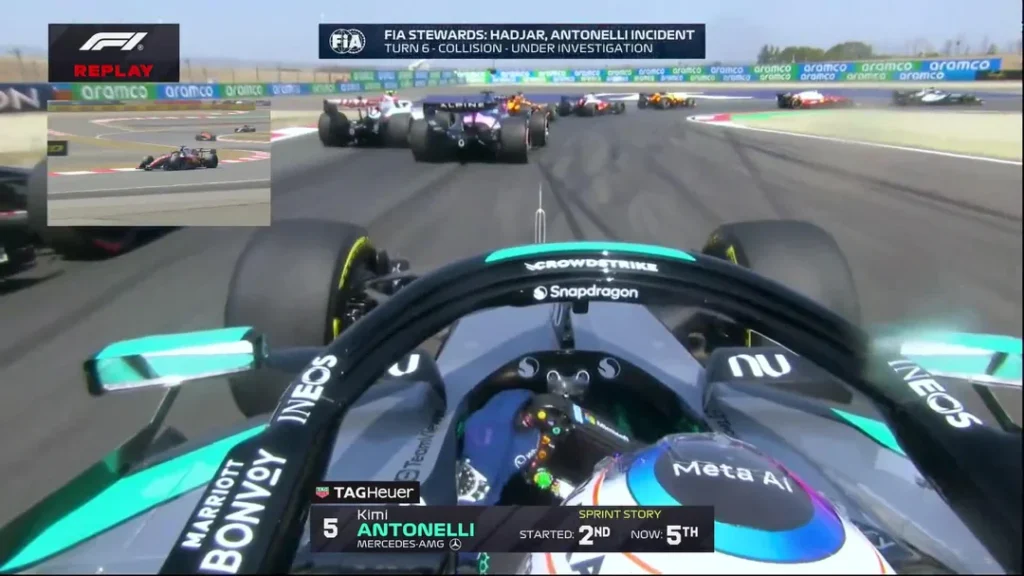
While Russell converted a clean start into control of the race, the other Mercedes story of the Sprint centered on Antonelli.
According to Toto Wolff, the rookie’s poor launch came down to a technical mistake during the start procedure.
“It was a bit of a mistake from Kimi. He wasn’t in the right mode at the start.”
That explanation aligned with what was visible from the opening meters of the race. Antonelli immediately lost ground, triggering a recovery drive that would ultimately become one of the race’s defining narratives.
Observers noted that Russell suffered no similar launch issues, reinforcing the sense that the problem was procedural rather than mechanical. In the tightly compressed Sprint format, even a small operational error can reshape the entire race.
Antonelli’s recovery effort later included aggressive attempts to regain track position, moves that ultimately resulted in a 10-second time penalty after an incident involving Isack Hadjar.
Hadjar questioned the urgency of the move after the race.
“I don’t understand why he’s so overexcited like that when he has a rocketship.”
The remark summed up a sentiment shared by many watching the Sprint unfold: the Mercedes looked fast enough that patience might have yielded the same result without the penalty.
Mercedes Pace Raises Eyebrows
Beyond the individual incidents, the Sprint further strengthened the impression that Mercedes may currently hold the strongest package under the 2026 rules.
Russell’s race pace, combined with Antonelli’s ability to regain positions despite setbacks, fueled the perception that the car has another level available when needed. Even when managing tire degradation, the Mercedes appeared capable of finding extra performance when required.
Hamilton himself hinted at the team’s underlying advantage earlier in the weekend.
“I’ve been with Mercedes for a long time so I know how it works there. In qualifying they have another mode that they can go to, a bit like party mode back in the day. Once they go to Q2 they switch that on.”
Hamilton’s comment was widely interpreted not as an accusation of anything illegal, but as an acknowledgement that Mercedes may have refined its energy deployment strategy to extract more performance during qualifying sessions.
Given Hamilton’s years inside the organization, the remark carried extra weight in the paddock.
Verstappen Struggles to Feature
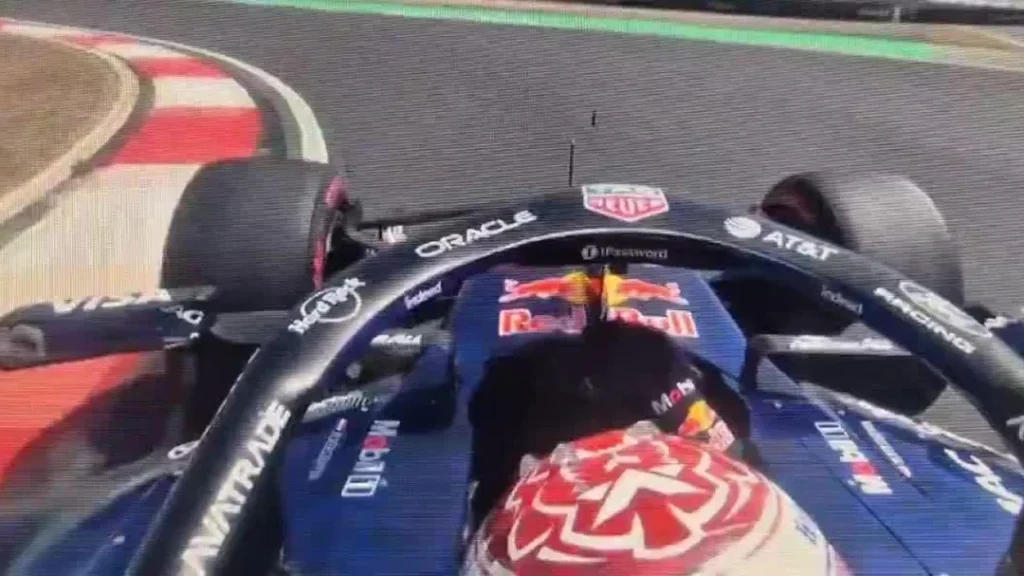
For Verstappen, the Sprint proved far more difficult.
Red Bull had already made several changes to his car under parc fermé conditions, including adjustments to the floor keel panel, rear brake duct seal, and chassis protection components. Despite those tweaks, the race itself never quite came together.
A poor launch immediately dropped Verstappen into traffic, and he ultimately finished ninth. In contrast to the dominant seasons that defined much of the early 2020s, Red Bull now appears to be navigating a more complex competitive landscape under the new regulations.
The Dutchman’s silence over team radio after the race only added to the sense that the team still has work to do to unlock the RB’s full potential this weekend.
Cadillac’s Reliability Questions Continue
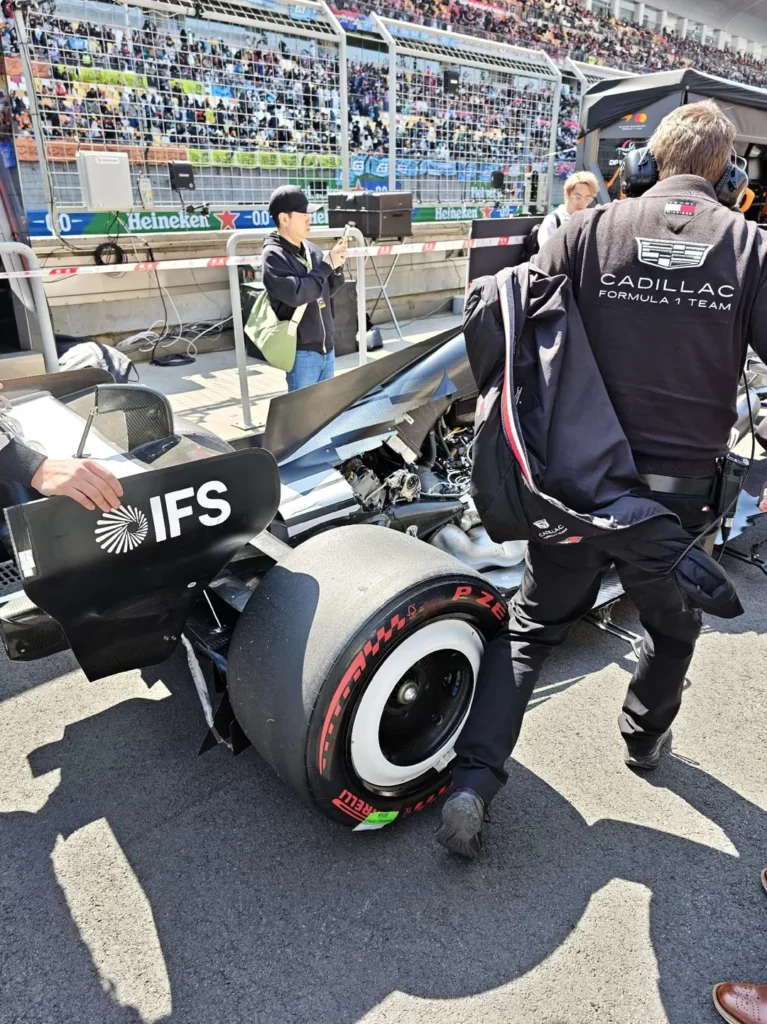
Elsewhere in the field, the Sprint raised fresh questions about Cadillac’s durability.
Sergio Pérez crossed the finish line with significant damage to the engine cover on his car, with large sections of bodywork visibly missing by the end of the race.
The detached components even triggered a brief Virtual Safety Car period during the Sprint. It also continued a pattern that has begun to emerge during the early part of the season: Cadillac cars shedding pieces of bodywork during races.
Whether the issue stems from early-season reliability challenges or simply race damage remains unclear, but it has already become a notable subplot for the new entrant.
A Sprint That Raised More Questions Than Answers
The 2026 Chinese Grand Prix Sprint ultimately provided more than just a result. It offered a glimpse into the evolving competitive order under the new regulations.
Mercedes appears to possess formidable pace, Ferrari remains firmly in the fight near the front, and Red Bull is still searching for the consistency that once defined its dominance.
As the teams prepare for the full Grand Prix distance on Sunday, the biggest question may not be who is fastest, but whether anyone can match the speed Mercedes demonstrated during the Sprint.