

Formula 1 finds itself in a moment of uncomfortable convergence—organizational shakeups, growing skepticism around its future technical direction, and an increasingly vocal chorus of drivers and observers questioning what the sport is becoming.
Across multiple storylines—from Red Bull’s internal restructuring to mounting criticism of the upcoming regulations—one theme is clear: F1 is wrestling with its own identity.
Red Bull’s Reset Meets Mounting Technical Scrutiny
Red Bull’s announcement of a restructured technical leadership—headlined by Ben Waterhouse stepping into an expanded Chief Performance and Design role, alongside the incoming Andrea Landi—signals a team attempting to recalibrate its internal architecture.
On paper, the move is about integration and performance acceleration. In reality, it lands against a backdrop of persistent external skepticism about where Red Bull actually stands technically.
There’s a growing belief that the team’s issues are not isolated but systemic. The idea that Red Bull may possess one of the more powerful power units on the grid, yet still trail rivals, has fueled a broader conclusion: performance in modern F1 cannot be compartmentalized. Engine, chassis, aero, weight, and reliability are no longer separable variables—they are an interconnected system where compromise is unavoidable.
That complexity is often lost in surface-level analysis. The notion of “second most powerful engine” has been repeatedly challenged by the reality that raw power does not equate to overall competitiveness. Driveability, reliability, deployment behavior, and packaging flexibility all carry equal weight, and Red Bull’s struggles appear to sit within that gray area.
At the same time, there’s a widening perception that Red Bull’s once-dominant infrastructure is eroding. References to correlation issues, an aging wind tunnel, and the loss of key personnel have fed a narrative of “brain drain,” with some expecting a multi-year rebuild cycle before the team can realistically return to the front.
Others push back, arguing this is simply the natural ebb and flow of Formula 1—a sport where talent circulates, hierarchies shift, and dominance is rarely permanent. But even within that defense, there’s an implicit acknowledgment: Red Bull is no longer operating from a position of unquestioned technical superiority.
The Regulation Debate: From Concern to Open Criticism
If Red Bull’s situation reflects internal transition, the broader conversation around F1’s future regulations reflects something more fundamental: a crisis of confidence.
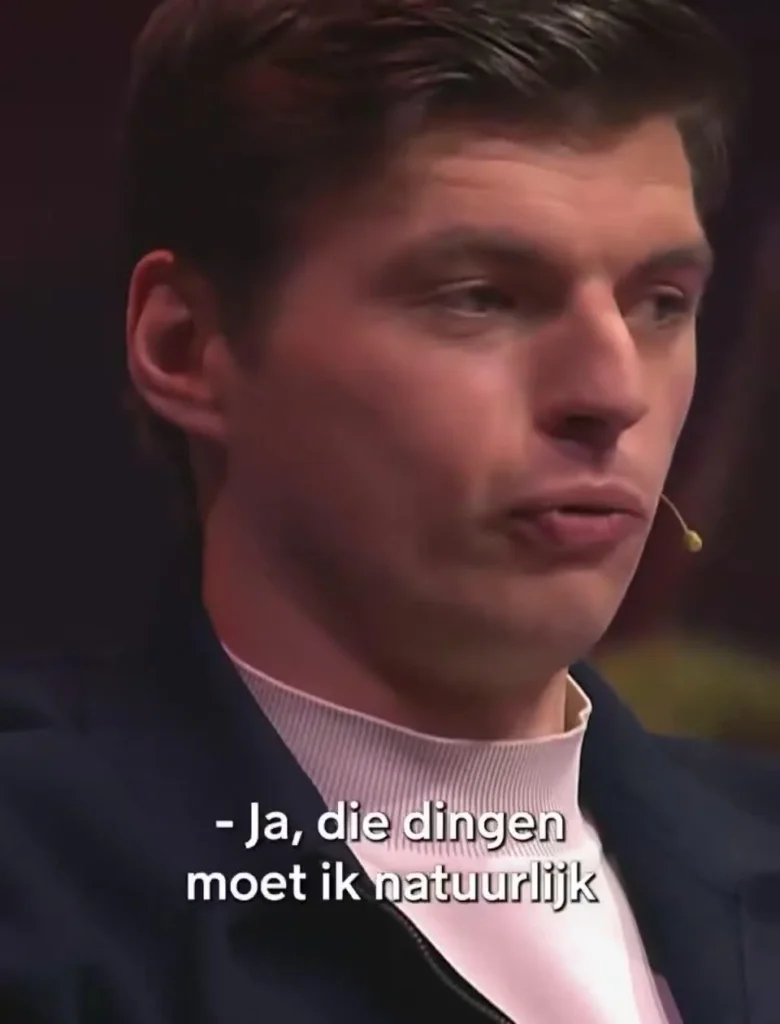
Max Verstappen’s blunt assessment—that “fundamentally something is wrong”—has become a focal point, but the sentiment extends well beyond one driver. The criticism is not about minor inefficiencies or tuning limitations; it’s about the core philosophy of the regulations themselves.
The central concern revolves around how energy deployment and hybrid constraints are shaping driving behavior. Instead of pushing flat-out through corners, drivers are increasingly forced into energy management cycles—harvesting, conserving, and timing deployment in ways that can make qualifying laps feel more like optimization exercises than pure performance runs.
That has led to a widely shared frustration: the idea that Formula 1 is drifting toward something that resembles controlled bursts of speed rather than continuous maximum attack. The suggestion that qualifying could devolve into something closer to a “drag race” is not entirely tongue-in-cheek—it reflects genuine concern about the direction of the sport.
Importantly, this criticism is not universally framed as a recent reaction to competitive struggles. There is a consistent thread pointing out that these concerns were raised well before current performance gaps emerged. The idea that Verstappen—or others—are only complaining because they are no longer winning is increasingly being challenged by evidence of long-standing unease with the regulatory trajectory.
At the same time, there is disagreement about where the root problem lies. Some argue the engine formula is the primary issue, describing it as overly complex and fundamentally flawed. Others believe the aerodynamic regulations are equally culpable, pointing to increased dirty air and the erosion of slipstreaming dynamics.
What is broadly agreed upon, however, is that these systems cannot be evaluated in isolation. Modern F1 design is a holistic exercise, and any imbalance—whether in energy systems or aero—ripples across the entire performance envelope.
A Divided Narrative: Drivers, Media, and Fan Interpretation
Layered onto the technical debate is a secondary conflict: how these criticisms are interpreted and amplified.
George Russell’s comments attempting to contextualize Verstappen’s complaints—drawing parallels to Mercedes’ porpoising struggles—have themselves become a flashpoint. The comparison has been widely contested, with many arguing that porpoising was a team-specific engineering issue, while the current concerns relate to regulation-wide constraints affecting every competitor.
This distinction matters. One is solvable within a team’s design philosophy; the other is embedded in the sport’s rulebook.
The discourse around these comments highlights a broader issue: the gap between what drivers say, how media frames it, and how fans react. There is a growing sense that nuanced positions are being flattened into headline-driven narratives, often exaggerating conflict or intent.
Repeated remarks are amplified, stripped of context, and recirculated, creating the impression of constant controversy—even when the underlying statements are measured or situational.
External Voices Add Pressure
The criticism is not confined to the F1 paddock. Pato O’Ward’s remarks—questioning the appeal of modern F1 machinery and contrasting it with the “raw” nature of IndyCar—introduce an external perspective that carries weight precisely because it comes from outside the ecosystem.
His framing is direct: the appeal of Formula 1 once lay in the visceral challenge of the cars themselves. The suggestion that modern systems introduce artificial elements—“flipping a switch” rather than purely racing—aligns with the concerns being voiced internally.
What makes this notable is the shift in tone. This is not a driver chasing an F1 seat; it’s someone openly questioning whether the current version of the sport aligns with what they value as a racer.
That shift reflects a broader sentiment: F1’s technical evolution, while commercially and technologically ambitious, risks drifting away from the qualities that define it as a pure racing series.
The Next Generation Still Circling
Despite the criticism, the pipeline into Formula 1 remains active—and complicated.
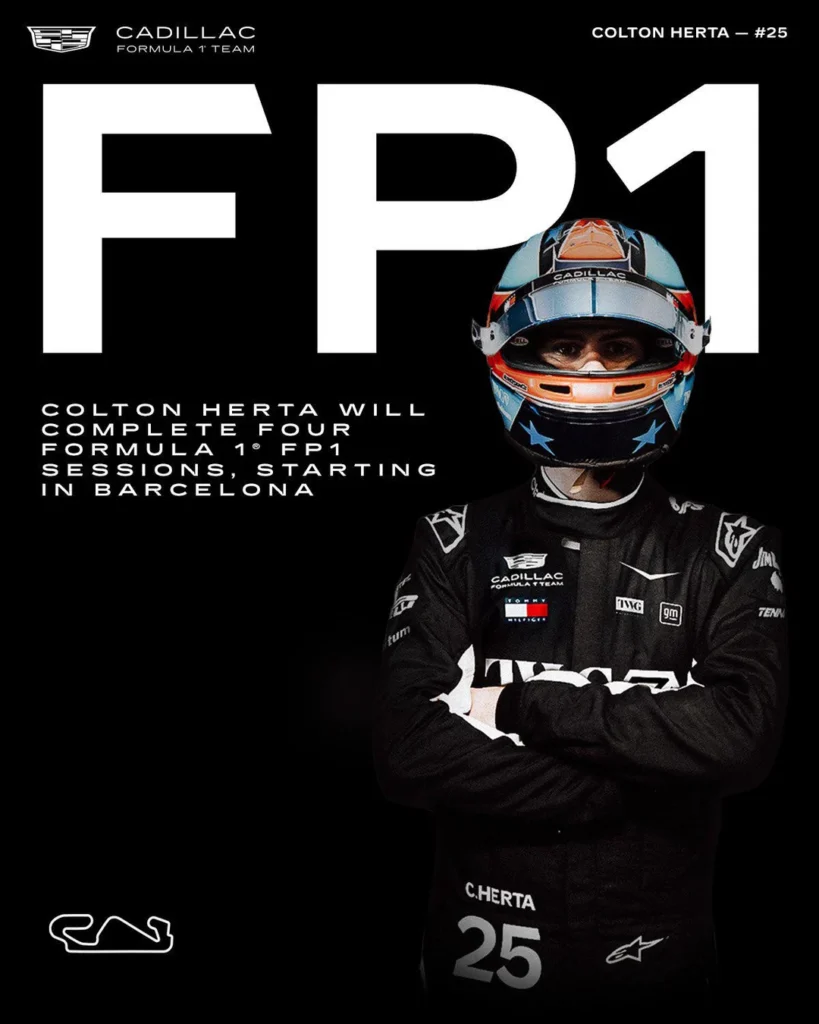
Colton Herta’s upcoming FP1 appearance with Cadillac highlights both opportunity and structural friction. The super license system, with its intricate points requirements and reliance on feeder series results, continues to shape career trajectories in ways that are increasingly debated.
There is growing skepticism about how effectively Formula 2 serves as a talent filter. Variability in machinery, reliability concerns, and the chaotic nature of midfield competition have led some to question whether standings alone accurately reflect driver potential.
At the same time, teams appear to be placing greater emphasis on internal evaluation—simulator performance, test sessions, and academy integration—rather than relying solely on junior series results.
Herta’s situation encapsulates that tension: a driver with proven ability in another discipline navigating a system that may not fully account for cross-series performance.
Verstappen: A Driver Defined by Racing Itself
Amid all of this, one constant remains: Verstappen’s relationship with racing.
Even outside the confines of Formula 1, his commitment is absolute—continuing to schedule race weekends wherever possible, filling gaps with sim racing, and maintaining a near-constant connection to competition.
It reinforces a key contrast at the heart of the current debate. The criticism of regulations is not coming from disengagement; it’s coming from someone deeply invested in the act of racing itself.
That distinction matters. It suggests the dissatisfaction is not with Formula 1 as a platform, but with how its current direction aligns—or fails to align—with the essence of what drivers value.
A Sport at an Inflection Point
Taken together, these storylines point to a sport in transition.
Red Bull’s internal changes reflect the shifting competitive landscape. The regulation debate exposes deeper questions about F1’s technical philosophy. External criticism and media amplification add pressure from both inside and outside the paddock.
None of this suggests immediate collapse or crisis. But it does indicate that Formula 1 is approaching an inflection point—one where incremental adjustments may no longer be sufficient.
Because the underlying question is no longer just about performance gaps or competitive balance.
It’s about what Formula 1 is supposed to be.