

Formula 1’s early-season narrative is already taking shape, and it stretches well beyond the on-track battle between Mercedes and Ferrari. From Toto Wolff declaring that Mercedes are “back,” to Ferrari preparing a potential future engine concept, to fan scrutiny of new broadcast graphics and even paddock life in Shanghai, the conversation around the sport has quickly broadened.
Together, these developments paint a picture of a championship that may be competitive on the surface, but one where teams, fans, and the sport itself are still adjusting to the realities of the new era.
Wolff: Mercedes “Back,” But Ferrari Is a Real Threat
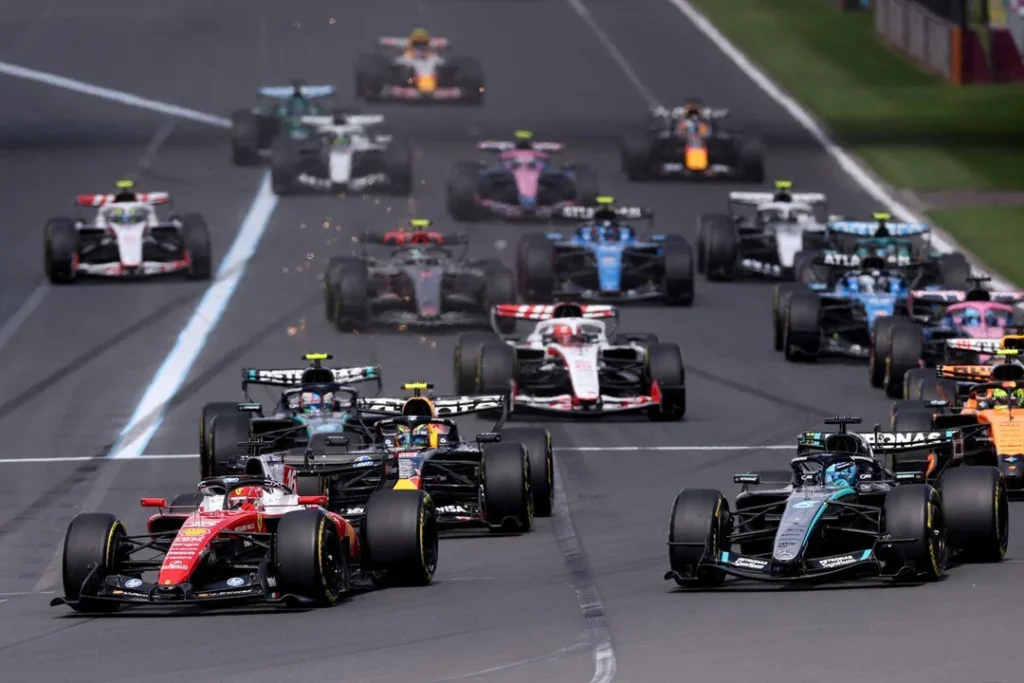
Mercedes team principal Toto Wolff struck an optimistic but measured tone after the race, acknowledging both the team’s progress and the strength of Ferrari.
“Before the race, people were saying, ‘well, you’re going to disappear in the distance’, and that wasn’t the case. We knew that they were strong on the starts and that’s what happened – it was an out-and-out battle between Charles and George at the beginning. It was a three-way fight between the two Ferraris and George, and eventually Kimi caught up.
For me, the prevailing feeling is now we have a fight on our hands with Ferrari. Most of all, there’s a certain degree of contentment that Mercedes is back.”
While Wolff framed the race as evidence of a close fight at the front, the broader analysis across the paddock suggests many observers are not entirely convinced the true competitive picture has been revealed yet.
Qualifying pace and race management both drew scrutiny. Mercedes appeared extremely strong in qualifying, with some viewing the gap as significant even if race results looked tighter. Meanwhile, during the race itself, the Silver Arrows were able to run long stints on very old hard tyres while maintaining competitive pace relative to Ferrari on newer rubber.
Late-race pace comparisons also raised eyebrows. As the closing laps unfolded, the gap between Mercedes and Ferrari fluctuated in ways that hinted the front-running cars may have been managing their performance rather than pushing flat-out.
In particular, Kimi Antonelli’s pace after clearing traffic suggested there could be more speed in reserve. Once he was able to run freely, he closed the gap to the leaders rapidly before the pace stabilized again.
The result has fueled speculation that Mercedes may still be concealing its full performance envelope, something the team has historically been accused of during dominant eras.
The theory is simple: if a team already has a comfortable margin, showing that margin publicly can invite regulatory scrutiny or accelerate rival development. Managing pace rather than obliterating the field keeps attention away while still securing results.
Whether that theory proves true remains to be seen, but the perception alone has already become a central storyline of the early season.
Ferrari Looking Ahead With a New Engine Concept
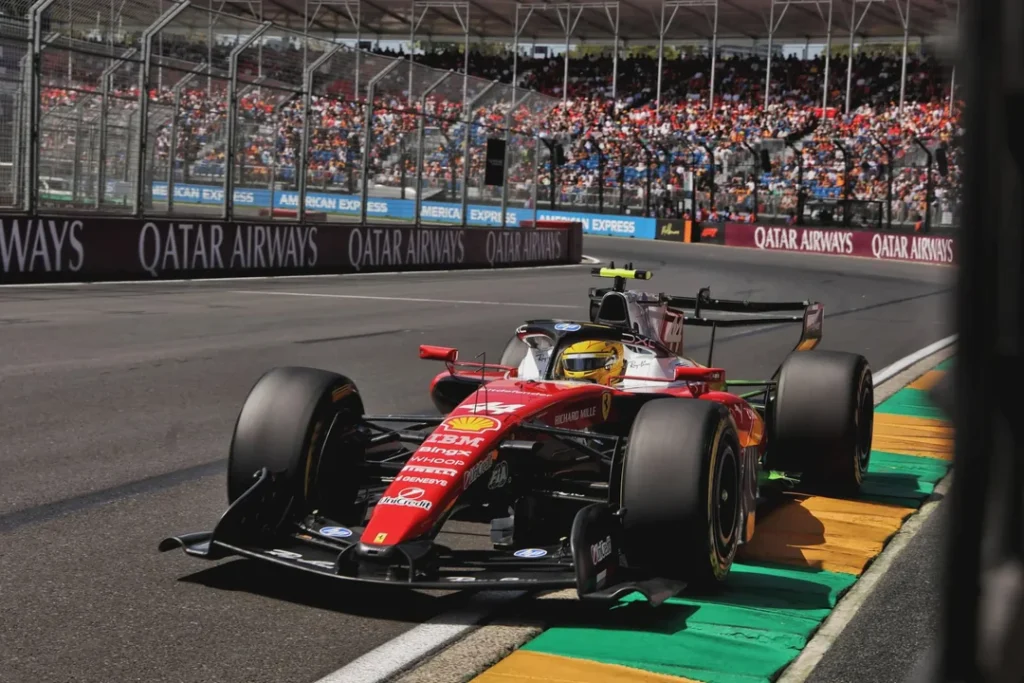
Even as Ferrari appears competitive in the current championship fight, the team is already thinking further down the road.
According to reports circulating within the paddock, Ferrari is pushing ahead with work on a new engine concept, targeted for introduction around 2027, or potentially earlier depending on how development evolves after Race 12.
The approach suggests Ferrari believes its current power unit concept may have limited development headroom compared with rivals. By beginning work on a new concept early, the team is attempting to create a larger performance ceiling for future seasons.
Importantly, the discussion centers on the engine architecture rather than the chassis or aerodynamic platform, which appears to be functioning well.
Ferrari has pursued similar strategies before. In past regulatory cycles, the team introduced entirely new power unit designs in an attempt to close performance gaps. Those efforts have produced both major gains and significant setbacks, reinforcing the inherent risk in radical development programs.
Some observers view Ferrari’s decision as a sign of confidence, taking a competitive car and attempting to unlock greater long-term potential rather than standing still. Others see echoes of past seasons where aggressive upgrades or concept changes failed to deliver the expected step forward.
There is also speculation that Ferrari’s planning may be influenced by potential regulatory shifts. If elements of the current competitive advantage, such as specific engine characteristics, were neutralized by rule adjustments, having an alternative concept already under development could become a major advantage.
In that context, Ferrari’s strategy reflects a broader reality of modern Formula 1: success often depends as much on anticipating regulatory changes as it does on maximizing current performance.
Williams’ Weight Problem: A Six-Race Wait
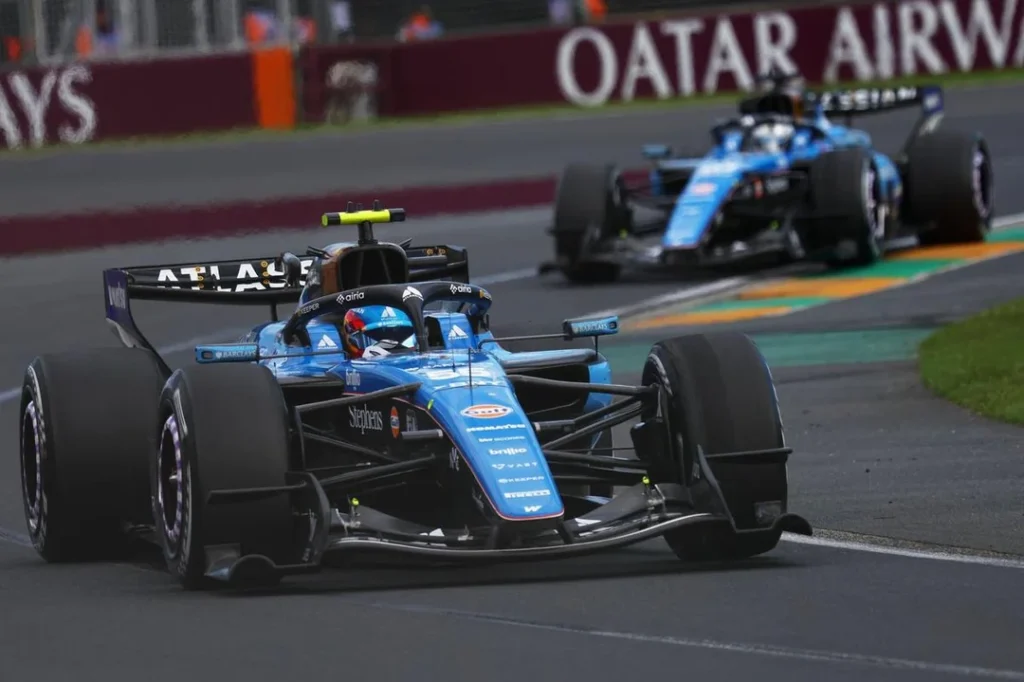
Elsewhere on the grid, Williams faces a much more immediate technical challenge.
Team principal James Vowles has confirmed that the FW48 is significantly overweight, by roughly 28 kilograms, and that resolving the issue will take longer than initially expected.
The timeline for fully addressing the problem is now estimated at around six races, roughly double the projection made during testing in Bahrain.
In Formula 1 terms, that weight penalty is enormous. Estimates suggest a deficit approaching a second per lap depending on the circuit layout.
What makes the situation more frustrating for observers is that Williams encountered a similar issue in the previous season. The team ultimately resolved its weight problems later in the year and briefly emerged as a “best of the rest” contender, but the early-season performance deficit proved costly.
Seeing the same issue appear again has raised questions about whether the team’s internal development processes are still stabilizing under Vowles’ leadership.
Weight problems in modern F1 cars can stem from multiple sources, structural reinforcements after crash-test failures, overly conservative design choices, or packaging compromises. Regardless of the cause, shedding 28 kilograms without compromising reliability or performance is a major engineering challenge.
For Williams, the next several races may therefore be about damage limitation rather than outright competitiveness.
F1’s Broadcast Data Controversy
While teams wrestle with technical challenges, Formula 1 itself has sparked debate among fans over how race data is presented on television.
A recent change to broadcast graphics reduced the precision of the gap display between cars from three decimal places to just one.
At first glance the difference seems minor, but the implications have quickly become clear. Because overtaking systems activate within one second of the car ahead, rounding times to a single decimal place can create misleading situations.
A gap of 0.950 seconds and a gap of 1.049 seconds could both appear as “1.0” on the broadcast graphics, even though one driver is actually within range while the other is not.
In a sport where thousandths of a second routinely determine grid positions, reducing the resolution of a key performance metric has struck many viewers as counterintuitive.
The change has also intensified broader criticism of Formula 1’s broadcast presentation. Fans increasingly expect more detailed information, not less, particularly in an era where energy management, battery deployment, and hybrid systems are critical elements of race strategy.
At the moment, viewers have limited visibility into those systems. Unlike the easily visible DRS flap of previous seasons, modern overtake modes tied to energy deployment are largely invisible to spectators.
That lack of transparency makes it difficult to understand when drivers are attacking, defending, or conserving resources, an issue that the new graphics change only highlights further.
Life in the Paddock: Even F1 Teams Go to Costco

Not all paddock stories are technical or political. Ahead of the Shanghai race weekend, fans spotted team personnel stocking up on supplies at a local Costco.
Photos circulating on Chinese social media showed staff from multiple teams shopping in bulk for the weekend’s operations, an amusing reminder that even the world’s most technologically advanced racing series still relies on very practical logistics behind the scenes.
The sightings sparked a wave of humor and speculation about how paddock life works during long international race trips.
Some joked that perhaps one person in the paddock holds the Costco membership while everyone else relies on them for access. Others imagined hypothetical partnerships between racing teams and Kirkland-branded components.
The jokes even extended to power units, with mock suggestions that Formula 1 teams could simply purchase replacement engines from warehouse shelves if reliability issues arise.
The lighthearted moment reflects something fans often forget: behind the multimillion-dollar technology and engineering arms race, Formula 1 teams still operate as traveling organizations that must feed, supply, and support hundreds of staff members every race weekend.
A Championship Still Taking Shape
Taken together, these storylines highlight how much uncertainty still surrounds the early phase of the season.
Mercedes may be competitive again, but whether the team is truly level with Ferrari or quietly holding back remains an open question.
Ferrari appears capable of fighting for wins today while already planning its next technological leap for tomorrow.
Williams faces a fundamental engineering challenge that could define the opening stretch of its season.
And outside the garages, Formula 1 itself is still refining how it presents one of the most data-driven sports in the world.
For now, the championship narrative remains fluid. But if the early signs are any indication, the battle between Mercedes and Ferrari, and the broader technological arms race behind it, could define the season ahead.