

Formula 1 spent an enormous amount of time wondering where Max Verstappen would go next.
Mercedes? McLaren? Retirement? Somewhere outside Formula 1 entirely? The answer, apparently, was the place he was already at. Oracle Red Bull Racing has announced that Verstappen has signed a contract extension through the end of 2030, adding another two years to a deal that previously ran through 2028. And while the length of the contract is significant, some of Verstappen’s comments surrounding the announcement make the endless speculation about his future look very different in hindsight.
Because Verstappen says he wasn’t particularly close to joining another Formula 1 team. He was closer to leaving Formula 1 altogether.
“I think I was closer to retiring than changing teams,” Verstappen admitted.
And then he revealed something even more striking about his relationship with Red Bull.
“I told Dietrich before he died that my goal is to race for Red Bull forever.”
Maybe we should have just listened to him.
Verstappen and Red Bull could be a partnership for life
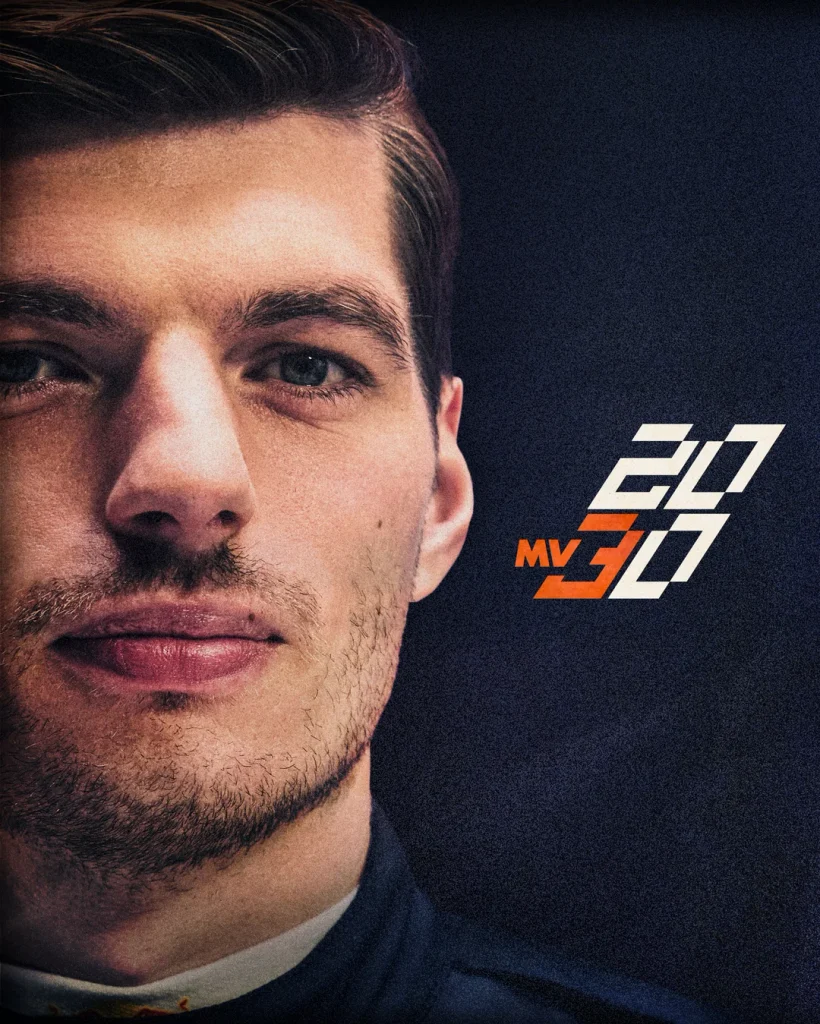
There has always been an assumption that if Red Bull became uncompetitive enough, Verstappen would eventually look elsewhere.
That seemed especially plausible as rumors repeatedly connected him with Mercedes. Every meeting, photograph and conversation involving Verstappen’s camp and Toto Wolff became another piece of evidence for the imaginary transfer announcement that never came. Instead, Verstappen has effectively committed the rest of his prime to Red Bull. He’s 28. His new contract runs through 2030. And considering he’s repeatedly talked about not necessarily wanting an exceptionally long Formula 1 career, it’s entirely possible this really does take him to the end.
The interesting part is that staying at Red Bull doesn’t necessarily mean staying exclusively in Formula 1. In fact, that might be exactly why this partnership works so well. We don’t know the details of Verstappen’s new contract, and the internet naturally responded to the announcement by inventing increasingly ridiculous salaries. But focusing exclusively on the number on his paycheck probably misses the point.
Verstappen already makes an enormous amount of money. What Red Bull can offer him that might be much harder to replicate elsewhere is freedom. He wants to race. Not attend endless marketing events. Not become a celebrity fashion icon. Not spend every waking moment selling Formula 1.
Race. We’ve already seen how seriously he takes sim racing and his growing interests outside Formula 1. Red Bull is also a company whose entire identity revolves around throwing money at people doing absurd things with fast machinery. That’s an unusually good match.
It’s easy to imagine negotiations being less about simply asking “How much will you pay me?” and more about determining what Verstappen is allowed to do outside Formula 1, how much support Red Bull provides his other motorsport projects and how much of the traditional F1 promotional workload he can avoid.
There is something wonderfully fitting about the possibility that one of the most valuable drivers in Formula 1 might ultimately have been retained with some combination of tens of millions of dollars, permission to race whatever he wants and a lifetime supply of identical Red Bull polos. Verstappen might genuinely be the easiest superstar on the grid to dress.
Red Bull shirt. Jeans. Sneakers. Done.
Maybe all the complaining didn’t mean what we thought it meant
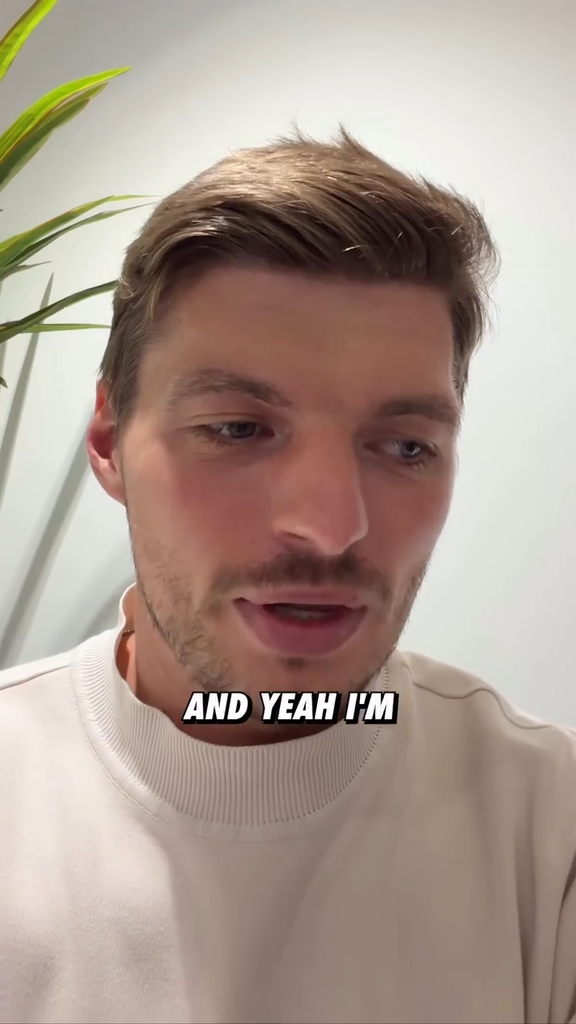
Verstappen’s radio messages have often been treated as evidence of a deteriorating relationship with Red Bull.
Bad car? Max complains. Bad strategy? Max complains. Something feels slightly wrong while he’s comfortably winning a race? Max will probably complain about that too.
But perhaps we’ve been interpreting that backwards. Verstappen being angry doesn’t necessarily mean he wants to leave. It may mean he still cares enough to demand that things improve. The dangerous moment for Red Bull might not be when Verstappen is loudly telling everyone what is wrong with the car. It could be when he stops bothering.
That’s an important distinction because there has been an enormous amount of projection surrounding Verstappen’s future. A frustrated radio message becomes evidence that he hates Red Bull. A difficult weekend becomes evidence that he’s looking at Mercedes. A meeting becomes evidence that a contract is coming. Meanwhile, Verstappen now says he was closer to retirement than switching teams and that he told Dietrich Mateschitz his goal was to spend his entire career with Red Bull. Those aren’t insignificant statements.
There are practical reasons for staying too. Red Bull knows Verstappen. Verstappen knows Red Bull. The organization has already built itself around maximizing one of the best drivers in Formula 1, and Verstappen enjoys a degree of influence and flexibility there that he couldn’t automatically assume he’d receive elsewhere. Moving teams might produce a faster car. It could also produce years of politics, culture clashes and frustration.
Why exchange enormous power within an organization you’ve helped build for the uncertainty of starting again?
Lando Norris would have welcomed Verstappen anyway
One destination that apparently wasn’t as realistic as some speculation suggested was McLaren.
Asked whether he ever gave much thought to Verstappen joining McLaren, Lando Norris said he knew about as much as everyone else.
“I never heard much more than what you guys did,” Norris said. “I mean I welcome anyone to be my teammate. Of course, a guy who’s as talented as him would always be cool to have as a teammate one day.”
There was, however, a rather important detail.
“But I know Oscar’s my teammate for quite a while yet, so I know nothing’s changing.”
So there goes another fun hypothetical. Norris versus Verstappen in identical machinery would be fascinating, but McLaren already has Norris and Oscar Piastri. Red Bull has Verstappen. Most of the major pieces seem increasingly locked into place. Which brings us to one unfortunate consequence of Verstappen’s announcement.
Silly season isn’t particularly silly. After all the speculation about potentially enormous moves, we may end up with remarkably little movement among the biggest names.
Netflix is going to have to work for those episodes.
Charles Leclerc isn’t interested in copying Verstappen
Charles Leclerc offered one of the more thoughtful perspectives on Verstappen’s success.
“Max has had an incredible career so far and has won four world titles. I haven’t yet, but I think every situation is different,” Leclerc said.
And then came the important part.
“I think it would be a mistake for me to try to follow in Max’s footsteps, especially because I have no idea what he does within the team to achieve this success. So it would be purely a matter of trying to imagine what it takes.”
That’s probably a better assessment of Formula 1 than most of what gets written about drivers online. We see perhaps a tiny fraction of what happens inside these organizations, yet confidently determine who provides better feedback, who motivates engineers, who understands development, who controls the political environment and exactly why one driver succeeds while another doesn’t. Leclerc is actually inside a Formula 1 team and races Verstappen every weekend.
And even he is essentially saying: I don’t know exactly what Max does inside Red Bull. That’s worth remembering. It also highlights why simply imagining Verstappen transplanted into Ferrari and automatically producing the same four championships is far too simplistic.
Would Verstappen have handled some of Ferrari’s problems differently? Almost certainly. Would Ferrari have responded differently to Verstappen? Maybe.
Would Verstappen simply have recreated Red Bull’s success in red? Nobody knows. Drivers don’t win championships in isolation. Neither do teams. The relationship between the two matters, and Verstappen and Red Bull have spent years developing one that works exceptionally well. Leclerc has to find his own version of that at Ferrari rather than cosplay as Verstappen.
The most important word in his comments might actually be “yet.”
Max has four championships. Leclerc hasn’t won one yet.
He clearly hasn’t given up on changing that.
Zandvoort is disappearing just as Verstappen commits to staying
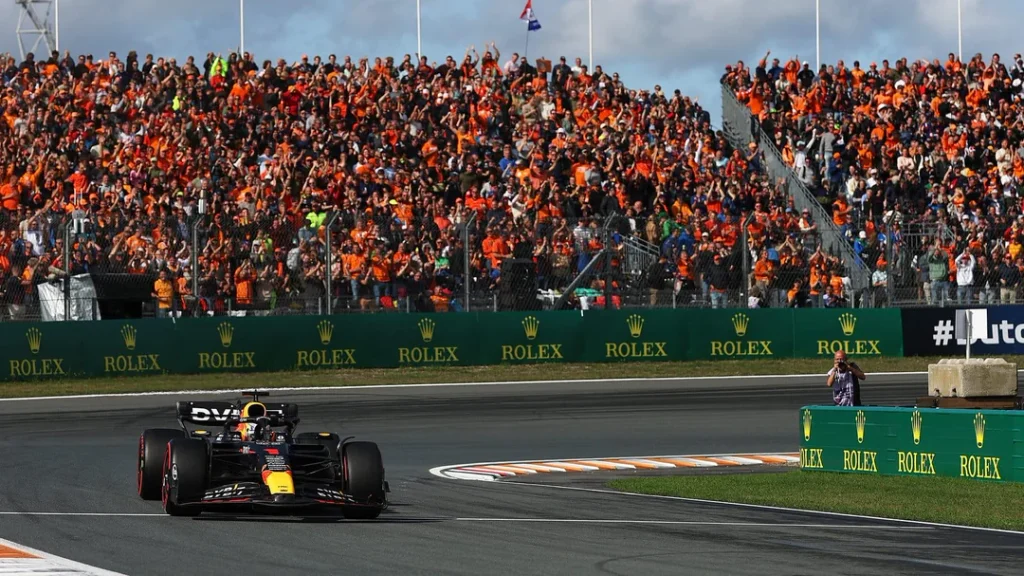
The timing makes the situation at Zandvoort particularly bittersweet.
Verstappen has committed himself to Formula 1 through 2030, but the Dutch Grand Prix is preparing for its final F1 race. And Zandvoort’s impending disappearance raises a much larger question about what Formula 1 actually wants its calendar to become. The event has been enormously popular. It has sold out. It produced one of the most distinctive atmospheres on the schedule. The banked corners give the circuit an identity completely different from many modern venues.
Perhaps most impressively, the article notes that 98% of spectators arrive by train, bicycle or on foot. For a permanent racing circuit hosting tens of thousands of people, that’s extraordinary. Some of it is enforced: ordinary visitors aren’t simply allowed to drive right up to the circuit. But that’s almost the point. Restricting cars only works if you create alternatives capable of moving huge numbers of people.
Zandvoort did. Trains can run constantly during the race weekend. Fans cycle significant distances to the circuit. Others park elsewhere and finish the journey by bike or on foot. Locals who initially wondered how the narrow infrastructure surrounding Zandvoort could possibly cope with an F1 weekend watched organizers make it work. There are other circuits that accomplish something similar. Montreal’s island location heavily encourages public transportation. Albert Park is well served by Melbourne’s trams. Monaco naturally has trains, walking and other alternatives. But 98% remains an incredible figure.
And none of it appears sufficient to save Zandvoort.
A sold-out Grand Prix apparently isn’t enough anymore
The argument surrounding Zandvoort ultimately comes back to money.
There is disagreement over exactly how profitable the Dutch Grand Prix has been. Claims that the event never made money have been challenged with figures pointing toward profits and dividend payments. But even if previous editions made money, the more important question is whether future editions would. Hosting fees have been rising. Additional investment would be required, including changes associated with accommodating an expanding grid. And Zandvoort doesn’t have the kind of government backing that allows some other races to treat an enormous Formula 1 hosting bill as part of a tourism or national-promotion budget.
That’s the uncomfortable reality. A privately operated Grand Prix has to make financial sense. A government-backed Grand Prix can justify losing money because the actual return might be tourism, international exposure or something less tangible.
And once those two types of promoter start bidding for the same limited number of dates, it’s obvious which one can tolerate the higher hosting fee. That’s how you can end up in the bizarre position where an event can sell essentially every ticket, create an exceptional atmosphere, solve one of motorsport’s biggest transportation problems and still disappear. It also explains why losing traditional European venues isn’t necessarily evidence that fans don’t want them.
The economics can simply become impossible. Zandvoort’s organizers also face a unique Verstappen problem. The modern Dutch Grand Prix returned amid the enormous popularity surrounding Max. If you’re negotiating another multi-year contract, you have to consider what happens if Verstappen retires halfway through it. Ironically, his new deal removes at least some of that uncertainty.
But apparently too late.
Norris spent his holiday becoming one with McLaren
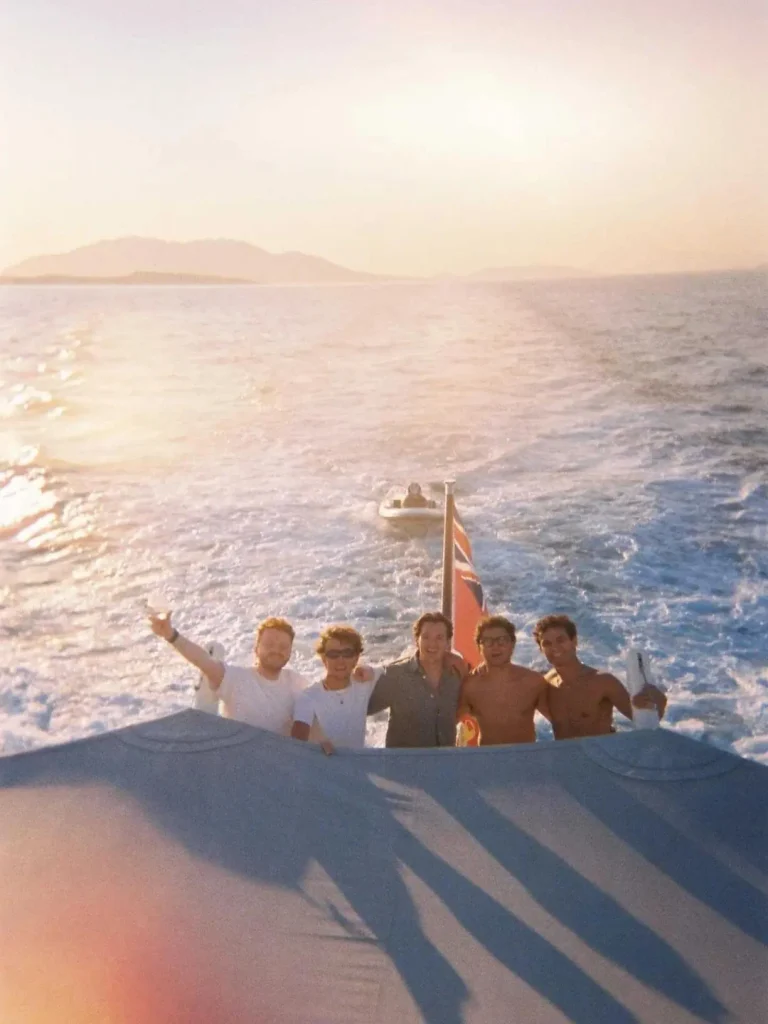
While Verstappen was apparently deciding to stay at Red Bull forever, Norris spent part of the break achieving previously impossible levels of McLaren brand integration.
Norris posted photos from what looked like a very enjoyable holiday involving yachts, sunshine and the kind of lifestyle that reminds everyone that being a Formula 1 driver has certain advantages. He also returned approximately the same color as his car. Forget Papaya Rules.
Norris apparently took Papaya Rules literally. The tan became enough of a story itself that the discussion about him potentially sharing a team with Verstappen was almost secondary to figuring out exactly how much sunlight one British man can absorb.
Oscar Piastri might want to introduce his teammate to Australia’s “slip, slop, slap” philosophy.
The holiday photos also offered another reminder of the strange world F1 drivers inhabit. Yachts, Mediterranean vacations and private travel aren’t exactly relatable summer-break content for most people. Although the appeal of a yacht for a famous driver probably isn’t merely luxury. It’s privacy. When you’re recognized almost everywhere you go, floating somewhere away from crowds has an obvious advantage.
Still, after seeing Norris’s tan, perhaps a little more time below deck wouldn’t have hurt.
Colapinto had a significantly worse break
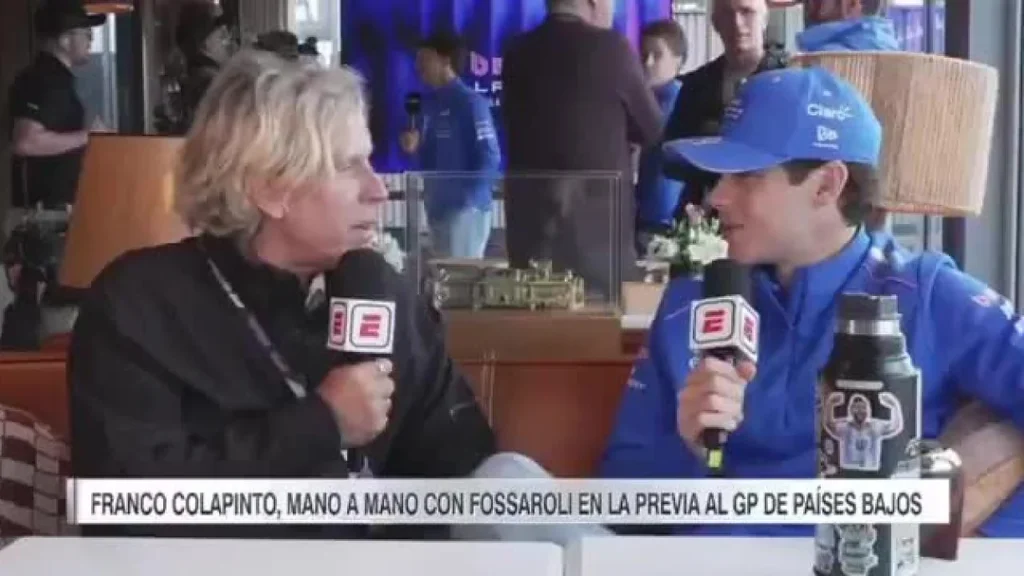
Franco Colapinto’s time away was considerably less enjoyable.
Colapinto revealed that he was robbed in Milan.
“They stole everything from me,” he said. “My wallet, passports, all my clothes. It was a disaster — I was left with nothing.”
That’s awful under any circumstances, but losing your passports while traveling adds an entirely different level of misery. The reaction among fans was notable because instead of disbelief that an F1 driver had been robbed in Milan, the prevailing response was essentially: Which F1 driver hasn’t been robbed in Milan?
People immediately shared their own stories of wallets, luggage and other possessions disappearing while visiting Italy, particularly around heavily touristed areas. There was even sympathy for the truly important casualty of the robbery: Colapinto’s mate supplies.
Apparently the thief might have acquired them without appreciating what they’d stolen.
Max Verstappen might have just killed the biggest storyline of the next four years
Ultimately, Verstappen’s extension removes one of Formula 1’s favorite recurring stories.
Every time Red Bull struggled, we could ask whether Max was leaving. Every time Toto Wolff appeared anywhere within the same postal code as the Verstappen family, we could speculate about Mercedes. Every frustrated radio message could become another clue.
Now Red Bull has him through 2030. More importantly, Verstappen is openly framing Red Bull as the team he wants to spend his career with rather than somewhere he’s reluctantly remaining because there isn’t a better option. That doesn’t guarantee everything will be peaceful.
This is Max Verstappen. He’ll complain. He’ll demand improvements.
He’ll probably tell the team the car is undriveable shortly before putting it somewhere it has no business being. But perhaps that’s simply part of the relationship. Red Bull gives Verstappen a team built around him, enormous influence, the possibility of pursuing racing beyond Formula 1 and apparently enough reason to keep doing something he has repeatedly suggested he won’t do forever.
Verstappen gives Red Bull one of the greatest drivers of his generation and perhaps the most natural brand ambassador the company could possibly design. And all they have to do is keep the racing interesting and the closet stocked with identical shirts. For all the speculation about where Verstappen would go next, the funniest answer may have been sitting in front of us the entire time.
Nowhere.