

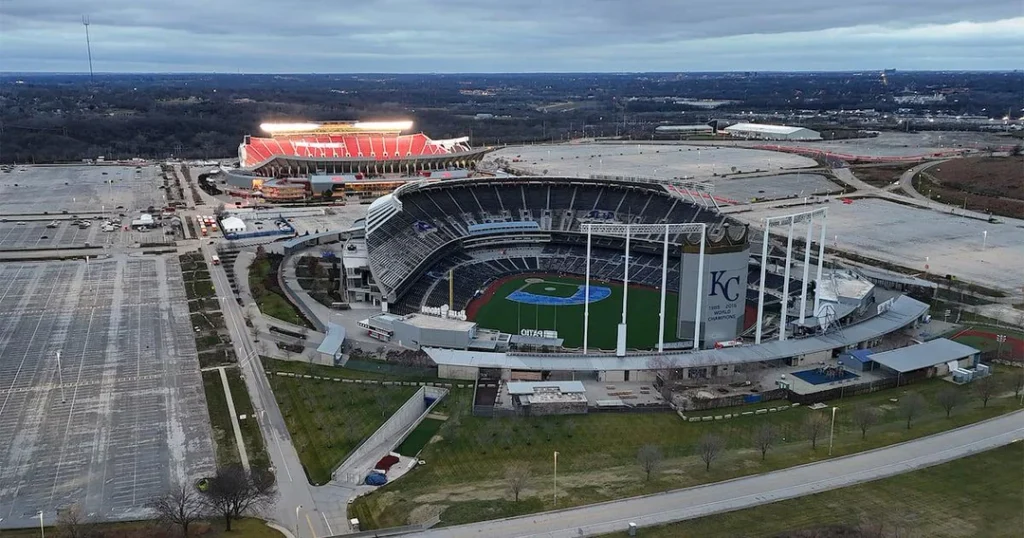
An IndyCar/NASCAR doubleheader at Kansas Speedway in May 2027 is an idea we would welcome. Another speedway race would be an appealing addition to the calendar, and pairing it with NASCAR could give fans a compelling reason to spend the weekend at the track. The question is whether that opportunity can be turned into an event that works for the teams as well as the audience.
The latest spark comes from The Marshall Pruett Podcast, with Pruett reportedly hearing encouraging information about the possibility. However, there is disagreement over whether his remarks described a likely addition or a hypothetical scenario. Kansas remains unconfirmed, and those comments should not be treated as an announcement.
Its absence from the published calendar does not necessarily close the door. A late announcement remains possible. But there is a considerable difference between finding room on a schedule and putting together a race weekend.
A Doubleheader Has Real Appeal
Our preference would be for IndyCar events to have enough strength and identity to stand on their own. Still, the appeal of sharing a weekend with NASCAR is difficult to dismiss.
For fans who enjoy both, the proposition is straightforward: more racing in one trip. For those primarily following NASCAR, an IndyCar race would offer another reason to arrive early or spend more time at the speedway. For IndyCar, it would be an opportunity to put its racing in front of people who already have an interest in motorsports. That does not guarantee crossover attendance or lasting interest. The schedule, ticket arrangements, and overall experience would determine how much value the pairing actually delivered. But the concept deserves consideration. Kansas would also give fans in the Kansas City area a local opportunity to watch IndyCar. That regional appeal matters. Wanting more ovals on the calendar is one thing; putting an event within reach of people willing to attend is what could help make that ambition sustainable.
We would be excited to see Kansas happen. We would also want it built around a realistic attendance case, rather than assuming enthusiasm for another oval automatically translates into a successful event.
The Calendar Gap Is Tempting
The gap between April 18 and May 15 presents an obvious opening. On paper, an early-May race could give IndyCar another event during a stretch without racing.
For the teams, though, those weeks are not simply unused time. A May 1 or May 8 date would put another race close to Indianapolis preparations, with the open test another consideration. Testing, travel, staffing, and car preparation all need to fit around the race schedule. Adding Kansas would mean finding capacity for another event during a period when attention is already turning toward Indianapolis. That is our biggest reservation about the proposed timing. The calendar may have room, but the people doing the work would still need enough time and resources to deliver it.
A late addition would make that planning more demanding. Teams would need a clear timetable and enough notice to organize personnel and preparation. The opportunity might justify the effort, but that effort should be part of the decision from the beginning.
NASCAR’s Weekend Has to Accommodate It
There is also the practical question of where IndyCar would fit within the NASCAR event.
With ARCA, Trucks, and Cup practice and qualifying identified as part of an already busy Saturday, finding suitable track time could be challenging. A doubleheader would need to give IndyCar enough room to operate while accommodating the other series. Pit-area space matters, too. Multiple series bring equipment, personnel, and competing operational needs. Moving a session around would not necessarily solve the broader challenge of fitting everyone into the venue. FOX could be an important part of making the opportunity attractive, but broadcaster interest alone would not settle those questions. A useful television window would need to align with a workable track schedule and a manageable commitment for the teams.
The appeal of a shared weekend is that it brings several audiences together. The complication is that it also brings several racing operations together. Kansas would need a plan that accounts for both.
Safety and Attendance Both Matter
Any potential return to a high-banked, 1.5-mile oval deserves a serious look at how the racing would work.
We would not reduce IndyCar’s absence from these tracks to a single explanation. Safety and attendance both belong in the conversation, and a viable Kansas event would need to address both. From a racing perspective, the track configuration and the behavior of the current aerodynamic package would be central questions. Concerns about close racing, dirty air, and downforce cannot be answered simply by saying that the calendar needs more ovals. At the same time, comparisons with Las Vegas are not enough on their own to establish whether Kansas would be suitable. The assessment would need to be specific to Kansas and the cars that would race there.
The timing ahead of a new vehicle also raises a fair question. If the hope is that the next car will make more speedway options viable, why push to add one immediately before that change? There could still be a case for racing at Kansas in 2027, but it would have to stand on its own merits. Expectations about a future car cannot substitute for confidence in the package available for this event.
The commercial argument needs the same scrutiny. A NASCAR pairing could help make the weekend more attractive, but another oval should be added with a credible plan for sustaining it. Getting Kansas onto the schedule would be the first step; giving it a reason to remain there would matter just as much.
We Want Kansas to Work
There is plenty to like about this possibility. Kansas would add another speedway race, bring IndyCar to an interested regional audience, and potentially offer strong value alongside NASCAR.
Our hesitation is about execution. An early-May date would ask more of teams preparing for Indianapolis. A crowded NASCAR weekend would require careful scheduling. The racing package would need to inspire confidence, and the event would need an attendance model that could support it beyond the excitement of an initial return. Those are substantial questions, but they are reasons to build the event carefully.
For now, Kansas remains a possibility rather than a confirmed addition. We would welcome it if the pieces can be put together. Another oval would be exciting; a well-planned oval event with a future would be even better.