

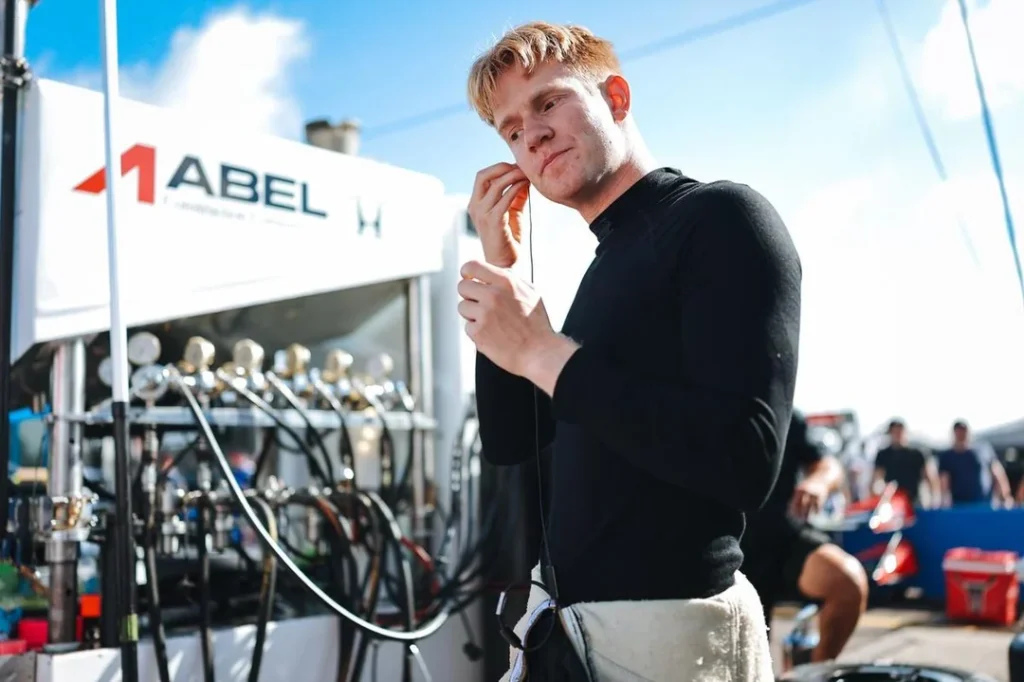
Jacob Abel’s Indy 500 entry and Álex Palou’s latest statistical milestone may seem like two separate stories, but together they capture the current shape of IndyCar unusually well. One is about the annual scramble to complete the Indianapolis 500 grid, where funding, timing, manufacturer choices, and realistic expectations still define who gets a shot. The other is about a championship leader whose excellence has become so routine that the conversation around him now swings between admiration, fatigue, meme culture, and outright dread over what another win might mean for the mood of the fanbase.
Abel Motorsports confirming Jacob Abel for the Indy 500 was received as the sort of announcement many expected, but that did not make it insignificant. It was immediately framed as another step toward filling out the traditional 33-car field, with the discussion quickly moving from Abel himself to what his addition means for the overall size and competitiveness of the grid. Some read Abel as the 32nd official entrant, while others treated Katherine Legge’s expected AJ Foyt Racing program as the likely piece that would bring the field to 33. Even without universal agreement on what was “official” and what was merely expected, the broader sentiment was clear: the 500 is moving toward a full field, but not toward the kind of overflow that produces bumping drama.
That reality sat underneath much of the reaction. There was some acceptance that 33 relatively competitive entries is perfectly fine for now, but there was also visible disappointment that the event no longer appears headed for the 35- or 36-car scenarios that create genuine qualifying jeopardy. The romanticism of Bump Day still matters to fans, and several reactions effectively treated a 33-car field as functional but a little unsatisfying. There was even a sense that any real return of bumping drama may have to wait until next year, when the final season of the current engines and chassis could inspire more one-off efforts and a more crowded field.
Abel himself became a useful stand-in for a much older IndyCar debate: who gets opportunities, and why. There was a practical argument made in his favor that is difficult to refute on its own terms. This is his family’s team, the car exists, the funding exists, and there is a seat to fill. In that framework, Abel does not need to clear some abstract meritocratic threshold beyond being available, funded, and attached to an operation willing to enter the race. That argument does not romanticize the system, but it does reflect how the sport actually works. The pushback, however, was emotional and familiar: people do not just want a full field, they want the strongest possible field, and that leads quickly to frustration over who is on the sidelines.
That is where the conversation broadened beyond Abel and into the economics of the series. Some fans were blunt that there are more competitive drivers who would be preferable in pure performance terms, but the problem is always the same one: funding. Others pushed back on the idea that money should be treated as a form of deservingness at all, arguing that it is a depressing commentary on the state of the sport when financial backing becomes the deciding factor in who gets a chance. The counterargument was equally blunt and equally rooted in motorsport reality: this has been part of racing for decades, and lamenting it does not change the fact that underfunded talent can remain sidelined while funded drivers keep cars on the grid.
Abel’s candidacy also reopened more specific frustrations about who is and is not getting opportunities in IndyCar. Linus Lundqvist and Callum Ilott were invoked as examples of drivers many fans would rather see in meaningful seats, while Sting Ray Robb and Nolan Siegel were brought up as symbols of a broader pay-driver ecosystem. That discussion then splintered into the mechanics of specific rides. One line of thinking held that leased seats are not really taking opportunities away from others because, without that money, the cars would not exist in the first place. Another line pushed back particularly on the Siegel example, noting that McLaren’s No. 6 had already existed and that the controversy around Siegel’s arrival was intensified by how quickly Théo Pourchaire was displaced after appearing to have secured the opportunity. Even there, though, the logic returned to funding: if a team cannot sustain an entry without outside money, then the funded driver is not merely replacing someone; he may be preserving the car’s existence.
Abel’s own prospects were discussed in much narrower and more race-specific terms. The most optimistic view was not that he would contend at the front, but that a Chevy-powered Abel effort could at least be functional enough to race respectably and qualify without drama. There was confidence from some corners that he is effectively guaranteed to make the field, which shifted the goalposts from survival to competitiveness. Others were less generous, openly hoping only that he would not run last. Still, there was also an attempt to separate Abel from the memory of his recent Coyne stint. That line of defense argued that Dale Coyne Racing’s lack of pace last year should not be placed entirely on Abel, and that Abel Motorsports, at least in its more familiar Indy NXT context, has usually fielded respectable equipment. Skeptics were unconvinced and wanted to know what benchmark that competitiveness was actually being measured against, but the broader point held: some of the pessimism around Abel is really pessimism inherited from prior machinery.
The manufacturer angle added another layer. Several reactions suggested that moving to Chevy could benefit Abel, especially in qualifying trim, with the bowtie camp perceived as stronger over one lap. But even that theory met resistance. Another view held that Abel’s previous struggles were not fundamentally a Honda problem at all, but a Coyne problem. In other words, manufacturer talk may matter around the margins, but the real determinant is whether the overall package is competent enough to let him participate credibly. That is a much harsher but probably more revealing way to frame expectations.
The lighter side of the Abel story centered on presentation. Fans immediately began dreaming about liveries, specifically hoping for the return of Miller High Life branding or the revival of the Sullivan throwback from last year that never got a proper race outing. There was also some disappointment that without a primary sponsor in place, any hope for meaningful merchandise at scale feels remote. That detail, minor on the surface, actually reinforced the overall character of the entry: this is less a polished commercial activation than a pragmatic effort to get on the grid. The excitement exists, but it is tempered by the knowledge that this is not a major, fully built-out program.
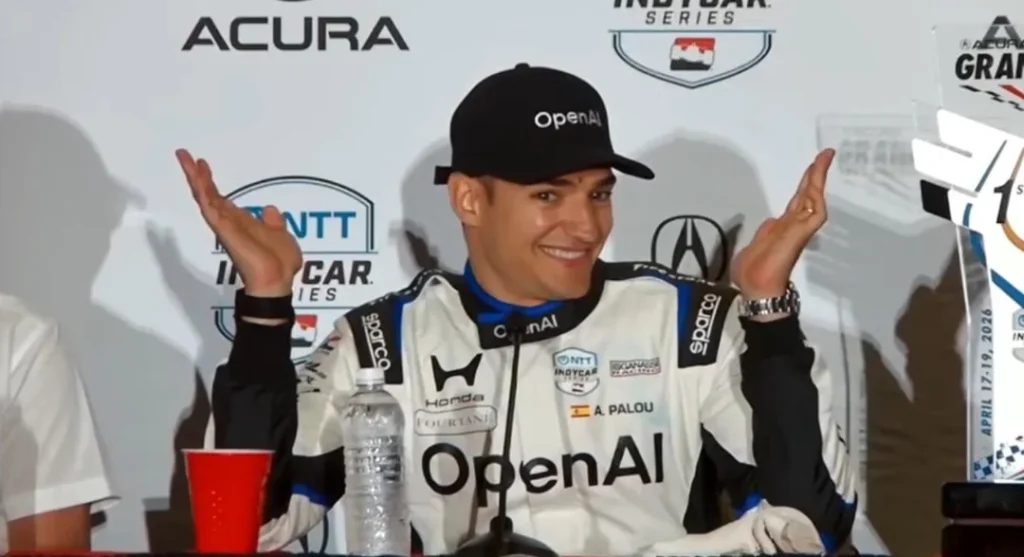
If Abel’s announcement illustrated the realities of getting into the biggest race on the calendar, the Palou discussion illustrated the realities of trying to beat the best driver in the series right now. The prompt for that conversation was almost comically simple: Palou’s face when told he has podiumed in 52 percent of his races with Ganassi. The reaction to that number was immediate because it feels absurd even by elite-driver standards. The consensus was not that Palou is personally disliked, but that his level of control is beginning to produce the same emotional response motorsport fans have always directed toward dominant champions. He has reached the point where people speak about him with a mix of awe and exhaustion.
That distinction mattered. The discussion did not really portray Palou as a villain. Quite the opposite: he was repeatedly treated as likable, personable, even disarmingly unbothered by the scale of his own achievements. The issue, as many framed it, is not that fans hate him. It is that relentless winning, especially when it comes through calm, methodical consistency rather than chaos or late-race theatrics, can flatten the emotional range of a series. His victories are not being described as controversial or ugly. They are being described as inevitable.
And inevitability is difficult for any fanbase to process in real time. Some posters compared the reaction to what other dominant figures have faced across motorsport and beyond: Max Verstappen, Lewis Hamilton, Jimmie Johnson, Kyle Busch, Jeff Gordon, AJ Foyt in earlier eras. The point was not that Palou is identical to any of them, but that fans almost always grow irritated when one competitor seems to reduce uncertainty too often. Dominance may be admired historically, but in the week-to-week moment it tends to be experienced as a threat to suspense.
There was also a strong argument that Palou is becoming a lightning rod for frustrations that are not entirely his fault. One view held that the real issue is not simply that he wins, but that the current product offers too little compelling action elsewhere when he escapes at the front. If the cars are heavier and the race behind the leader is not consistently dynamic enough for the broadcast to spotlight, then a Palou victory can feel more stifling than a similarly dominant win might in a more chaotic or visually active formula. One frustrated observation about extended highlights jumping from a restart to two laps to go captured that perfectly: it is not just that Palou keeps winning, it is that his races can seem to remove the oxygen from the edit.
At the same time, there was enormous respect for the machinery around him. Palou’s success was repeatedly described not as a one-man show but as the output of an elite operating system. Ganassi’s No. 10 team was praised as a dynasty-level unit, with Barry Wanser, Julian Robertson, Ricky Davis, the pit crew, and Chip Ganassi himself all treated as foundational to what Palou is doing. The case was simple and persuasive: Wanser makes the right calls, the stops are clean, the car is protected by a driver who does not overwork it, and the whole structure benefits from continuity stretching back decades. Palou’s brilliance does not diminish the team; it reveals just how complete the team is.
That is why attempts to diminish his success or turn it into a conspiracy of teammate favors were mostly brushed off as playful fiction rather than serious critique. The notion that Palou somehow “threw one away” for Scott Dixon was treated as a fun joke rather than a real interpretation, because the level of respect among top drivers makes that kind of pity gesture feel implausible and even insulting. Great teams do not operate that way, and great drivers would not want that kind of charity. The more serious discussion around Dixon focused instead on the timeline of his career. Some believe he can keep the seat as long as he wants it; others think age-related cracks are appearing, especially in qualifying. But none of that undermined the core point: Palou is not benefiting from handouts. He is driving at a historically high level inside a historically strong team.
The memes, though, are starting to become part of the Palou story in their own right. His expression in the clip immediately invited sticker and emoji treatment, and some of the reaction spun out into jokes about wanting a version without the OpenAI branding front and center. That branding concern then became its own comedic thread, with users joking about editing the logo out, posting their own altered versions, and essentially turning Palou’s face into a reaction image for broader use. It was a small but revealing moment: even when the subject is a staggering podium statistic, the conversation around Palou now naturally branches into broader discourse about sponsors, image culture, and how dominant athletes get repackaged online.
That sponsor layer matters because it connects directly to the looming Washington, D.C. race and the sense that it may become a uniquely combustible weekend online. The idea of Palou winning there, in the OpenAI car, was enough to produce an entire side conversation about toxicity, thread moderation, and the need for metaphorical protective gear. The humor was dark and exaggerated, but the feeling underneath it was real. Fans are already anticipating that the discourse surrounding that event could become unmanageable if Palou adds yet another win in circumstances guaranteed to inflame existing tribal lines. Some even suggested the cleanest strategy is simply not to engage at all if the conversation has nothing constructive to offer.
Yet even that anxiety revealed an odd truth about Palou’s current place in the series. For some, the D.C. race is precisely the one time they would embrace a Palou win because of the meme potential. Others want any non-American driver to win there, regardless of the sponsor on the car. Others still admit that the whole spectacle could become absurd enough to be perversely entertaining. It is a strange position for a driver to occupy: he is so effective, so uncontroversially excellent, and so tied to such a loaded combination of imagery and discourse that even hypothetical future victories are already being treated as social media events before they happen.