

Formula 1 has never been short on controversy. But right now, the debates aren’t just about lap times or team orders, they’re about the very identity of the sport.
From Bernie Ecclestone warning that F1 risks losing fans under the new regulations, to the FIA introducing computer-vision tools to police track limits, to Apple’s streaming takeover in the United States, and even to the way drivers curate their LinkedIn profiles, the conversation feels bigger than one rule change.
It feels existential.
“Drivers’ Championship, Not Engineers’ Championship”
Bernie Ecclestone’s warning was blunt: the DNA of Formula 1 is that it is a drivers’ world championship, not an engineers’ championship. He believes the sport is drifting toward something closer to Formula E, and that the danger is losing fans in the process.
There’s irony here. After testing in 2014, Ecclestone called for the new engines to be dropped because of how bad they sounded, despite not having attended the test, nor hearing them broadcast. That era did, in hindsight, mark the beginning of what many describe as the “bad sounding engines” era.
And for fans who experienced the V10 and V8 years in person, the contrast was visceral. The V10 thunder under braking and downshifts, the Williams BMW screaming near 20,000 RPM, that wasn’t just sound. It was physical. You felt it in your chest and sinuses. Every hair stood on end. It felt monumental.
Compared to that, the 2014 cars felt muted. Even Porsche Cup and Ferrari Challenge machinery sounded louder trackside. For many, something intangible was lost.
But here’s the uncomfortable truth: most F1 revenue comes from viewers watching on screens, not from fans at the circuit. The spectacle has long been mediated through broadcast.
And that brings us to the deeper tension.
Engineering vs. Entertainment
Formula 1 has always been both an engineering championship and a drivers’ championship. Dominant eras, by definition, are engineering masterclasses. That’s why the Constructors’ Championship exists.
Yet the majority of fans emotionally anchor to the Drivers’ Championship.
That duality is the tension.
You cannot remove engineering from F1 without turning it into a spec series. And there are reasons F1 is not a spec series. At the same time, if engineering complexity undermines the excitement of the title fight, fans notice.
Some argue the unpredictability of new regulations is part of the allure. Watching teams interpret rules differently, watching some get it right and others get it catastrophically wrong, that is part of the sport’s identity.
But others worry that if the driver’s influence feels secondary, if software and deployment maps determine whether a full-throttle corner produces 240 km/h or 330 km/h, then the championship risks feeling detached from human control.
Both things can be true:
- F1 is fundamentally an engineering sport.
- If the engineering overwhelms the driver narrative, it risks alienating fans.
Ecclestone may be wrong. But the concern is not imaginary.
AI, Track Limits, and “VAR 2.0”
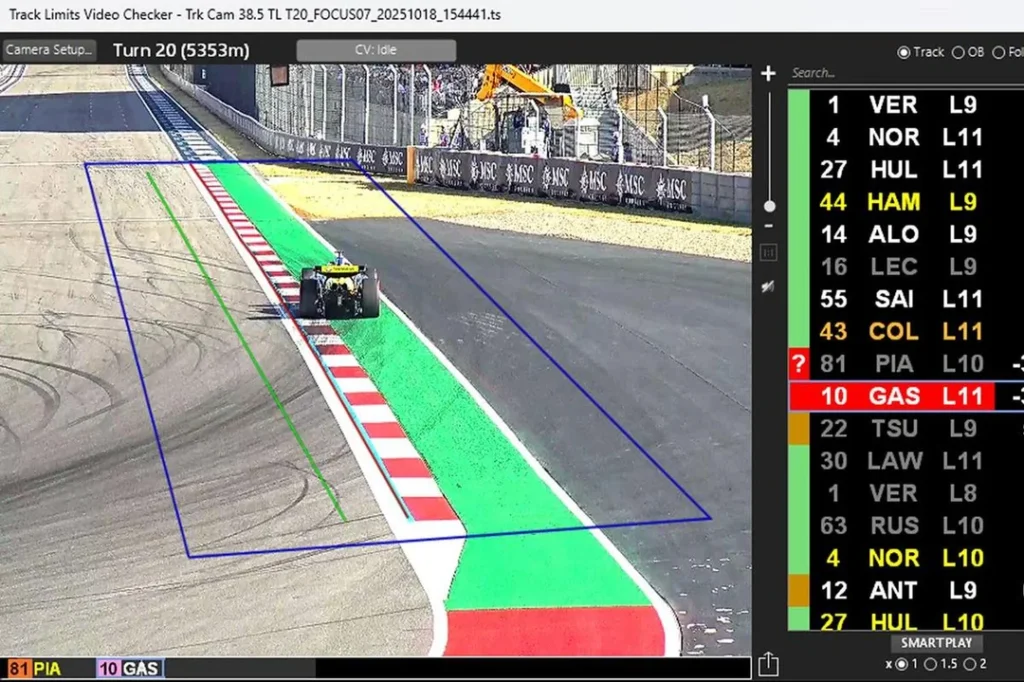
If the regulations spark philosophical debate, the FIA’s new computer-vision tool for track limits sparks practical anxiety.
The system integrates into RaceWatch and uses automated detection to flag when cars cross white lines. According to the FIA, it has cut by 95% the number of cases requiring human involvement.
Importantly, it is not fully automated enforcement. It eliminates “close to the line” non-violations and flags incidents for review. Black-and-white flags still require human evaluation. The aim is semi-automation, not machine dictatorship.
Yet skepticism remains.
Is this VAR 2.0? Will tight margins be inconsistently applied? Will technology introduce new controversy instead of eliminating it?
The comparison to football’s offside technology is imperfect. In F1, the line is static and straight. Either the car crosses it or it doesn’t. There are fewer dynamic variables than in football, where frame selection alone can alter a decision.
But trust in officiating isn’t just about binary logic, it’s about transparency.
If the tool simply assists stewards and removes bias, it may be a net positive. If it becomes a shield for opaque decisions, it won’t matter how advanced the algorithm is.
The broader lesson? Fans don’t reject technology. They reject inconsistency.
Apple, F1TV, and the New Viewing Era
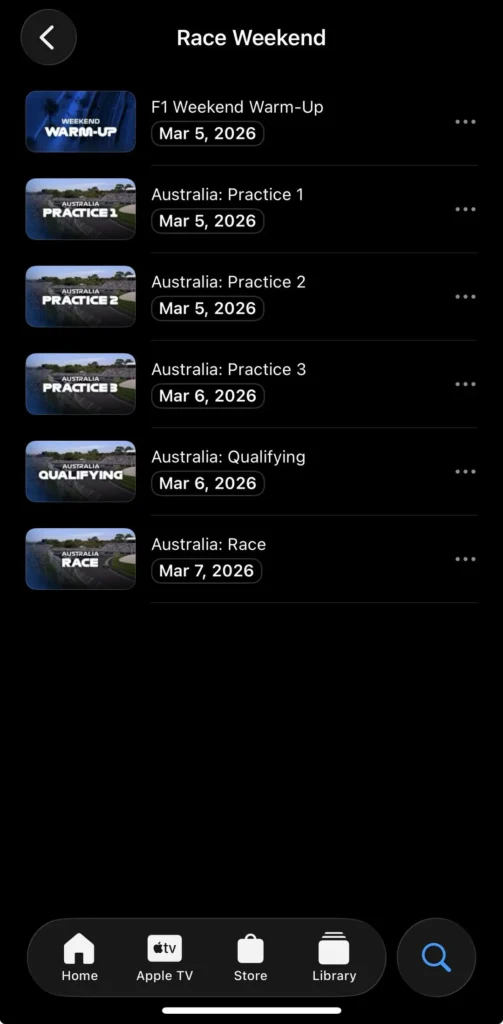
While governance evolves, so does distribution.
In the United States, Apple now holds live F1 rights. F1TV subscriptions, as previously known, effectively no longer exist for live streaming in the US. Instead, Apple TV+ subscribers can link accounts and access F1TV content through that integration.
The reaction has been equal parts relief and frustration.
Yes, linking works.
Yes, archives remain accessible (with varying completeness pre-2000).
Yes, multiview and driver cams are available through F1TV after linking.
But the UI experience has left fans exasperated. The inability to add the entire F1 season at once, the need to manually add individual events, spoiler-prone thumbnails in the past, these are not trivial irritations.
In the streaming era, user experience is part of the sport.
If you’re competing for attention, friction matters.
Damson Idris, Blockbuster Ambitions, and Cultural Reach
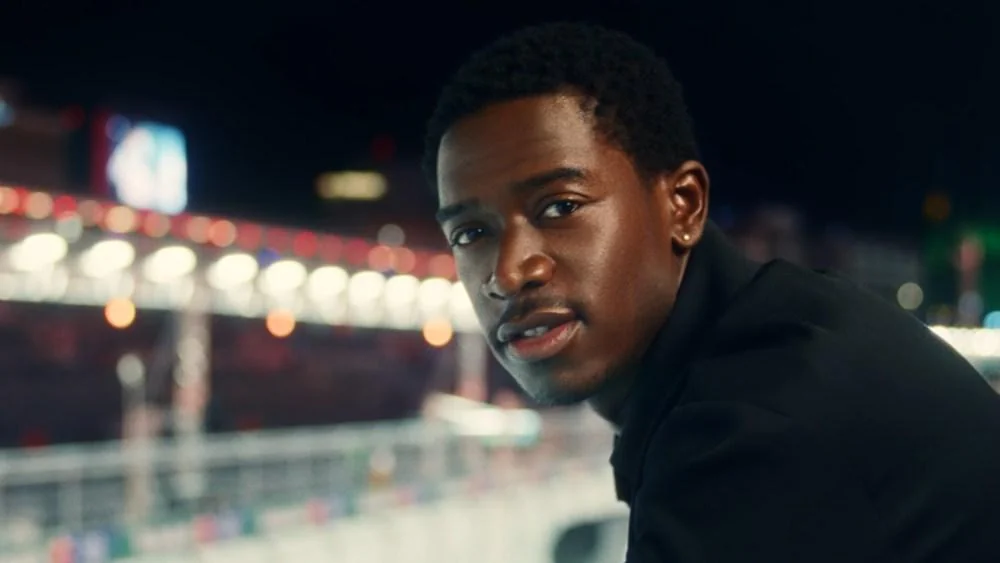
The appointment of Damson Idris as a Global Ambassador reinforces that F1’s cinematic ambitions are far from finished.
Speculation immediately turned to sequels, franchise arcs, and underdog narratives, perhaps even an F2 storyline. Some question whether Idris alone has enough mainstream draw beyond the film audience, while others argue that the movie itself is the gateway.
This isn’t just about star power. It’s about whether F1 can expand culturally without diluting itself.
The sport wants growth.
Growth requires narrative.
Narrative requires characters.
But growth also magnifies scrutiny.
The LinkedIn Era of Lewis Hamilton
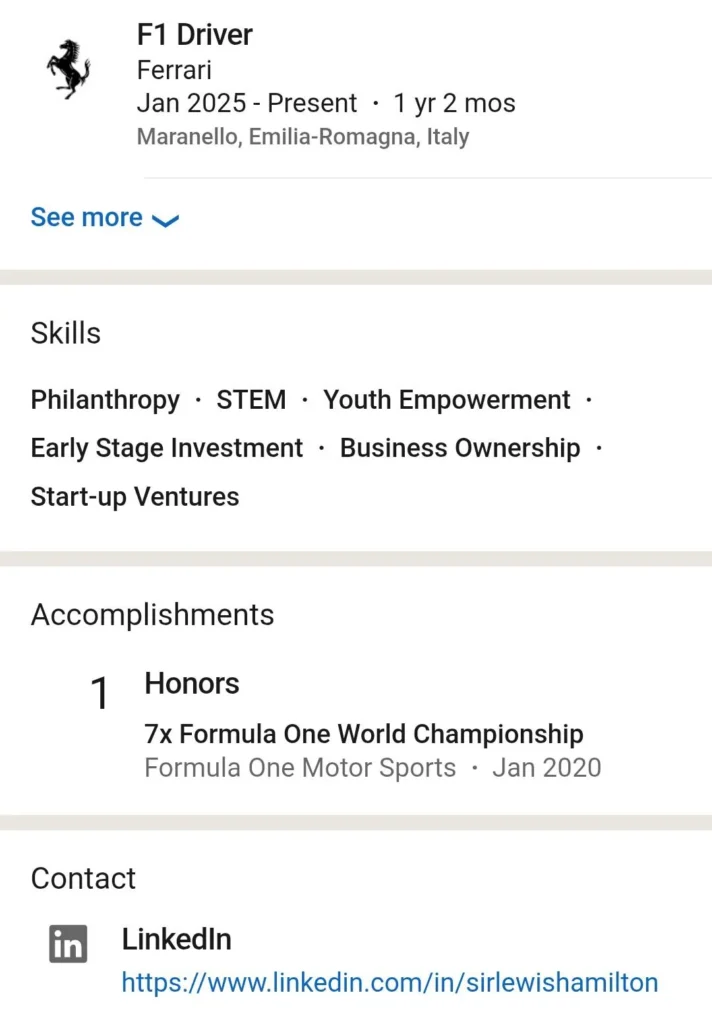
And then there’s Lewis Hamilton listing his seven world championships on LinkedIn.
For some, it’s hilarious. For others, it’s brand strategy. For others still, it’s simply modern athlete professionalism.
Is it job hunting? Of course not.
It’s positioning. It’s corporate Instagram. It’s legitimacy for business partners and collaborators. It’s visibility to audiences who may never watch a race.
In 2026, an F1 driver having a curated LinkedIn profile is less absurd than it sounds.
The sport exists simultaneously on track and in boardrooms.
Papaya Rules and the McLaren Model
Amid all this noise, one team has quietly demonstrated something rare: functional harmony between two title-contending drivers.
Oscar Piastri described his relationship with Lando Norris as “unique.” Racing as teammates for an individual prize is inherently paradoxical. Yet they committed from the start to transparency and to helping each other fight for 1st and 2nd.
They collided last season. Multiple times. And still no implosion.
That is significant.
The so-called “Papaya Rules”, whether fans love or hate the name, represent a culture built over years. Both drivers began their careers at McLaren. Expectations were established from day one. There is no legacy baggage from prior teams.
The result? A lineup that delivered both the Constructors’ and Drivers’ titles without public acrimony.
That does not happen by accident.
In a sport obsessed with number-one hierarchies, McLaren demonstrated that two high-level drivers can coexist, if the culture is right.
Is that the model for F1 teams going forward? Perhaps.
But it only works when:
- Both drivers are talented enough.
- The car is competitive enough.
- The team culture is transparent enough.
That combination is rare.
So… Is F1 in Danger?
Formula 1 is not dying.
But it is transforming.
The sport is:
- Increasingly data-driven.
- Increasingly software-regulated.
- Increasingly corporate.
- Increasingly global in media ambition.
Some fans long for the V10 thunder and simpler rules.
Others embrace AI officiating and multiview streaming.
Most live somewhere in between.
The real question is not whether F1 becomes more technological.
It always has been.
The real question is whether, in the pursuit of innovation and growth, it preserves what made people fall in love with it in the first place.
Ecclestone may be wrong.
But if fans ever feel like the human element has become secondary, that the drivers are passengers to software, that championships are boardroom products, then the warning won’t sound so alarmist after all.
For now, though, the grid is still full.
The rivalries are still intact.
The debates are louder than ever.
And perhaps that, more than anything, proves the sport is still very much alive.