

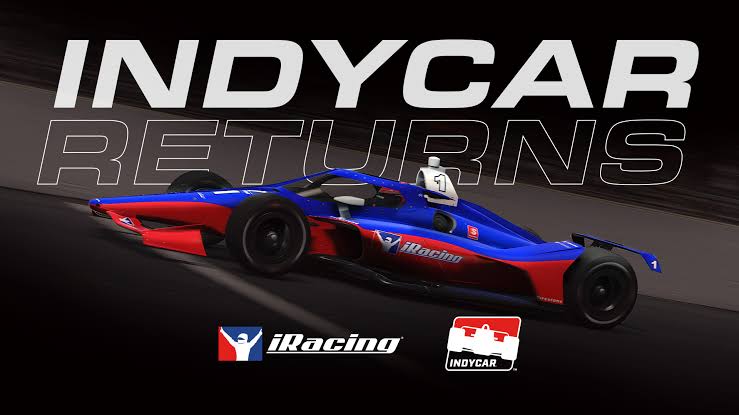
IndyCar and iRacing have officially announced the launch window for the series’ first standalone video game in more than two decades, with the new title scheduled to arrive in the weeks leading up to the 2027 Indianapolis 500.
The game, titled IndyCar Racing: The Game, will be available on PlayStation 5, Xbox consoles and PC through Steam. The announcement immediately created excitement, but it also arrived alongside a broader conversation about IndyCar’s visibility outside its existing audience. With Pato O’Ward no longer serving as a Formula 1 reserve driver and making occasional appearances during F1 practice sessions, IndyCar has lost one of its most obvious points of crossover with the world’s largest open-wheel championship. Taken together, the two developments raise an important question for the series: Does IndyCar need to borrow attention from Formula 1, or should it concentrate on building its own platforms, products and identity?
The upcoming video game could be one of the clearest attempts yet to pursue the second option.
Releasing the Game Before the Indianapolis 500 Is the Right Strategy
Although some would understandably prefer to receive the game as soon as possible, launching it during the buildup to the 2027 Indianapolis 500 makes considerably more sense than releasing it near the end of the 2026 season.
The Month of May is when IndyCar receives its greatest concentration of attention. The Indianapolis 500 reaches beyond the series’ regular audience, attracts casual motorsports viewers and creates a natural promotional window that IndyCar rarely has at any other point on the calendar. A game released after the season would arrive just as IndyCar begins a lengthy offseason. That may place it closer to the holiday shopping period, when video-game spending traditionally increases, but it would also mean launching the title when the championship itself has largely disappeared from weekly sports coverage. Releasing it before the Indianapolis 500 allows the game’s marketing campaign to work with the series rather than independently of it.
Sports games often benefit from launching when interest in the sport is naturally increasing. The excitement surrounding the beginning of a season can encourage people to purchase a title even when the annual edition does not represent a major departure from the previous one. IndyCar has an even more obvious opportunity because its biggest event is also its most recognizable global property. There is also less risk of the game being buried beneath the promotional campaigns surrounding larger releases. Even if many potential IndyCar players would not personally purchase another major game arriving around the same time, every publisher is still competing for coverage, advertising space and attention from gaming media. An IndyCar title would have difficulty breaking through a crowded fall release schedule. During May, however, the game can attach itself directly to the Indianapolis 500 and reach both established supporters and more casual racing-game players.
Waiting until 2027 may therefore represent a delay, but it also gives iRacing a stronger opportunity to make the launch feel like an event.
The Extra Development Time Must Produce a Complete Game
The later release date will inevitably increase expectations.
One concern is whether every major circuit will be ready for the finished product, particularly the street courses that may require additional development. A 2027 launch creates more time to build a game that represents a fuller version of the IndyCar schedule rather than releasing an incomplete experience simply to meet an earlier deadline. That additional time should also allow iRacing to prioritize polish. For a series returning to standalone console and PC gaming after more than two decades, the first impression matters enormously. The game cannot depend entirely on the loyalty of IndyCar’s existing audience. It needs to be accessible and enjoyable enough to attract players who may primarily know the Indianapolis 500 or who simply want a different form of open-wheel racing.
The early images have already produced some skepticism about the visual presentation. Without the full lighting and graphical effects that may appear in the final product, some of the screenshots have been compared to much older racing simulations. That is not necessarily a fair judgment of an unfinished game, but it demonstrates why the delayed launch must result in a product that feels current when it arrives.
IndyCar has waited too long for a new game to receive something that appears unfinished.
The Name May Reveal the Long-Term Plan
The title itself has generated almost as much discussion as the launch window.
IndyCar Racing: The Game is undeniably awkward. A simpler name such as IndyCar Racing 2027 would sound more conventional, while longtime players may have preferred the historical connection of calling it IndyCar Racing 3. However, attaching a year to the title would imply that a new edition is expected every season. Calling it the third entry in an old series could also confuse players who have no connection to the previous games and may wonder why they are being asked to begin with a sequel. The unusual title may therefore point toward a different business model.
Rather than releasing a slightly revised game every year, iRacing could maintain one core IndyCar title through downloadable content, seasonal updates, new cars and additional circuits. That approach may be particularly appropriate for a championship with a smaller gaming audience than NASCAR or Formula 1. There may be enough dedicated IndyCar and simulation-racing supporters to make the game viable, but that does not automatically mean there is enough demand to support an entirely new full-price title every year. Most sports games probably do not require annual releases in the first place. A new edition makes sense when there have been meaningful improvements in graphics, performance or the underlying game engine. Updated drivers, liveries and schedules can otherwise be added without forcing customers to purchase essentially the same game again.
A model similar to a continually updated racing platform could serve IndyCar better. A future car change could be introduced through an expansion or season update, with a larger sequel arriving only when the technology or gameplay has advanced enough to justify it.
The title may sound clumsy, but avoiding a year could ultimately be one of the smarter decisions surrounding the project.
The First Teaser Has Already Found IndyCar’s Cruel Sense of Humor
The announcement also demonstrated that the game’s developers understand one of the most emotionally effective storylines available to them.
The initial promotional material appeared to show Pato O’Ward narrowly losing the Indianapolis 500. For a new fictional game to immediately create another runner-up heartbreak for O’Ward is almost unnecessarily cold. It is also extremely effective. O’Ward has become one of the most recognizable drivers in the championship, and the idea of him coming agonizingly close at Indianapolis carries instant emotional weight. The teaser therefore communicates more than simply showing cars driving around the Speedway. It gives the audience a recognizable story and an immediate reason to imagine changing the result themselves.
The response also illustrates what a good IndyCar game can offer: the ability to rewrite the moments that have frustrated or devastated supporters. The game should lean into those personalities and storylines rather than presenting itself only as a technical driving simulation. A detailed career or management mode would be especially valuable. Players should be able to manage driver lineups, make questionable personnel decisions, give disastrous interviews and create the kind of organizational chaos that surrounds real racing teams.
A standalone IndyCar title needs strong driving physics, but it also needs to understand that the championship is entertaining because of the people and stories around the cars.
The Missing Nintendo Switch 2 Version Is a Disappointment
The announcement currently identifies PlayStation 5, Xbox consoles and Steam as the game’s platforms, with no Nintendo Switch 2 version mentioned.
That absence may simply reflect the timing of development and access to the necessary hardware. If iRacing was not among the earliest developers to receive the relevant development equipment, the project may already have been too far along for another platform to be included without causing further delays. Even so, a Switch 2 release would have expanded the game’s reach. A portable version could introduce IndyCar to a younger or more casual audience that may not own a dedicated racing setup. The game does not need to be restricted to hardcore simulation players, particularly if part of its purpose is to create new followers for the championship.
Its absence may be understandable, but it still feels like a missed opportunity.
Does IndyCar Still Need an F1 Reserve Driver?
The video-game announcement arrives as IndyCar also considers the loss of another form of exposure.
O’Ward’s appearances in Formula 1 practice sessions gave IndyCar a visible presence during F1 weekends. Even though FP1 generally attracts fewer viewers than qualifying or the race, the broadcasts still created opportunities for commentators to discuss O’Ward’s IndyCar season and introduce the American championship to viewers who may not otherwise follow it. Those sessions also generated conversation among F1 audiences about O’Ward and IndyCar. From that perspective, losing an active IndyCar driver from an F1 reserve role does remove a small but useful crossover point. It is not likely to cause any meaningful damage to the championship, but it did create occasional visibility in front of a much larger audience.
The more complicated question is what that visibility communicated. An IndyCar driver repeatedly participating in F1 practice without a realistic path to a race seat can reinforce the impression that IndyCar exists beneath Formula 1. Instead of presenting O’Ward as a star of another top-level championship, the arrangement could make him appear to be waiting for an opportunity to graduate. That becomes especially uncomfortable when the reserve role is effectively the highest position available.
IndyCar is not a feeder championship. It is a top-level series with its own identity, demands and marquee event. The Indianapolis 500 does not need validation from Formula 1, and IndyCar should not frame its best drivers as prospects whose careers remain incomplete until an F1 team chooses them. The issue is therefore not whether an IndyCar driver should ever test an F1 car. Crossovers are interesting, and seeing a successful driver adapt to another type of machinery can be valuable for both championships. The problem is the absence of a genuine path.
If an IndyCar star is only being used to complete practice requirements, generate occasional attention and remain permanently outside the race lineup, the partnership may benefit the F1 team more than it benefits IndyCar.
IndyCar and Formula 1 Are Different Disciplines
Attempts to rank IndyCar and Formula 1 inevitably become arguments about prestige, money, history and driver quality.
That debate rarely produces anything useful. The two championships are both forms of open-wheel motorsport, but they demand different skills and operate under different sporting structures. The comparison provided by Guenther Steiner is appropriate: they are like the 400-meter dash and the 400-meter hurdles. They remain related athletic disciplines, but success in one does not automatically predict identical success in the other. Formula 1 drivers must work within an environment where differences between teams and cars can be enormous. IndyCar drivers compete in a championship where the performance gaps between teams are generally less pronounced and where traffic, strategy, backmarkers, ovals and different defensive rules can dramatically change the challenge.
A Formula 1 champion would likely be competitive in IndyCar because elite drivers are capable of adapting. That does not mean the driver would immediately dominate. The same applies in the opposite direction. A leading IndyCar driver placed in a competitive F1 car could perform strongly, but historical comparisons are often distorted by the quality of the machinery each driver received. A driver entering a front-running organization is not being tested under the same conditions as someone joining a struggling team.
The constant argument over whether Max Verstappen would dominate IndyCar or Álex Palou would win a Formula 1 championship cannot be settled without placing them in those environments. Car quality, team support, engineering resources, experience and regulations all matter too much. That is precisely why IndyCar should avoid depending on Formula 1 to establish the value of its drivers.
Their achievements should be judged by the championship they are actually competing in.
O’Ward’s Comments Can Be Read as an Endorsement of IndyCar
O’Ward has previously expressed that he does not enjoy the current Formula 1 cars as much and prefers IndyCar.
Some will dismiss that position by arguing that he would immediately change his mind if a leading F1 team offered him a competitive race seat. That hypothetical cannot be proven, and it overlooks the possibility that an established IndyCar star may genuinely prefer the racing environment he already has. Not every driver must view Formula 1 as the only meaningful destination. O’Ward has already gained experience in F1 machinery. If his conclusion is that he prefers IndyCar, that should be viewed as an endorsement of the championship rather than evidence that he failed to escape it.
The assumption that every driver would abandon IndyCar the moment Formula 1 called is part of the hierarchy that IndyCar needs to challenge. There are obvious reasons why Formula 1 remains attractive, including its money, reach and prestige. Acknowledging those advantages does not require presenting every other championship as secondary.
IndyCar can be a driver’s preferred destination rather than a consolation prize.
The Better Path Is Building IndyCar’s Own Ecosystem
The loss of O’Ward’s F1 practice appearances is unlikely to make a noticeable difference to IndyCar.
Those sessions offered useful exposure, but they were never a substitute for the series investing in its own audience. A dedicated video game has the potential to create a much deeper connection. Instead of giving F1 viewers a few minutes of discussion during a Friday practice session, it can place IndyCar’s cars, tracks, drivers and strategies directly in front of players for hours. It can introduce people to street circuits, road courses and ovals. It can teach them how difficult traffic management becomes at Indianapolis. It can familiarize them with the personalities and teams they may later choose to follow.
Most importantly, it presents IndyCar as the main attraction. That is the distinction the series needs. IndyCar should remain open to meaningful crossover with Formula 1, NASCAR and other forms of motorsport. Drivers moving between championships creates interest, and shared audiences are valuable. But the series cannot build its future around waiting for another championship to mention it.
The leadup to the 2027 Indianapolis 500 gives IndyCar and iRacing a chance to make the new game part of the biggest celebration on the calendar. If the final product is polished, complete and supported through long-term updates, it could be more valuable than any reserve-driver arrangement. For years, IndyCar has needed new ways for people to discover the championship on its own terms.
IndyCar Racing: The Game may have an awkward name and a later release date than some wanted, but its arrival represents exactly the kind of independent platform the series should be building.