

IndyCar should improve its merchandise game. But the most meaningful opportunity might be a small, affordable car that a child can take home, race across the living room, and recognize on television the following weekend.
A durable toy can create a connection that lasts beyond a race broadcast. It gives a young viewer a car to follow, a driver to recognize, and a reason to care about what happens next. For IndyCar, making that connection easier deserves serious consideration.
The challenge stretches across the merchandise business: availability, design, price, durability, and whether the products give people something they actually want to own. Getting more merchandise onto shelves would help only if the merchandise belongs there in the first place.
A Place in the Toy Aisle
The clearest opportunity is an accessible range of 1:64 IndyCar toys designed for children to play with.
There is a meaningful difference between a collectible model and a toy. Detailed replicas serve their purpose, but delicate components become a problem when the intended activity involves imaginary overtakes, crashes, and repeated trips across the kitchen floor. A parent buying an IndyCar for a child should have an option that can survive being treated like a race car. When pieces break shortly after the box opens, the product struggles to deliver the experience that made the purchase appealing. A simpler, sturdier car at an accessible price could fill that gap. The supplied examples of inexpensive Hot Wheels F1 toys alongside more detailed collector versions illustrate the appeal of serving both audiences. IndyCar would not need every product to satisfy collectors and children simultaneously. Distribution matters just as much. Walmart and Target are places where families already shop. A product available during an ordinary shopping trip can reach a child who has never visited an IndyCar merchandise tent or searched a team’s online store.
That creates an opportunity for discovery beyond the people who already know exactly what they want to buy.
Put a Driver With the Car
The packaging could make those toys more useful as an introduction to the series.
Include a card showing the real car, the driver’s name, and the driver’s face. Give children a straightforward way to connect the object in their hands with the person behind the wheel. A child playing with a Pato O’Ward, David Malukas, or Alex Palou car could learn to recognize its appearance during a broadcast. A photograph would then help connect the helmeted figure in the cockpit with the driver appearing in an interview. The same approach could give drivers throughout the field a stronger identity. Josef Newgarden, Scott McLaughlin, Scott Dixon, and Alexander Rossi would be part of that world, but so could Christian Rasmussen, Dennis Hauger, Louis Foster, and others.
Children do not necessarily organize their favorite toys according to championship position. A distinctive car can become a favorite because of its colors, its number, or the adventures a child invents for it. That gives merchandise a role beyond celebrating the biggest stars. It can help make the wider grid recognizable.
The childhood appeal of a Tony Kanaan 7-Eleven diecast captures the potential particularly well: a specific car and sponsor combination can remain memorable long after the toy first enters someone’s collection. IndyCar should give today’s children more opportunities to build those associations.
Merchandise Needs an Identity
The clothing side needs attention, too.
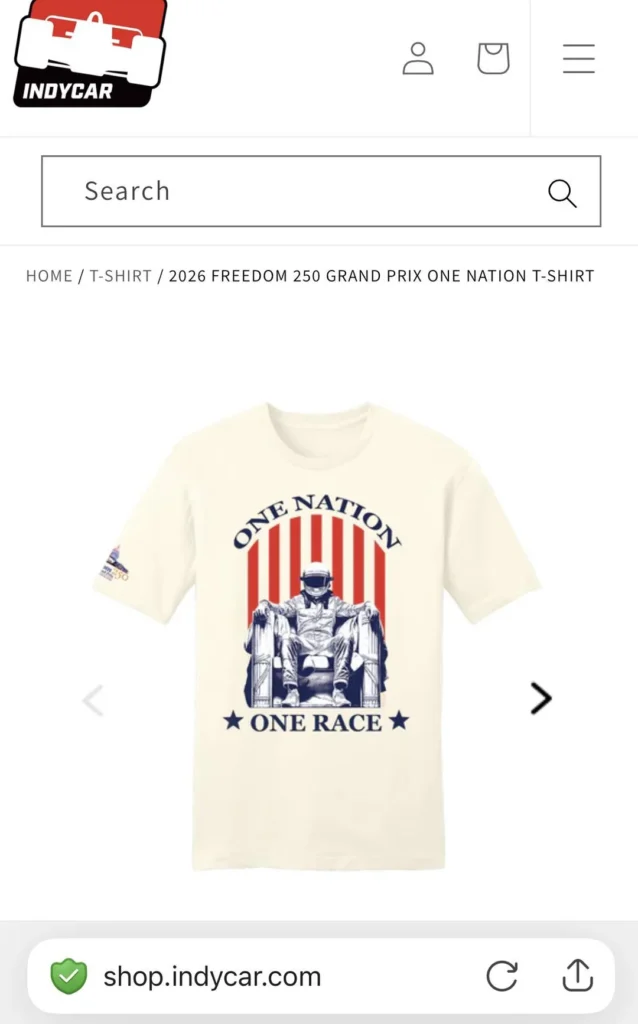
An expensive shirt needs to offer a compelling reason to wear it. A driver’s name surrounded by sponsor logos will appeal to some buyers, but that alone does not guarantee an attractive design. Sponsorship belongs in racing merchandise. F1 and NASCAR products carry commercial branding as well, and those relationships are part of the sport’s business. The question is whether the finished product feels thoughtfully designed. IndyCar needs merchandise that people want to wear away from a race weekend. That means stronger graphics, recognizable identities, and options that allow a driver’s personality or a team’s character to come through.
AO Racing offers a useful example through Rexy and Spike. Cars presented as dinosaurs and dragons provide characters that extend naturally into clothing, merchandise, and paddock appearances. The inflatable costumes give children another way to engage with the same identities they see on track. The lesson is the value of a coherent idea. A character gives a child something to recognize immediately and gives merchandise a visual identity beyond a collection of commercial logos. IndyCar teams have room to think more deliberately about what makes their own products recognizable and appealing. The enthusiasm for Styled Aesthetic’s IMSA merchandise also points toward the value of involving designers who understand how to turn racing identities into desirable clothing.
Simply producing more of an unappealing shirt would leave the underlying problem untouched.
Make the Obvious Purchases Easier
Some opportunities are considerably more straightforward.
The hat a driver wears on a race weekend is an obvious purchase for someone who wants to support that driver. If the buyer cannot find it through the team or series store, an existing connection has reached a dead end. A P1 Award sticker offers another example. It is a recognizable part of the race weekend with an understandable appeal as a small accessory. Products like that provide a way to participate without committing to an expensive shirt or collectible. Posters, affordable clothing, and simple accessories deserve attention alongside premium products. A broader range of useful price points would give more people a way to buy into the sport. Online availability also matters. Merchandise should be easy to find, with clear designs and a sensible purchasing experience. The presence of some Puma McLaren products on Amazon illustrates another potential route to customers, although broader availability would still need to be supported by products people want.
The aim should be to reduce the distance between seeing something appealing and being able to purchase it.
Retailers Still Need a Business Case
There is a limit to how much of this can be solved by asking stores to carry more IndyCar products.
Retailers need merchandise that sells. Shelf space has to be justified, and IndyCar cannot assume that a licensing agreement or a prominent sponsor will automatically create demand. The supplied example of a north central Indiana Meijer carrying Indianapolis 500 shirts and hats during May, alongside a broader assortment of F1 products, illustrates the visibility gap. It is a useful snapshot, although one store cannot establish the picture across the entire retail market. The account of Target stores lacking IndyCar merchandise during periods of the company’s Ganassi involvement raises a related point: sponsor visibility and consumer product distribution do not necessarily move together.
Earlier IndyCar merchandise efforts involving Hot Wheels and IZOD also complicate the idea that access alone is the answer. Products can reach stores and still sit unsold. Any renewed push would need to account for that experience. Product selection, price, design, distribution, and demand all have to work together. Trademark and licensing requirements add further complexity, particularly when the potential market is smaller than F1’s global audience.
A carefully chosen range would make more sense than treating every possible product as an immediate opportunity.
Growth and Merchandise Should Reinforce Each Other
Merchandise can reflect the size of an audience, but it can also give that audience another way to engage.
A retailer is more likely to stock products when demand is visible. At the same time, a toy sitting on a shelf can introduce the sport to someone who would never have searched for it. That relationship makes merchandise worth considering as part of IndyCar’s wider effort to build recognition beyond the Indianapolis 500 and individual race weekends. Television exposure remains part of that equation. A child needs opportunities to see the real cars and drivers for the toy to develop a deeper connection. The toy, broadcast, and driver identity can then reinforce one another. None of this establishes that a merchandise expansion would automatically pay for itself. The supplied material does not provide sales figures or production costs, and the commercial case would need to be demonstrated.
But there is a clear strategic argument for exploring products that help people recognize and engage with the series, especially when they address an identifiable gap.
Build Products Worth Keeping
A merchandise push should also consider quality and waste.
There is little value in producing large volumes of unwanted clothing or toys that break immediately. Durable products, appealing designs, and a focused assortment would better serve both buyers and the business. That supports starting with practical priorities: playable cars, recognizable driver information, better clothing, and accessible items that already have a natural connection to the race weekend. IndyCar has cars, personalities, and racing identities that can mean something to a child. Its merchandise should make those connections easier to discover.
A small car picked up during a family shopping trip could become the reason a young viewer recognizes a livery, learns a driver’s name, and asks when the next race is. That is an opportunity worth taking seriously.