

IndyCar has enjoyed one of its busiest news cycles of the season, with a fascinating look inside life as a mechanic, another major silly season domino falling into place, fresh debate over Arrow McLaren’s controversial driver strategy, and growing discussion over whether the series is finally riding a wave of renewed popularity.
While each story stands on its own, together they paint a picture of a championship that feels increasingly healthy—not because everything is perfect, but because there are more compelling stories surrounding the series than there have been in years.
The Reality Behind an IndyCar Race Weekend
One of the most revealing discussions of the weekend came from an anonymous IndyCar mechanic who opened the floor for questions about what life inside the paddock is actually like.
The answers highlighted just how different the reality of racing can be compared to the polished television product. When asked about the wildest repairs he’d witnessed, the mechanic explained that sometimes race cars are held together with whatever works when time is running out. After major crashes, saws are sometimes used simply to cut damaged cars apart so they can be loaded onto trailers. More surprisingly, repairs can involve glue, grinders, sandpaper and massive strips of industrial tape.
Street course weekends are particularly unforgiving. A damaged floor might receive a six-foot strip of tape before the car is sent back onto the circuit almost immediately. Rather than viewing those repairs as embarrassing, he described them as simply part of racing. “Gotta do what ya gotta do sometimes.”
That philosophy appears to extend throughout the entire paddock. Even supposedly “spec” Dallara parts rarely fit perfectly. Carbon fiber bodywork frequently requires redrilling and reshaping before it can be mounted to a chassis. The most fascinating insight involved Indianapolis itself.
According to the mechanic, teams spend months perfecting Indy 500 floors, polishing every surface because the aerodynamic gains are so significant. Those floors become specialized equipment reserved almost exclusively for Indianapolis. He even revealed that teams remove tiny molding marks from tires because at approximately 240 mph they can generate roughly 12 pounds of drag.
The attention to detail at Indianapolis simply doesn’t exist anywhere else on the calendar.
Racing Is Equal Parts Science and Improvisation
The AMA also offered a reminder that racing remains wonderfully imperfect.
Mechanics still occasionally resort to rubber mallets to persuade stubborn components into place. Bushings sometimes require what he jokingly described as “angry time.” Creative rulebook interpretation remains just as alive as ever.
Without revealing current competitive secrets, he acknowledged that if something isn’t explicitly prohibited, teams will explore it. Past examples included running additional fuel line inside fuel cells to gain extra fuel mileage and aerodynamic suspension covers that were later outlawed. The mentality was refreshingly honest.
If there’s performance available inside the gray areas of the regulations, teams will look for it.
There Is No Such Thing As “Off Time”
Perhaps the biggest takeaway from the discussion wasn’t technical at all.
It was the workload. The mechanic described the process after returning from a race. Cars are almost completely disassembled.
Every component is cleaned. Every part is inspected. Mileage is tracked for every single item.
Bodywork is repaired and rewrapped. Suspension settings are rebuilt. Brakes are replaced.
Cars are reassembled, loaded, transported and prepared again before another race weekend begins. Once at the circuit, the work barely stops. Ride heights.
Camber. Toe. Wing angles.
Gear ratios. Engine warmups. Set-down measurements after every session.
Constant setup revisions. By race day, mechanics are hoping the only thing left to do is execute clean pit stops. The schedule is equally relentless away from the shop.
The mechanic revealed that during one stretch in 2023 he only spent eight days inside his own apartment between March and June.
That workload is one reason he admitted that, from a crew perspective, IndyCar’s current 17-race calendar already feels like enough.
Why IndyCar Still Feels Different
The discussion also highlighted something many longtime fans already appreciate.
Accessibility. The mechanic spoke proudly about being able to interact with fans, hand out parts when possible and allow spectators to get close enough to actually experience the cars. That openness remains one of IndyCar’s greatest strengths.
Rather than hiding every repair behind garage doors, the series still embraces a level of accessibility that many believe separates it from Formula 1.
Marcus Armstrong Finds Stability
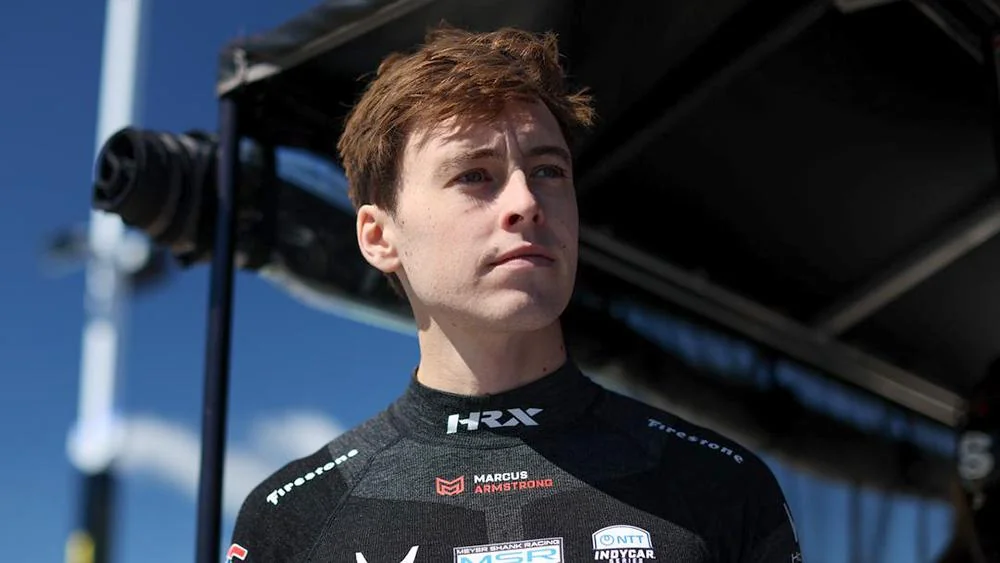
Away from the paddock, Meyer Shank Racing confirmed Marcus Armstrong has signed an extension and will drive the No. 60 entry in 2027.
The move immediately fueled even more speculation about the remaining seats across the grid. One conclusion appeared almost universal. Armstrong has earned this opportunity.
After establishing himself this season, many view the extension as Armstrong transitioning from being viewed primarily as a funded driver into someone MSR genuinely wants to build around. The switch to the No. 60 also sparked speculation that Armstrong is now fully an MSR driver rather than simply operating as a Ganassi affiliate. Attention now immediately shifts toward the No. 66 car.
Numerous possibilities continue to circulate, with names including Caio Collet, Rinus VeeKay, Linus Lundqvist, Hauger, Ohta and others all being discussed.
Does This Clear The Path For Christian Lundgaard?
Armstrong’s extension only intensified one of IndyCar’s biggest ongoing storylines.
Many now believe Christian Lundgaard is increasingly likely to replace Scott Dixon at Chip Ganassi Racing. The logic appears straightforward. With Armstrong staying put, one major option disappears, leaving Ganassi’s No. 9 among the most attractive available destinations.
There is still debate over whether Chip Ganassi could ultimately surprise everyone with another unexpected signing—as he famously did with Alex Palou—but Lundgaard continues to be viewed as the most logical fit.
Others wonder whether Ganassi could instead prioritize an Indianapolis specialist or another experienced driver, but the overwhelming expectation remains that Lundgaard would make the most sense.
Arrow McLaren’s Philosophy Is Becoming Clear
Perhaps the most controversial discussion centered on Arrow McLaren.
A report examining the team’s recent decisions painted a picture of an organization attempting to fundamentally reshape how it develops race cars. The reported philosophy is straightforward. Pato O’Ward remains the centerpiece.
The belief inside the organization appears to be that O’Ward is exceptionally talented at extracting speed from a properly prepared race car but is not the driver responsible for leading overall chassis development and engineering direction. That creates a different team-building strategy. Instead of surrounding O’Ward with similarly fast drivers, the emphasis shifts toward pairing him with veterans capable of accelerating engineering development and helping create better baseline setups across the organization.
Within that framework, Scott Dixon and Felix Rosenqvist suddenly make far more sense. Rosenqvist is viewed as someone whose technical feedback was undervalued during his previous McLaren stint. Dixon, meanwhile, carries perhaps the strongest reputation in the series for developing race cars and guiding engineering programs.
The long-term goal reportedly extends beyond next season.
Arrow McLaren appears focused on preparing itself for the arrival of the new 2028 chassis while simultaneously creating a more collaborative, team-first engineering culture.
The Debate Isn’t Going Away
Even with that explanation, many remain unconvinced.
The biggest criticism is difficult to ignore. Christian Lundgaard has arguably been Arrow McLaren’s strongest overall driver this season. Replacing one of the team’s fastest performers with two veterans naturally raises questions.
Many believe the organization is becoming overly committed to building everything around O’Ward, even if it means allowing another elite talent to leave. Others argue the strategy places disproportionate emphasis on winning the Indianapolis 500 rather than chasing championships across the full season. At the same time, another perspective has emerged.
Within IndyCar, the Indianapolis 500 simply carries unmatched importance. Sponsors. Manufacturers.
Team owners. Drivers. The race remains the centerpiece of the entire championship.
Viewed through that lens, prioritizing drivers with Indianapolis experience and elite development ability becomes easier to understand.
Whether the strategy ultimately proves correct remains to be seen.
Is IndyCar Riding Formula 1’s Success?

The final major discussion centered on the series itself.
Many believe IndyCar is enjoying genuine momentum. The bigger question is why. One theory argues Formula 1 deserves some credit.
Drive to Survive introduced millions of American viewers to international motorsport. Many of those fans eventually expanded into IndyCar, endurance racing, NASCAR and MotoGP. Several fans described exactly that journey.
Formula 1 became the gateway. IndyCar became the destination. Others believe Formula 1’s move behind Apple’s streaming platform may have unintentionally accelerated that trend.
Without publicly available viewership numbers, many remain skeptical of claims surrounding F1’s continued U.S. growth. Some argued that moving away from ESPN likely reduced casual audiences, while others countered that Apple is making a long-term investment that isn’t dependent on traditional television metrics. Regardless of Formula 1’s exact trajectory, one point drew broad agreement.
IndyCar itself appears healthier. Attendance is improving. Television ratings are trending upward.
Silly season has generated sustained interest. Fox’s promotion of the championship has created more visibility. For longtime followers who remember the difficult years following the CART split, the current moment feels dramatically different.
Rather than comparing itself directly to Formula 1, IndyCar increasingly appears to be benefiting from a broader rise in motorsport interest while simultaneously carving out its own identity through close racing, paddock accessibility and compelling storylines.
And judging by everything from anonymous mechanics explaining how race cars are held together with tape to one of the busiest driver markets in years, there may be no better advertisement for the series than simply letting people see what IndyCar actually is.