

IndyCar’s decision to eliminate open entries from all races outside of the Indianapolis 500 after this season marks a significant structural shift—one that underscores the series’ continued move toward a charter-driven model, while raising immediate questions about cost, access, and the long-term health of the grid.
At face value, the rationale is operational. Limiting non-chartered entries allows suppliers—most notably engine manufacturers—to better plan allocation and logistics. With a capped grid of 27 cars and increasing strain on resources, this move introduces predictability. But the broader implications extend far beyond supply chain efficiency.
A Charter System Tightens Its Grip
The move is widely interpreted as another step toward solidifying charter value. By restricting entry opportunities, the scarcity—and therefore worth—of charters increases. That dynamic has precedent across motorsports, and within IndyCar itself, where recent developments have already pointed toward a more closed ecosystem.
In practice, however, this tightening has immediate consequences. Without the ability to compete across the season, non-chartered teams are effectively reduced to one-off Indianapolis 500 entries. That fundamentally alters the investment calculus.
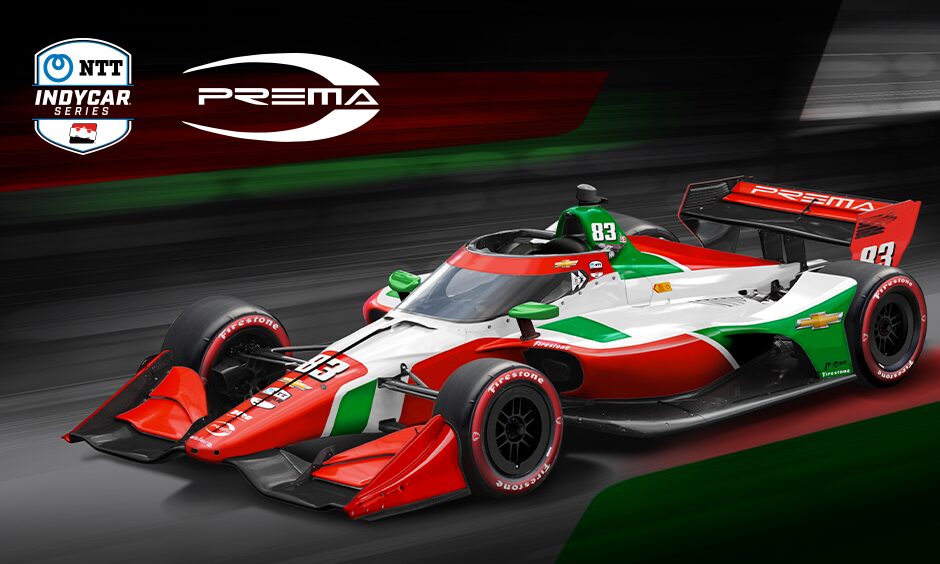
The situation surrounding PREMA has become a focal point for this discussion. While their struggles predate this announcement, the new rule effectively closes any remaining pathway to a meaningful IndyCar presence. As one line of thinking suggests, PREMA’s inability to secure a charter—combined with the anticipated allocation of future charters to manufacturers like Honda and Chevrolet—left them attempting to sell a short-term proposition with limited upside and virtually no recoup path. Without access to Leader’s Circle funding or a guaranteed schedule, the business case collapses into little more than asset liquidation.
The repeated references to PREMA’s “demise” reflect more than just frustration—they illustrate how quickly a non-chartered operation can become nonviable under the current model.
The Economics No Longer Add Up
At the heart of the debate is a simple reality: running an IndyCar entry—particularly at the Indianapolis 500—is expensive, and the return on investment has eroded.
One widely cited example highlights the imbalance: a high-profile Indy 500 program reportedly cost nearly $5 million to field, only to yield a fraction of that in prize money. Even accounting for adjustments to the purse structure, payouts for lower-finishing entries have declined significantly when compared to historical benchmarks—especially when adjusted for inflation.
This has a chilling effect on potential entrants. The traditional model—where independent teams or one-off efforts could justify participation based on exposure and prize money—no longer holds. As a result, the likelihood of new, unchartered teams entering the ecosystem diminishes sharply.
That shift also impacts driver development. Many established IndyCar drivers historically entered the series through part-time or one-off opportunities. With those pathways disappearing, the barrier to entry becomes increasingly tied to financial backing. The concern is clear: limiting access points risks narrowing the talent pipeline and reinforcing a pay-to-play structure.
The Indy 500: Tradition vs. Reality
Nowhere is the impact of this decision more scrutinized than at the Indianapolis 500.
The race has long been defined by its openness—33 starters, bumping drama, and the possibility for underdog entries to fight their way onto the grid. This change doesn’t eliminate open entries at Indy itself, but it does weaken the ecosystem that supports them.
The likely outcome, according to prevailing analysis, is a grid increasingly filled by existing chartered teams running additional entries. Rather than independent teams stepping in, the burden shifts internally: a handful of organizations fielding extra cars just to reach the traditional 33-car field.
Even that scenario comes with limitations. Teams have little incentive to expand operations without financial compensation, and forcing entries risks producing underfunded, uncompetitive efforts. The more probable outcome is a minimal expansion—just enough cars to reach 33, but rarely exceeding it.
That has direct implications for one of the race’s defining traditions: bump day. With teams unwilling to risk entering additional cars only to be eliminated, entry lists are expected to stabilize at or near 33. In that environment, the competitive tension of qualifying diminishes, and the likelihood of bumping scenarios fades.
There is also a structural constraint: engine supply. Current capacity appears to cap the realistic field at the mid-30s at best, further limiting the potential for oversubscription.
A Broader Industry Trend
IndyCar’s move does not exist in isolation. Across motorsports, series are trending toward closed or semi-closed systems. Charter models, franchise-style entries, and capped grids are increasingly common, prioritizing financial stability and team valuation over open competition.
From a business standpoint, the logic is clear. Predictability attracts investment, stabilizes costs, and protects existing stakeholders. But it also comes at a cost—namely, the erosion of accessibility and the reduction of organic entry points into the sport.
The tension between those priorities is evident in the reaction. On one hand, there is acknowledgment that the financial model for open entries has been deteriorating for years. On the other, there is frustration that the solution appears to prioritize asset value over competitive diversity.
What Comes Next
Despite concerns, there is still confidence that the Indianapolis 500 will continue to field 33 cars. The combination of prestige, sponsorship appeal, and existing team infrastructure makes that threshold achievable. However, going beyond 33—once a hallmark of the event’s competitiveness—now appears increasingly unlikely.
Looking further ahead, the introduction of a new chassis in 2028 adds another layer of complexity. For independent or one-off entrants, the cost of acquiring new equipment for a single race becomes even harder to justify. This could mark a final phase-out of traditional “privateer” efforts, with 2027 potentially serving as a last window for older equipment to make one final appearance.
Ultimately, IndyCar’s decision reflects a sport at an inflection point. The move toward a charter-driven model may deliver financial clarity and stability, but it also accelerates the transition away from the open-entry ethos that has historically defined the series—especially at its most iconic event.
The question now is not whether the grid will be full, but what kind of grid IndyCar wants to sustain—and what it is willing to sacrifice to get there.