

The Freedom 250 is over, but the conversation surrounding IndyCar’s weekend in Washington, D.C. may ultimately be more interesting than the race itself.
Kyle Kirkwood won the inaugural event, but in the days afterward, fans have been debating everything from the wildly different experiences inside the Stars and Stripes viewing zones to security, overcrowding, food lines and whether Washington proved there is an untapped market for IndyCar in the Mid-Atlantic. There were also plenty of racing stories underneath it all. Christian Rasmussen’s miserable run continued after contact with Marcus Armstrong. Sting Ray Robb somehow emerged from Washington with a few more fans despite crashing out. And with the IR-28 approaching, some are already dreaming about what IndyCar could eventually become. Perhaps most importantly, Washington showed what can happen when IndyCar puts itself somewhere people aren’t accustomed to seeing it.
The problem is that getting people through the gates is only the beginning.
The Freedom 250 Was Either Fantastic or Awful, Depending on Where You Stood
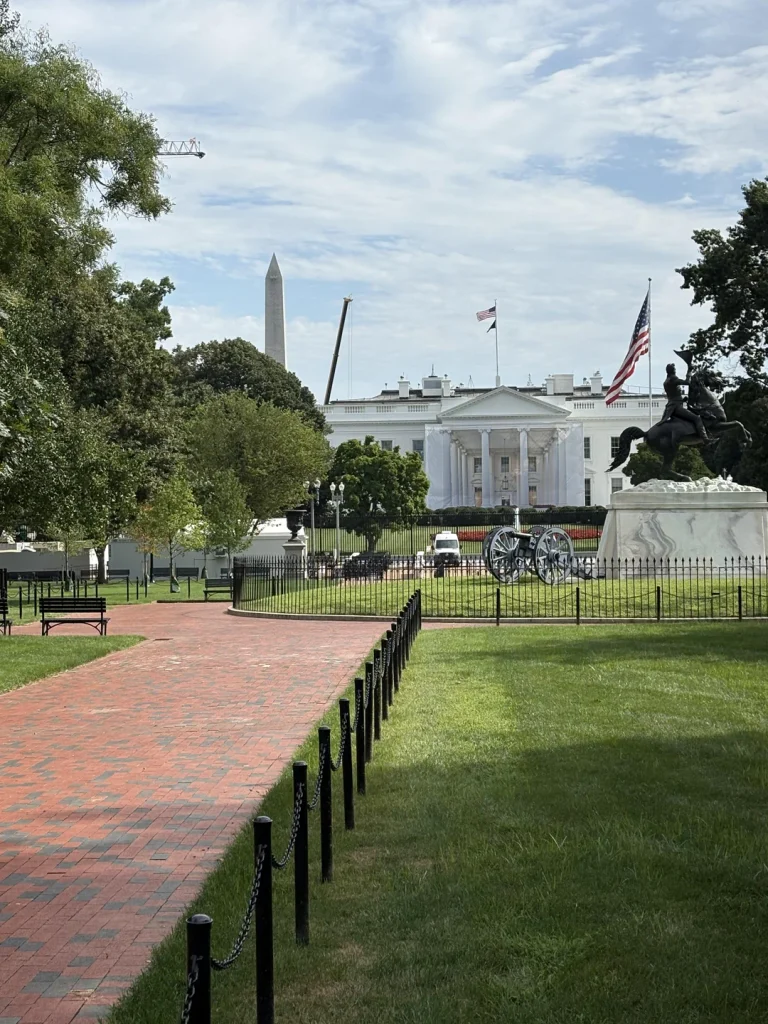
The most striking part of the post-race reaction has been how dramatically different the experience could be from one spectator to another.
One fan who regularly attends nine or ten races per year across Formula 1, IndyCar, IMSA and NASCAR described the entire Washington weekend as a great experience. The race brought them to Washington for the first time. They toured the monuments, explored the city’s food scene and spent hours inside the National Air and Space Museum during the race weekend. Getting into and out of the circuit was smooth when arriving as the gates opened and leaving roughly 45 minutes before the end of the event. The setting itself became part of the attraction.
Fans were treated to flyovers from the Blue Angels, a B-2 stealth bomber and Air Force One. The Smithsonian museums provided air-conditioned escapes from the August weather, clean bathrooms and something genuinely unique compared with a conventional race circuit. For a family attending together, that combination of racing, museums, aviation and Washington landmarks made the weekend much more than simply watching IndyCars. There was also an extraordinary security presence. Fans reported seeing personnel from TSA, the Secret Service, National Guard, U.S. Army, U.S. Marshals and Park Police. One person who had worked NASCAR and IndyCar events for four years said it was the first time workers themselves had been required to pass through metal detectors and bag checks.
Others compared it with the relatively relaxed environments at Road America and Mid-Ohio. There was even discussion about confiscated vapes, candy and the intimidation factor created by the sheer amount of security. Yet that same successful weekend contained obvious shortcomings. The original fan had never particularly enjoyed attending street races because of the limited sightlines, and Washington didn’t change that. With no television screens at the grandstand, they eventually parked themselves on the lawn in front of a large screen.
The fan activation was disappointing as well. There weren’t enough booths, tents or sponsors to interact with, and the autograph session lasted only 45 minutes. After waiting two hours, the fan still wasn’t able to meet any drivers — particularly disappointing when the goal had been to meet Hélio Castroneves. They did, however, spot Chip Ganassi and Mario Andretti walking around largely unnoticed. Even Java House became part of the great Stars-versus-Stripes debate. It apparently existed in Stars, while those elsewhere wondered where it had gone.
Food was another wildly variable experience. Arrive early enough and there were virtually no lines. Wait until later and it became a completely different event. Fans reported concessions selling out, one person waiting roughly 90 minutes for a burger and another hearing about hot dogs being served without buns because the vendor had run out.
That doesn’t necessarily ruin an event, but it illustrates how quickly the infrastructure struggled once the crowds arrived.
Stars Wasn’t Necessarily Better
Some initially came away believing Stars had been considerably better than Stripes.
There were reasons for that impression. Stars had Java House, access to the Museum of Natural History, the Sculpture Garden, cafes, an outdoor bar and convenient access to the Smithsonian Metro station. Fans could escape the heat and spend time somewhere other than a crowded sidewalk. But another detailed account from Stars paints an almost completely opposite picture. That spectator rated the experience just 2/10.
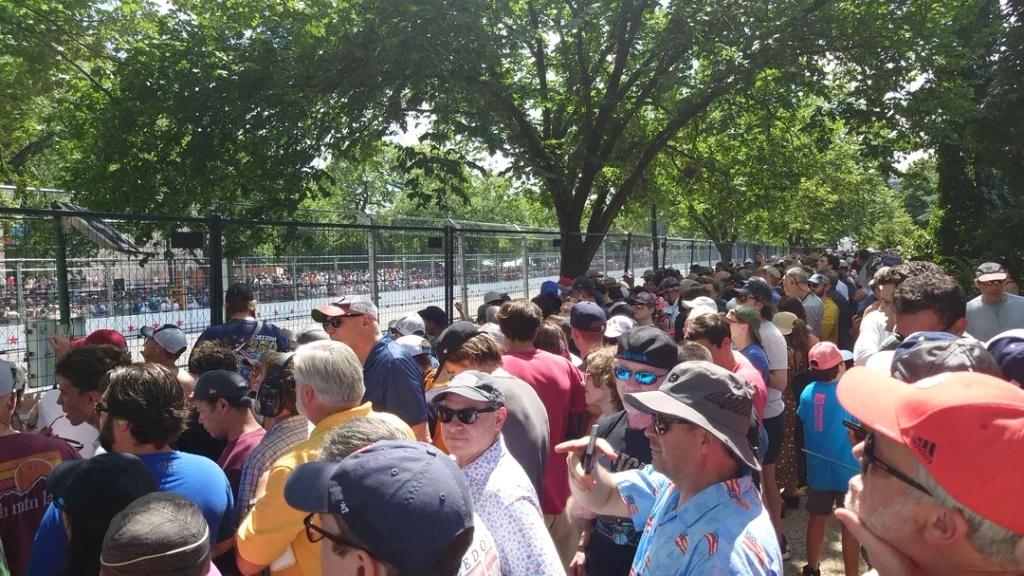
The central complaint wasn’t that the racing was bad. It was that an event built around race cars seemed inadequately prepared for the number of people who actually wanted to see the race cars. Around the exit of Turn 4, spectators reportedly packed sidewalks roughly ten deep. The crowd became so dense that the fan considered it legitimately dangerous, particularly because moving through the area would have been extremely difficult during an emergency. There was no public-address system in that location, no screen and unreliable phone service under the load of the crowd.
In other words, thousands of people were attending a motor race without a reliable way to see, hear or follow the motor race. Turn 2 wasn’t much better. Starlink banners blocked potential sightlines, leaving some spectators bending down to peer through small gaps above the wall. Others climbed rocks and structures trying to manufacture a view. Elevated viewing areas were packed. The Turn 3-4 platform was described as sardine-like, while the grandstand had a long line and offered only a few seconds of seeing cars pass on a straight. One fan arrived in a grandstand line at 10:30 and didn’t get inside until ten laps after the race had started. Another secured seats at 9 a.m. and simply stayed there all day rather than risk losing them.
That produced a strange reality: Washington could be an excellent event to attend while simultaneously being a poor race to spectate.
Washington Needed More Places to Watch
By later in the race, some viewing areas reportedly became much more manageable as spectators cycled out. People at the front gave up their spots and others moved forward.
But that isn’t necessarily evidence the system worked. If sightlines improve because frustrated spectators leave the area, the underlying problem hasn’t been solved. Fans quickly began suggesting changes should the Freedom 250 return.
More grandstands were the obvious request. Constitution Avenue, Independence Avenue and areas near the Sculpture Garden were all suggested as potential locations. The steps of the National Archives were also raised as a possible natural grandstand, with fans noting that they had previously been used for championship parades. Whether those locations could actually accommodate temporary structures is another question. The National Mall presents permitting restrictions, trees can’t simply be removed, and one fan had heard grandstands couldn’t be built on grass. The event was also assembled on a short timeline, which may help explain why making the circuit race-ready and accommodating VIP infrastructure took precedence over maximizing general-admission viewing.
But if Washington returns, those explanations become less persuasive. A second running would come with evidence of demand and firsthand knowledge of exactly where the bottlenecks appeared. More screens, more extensive PA coverage, better concession capacity and substantially more viewing infrastructure would need to be priorities. Because there was clearly demand.
One fan who stayed home because they expected the hastily assembled event to provide a poor spectator experience came away impressed by both the course and the race itself. They argued that there is a hole in the Mid-Atlantic market between Charlotte and Philadelphia and that the Washington turnout demonstrated potential for a properly planned, paid event. That might be one of the biggest takeaways from the entire weekend. IndyCar didn’t simply bring existing fans to another race.
It brought people to Washington, introduced first-time spectators to IndyCar and gave existing motorsports fans a reason to travel somewhere they otherwise wouldn’t have visited. One attendee explicitly said they never would have come to Washington without the Freedom 250 — and now plan to return to the city even without a race.
That’s an economic and promotional argument much bigger than whether everyone could see Turn 4.
Even Sting Ray Robb Made a New Fan
There may not be a better example of the Freedom 250’s ability to reach beyond IndyCar’s existing audience than Sting Ray Robb.
One account of the weekend highlighted Robb’s maintenance truck, decorated with seven puppies climbing on his race car. That was apparently enough to create a new fan almost immediately. Robb then crashed early, but the connection had already happened. It sparked a surprisingly warm discussion about a driver who normally receives plenty of criticism for his on-track performance.
Several people recalled positive personal interactions with Robb. One fan who met him at Portland in 2024 remembered Robb noticing their Irish accent, asking about their trip and then recognizing them later in the paddock and checking whether the jet lag had improved. Others have warmed to his self-deprecating personality, while his support for animal welfare through some of his liveries has won over people who otherwise have little in common with him. There remains plenty of criticism.
Some believe Robb was promoted into IndyCar before he was ready, while others point out that he funded his opportunities and has been involved in too many incidents. Dalton Kellett was invoked as a comparison, with the argument that Kellett was treated harshly despite many of his retirements coming from mechanical problems in an uncompetitive Foyt operation. Kellett was never particularly fast, but he also wasn’t necessarily the wrecking ball some expected him to become. Robb’s future as a top-level driver remains debatable. One interesting suggestion was that his personality and ability to interact with fans could eventually make him valuable in broadcasting, perhaps in a role similar to Townsend Bell.
And that highlights a weakness in the American open-wheel ladder. NASCAR has national series below Cup where professional drivers can build long careers. In single-seaters, drivers who can’t retain an IndyCar seat generally have to look toward sports cars or elsewhere rather than simply dropping into another professional open-wheel championship. Still, the broader point from Washington is simpler. Someone saw puppies on an IndyCar transporter and suddenly cared about Sting Ray Robb.
That’s how fandom sometimes begins.
Rasmussen Can’t Catch a Break
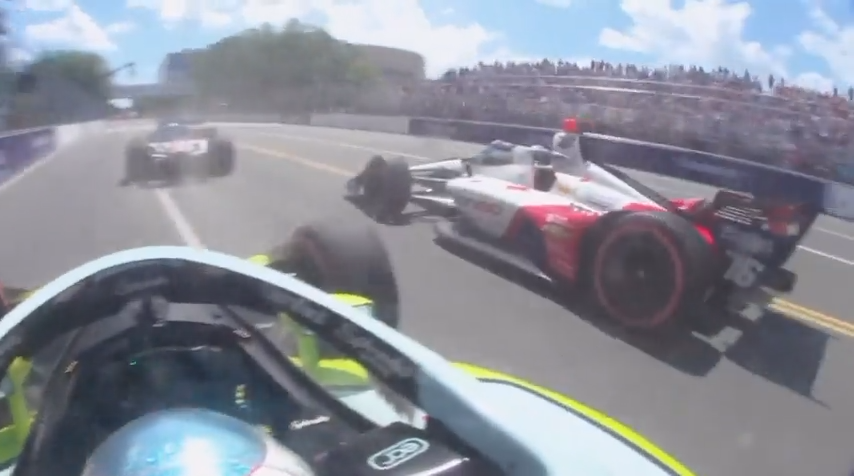
Christian Rasmussen’s season went in the opposite direction.
His Freedom 250 ended after he was hit by Marcus Armstrong, continuing an extraordinary run in which Rasmussen has now recorded eight DNFs or far-behind finishes across the last ten races. This one was particularly painful because Rasmussen had produced a career-best qualifying performance before being taken out of a top-ten position through no fault of his own. And it wasn’t the first time recently.
For the second consecutive weekend, a potentially strong top-ten run ended because of someone else’s incident. Add reliability problems to that equation and Rasmussen has spent much of this stretch barely getting the opportunity to turn his underlying pace into results. That doesn’t completely absolve him over the season.
Rasmussen has made his own mistakes, and the “win it or bin it” tendency remains something he needs to control if Ed Carpenter Racing is going to progress. Between crashes, reliability and plain bad luck, ECR simply isn’t accumulating enough productive race mileage.
But Washington belongs firmly in the bad-luck category. Armstrong, meanwhile, has increasingly attracted criticism for his decision-making since Road America. There is a sense that frustration may be creeping into his driving, with several recent moves doing little to help that perception. The incident also revived another longstanding IndyCar complaint: rotating onboard cameras.
Fans want to see the driver’s hands, steering input and trajectory through an incident. Instead, the camera sometimes rotates toward the other car at exactly the moment when the forward-facing view would be most useful. Scott McLaughlin’s incident with Kirkwood was cited as another example. The obvious fan request is 360-degree onboard cameras for the IR-28, allowing the broadcast to record everything and choose the appropriate angle afterward rather than physically moving the viewer’s perspective during the action. Whether implementing that is as straightforward as it sounds is debatable. Race cars subject cameras to vibration and forces far beyond normal consumer applications, and the software behind existing consumer 360-degree systems may introduce its own complications.
But the desire is obvious: when the IR-28 arrives, fans don’t simply want a new race car. They want IndyCar’s broadcast technology to evolve with it.
Could the IR-28 Become Something Much Bigger?
That anticipation around the new car is already producing some ambitious ideas.
One proposal imagines the IR-28 not merely as the next IndyCar chassis, but as the basis of a global open-wheel formula. Under that concept, the existing IndyCar Series would remain largely unchanged: roughly 17 races, primarily in North America, maintaining its combination of ovals, road courses and street circuits. Instead of making that championship travel around the world, separate regional series could use the same basic car.
A European IndyCar championship could visit circuits such as Brands Hatch, Hockenheim, Zolder, Mugello, Spa, Donington and even the Lausitzring. Former Formula 1 drivers, F2 graduates without F1 seats, Formula E competitors and sports-car professionals could potentially populate the field. Then everything would converge on Indianapolis. European teams could attempt to qualify for the Indianapolis 500 alongside Penske, Ganassi, Andretti, McLaren and the rest of the existing field. Forty or 45 cars fighting for the traditional 33 starting positions would transform Bump Day.
A handful of crossover “Majors” could theoretically connect the championships, with ideas including Long Beach, Indianapolis, Hockenheim, a European 500-miler, Washington, Surfers Paradise and a Brazilian event.
It’s an entertaining vision. It’s also one that immediately produces the most important question imaginable:
Who pays for it?
IndyCar Doesn’t Need to Become Formula 1
Reaction to the global IR-28 concept was overwhelmingly skeptical.
The cost of creating and sustaining a European championship would be enormous. Teams at the smaller end of the existing IndyCar grid already operate under constraints that make even adding international races to the current calendar potentially difficult. There is also history here. American open-wheel racing has previously attempted much greater international expansion, and nobody wants growth ambitious enough to undermine the championship that already exists.
The counterargument is that IndyCar is fundamentally a North American racing series — and there is nothing inherently wrong with that. More Canadian races are plausible. Mexico could be an attractive expansion opportunity. Brazil has obvious historical connections to IndyCar, and a return to Australia or Japan becomes easier to imagine if an outside promoter is willing to carry the financial burden. Europe is considerably harder.
Even enthusiasts who would personally love an IndyCar race at the Lausitzring questioned whether enough spectators would actually attend. Hockenheim and the Nürburgring could theoretically offer famous venues, but famous empty grandstands don’t pay the bills. The IR-28 doesn’t need to conquer Europe to succeed. It needs to make the championship it already serves healthier.
And Washington may actually provide a much more realistic blueprint for IndyCar’s future than a hypothetical European championship.
IndyCar’s Opportunity Might Be Right in Front of It
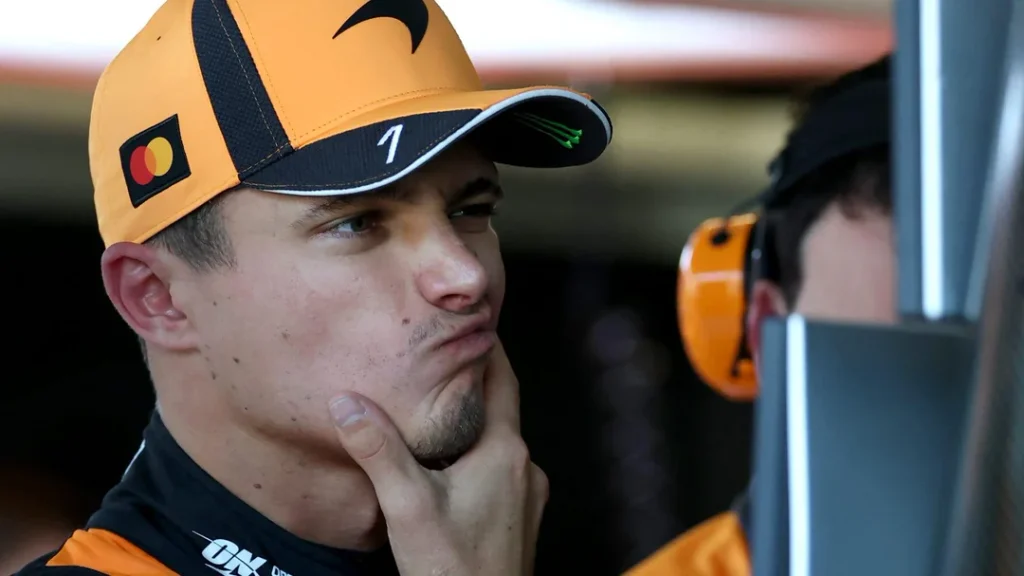
The timing of all this is particularly interesting because motorsports fans are simultaneously discussing access to Formula 1.
Fans say the move from ESPN to Apple TV has changed their viewing habits. Some who previously watched through Hulu or ESPN aren’t willing to pay for another subscription. Others still technically have access but simply don’t instinctively open Apple TV on a Sunday morning. Subscription fatigue is real in those accounts. Some longtime fans say they’ve stopped watching officially, while others have reduced the number of services they maintain and simply accept that certain sports won’t be available. The debate over why F1 viewership has fallen is more complicated than blaming one platform.
One important counterpoint is that the first three races were reportedly flat year-over-year before two races disappeared from the calendar ahead of Miami, creating a long period without races. That kind of interruption can produce an “out of sight, out of mind” effect.
The racing itself also matters. Fans who came to F1 through Drive to Survive don’t necessarily have the same attachment as lifelong motorsports followers. Some have drifted away as the novelty faded. And F1 presents a difficult proposition to casual sports fans: if you choose the wrong driver, that driver may realistically have almost no chance of winning. That’s very different from traditional American sports, where even terrible teams win games, or NASCAR seasons where a large portion of the field can realistically find Victory Lane.
IndyCar’s relative parity can be messy, but it is also an asset. Fans in this discussion repeatedly described IndyCar, IMSA and WEC as alternatives they now find more entertaining. That doesn’t mean IndyCar is suddenly about to steal Formula 1’s American audience. F1 remains an entirely different proposition, and one fan pointed out the obvious counterargument: spec-heavy IndyCar racing doesn’t appeal to everyone who follows F1 for technological competition.
But accessibility matters. ESPN didn’t just broadcast Formula 1. Being part of a mainstream sports ecosystem allowed casual viewers to encounter it. Once something moves behind another dedicated subscription and requires viewers to actively seek it out, some of those people disappear.
That should be a lesson IndyCar pays very close attention to.
Washington Put IndyCar in Front of People
The Freedom 250 wasn’t perfect.
At times, it wasn’t even close. There were overcrowded sidewalks, blocked sightlines, insufficient screens, missing PA coverage, hour-plus concession lines and grandstands that couldn’t come close to accommodating demand. Some spectators had an incredible weekend.
Others rated it 2/10. Both experiences can be true. But there is something IndyCar should not overlook amid the criticism: people showed up.
First-time race attendees showed up. Families showed up. Casual spectators showed up. Experienced fans traveled to Washington. People who couldn’t see enough of the circuit still wanted to see the cars badly enough that they climbed rocks and searched for tiny gaps beneath advertising banners. That is a logistical failure, but it’s also evidence of demand. The Freedom 250 turned the National Mall into an IndyCar event, placed race cars alongside Smithsonian museums and military flyovers, introduced people to drivers they had never heard of and gave motorsports fans a reason to visit Washington.
One fan came away wanting to return to the city. Another who had never attended a race before was thrilled simply to see IndyCars in person for the price of a train ride. Another stayed home because they expected the event to be poorly organized, watched what happened and now says they’d attend if it returns.
And somewhere in the middle of all of it, seven puppies on Sting Ray Robb’s truck created another IndyCar fan. There will always be temptation to imagine what IndyCar could become with a global championship, famous European circuits and 45 cars attempting to qualify for Indianapolis. But Washington offered a considerably simpler vision. Put IndyCar somewhere people can discover it. Make it accessible. Give them reasons to care about the drivers. Give them a race worth watching.
And next time, make sure they can actually see it.