

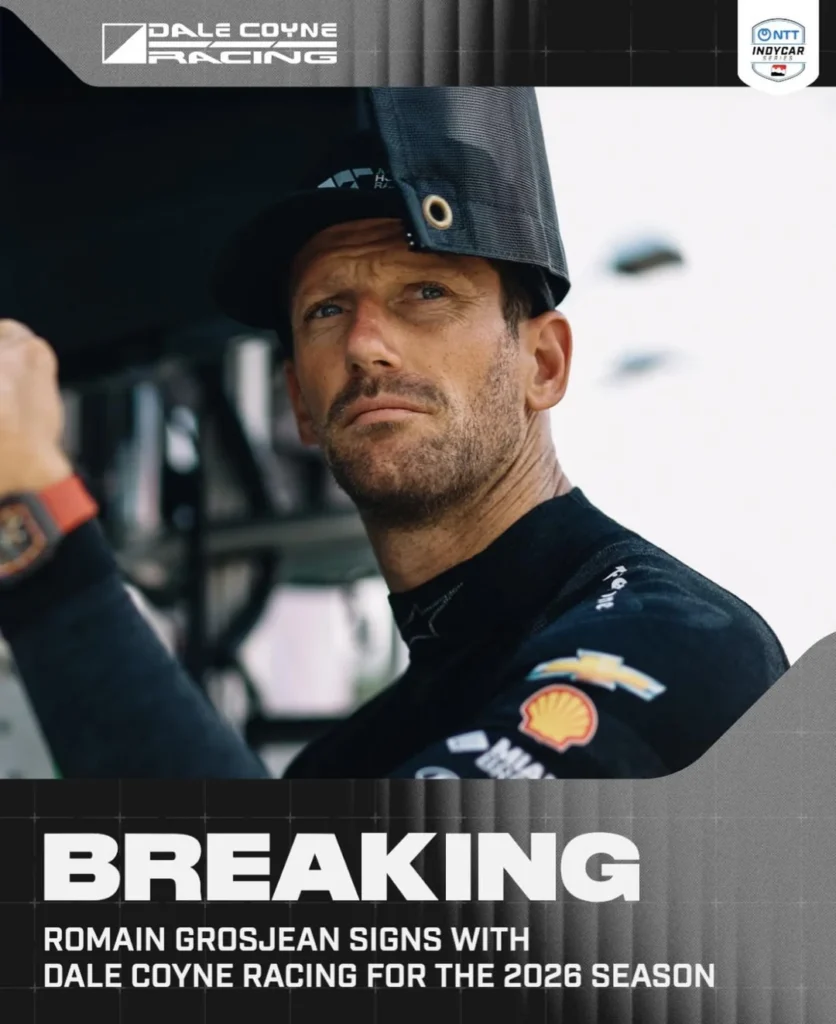
Romain Grosjean is officially back with Dale Coyne Racing, set to pilot the #18 Honda for the 2026 IndyCar season per IndyCar’s announcement on Instagram.
And while the confirmation sparked immediate speculation, one thing is now clear: by announcing Grosjean, the funding is there. The deal does not get confirmed otherwise. What remains unclear are the details.
A Reunion With Real Upside
On the sporting side, this move feels like unfinished business.
Grosjean’s first stint with Dale Coyne Racing in 2021 is still remembered as one of the most compelling driver-team pairings of that season. His Laguna Seca performance remains a reference point, proof that he can extract serious pace from modest equipment when comfortable and energized. That version of Grosjean, aggressive, sharp, and visibly enjoying himself, is the one many want to see again.
There’s belief that a lower-pressure environment compared to Andretti could help unlock that form. With Dennis Hauger’s performance last year and Rinus VeeKay nearly securing multiple podiums, some see real upside in the current DCR package. An eight-year win drought doesn’t feel untouchable if strategy, execution, and timing align.
If 2021 is anything to go by, there’s a scenario where Grosjean steals a win if the race unfolds correctly.
But not everyone is convinced.
Some would be shocked if either DCR car contends for a podium, let alone a victory. Grosjean’s IndyCar résumé still reads zero wins, and incidents like Portland remain part of the perception landscape. For skeptics, volatility still defines the risk profile.
Even so, one emotional note rang clearly: after what was described as a “long, regional nightmare,” the Indianapolis 500 once again features a French driver. That alone matters to a portion of the fanbase.
Funding Secured, Transparency Pending
The louder debate, however, initially centered on sponsorship uncertainty.
If this agreement has been in motion since October 2025 alongside Grosjean’s backers, how could the car still appear commercially unresolved? That question drove much of the early frustration, particularly surrounding the Ault sponsorship situation and Todd Ault’s reputation for delayed or disputed payments.
But the confirmation itself changes the equation.
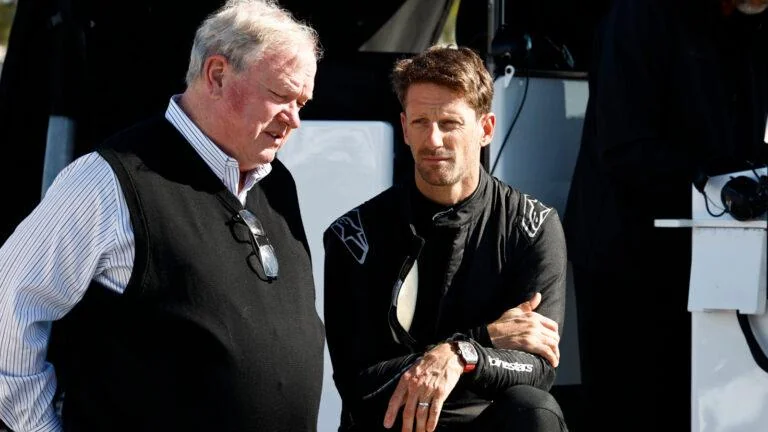
Dale Coyne Racing does not publicly lock in a full-season driver without the budget secured. The funding is there. What hasn’t been revealed are the structural details, who is primary, how it’s allocated across the calendar, and what the branding will ultimately look like.
That gap in transparency created room for humor.
The “GroFundMe” Discourse
With sponsorship optics unclear, the conversation quickly turned tongue-in-cheek.
Should fans start a GoFundMe? Could the subreddit contribute $5 each? The “GroFundMe” concept practically branded itself.
What makes the joke resonate is that crowd-backed motorsport funding has precedent:
- Justin Wilson’s PLC model financing his Minardi seat in exchange for future earnings.
- The NASCAR Dogecoin car.
- r/NASCAR sponsoring Ryan Vargas.
- Elite INDYCAR (Facebook group) appearing as a minor sponsor on Cusick Motorsports’ Indy 500 entries.
- r/WEC placing its logo across the entire grid at the 12 Hours of Brno for 400 euros.
- Caterham F1 crowd-funding its final race.
- Scott Dixon utilizing upfront capital for future earnings.
- “Money for Memo.”
- Conor Daly’s polka-dot entry framed as crowd-supported.
Elite INDYCAR’s continued minor sponsorship involvement with Cusick, including mirror placements at the Indy 500 and expansion into Indy NXT, stands as one of the cleaner IndyCar examples.
But there’s a difference between novelty placements and funding a full-season IndyCar program. The GroFundMe jokes highlight engagement, not financial reality.
The Reputation Divide
Beyond funding, Grosjean’s market perception remains split.
Some frame him as a driver with significant crash history and no IndyCar wins, a challenging sponsorship pitch. Others counter that his IMSA GTP stint with Lamborghini’s SC63 program did not reflect recklessness at all. In fact, crash frequency in that environment was minimal from what many recall.
His Lamborghini exit appears structural rather than performance-driven: he was tied specifically to Iron Lynx’s SC63 effort rather than Squadra Corse’s in-house GT3 structure. When that relationship ended, so did the seat.
In a paddock where even Prema is reportedly navigating sponsorship headwinds, Grosjean’s situation looks less like isolation and more like industry-wide tightening.
The Bottom Line
The speculation cycle is over. The seat is confirmed. The budget is secured.
What remains unknown are the commercial details, not whether the money exists.
Now the narrative shifts back to performance. Can Grosjean recreate the magic of 2021? Can Dale Coyne Racing convert recent flashes of competitiveness into podiums, or even snap that eight-year win drought?
The funding question has been answered by the announcement itself.
The on-track question begins in 2026.