

Formula 1 is heading into one of the strangest stretches of its season.
The upcoming triple-header begins in Baku before moving to Sepang for the Bahrain Grand Prix — yes, the Bahrain Grand Prix in Malaysia — and then Singapore. But even before the cars hit the track, there is plenty to talk about. Williams is already compromising its 2026 development to focus on 2027, prompting an understandable case of déjà vu. Aston Martin continues to raise the eternal question of just how long Lance Stroll can keep his seat. Mercedes has leaned so hard into its new “family” identity that the jokes practically write themselves. Michael Masi has a new job. And with Baku approaching, Formula 1 has once again demonstrated that give it two data points and someone will find a curse.
There is also a much bigger historical conversation brewing: just how badly did Ferrari squander its opportunities in 2017 and 2018?
Williams is asking everyone to believe in next year. Again.

Williams has accepted a compromise in the development of its 2026 car as its attention increasingly shifts toward 2027.
There is just one problem with that sentence: it sounds extremely familiar. The immediate response is obvious. Wasn’t 2025 sacrificed in part to prepare for 2026? And wasn’t 2024 already being discussed through the lens of the enormous opportunity presented by the 2026 regulations? Williams increasingly feels like a team permanently preparing for the season after the current one.
The running joke is that by April 2027, Williams will announce that it has compromised 2027 to focus on 2028. “Next year is our year” is normally championship language. At Williams, it has become a promise that eventually the team will produce a consistently competitive car.
But there is a serious issue underneath the jokes. James Vowles inherited an organization that required enormous modernization. The transformation is not simply a matter of designing a better front wing or finding a few tenths in the wind tunnel. Williams has been attempting to modernize facilities, software, processes and infrastructure while its competitors continue developing themselves. That distinction matters because it makes evaluating Vowles unusually difficult.
If the underlying organization was as outdated as has been described, transforming Williams was always going to be a multi-year project. Changing engineering processes inside any established organization can be difficult enough; doing it while simultaneously trying to compete against Formula 1 teams that already possess modern infrastructure makes the challenge considerably greater. At the same time, patience cannot become infinite. Vowles began leading Williams in 2023. Eventually, organizational transformation has to produce something visible on the racetrack. There is a difference between accepting that rebuilding Williams takes time and accepting an endlessly moving target. Expectation management matters too. If each compromised season is sold as an investment in the next major opportunity, eventually that opportunity has to arrive.
Otherwise “focus on next year” stops sounding like a strategy and starts sounding like the strategy itself.
Lance Stroll remains Formula 1’s ultimate exception
Another debate that never completely disappears surrounds Lance Stroll.
Why is he still driving for Aston Martin? The simplest answer is also the one that makes most attempts at a deeper explanation unnecessary: his father owns the team. Formula 1 has always had drivers whose careers were helped by money or family connections. That alone is not particularly unusual. What makes Stroll’s situation different is the degree of security it provides.
Other drivers — particularly rookies — can find their Formula 1 careers judged over remarkably short periods. Stroll does not operate under the same pressure. There is, however, an interesting argument for why replacing him right now might not actually accomplish much. Aston Martin is struggling. Putting a rookie into a difficult car could create an environment where the newcomer spends an entire season at the back, potentially damaging their reputation before they have a meaningful opportunity to demonstrate what they can do. Keeping Stroll in the seat while Aston Martin attempts to solve its larger problems avoids sacrificing another driver’s career to a car that is not ready.
That does not make Stroll’s continued presence meritocratic. It simply means the consequences of replacing him are more complicated than “put someone faster in the car.”
There is also little reason to assume from the outside that Stroll simply doesn’t want to race. His demeanor away from the cockpit can appear detached, but that is different from knowing how he feels about actually driving. The fact that he returned quickly after breaking his wrists has previously been used as evidence that whatever he thinks about the media obligations and everything surrounding Formula 1, the racing itself still matters to him. Ultimately, though, Aston Martin operates under a reality no other team does. Most Formula 1 drivers have to continually justify why they should keep their seat.
Stroll can keep his for as long as the people controlling Aston Martin want him there.
Mercedes has become Formula 1’s newest “family”
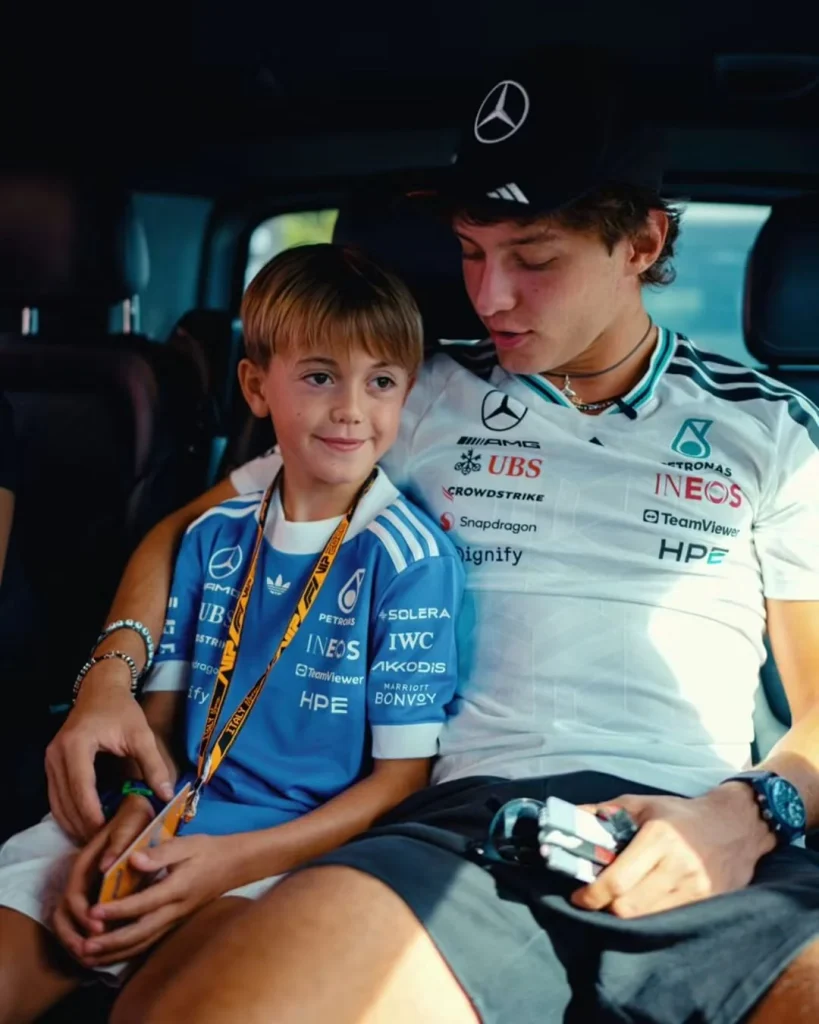
Mercedes, meanwhile, has been leaning heavily into a considerably softer theme.
The team’s Facebook post describing a race weekend “as a family” produced an immediate reaction: please stop with the family gimmick.
Formula 1 teams have long attempted to create identities extending beyond the cars themselves, but Mercedes appears to be pushing particularly hard on this one. The inevitable joke is that Mercedes-AMG Petronas Formula One Team is eventually going to become the Mercedes F1 Family. Or perhaps simply Fam1ly. The Vin Diesel jokes are unavoidable. If Mercedes continues at this rate, he may have to become team principal.
But the reaction also reveals an interesting tension in modern Formula 1. There is clearly an audience for personal access. Teams would not continually publish this material if nobody engaged with it. Formula 1 has increasingly blurred the line between sport and personality-driven entertainment, making drivers, partners, children and pets part of the wider content ecosystem. For some, that makes the paddock more human. There is also something genuinely positive about a workplace where family life does not have to be completely separated from professional life. Seeing leadership openly include family can normalize an environment in which working parents do not have to pretend that the rest of their lives disappear when they arrive at work.
But there is another side to it. There is a difference between naturally showing the people around a team and deliberately manufacturing parasocial engagement. Once the latter becomes too obvious, the content can start feeling less authentic rather than more intimate. And for those who simply want racing, there is an obvious alternative.
Give us more Max versus 100.
The Bahrain Grand Prix is heading to… Malaysia
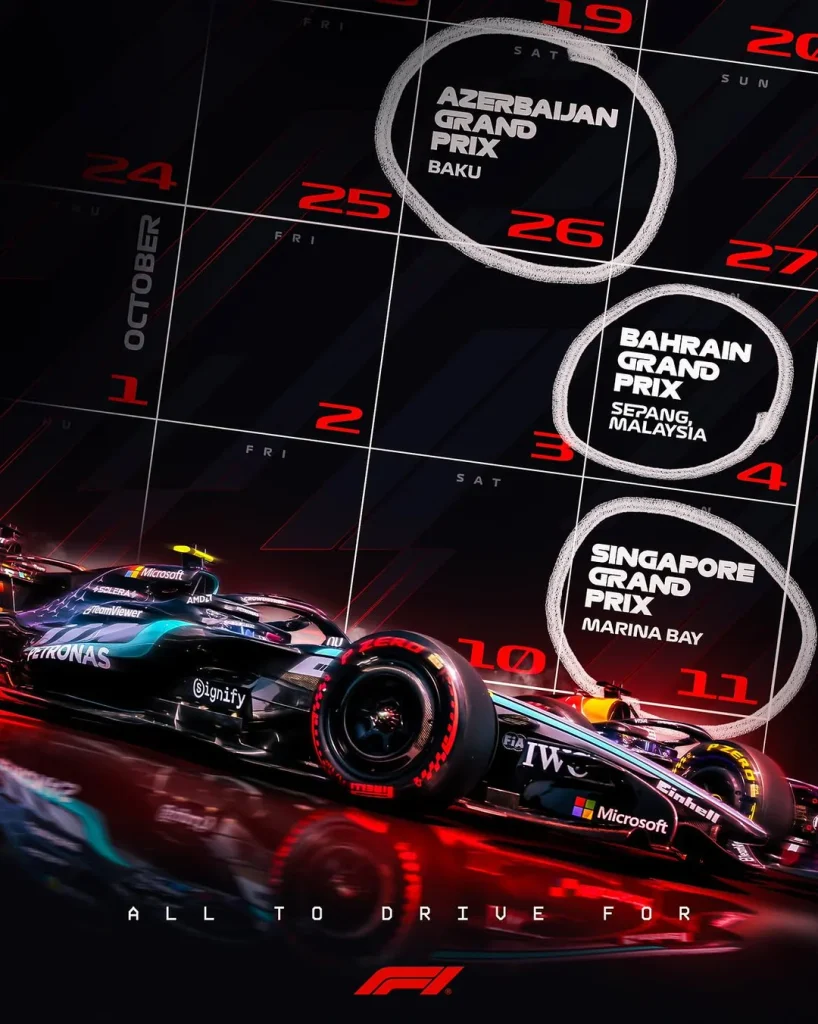
Nothing captures the strangeness of this season quite like the upcoming triple-header.
First comes the Azerbaijan Grand Prix in Baku. Then the Bahrain Grand Prix at Sepang in Malaysia. Then Singapore.
The phrase “Bahrain Grand Prix in Malaysia” remains objectively funny no matter how many times F1 says it.
Call it the Malaysian Grand Prix brought to you by Bahrain. Call it the Bahraysian Grand Prix. Or simply welcome everyone to beautiful Sepang, Bahrain. Whatever the name, the enthusiasm for Formula 1 returning to Sepang is obvious. There is particular intrigue because so much of the current grid has never raced there in Formula 1. Add the possibility of Malaysia’s weather and the prospect of these cars experiencing a wet Sepang weekend, and this could become one of the season’s most fascinating events.
There is an important distinction between celebrating Sepang and criticizing Bahrain International Circuit itself. Bahrain has produced plenty of good racing, with multiple overtaking opportunities, tire degradation and the technical challenge of Turn 10. Losing the normal Bahrain race is not necessarily something to celebrate. Getting Sepang back, however, is. The odd naming arrangement also has plenty of historical company. Formula 1 has previously staged Grands Prix whose names did not neatly correspond with their physical locations, including the San Marino Grand Prix in Italy, the Swiss Grand Prix in France and the Luxembourg Grand Prix in Germany.
So perhaps “Bahrain Grand Prix in Malaysia” is not as unprecedented as it initially sounds.
It is certainly one of the funniest.
Please stop inventing Formula 1 curses from two races
Baku has also delivered our latest statistically accurate but almost completely meaningless Formula 1 streak.
Every winner of the Azerbaijan Grand Prix since 2023 has failed to finish the race the following year. Sergio Perez won in 2023 and retired in 2024. Oscar Piastri won in 2024 and retired in 2025. Max Verstappen won in 2025.
Cue ominous music. Except, of course, we have a grand total of two examples. Two races do not make much of a curse.
This is one of Formula 1’s favorite statistical habits: choose an arbitrary starting point, identify something that happened twice and suddenly we have a streak. You can manufacture almost anything using that method. There are as many examples of a Baku winner having failed to score the previous season: Verstappen retired in 2021 before winning in 2022, while Valtteri Bottas retired in 2018 before winning in 2019.
Choose one direction and we have a winner’s curse. Choose the other and apparently failing to score is the secret to winning Baku. Statistics are useful when they tell us something about performance. They are considerably less useful when the sample consists of two convenient data points with everything before them discarded because it ruins the pattern. So Verstappen enters Baku as the defending winner.
Whether he finishes this year’s race will have considerably more to do with what happens this weekend than what Perez and Piastri did years earlier.
F1’s zero-overtake list needs an enormous asterisk
Another statistic making the rounds is far more interesting.
Five Formula 1 races have been listed as having zero on-track overtakes: 2003 Monaco Grand Prix, 2005 United States Grand Prix, 2009 European Grand Prix, 2021 Monaco Grand Prix and 2021 Belgian Grand Prix. Immediately, there are complications.
Lap-one position changes are not included in overtaking statistics, which explains some seemingly contradictory memories of these races. The 2009 European Grand Prix, for example, featured multiple changes on the opening lap despite subsequently ending up on the zero-overtake list. Then there is Spa 2021. Calling that a race at all remains controversial for obvious reasons. The event officially counted, but there was never a green-flag racing lap. The field completed laps behind the Safety Car in dreadful conditions before the event was ultimately abandoned, with Max Verstappen declared the winner.
That makes putting Spa alongside something like Indianapolis 2005 slightly strange. The 2005 United States Grand Prix was a farce of a completely different variety, but six cars at least competed at racing speed under green-flag conditions. Spa produced a procession behind the Safety Car. Perhaps the most revealing comparison, however, is not between those historical races.
It is Madrid. The Spanish Grand Prix produced only four on-track overtakes after Lap 1. We previously covered just how extraordinary that number was compared with the rest of the season, and the fact that a four-overtake race can immediately be invoked alongside Spa 2021 says plenty about how poorly the Madring’s debut was received. There is also something strangely memorable about races where nothing happens.
Spa’s endless rain delay created hours of commentators desperately finding anything to discuss. The experience was considerably less amusing for spectators sitting in the rain, particularly those dealing with traffic, long walks and eventually discovering there would be no actual racing. Sometimes a terrible race becomes memorable precisely because of how terrible it was.
That does not mean anyone wants another one.
Michael Masi has a new motorsport role

One of the central figures from the 2021 season has also returned to the conversation.
Former Formula 1 race director Michael Masi has been appointed head of sporting at SRO Motorsports Australia, which runs GT World Challenge Australia as part of its Shannons SpeedSeries network. Unsurprisingly, the announcement immediately reopened memories of his Formula 1 tenure.
Even years later, phrases associated with the 2021 Abu Dhabi Grand Prix remain permanently attached to Masi. “That’s so not right” and “We went motor racing” have become part of Formula 1’s vocabulary.
And that connection probably isn’t disappearing anytime soon. Interestingly, the zero-overtake discussion occurring at roughly the same time also brought Spa 2021 back into focus. Abu Dhabi dominates discussion of that season because of the championship implications, but Spa remains another deeply controversial chapter from the same year. The debate over which event was worse is almost beside the point. They were fundamentally different controversies.
What is clear is that 2021 left Formula 1 with moments that are still being argued about five years later. Masi can move into a completely different motorsport role.
His name, however, will probably remain inseparable from that season for a very long time.
Was 2018 Ferrari’s greatest missed championship?
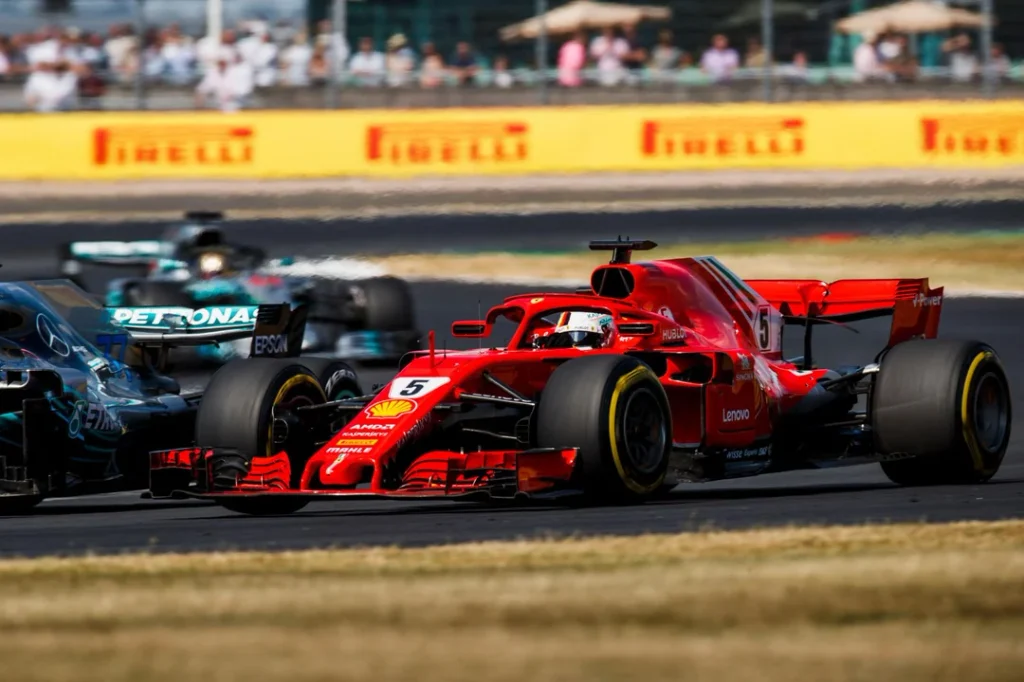
Then there is Ferrari.
A discussion about whether Ferrari squandered its best modern championship opportunity in 2018 quickly turns into a debate over whether the bigger missed opportunity was actually 2017. Both cases are compelling for different reasons. In 2017, Sebastian Vettel was extracting enormous results while fighting a Mercedes that appeared to have the stronger overall package. The championship remained competitive until a disastrous Asian stretch.
Singapore became the obvious inflection point. Vettel started from pole, but the opening-lap collision involving Vettel, Kimi Räikkönen and Max Verstappen eliminated Ferrari’s opportunity immediately. It was the kind of chaotic start that becomes easy to dissect with hindsight but was much harder to anticipate in the moment. Vettel’s move across the track from pole was hardly unprecedented; what made the situation extraordinary was Räikkönen launching from fourth well enough to arrive alongside. Then came further problems in Malaysia and Japan.
Taken together, the stretch destroyed Ferrari’s championship momentum. That is why 2017 can arguably feel like the crueler missed opportunity: Ferrari did not simply lose because Mercedes gradually became faster. Reliability, incidents and execution combined at exactly the wrong moment. But 2018 carries a different frustration because Ferrari arguably had an even stronger car.
For significant portions of that season, Ferrari could fight Mercedes directly. Vettel won in Belgium even after the infamous German Grand Prix crash that has come to symbolize his title collapse. Reducing the entire championship to Hockenheim, however, is too simplistic. Vettel made mistakes. Ferrari made mistakes. Ferrari also lost ground in the development battle while Lewis Hamilton produced an extraordinary second half of the season.
Monza offered a perfect miniature version of the problem. Ferrari had Kimi Räikkönen on pole, Vettel immediately became entangled fighting Hamilton, and what should have been an enormous opportunity instead became another weekend where Mercedes extracted more. Singapore then provided another example of Hamilton simply producing something exceptional when Ferrari needed to strike back. The important distinction is that Vettel’s errors did not occur in isolation. As Ferrari lost ground and repeatedly failed to maximize weekends, its driver increasingly had to extract more from narrowing opportunities. That does not erase mistakes, but it helps explain why simply counting Vettel’s lost points does not tell the complete story.
The 2018 collapse was shared. And perhaps that is why it still resonates. Ferrari had the driver. It had a car capable of fighting Mercedes. It had genuine championship opportunities across two consecutive seasons.
Yet somehow neither became a title. There is even an argument that 2010 remains the greater missed opportunity of all, considering Ferrari entered the final race with Fernando Alonso leading the championship before strategy helped turn the finale against them. Which brings us to perhaps the most Ferrari part of this entire discussion. Different seasons. Different drivers. Different cars.
And somehow strategy and development keep finding their way into the conversation.
F1 can turn almost anything into a storyline
That may be the connecting thread through all of these conversations.
Williams says it is compromising today for tomorrow, and immediately years of similar promises become part of the story. Mercedes posts about family, and suddenly its social-media identity becomes a referendum on how much access people actually want into the personal lives surrounding Formula 1. Two defending Baku winners retire the following season, and we have a curse.
Five races produce zero overtakes, and the definition of an overtake — or even a race — becomes the argument. Michael Masi gets a new job in Australian motorsport, and 2021 instantly returns. Ferrari’s 2018 season gets revisited, and within minutes the discussion stretches backward to 2017 and 2010.
Then there is the one story that barely needs embellishment at all. Formula 1 is about to travel from Azerbaijan to the Bahrain Grand Prix in Malaysia before finishing the triple-header in Singapore.
Sometimes the sport creates enough weirdness on its own.