

Formula 1 may be away from the track, but the sport has not exactly gone quiet.
In the absence of a race weekend, fans have filled the vacuum with everything from championship predictions and historical test results to special liveries, teammate comparisons and Lewis Hamilton jogging past penguins in Antarctica. Taken separately, these stories feel random. Put together, though, they reveal something more interesting about how Formula 1 is discussed now. The sport is no longer sustained only by race results. Fans are constantly reinterpreting the past, debating how much context should be attached to statistics, turning obvious conclusions into headlines and deciding which teams understand visual identity better than everyone else.
Sometimes the biggest story is the championship leader. Sometimes it is a yellow Racing Bulls car.
Sometimes it is a seal realizing Lewis Hamilton has entered its habitat.
Antonelli Is the Favorite, Which Apparently Counts as a Prediction
Both Helmut Marko and Bernie Ecclestone reportedly believe Kimi Antonelli will become the 2026 Formula 1 world champion.
That is technically a prediction. It is also the closest thing Formula 1 can produce to saying that the driver leading the championship, driving what many believe is the strongest car and holding a comfortable points advantage is currently the most likely driver to win the championship. The reaction was predictably sarcastic.
Antonelli is already the obvious favorite. The real debate is not whether he should be considered the favorite, but what would actually have to happen for him to lose. His advantage is significant enough that his rivals cannot simply wait for one bad weekend. They would need to consistently outscore him across the remainder of the season, and that is much easier to describe mathematically than accomplish on track. The argument for Antonelli is straightforward.
He has built a lead that is larger and more convincing than some recent midseason championship advantages. He has also often looked at least as quick as George Russell, while Russell has dealt with recurring car problems. Ferrari has not consistently appeared fast enough to apply pressure everywhere, while both Max Verstappen and Lando Norris are considered too far behind to rely solely on normal race-to-race gains. That does not make the title inevitable. Reliability has been a bigger factor this season, and a tightly packed closing stretch could introduce pressure that Antonelli has not yet faced as a championship leader. A run of nine races in eleven weeks would test any driver, especially one still early in his Formula 1 career.
There is also a natural hesitation because fans have seen promising title campaigns deteriorate before. Oscar Piastri was treated by many as a future champion in waiting during the first half of last season. He appeared composed, consistent and capable of increasing his advantage over Lando Norris. Instead, his form fell away while Norris improved, and the title picture changed dramatically. The comparison is imperfect.
Piastri never created the kind of gap Antonelli currently holds. Norris continued to show signs of being the faster McLaren driver even when Piastri was winning, while Antonelli has looked more consistently competitive against Russell. Piastri’s biggest advantage was also influenced by a Norris retirement, whereas Antonelli’s lead has developed over a broader period. The lesson is not that Antonelli is about to collapse. It is that Formula 1 championships are rarely won because somebody declared the leader likely to win during the summer break. Marko and Ecclestone may be right. At this stage, most people probably agree with them. The headline sounds more dramatic than the conclusion actually is.
That may be the clearest sign yet that Formula 1 is deep into its summer news cycle.
The More Interesting Story May Be George Russell
The constant celebration of Antonelli creates an uncomfortable secondary narrative around Russell.
When Max Verstappen or Lando Norris praises Antonelli, it can be interpreted as admiration for a young driver. It can also sound like another indirect judgment of Russell. Russell has reasons to believe the current standings do not perfectly reflect his season. His car has suffered problems, and several weekends have been compromised in ways Antonelli’s were not. From his perspective, those races may not represent a fair comparison. But Formula 1 has never waited patiently for context before forming a new hierarchy.
Once a younger teammate begins leading the championship, every compliment aimed at that driver starts to feel like another question directed at the other side of the garage. Antonelli is not only being presented as Mercedes’ future anymore. He is being treated as its present. That shift can happen quickly, especially in a sport where perception changes faster than machinery. Russell is still in mathematical contention, but the public conversation has already moved beyond whether he can win the championship. It is now focused on whether Antonelli can lose it.
That is a very different position for a driver who began the season expecting to lead the team.
Verstappen’s Teammate Statistics Need Context, but They Still Hurt
Another set of numbers circulating during the break compared Max Verstappen’s points total with each teammate after eleven races.
The list is dramatic. Daniel Ricciardo led Verstappen 117 to 67 in 2017 and 106 to 105 in 2018. From there, the comparison changed completely. Verstappen led Pierre Gasly 162 to 54 in 2019, Alex Albon 147 to 64 in 2020, Sergio Perez 187 to 104 in 2021, 208 to 151 in 2022, 281 to 171 in 2023 and 237 to 118 in 2024. Then came the most shocking number: Verstappen 155, Yuki Tsunoda seven after eleven races in 2025.
In 2026, Verstappen leads Isack Hadjar 109 to 68. The immediate conclusion is obvious. Tsunoda’s comparison looks catastrophic. Expressed as a percentage, the gap becomes even more extreme. Verstappen scored more than twenty times Tsunoda’s total across the measured period.
But points alone are not a clean measure of teammate performance. A driver can finish a similar distance behind Verstappen in two different seasons and receive completely different points totals depending on how competitive the rest of the field is. Finishing 45 seconds behind Verstappen could mean sixth in one year and twelfth in another. That distinction matters when comparing Hadjar with Tsunoda, Albon, Gasly or Perez.
Hadjar’s points total benefits from the position of Red Bull relative to the rest of the grid. If the same performance gap existed while the car was only capable of fighting in the midfield, his points percentage could look much worse without his actual pace changing at all. The same is true in reverse for Tsunoda. The 2025 field was described as extremely close, meaning a small deficit could drop a driver outside the points entirely. His result still looked poor, but the raw total exaggerated how uniquely poor it may have been compared with other Verstappen teammates.
Qualifying data offers a different picture. Hadjar has generally been closer to Verstappen over one lap than Tsunoda was. Even when Verstappen has encountered issues, simply being close enough to capitalize is something several previous teammates failed to do. That does not settle the debate.
A better grid position only matters if it leads to a more competitive race. If Hadjar qualifies eighth instead of thirteenth but still finishes roughly the same distance behind Verstappen, then the Saturday improvement may not translate into stronger overall performance. The standards have also changed. Perez was criticized for failing to remain within a pit stop of Verstappen or for being unable to interfere with rival teams. Hadjar can spend much of a race away from the leading group and still receive praise because the current expectation for Verstappen’s teammate is no longer to challenge him.
It is to survive him.
Red Bull’s Second Seat Has Changed Meaning
That may be the biggest shift revealed by the comparison.
When Gasly and Albon were promoted, Red Bull still appeared to be searching for another Ricciardo: a teammate capable of challenging Verstappen, supporting a title campaign and occasionally beating him outright. Now, nobody seriously expects that. Hadjar is judged by whether he stays reasonably close in qualifying, scores consistently and avoids the complete collapse that has defined several recent occupants of the second car.
That does not necessarily mean Hadjar is worse than Perez, Albon or Gasly. It means Red Bull’s definition of success has been lowered by years of evidence showing how difficult Verstappen is to match. Albon may not have been dramatically worse than Hadjar relative to Verstappen, but the optics were harsher because Verstappen was often qualifying near the front while Albon missed Q3. Hadjar can remain inside the top ten while still giving away a similar amount of time.
The position of the car changes the appearance of the driver. That also complicates how Tsunoda and Liam Lawson are remembered. Some believe both were placed in the second Red Bull at the worst possible moment, when the car was particularly difficult and the field was compressed. On that reading, moving Lawson back out of the seat may have protected his career, while Tsunoda was allowed to absorb the damage.
Others see that explanation as too generous. Tsunoda had five seasons to prove he deserved a long-term place in Formula 1. His popularity, personality and unfiltered radio messages may have helped create a stronger online following than his results justified. Hadjar has similar emotional outbursts, but he is also delivering points and has a podium. That does not erase the context around the car.
It does explain why the public is more forgiving of one driver than the other.
Ricciardo Remains the Exception Everyone Remembers
The same graphic also revived nostalgia for Daniel Ricciardo.
He remains the only teammate on the list who could consistently compete with Verstappen across a meaningful period. In 2017, he led comfortably after eleven races. In 2018, the two were separated by only one point. That does not prove Ricciardo was better than Verstappen overall. Verstappen suffered more reliability trouble in 2017, while Ricciardo endured his own run of problems in 2018. Verstappen also became more consistent as that season progressed and increasingly appeared to have the pace advantage.
Still, Ricciardo’s record looks better with every passing year. Gasly, Albon, Perez, Tsunoda and Hadjar have all struggled to stay close. The longer that pattern continues, the more impressive Ricciardo’s performance becomes. It also raises the inevitable alternate-history question: what would have happened if he had stayed?
Some believe Ricciardo would eventually have been pushed into a clear supporting role as Verstappen improved. Others think his presence could have helped Verstappen by taking points from rivals, particularly on tracks where Red Bull was strongest. There is no clean answer. Ricciardo left because the direction of the team was becoming clear. Verstappen was the long-term centerpiece, and Ricciardo was unlikely to accept being treated as a permanent second driver.
What remains is the statistical reminder that he was closer than anyone who followed.
The 2017 Hungary Test Now Looks Like an Alternate F1 Universe
A test session after the 2017 Hungarian Grand Prix offered another reminder of how quickly the sport changes.
Sebastian Vettel topped the session for Ferrari with a 1:17.124. Behind him were Lando Norris for McLaren, Kimi Räikkönen for Ferrari, Robert Kubica for Renault, Carlos Sainz and Daniil Kvyat for Toro Rosso, Lucas Auer and Nikita Mazepin for Force India, George Russell for Mercedes and Pierre Gasly for Red Bull. At the time, it was simply a test classification. Nine years later, it reads like a strange collection of established champions, future stars, lost prospects and drivers whose careers moved into completely different parts of motorsport.
The most striking detail is how much remained the same for Norris and Russell. Norris was already driving a McLaren. Russell was already in a Mercedes. Both would eventually become central figures for those teams. Norris finishing second behind Vettel also stands out because he was still only a teenager. The gap to the drivers behind him suggested that his speed at the Hungaroring was not something that appeared suddenly later in his career.
Hungary has continued to suit him. His record there across junior categories, testing and Formula 1 supports the idea that some drivers simply connect with particular circuits. He has been strong enough at so many tracks that Hungary is not an isolated strength, but the pattern was already visible before his full-time Formula 1 debut. The same list also shows how misleading a test appearance can be as a predictor of a future seat.
Lucas Auer drove for Force India through his Mercedes and BWT connections, but that did not necessarily mean he was close to a race opportunity. Other drivers were given tests because of sponsorship, development programs or commercial value rather than because a Formula 1 seat was imminent. The presence of Mazepin and Santino Ferrucci in the wider discussion also reminded fans that Formula 1 testing has never been reserved only for drivers who would later earn lasting respect.
Money, timing and team relationships have always influenced who gets behind the wheel.
Robert Kubica’s Day Still Feels Extraordinary
Among all the names, Robert Kubica’s test remains one of the most remarkable.
Completing roughly 150 laps at the Hungaroring would be physically punishing for any driver. Kubica did it while adapting around the lasting effects of his injuries and driving a Renault that was not regarded as especially fast or reliable. That alone made the session memorable. The test did not restore the career path he had once been expected to follow, but it became another example of his determination to return to top-level competition.
Looking back, the entire classification functions as a snapshot of motorsport careers before they fully separated. Some became world champions. Some moved into endurance racing, IndyCar, Super Formula, DTM, GT racing or other categories.
Some remained with the same team for almost a decade. Some disappeared from the Formula 1 conversation almost entirely.
At the time, nobody could know which name would mean what.
Racing Bulls Understands the Assignment
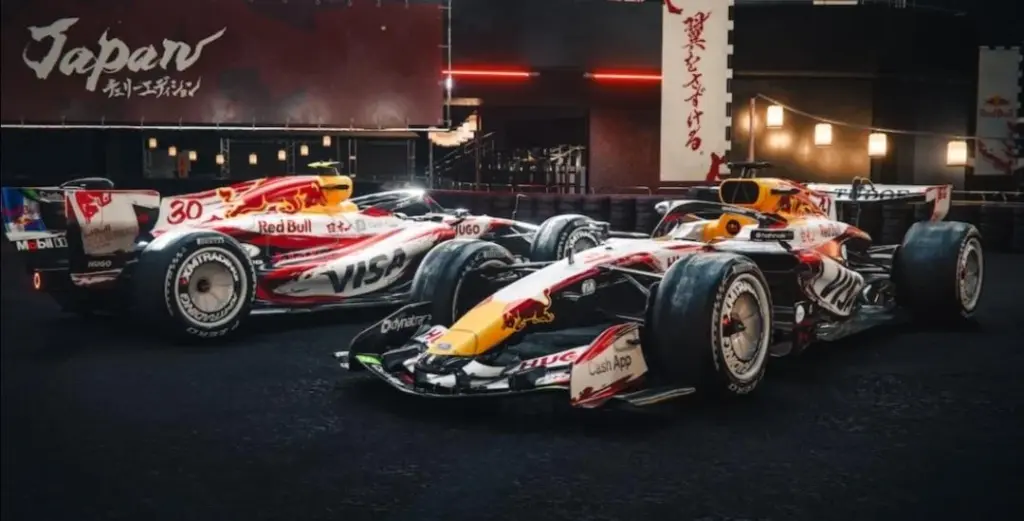
While fans were debating championship mathematics and historical driver comparisons, they were also deciding which team has produced the best special livery of the season.
The clearest answer was Racing Bulls. Its Japanese design, Barcelona concept and yellow lemon-themed car all received strong support. Even fans who disliked a particular Racing Bulls special livery often considered it better than most rival attempts. That matters because special liveries are frequently too cautious.
Teams announce them as major visual events, only for the final design to be a barely visible pattern change or a sponsor-led alteration that disappears at speed. Racing Bulls has generally avoided that problem. Its liveries are recognizable immediately. They use color boldly enough to change the car’s identity, and the themes often extend beyond the bodywork into merchandise and the wider presentation.
The Barcelona concept was strong enough that fans considered buying team apparel based on the design alone. That is what a successful special livery should do. It should create something people remember beyond the race result. The yellow cars also demonstrated how much the modern grid benefits from color. The yellow Racing Bulls and Audi designs stood out because so many contemporary cars are dominated by darker tones and exposed carbon. Even when Audi’s yellow livery was criticized for retaining red numbers and other standard-color details, the main idea was still praised.
Those small inconsistencies mattered because they prevented the design from feeling complete. A special livery does not need to reinvent every surface, but the car numbers, intakes and secondary details should support the concept rather than look carried over from the previous weekend. McLaren’s Silverstone design also connected strongly with fans because it referenced the M2B. Cadillac’s Silverstone look received similar praise.
Williams, meanwhile, was treated as the obvious non-contender in the comparison. The broader lesson is simple.
Fans do not want a press release explaining why a livery is special. They want to be able to see that it is special.
Results Matter Less When the Car Looks Good

There was also a recurring joke that Racing Bulls’ special liveries may be cursed.
The team has sometimes struggled to score or finish when using them, which has created the impression that visual creativity comes with competitive consequences. That may be anecdotal, but it has already become part of the appeal. A special livery cannot guarantee points.
It can guarantee that a retirement looks good. That attitude says something about how fans consume Formula 1 now. A weekend can produce value beyond the classification. A memorable car, a strong visual concept or a personality-driven moment can survive longer online than a midfield points finish. The ideal outcome is still performance and style.
When forced to choose, though, many fans would rather watch a beautiful car fail than an anonymous one finish tenth.
Lewis Hamilton Is Apparently Training With Penguins
Then there is Lewis Hamilton.
During the offseason, Hamilton appeared in Antarctica, running near penguins and seals and inspiring the obvious question: what exactly is a Formula 1 driver doing there? The serious answer may simply be that Hamilton was traveling and training. The internet’s answer was that he was preparing for the Antarctic Grand Prix, testing for a snow race, hiding from celebrity culture, running with penguins or investigating alien technology.
The appeal of the story comes from Hamilton’s unpredictability away from Formula 1. Nobody is particularly surprised when he appears somewhere unexpected. His public life has always extended beyond the standard driver routine, so footage of him moving through Antarctica feels both absurd and completely believable. The animals made the scene even better. A seal looking up at Hamilton appeared almost as confused as the fans. The moment felt like one of the rare occasions where wildlife seemed to recognize that something unusually famous had entered the frame.
The idea that the seal now had a more interesting story than most people only added to the comedy.
The Antarctica Story Also Exposed a Real Contradiction
Beneath the jokes, the footage generated a more serious discussion about tourism in Antarctica.
Some argued that regulated tourism is possible because access is controlled, ship sizes affect landing permissions and visitor numbers are managed by area and timing. Others pointed out that regulation does not eliminate environmental impact. Tourism has increased dramatically, and the concern is not only the number of people stepping onto the continent. It is also the emissions, boat activity, waste and disturbance associated with getting them there.
That creates an uncomfortable contradiction. People often want to visit Antarctica because of its rare environment and biodiversity. Yet the journey itself may contribute to the decline of the place they hope to appreciate. The same tension applies to elite travel more broadly.
Hamilton has often been associated with environmental concerns, so an expensive, long-distance trip to one of the most fragile regions on Earth was always going to invite criticism. That does not mean the footage provides enough information to judge every aspect of the journey. It does mean the reaction was about more than penguins. Formula 1 exists inside a global travel culture built around constant movement, private access and high consumption. The sport celebrates sustainability while continuing to operate through an enormous international logistics network.
Hamilton’s trip became a small version of that larger contradiction.
Formula 1 Fans Will Turn Anything Into a Story
Together, these five conversations show why Formula 1 never truly stops during the summer break.
A predictable championship statement becomes a debate about pressure and reliability. A teammate points graphic becomes an argument over car performance, field spread and whether the sport misunderstood several drivers. A nine-year-old test result becomes a map of careers that had not yet taken shape.
A special livery becomes evidence that one team understands modern fan culture better than most of the grid. A training video becomes a Madagascar joke, an Antarctic Grand Prix pitch and an environmental argument. None of these stories needed a race to exist.
That may be Formula 1’s greatest strength and one of its strangest weaknesses. The sport now generates so much conversation that even obvious conclusions are packaged as revelations. Statistics are shared without context and then reconstructed in the comments. Nostalgia is created from graphics that are not even a decade old. Drivers become characters in stories that have little to do with what happens on Sunday. For the next few weeks, Antonelli will remain the championship favorite, Verstappen’s teammates will continue being measured against an almost impossible standard, and Racing Bulls will probably keep winning the livery championship.
And somewhere, at least one Antarctic seal is still trying to understand why Lewis Hamilton ran past it.