

Formula 1’s future calendar is beginning to take clearer shape—and with it, a familiar tension is resurfacing. The sport is simultaneously expanding, rotating, and reacting to forces both within and far beyond motorsport. The confirmation that the Turkish Grand Prix will return from 2027 on a five-year deal is being celebrated as a win for “real” racing circuits, but it arrives amid geopolitical disruption, ongoing debate over track identity, and growing skepticism about long-term team ambitions.
Istanbul Park Returns as F1 Leans Back Toward “Real Circuits”
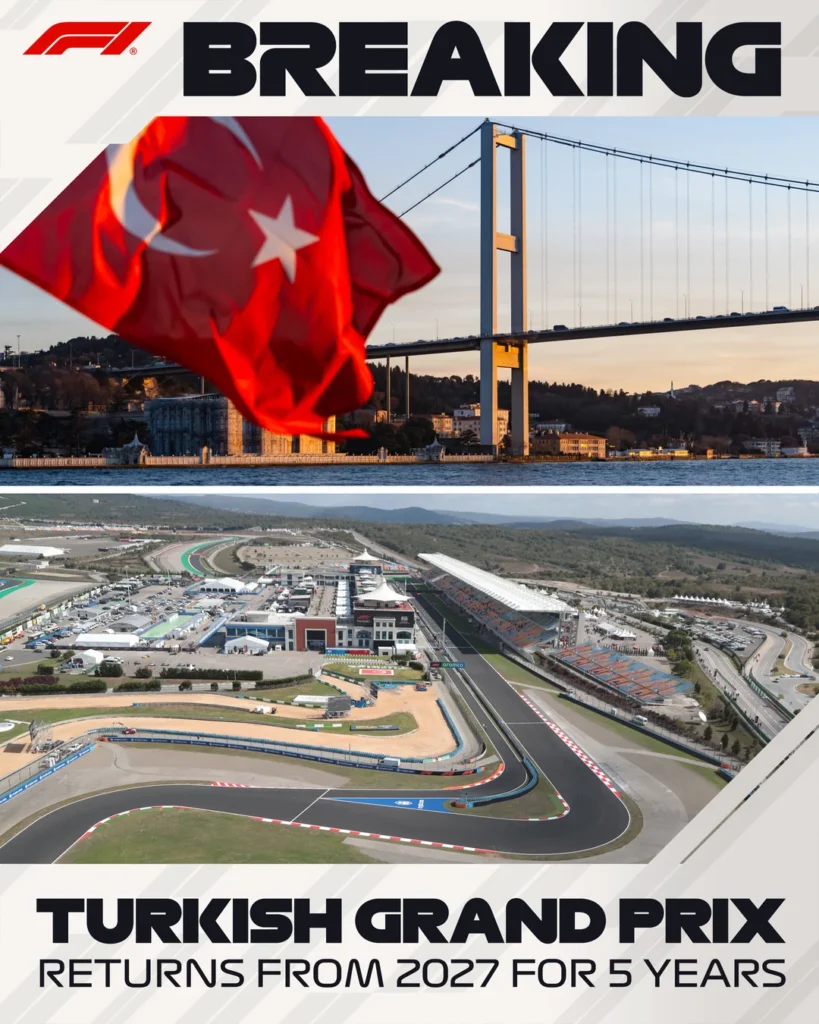
The headline development is straightforward: Istanbul Park is back. From 2027, the Turkish Grand Prix will be part of the calendar for at least five years, marking the return of one of the most popular modern-era circuits.
Fan reaction has been overwhelmingly positive—not just for Turkey itself, but for what it represents. The return is being framed as a rare victory for permanent circuits in an era many perceive as dominated by street races. As one line of thinking goes, “an actual racing circuit” is becoming a novelty, which explains the enthusiasm around both Turkey and Portugal rejoining the schedule.
There’s also a broader sense that this signals a partial correction. While some argue the “street circuit takeover” narrative is exaggerated—pointing out that recent additions include both permanent and temporary venues—the underlying concern remains: traditional tracks are increasingly forced into rotation while newer, high-paying venues secure long-term slots.
That contradiction is at the heart of the reaction. Fans are celebrating Istanbul’s return, but at the same time questioning why circuits like Spa are being pushed into rotational agreements. For many, it creates a hierarchy where legacy tracks must justify their place financially, while newer destinations benefit from deeper pockets and longer guarantees.
The Rotation Era: A Necessary Compromise or a Slippery Slope?
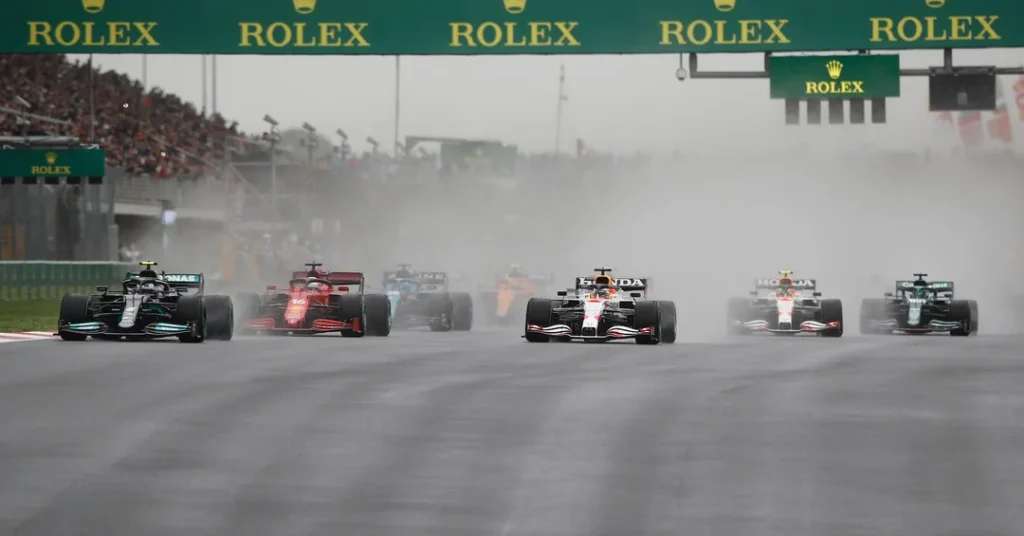
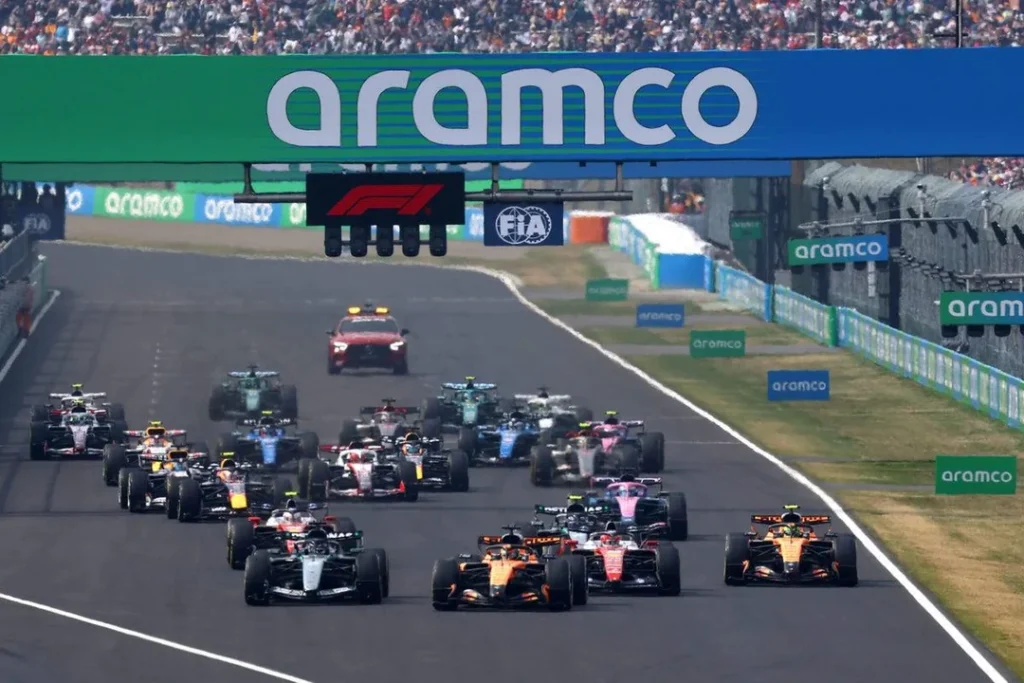
The Istanbul deal doesn’t exist in isolation—it’s part of a broader restructuring of the calendar. With F1 holding firm at around 24 races, expansion now comes through rotation rather than outright growth.
This has triggered a mix of curiosity and concern. Some see rotation as a pragmatic solution: it allows more venues to participate without overloading the schedule. Others view it as a warning sign that even the sport’s most iconic circuits are no longer secure.
The Spa situation is the clearest flashpoint. While it remains on the calendar, its rotational status has sparked frustration, with many arguing that circuits of that pedigree should be untouchable. At the same time, there’s a counterpoint emerging: heritage alone isn’t enough if the racing product doesn’t consistently deliver. Some fans openly admit that recent races at Spa have been underwhelming, raising the uncomfortable question of whether nostalgia is outweighing reality.
This divide reflects a broader identity crisis. Should Formula 1 prioritize history, racing quality, financial sustainability, or global expansion? Increasingly, it feels like it can’t fully optimize all four.
The Economics of Hosting: Why Some Tracks Stay and Others Fade
Underlying nearly every calendar debate is money. Hosting fees have risen to the point where even iconic venues struggle to justify their place. That reality is widely acknowledged—sometimes bluntly—as the reason certain circuits remain while others rotate or disappear.
There’s a growing acceptance that the calendar is shaped less by sporting merit and more by financial leverage. Comments pointing to “plenty of reasons” for certain tracks staying—often accompanied by thinly veiled references to revenue—capture the sentiment succinctly.
At the same time, not all regions operate under the same model. Discussions around Sepang’s absence highlight the complexity: while fans argue the race could be commercially viable through tourism and regional demand, others counter that government spending priorities and competition from nearby events like Singapore complicate the equation.
Even among those who want classic circuits back, there’s recognition that the economics are not straightforward. Hosting Formula 1 is no longer just about building a track—it’s about sustaining a global event with massive logistical and commercial expectations.
Geopolitics Enters the Frame: War Disrupts the Calendar
While financial pressures shape long-term planning, more immediate forces are also at play. The ongoing conflict involving Iran has already cost Formula 1 two races, introducing uncertainty into the current and future calendars.
The reaction to this development has been telling. Many fans have pushed back on the framing of the issue, pointing out that the loss of races is trivial compared to the human cost of war. Comments calling out the disconnect—questioning why the focus is on billion-dollar sporting implications rather than real-world consequences—highlight how tone-deaf such coverage can appear.
Still, from a purely operational standpoint, the disruption raises practical questions. If instability continues, could additional races in the region be canceled? And if so, how quickly could Formula 1 adapt?
Some believe replacements could be found, given the number of circuits capable of hosting races. Others point out the logistical and financial barriers: short-notice events struggle with ticket sales, infrastructure setup, and overall profitability. Even if technically feasible, emergency replacements are far from simple.
There’s also an underlying assumption many aren’t willing to dismiss: that financial incentives will ultimately dictate decisions. As one blunt perspective suggests, “money will prevail,” even in the face of geopolitical instability.
Istanbul’s Legacy—and Why It Resonates
Part of the excitement around Istanbul Park stems from its history. The circuit has delivered some of the most memorable and chaotic races in recent memory, particularly during the pandemic-era return.
That 2020 race weekend remains a reference point. A freshly resurfaced track combined with wet conditions created extremely low grip, leading to unpredictable qualifying and race strategies. The result was a rare convergence of setup gambles, tire management, and opportunistic performances—producing one of the most tactically fascinating races in years.
Moments like Lance Stroll’s pole position and the broader unpredictability of that weekend are still fresh in fan memory. They serve as a reminder of what circuits like Istanbul can offer: variability, challenge, and the potential for unexpected outcomes.
That’s a key reason why its return is being celebrated. It’s not just about nostalgia—it’s about the type of racing environment it enables.
Calendar Gains vs. Broader Uncertainty
Taken together, the return of Istanbul Park, the addition of other permanent circuits, and the introduction of rotation suggest a calendar that is evolving rather than expanding. There is a clear attempt to balance competing priorities: tradition, global reach, and financial sustainability.
But that evolution is happening alongside growing uncertainty. Geopolitical instability, shifting economic models, and internal sporting debates are all influencing the direction of Formula 1 in ways that feel less predictable than before.
Even seemingly straightforward announcements—like a five-year deal for a returning race—are now interpreted through a wider lens. What does it replace? Who loses out? Is it permanent, or just part of a rotation cycle?
Williams and the Long-Term Gamble

Away from the calendar, another narrative is unfolding—one that mirrors the theme of long-term planning versus immediate results.
James Vowles’ latest comments on Williams’ trajectory have sparked widespread skepticism. After previously positioning 2026 as a key target, expectations are now being pushed further into the future, with suggestions that meaningful results may not materialize until closer to 2028–2030.
The reaction has been sharp. Some see it as a necessary dose of realism from a team still rebuilding infrastructure and processes. Others view it as moving the goalposts after years of messaging centered around a 2026 breakthrough.
The criticism isn’t just about timing—it’s about credibility. Repeated references to sacrificing multiple seasons in pursuit of future gains have led some to question whether the strategy is coherent or simply reactive. There’s a growing sentiment that promises of long-term success must eventually translate into visible progress.
At the same time, defenders point out that Williams has made structural improvements and achieved results not seen in years. The debate ultimately reflects a familiar tension in Formula 1: how long should a rebuild be given before results are demanded?
A Sport at a Crossroads
The current moment in Formula 1 feels less like a stable equilibrium and more like a transition phase. The return of Istanbul Park is a clear positive—one that aligns with fan demand for challenging, purpose-built circuits. But it exists within a broader ecosystem that is increasingly complex.
The calendar is no longer just a sporting construct; it’s a financial and geopolitical balancing act. Teams are no longer judged solely on results; they are evaluated on long-term strategies that may take years to validate.
And through it all, the same core debate persists: what should Formula 1 prioritize?
For now, the answer appears to be “a bit of everything”—with compromises everywhere. Istanbul’s return is a win for racing purists, but the conditions that made it necessary also highlight the shifting realities of the sport.
In that sense, the celebration comes with a caveat. The world may feel like it’s “healing” when circuits like Istanbul and Portimão return—but the forces shaping Formula 1 suggest the story is far more complicated.