

Formula 1 hasn’t even properly gone racing yet, and already this season feels like it’s teetering between farce and full-blown crisis.
From Aston Martin’s Honda nightmare to Middle East geopolitical uncertainty, from formation-lap rule debates to Cadillac quietly winning the marketing war, the opening round narrative is chaotic, contradictory, and deeply revealing about where the sport stands right now.
Aston Martin’s Formation Lap Nightmare
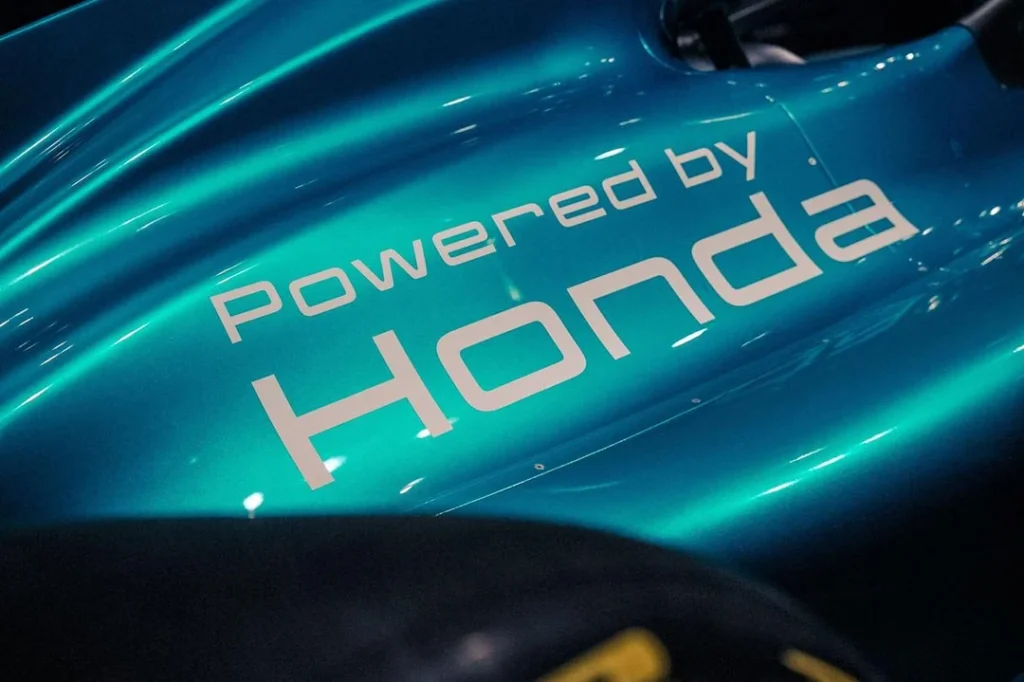
The dominant storyline is simple, and brutal: Aston Martin may take the formation lap in Melbourne, and retire immediately due to spare parts shortages tied to Honda.
That possibility alone has already done reputational damage.
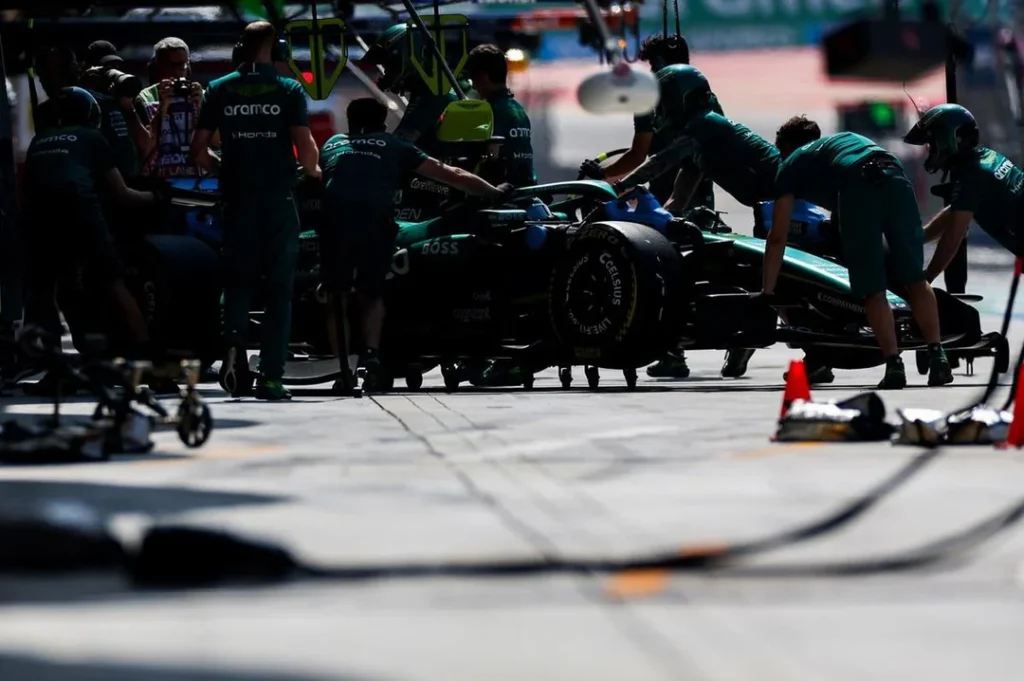
If this happens, it would feel worse than McLaren-Honda 2015. At least in Australia that year, a severely detuned car limped home. This scenario? Not even trying to finish. Not even guaranteed to start properly. Just surviving long enough to avoid blocking the pitlane.
And that’s the core embarrassment. This isn’t a backmarker with no budget. This is a fully resourced works project with a new factory, a star technical hire, and championship ambition. The fact that a formation-lap retirement is even being discussed publicly is already egg on face.
The comparisons are inevitable:
- McLaren-Honda 2015
- Manor missing the start of 2015
- Arrows’ financial collapse in 2002
- The Michelin withdrawal at Indianapolis 2005
Except those teams had structural excuses. This one was meant to be the future.
Instead, we’re debating DNS vs DNF semantics before lights out.
DNS, DNF, or Something Worse?
If a car fails on the formation lap, is that a DNS or a DNF?
The rulebook says the race “starts” when the red lights go out. But historical precedent muddies that clarity. The 2005 Michelin teams were classified as retired. More recently, formation-lap incidents have been labeled differently across platforms.
The irony? It doesn’t matter.
You cannot “Did Not Finish” if you never meaningfully began. And yet lining up and rolling away has historically counted as starting.
The joke writes itself:
- Did Not Start?
- Did Not Form?
- Did Not Fernando?
- Denied New Spares?
Whatever the classification, the optics remain catastrophic.
And the mood around Aston’s social messaging, black-and-white visuals, somber tone, no car in sight, already feels like a funeral poster before the race has begun.
It’s Not Just Honda
Blaming Honda is convenient. It’s also incomplete.
The technical chatter points to a tightly coupled failure chain:
- Engine vibration at high RPM
- Mounting configuration changes
- Amplified chassis resonance
- MGU-K repositioning near the battery
- Integration misalignment between departments
Whether it began with Honda or was exacerbated by late Aston design changes, the reality is this: this is a team failure.
And that’s the uncomfortable truth. You cannot build a championship car by throwing talent together and expecting instant cohesion. “Nine women can’t make a baby in one month” applies as much to F1 projects as it does to corporate fantasy.
The most damning part? Reports suggest this early retirement might be pre-planned. Extract practice data. Protect the hardware. Avoid public explosion.
That’s not sandbagging. That’s damage control.
Meanwhile: War, Airspace Closures, and Calendar Uncertainty
As if Aston’s technical crisis weren’t enough, Formula 1’s Middle East rounds are now clouded by geopolitical instability.
Refinery strikes. Airspace closures. Missile range discussions. Travel chaos. Teams potentially stuck in Bahrain. Commercial aircraft rerouting around conflict zones.
And yet the official line is measured neutrality.
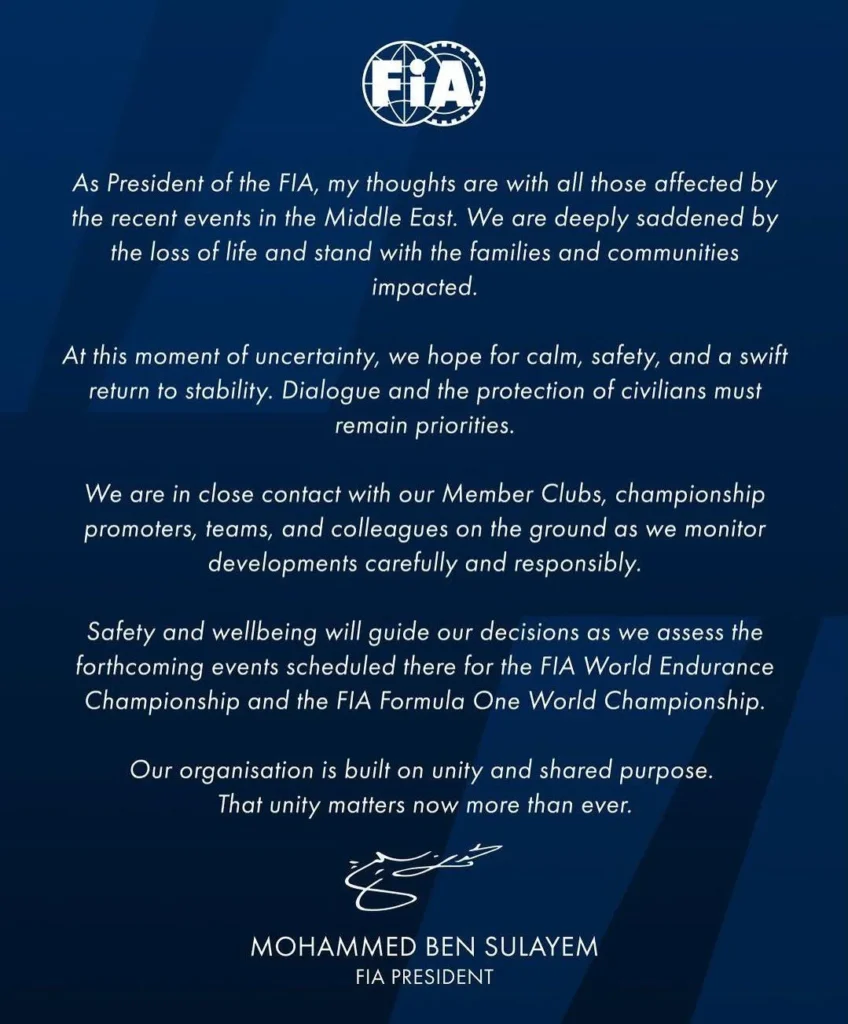
The FIA President issued a statement emphasizing unity, safety, dialogue, and monitoring developments. To some, it read like corporate abstraction. To others, it was precisely what an international governing body is legally allowed to say.
The tension underneath is clear:
- If Bahrain and Saudi can’t run, April is compromised.
- Qatar and Abu Dhabi become uncertain if escalation continues.
- Replacement races are logistically near impossible at short notice.
- Profitability factors heavily into decision-making.
Some fans argue cancellation is inevitable. Others believe F1 will find a way, it always does.
But even optimistic voices struggle to see how confidence returns in time for April.
Travel Chaos and 2020 Flashbacks
The Melbourne logistics complications have resurfaced uncomfortable memories of 2020.
Flights turned around mid-air. Personnel stranded. Airspace closures. Teams operating in flux. Uncertainty at the gates.
Back then, the cancellation was chaotic but unprecedented. This time, the sport knows exactly how fragile global operations can be.
Transport isn’t under the cost cap. That helps. But rerouting entire freight and personnel chains across continents mid-crisis isn’t trivial.
If the Middle East rounds are canceled, it won’t just be sporting drama. It will reshape the logistical spine of the season.
Leclerc, Weddings, and the Ferrari Hypetrain
While chaos swirls elsewhere, Ferrari’s world carries its own dual narrative.
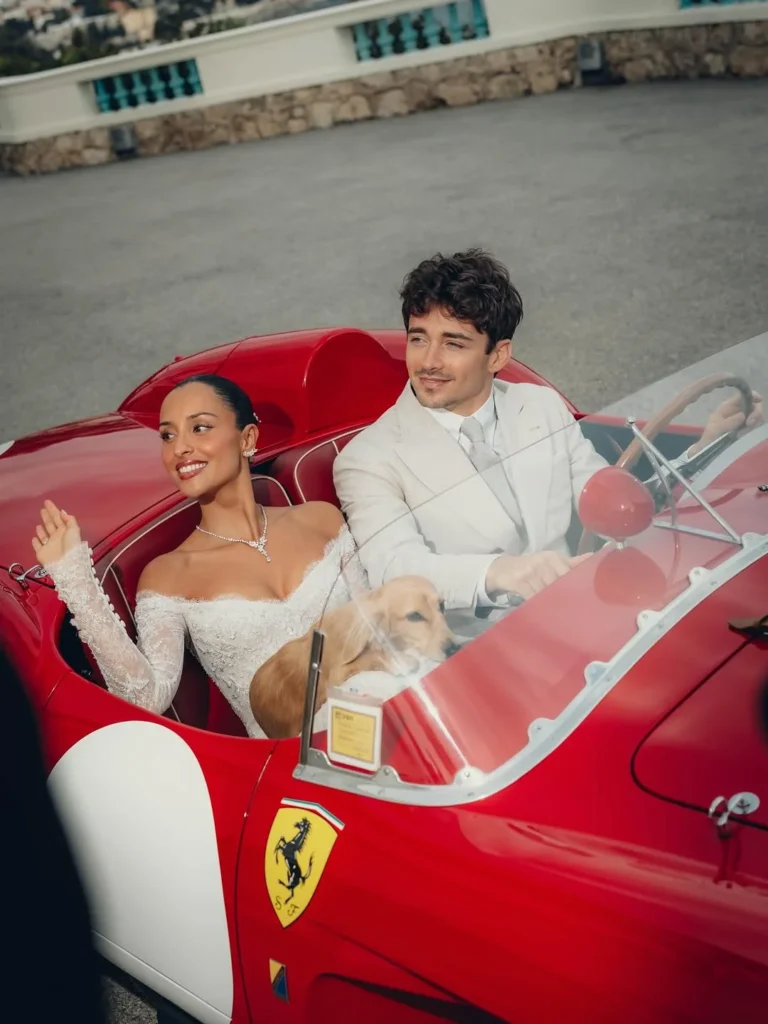
Charles Leclerc marked a deeply personal milestone, “part one is done,” with a second celebration planned next year. The paddock humor immediately followed: the “nepo dog,” bespoke tailoring jokes, and light-hearted speculation about Monaco ceremony traditions.
But beneath that warmth is the familiar rhythm of Ferrari expectation.
“This is the year.”
“Can we at least wait until Q3?”
“High on the hopium.”
“Ferrari strategy is consistently inconsistent.”
The hype machine never rests. And yet the skepticism remains intact.
It’s the Ferrari paradox: eternal optimism paired with generational trauma.
Bearman, Verstappen, and the Driver Market Chessboard
Ollie Bearman’s emotional recollection of going toe-to-toe with Verstappen in Mexico captured something rare, pure awe at competing with the sport’s benchmark.
The fan discourse quickly expanded:
- Verstappen as generational yardstick.
- Hamilton debates resurfacing.
- Leclerc’s future questioned.
- Piastri’s long-term trajectory debated.
- Audi and Aston positioned as long-game wildcards.
The prevailing view? There are very few truly open championship seats. And elite drivers don’t move based on current performance, they move based on probability curves five years out.
Works teams without a defined #1 by 2030 suddenly become attractive.
That’s the long-term lens. But in the short term, stability reigns, unless Verstappen moves, everything else likely stays locked.
Cadillac Quietly Winning the Off-Track Championship
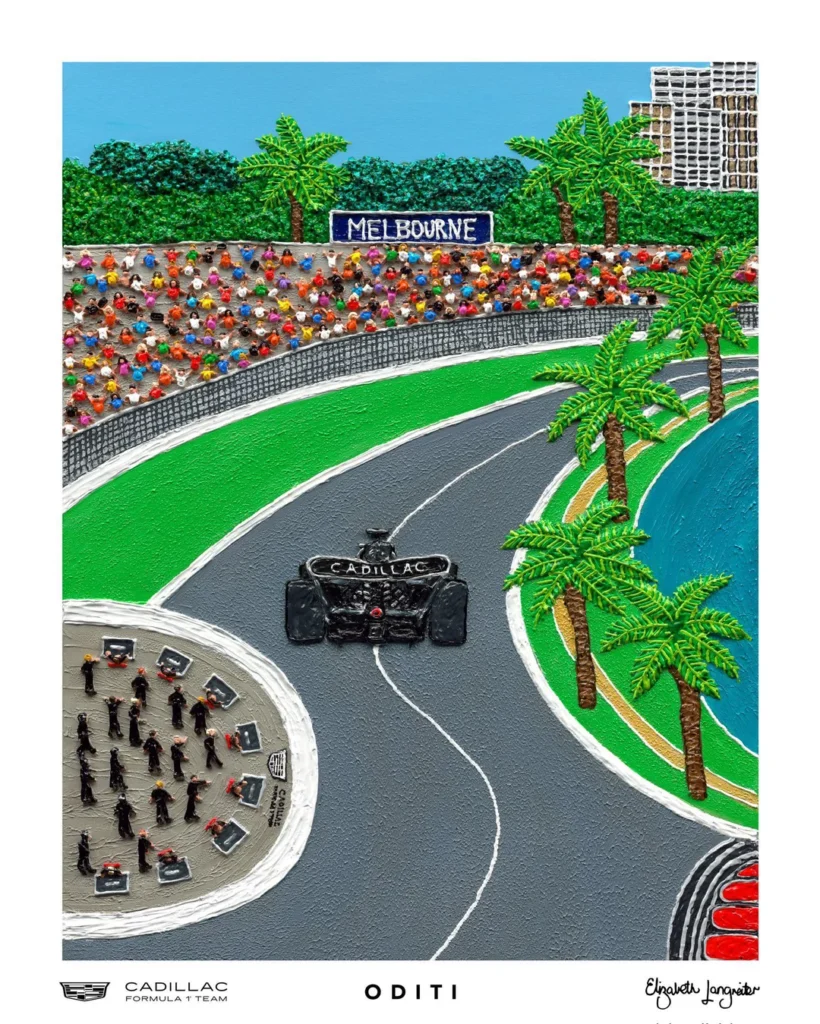
While some teams battle reliability and geopolitics, Cadillac may already be winning something else entirely: cultural presence.
Their 2026 Australian Grand Prix poster, locally commissioned, textured, artist-driven, was widely praised. The decision to feature a local artist at every race is simple and brilliant.
It feels human. Intentional. Authentic.
And in a season opening defined by instability, that matters.
Even rival fans admit it: they may not win races immediately, but they’re winning hearts.
The Mood of the Moment
The season hasn’t begun. Yet the narrative is already layered:
- A works team contemplating formation-lap retirement.
- A regulatory body navigating war-adjacent scheduling.
- Freight routes rerouting across continents.
- Fans debating DNS vs DNF technicalities.
- Ferrari oscillating between wedding bliss and title anxiety.
- Young drivers dreaming of chasing greatness.
- A new entrant redefining visual storytelling.
Formula 1 is often described as the pinnacle of precision.
Right now, it feels like controlled instability.
And if Aston Martin does peel into the pitlane before the red lights even go out, the image will define more than just one team’s crisis.
It will define how fragile even the most ambitious projects can be when ambition outruns integration.
Lights out hasn’t happened yet.
But the season is already on fire.