

Put together, these five completely different conversations tell a surprisingly coherent story about where Formula 1 discourse sits heading into 2026: distrust headlines, mock the obvious, overanalyze the clever details, and never miss a chance to argue about points, sponsors, or Alpine.
Franco Colapinto, Mercado Libre, and Headline Panic
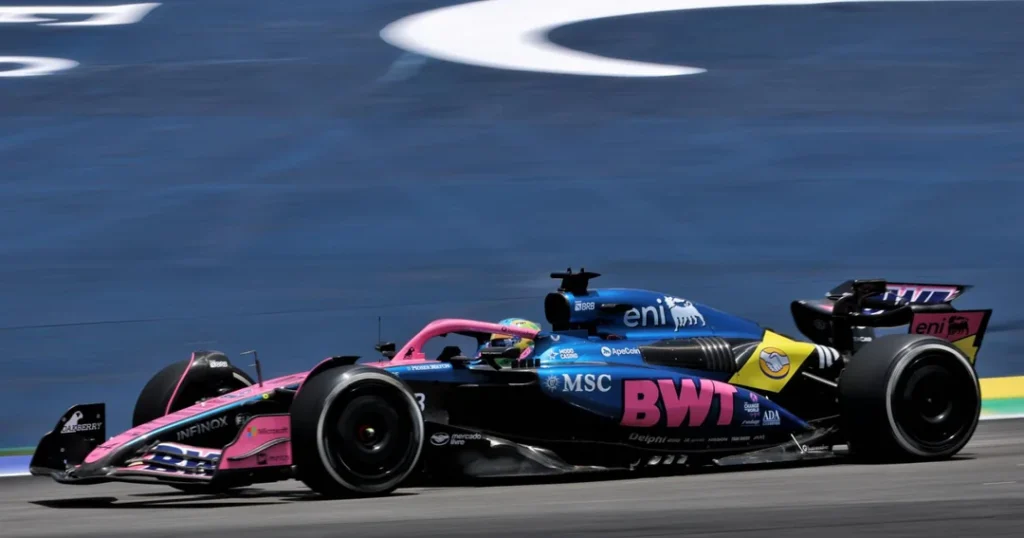
The spark was familiar: Franco Colapinto’s main sponsor disappears at Alpine. The reaction was immediate, loud, and largely detached from what the article actually said. Claims flew that Mercado Libre had abandoned him, pivoted to other Latin American drivers, or signaled the end of his F1 career. Just as quickly, others pointed out that Mercado Libre is still sponsoring Colapinto, he remains all over their Argentine promotional material, and negotiations with Alpine are ongoing. Bahrain is weeks away. Australia is more than a month out. Nothing has actually happened yet.
Still, Alpine’s management reputation, often filtered through jokes about Flavio Briatore, kept the speculation alive. Some treated it as a non-story inflated by clickbait titles and popup-infested sites, others as proof that people read headlines and nothing else. The recurring conclusion was blunt: Colapinto’s seat is decided on performance, not February sponsor placement, and the toxicity around his name says more about online behavior than about Alpine’s plans.
Alpine A526 and the Rear Wing That Broke Everyone’s Brain
Ironically, while Alpine were being dragged elsewhere, one of the more genuinely interesting technical discussions of the preseason centered on the A526’s rear wing. Unlike the rest of the grid, Alpine appear to have designed a rear wing flap that pivots around a hinge near the leading edge, meaning the trailing edge rotates downward in straight-line mode instead of opening upward like a conventional DRS.
The diagram made it click for many. Some instinctively felt it looked more logical, flattening the element rather than creating a gap underneath, while others immediately questioned fail-safety. That opened a long, detailed discussion about actuator loads, hydraulic locking, historical DRS failures, and the explicit requirement in the technical regulations that both front and rear wing systems must fail in the closed “Corner Mode” position.
What tempered the hype was realism. Teams already use this leading-edge pivot principle on front wings, and Alpine may simply be applying the same concept at the rear. Any aerodynamic gain is uncertain, possibly marginal, and just as likely to be about mechanical simplicity or efficiency rather than outright top speed. Clever? Yes. Revolutionary? Probably not.
McLaren, Puma, and a Merch Disasterclass
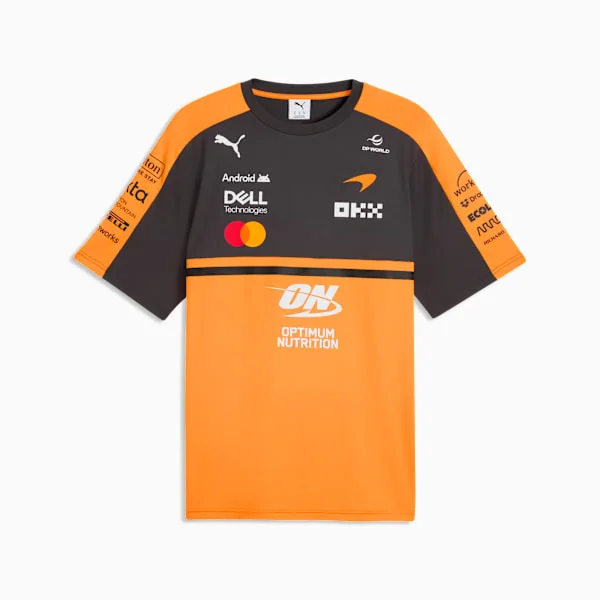
If Alpine’s rear wing earned cautious respect, McLaren’s 2026 Puma team gear earned none. The reaction to the reveal was brutal. Horizontal stripes were widely hated. The polo was mocked for looking like it was “wearing a smaller polo shirt.” Wide sleeves caught flak immediately, with comparisons to Ferrari’s past designs.
Caps were the real breaking point. Fans were openly disappointed McLaren moved away from New Era, with Puma caps criticized for poor shape, visible stitching issues, and inconsistent quality, even in promo photos. Several longtime buyers said this ends their McLaren hat run entirely, saving them money whether the team likes it or not. The Optimum Nutrition logo didn’t help, standing out awkwardly despite a shirt already packed with sponsors.
The verdict was unanimous and concise: thanks, we hate it.
Career Points and Why This Stat Is Basically “Where Do Lewis and Max Drive?”
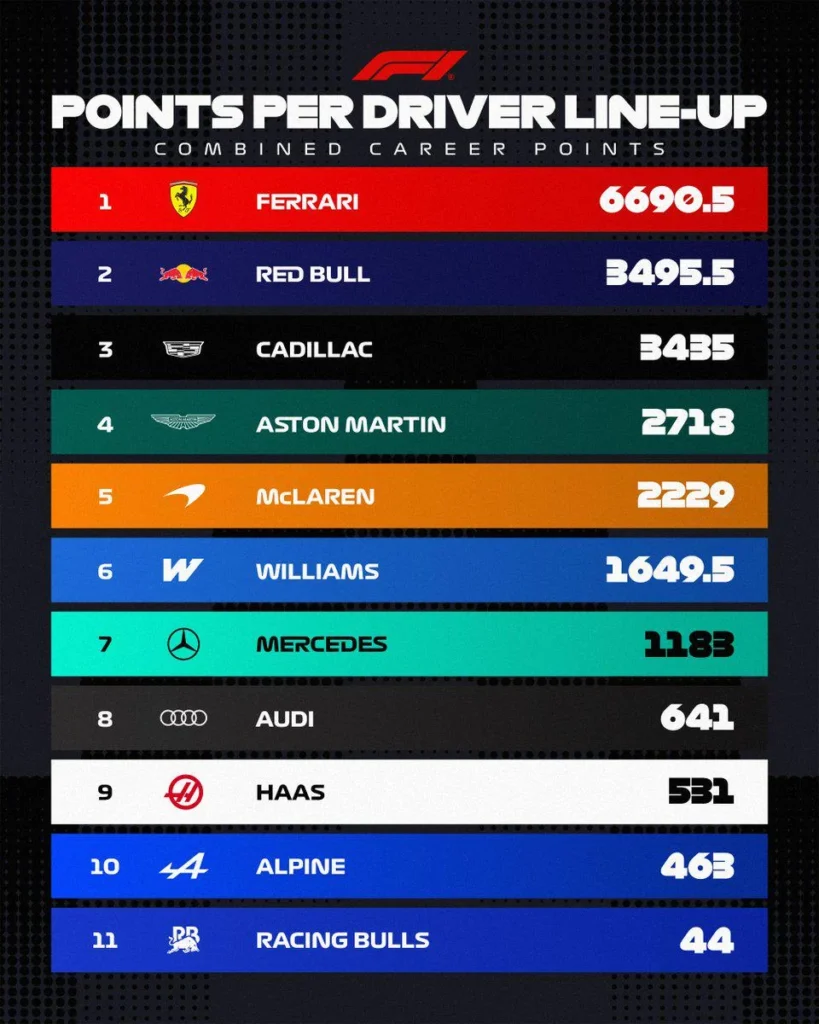
Combining the career points of 2026 driver line-ups quickly collapsed into absurdity. Lewis Hamilton alone sits on 5018.5 points, more than entire teams. Max Verstappen accounts for roughly 99% of Red Bull’s total when paired with a rookie teammate. The comparisons drifted into Gretzky brothers territory, Kobe-and-Kwame jokes, and reminders that this stat says more about generational outliers than driver pairings.
Ferrari and McLaren sparked a different debate. Charles Leclerc having massive points totals with relatively little to show reignited old frustrations, while McLaren fans pushed back by reminding everyone how uncompetitive the car was for years, when finishing eighth felt like a win. The argument then turned methodological: should points from different eras be adjusted? Should Alonso’s early-2000s results be normalized? Or is it fine to stick with official points, even if that makes comparisons borderline meaningless?
Once fractional points from the 1950s entered the chat, 1/7th of a point for shared fastest laps, the conclusion was inevitable: this stat is fun, but fundamentally broken.
Oscar Piastri, Google, and Weaponized Background Art
If any single moment tied everything together, it was a Google ad starring Oscar Piastri. As he says, “So when I see a chance to get ahead, I will change things up. I mean, why would you want anything less than the best?”, the painting behind him quietly changes, from the Alps to papaya. Subtle, clean, and absolutely not missed.
Fans loved the cheek. The shade felt deliberate. The shelf details, including “How to hit the griddy”, turned the ad into a scavenger hunt. Jokes spiraled from conspiracy theories to mock-serious claims that OP stood for Oscar Piastri. Alpine, predictably, caught strays again, with callbacks to old statements about not displaying Alpine art and comments about how quiet they’ve been since the ad dropped.
Most people were clear-eyed about it: this doesn’t mean Alpine and McLaren are suddenly fighting at the front. The new regulations are too big a reset for certainty. But as marketing, it landed perfectly. Calm delivery, no explicit call-out, and the background did all the talking.
One Thread Through All Five
Across sponsors, aero concepts, merch, stats, and advertising, the common thread was skepticism, of headlines, of lazy narratives, and of surface-level analysis. People dug into diagrams, contracts, regulations, historical context, and background props. And when something deserved ridicule, they didn’t hold back.
Nothing here decides championships. But together, these five conversations capture exactly how the 2026 season is already being framed: cautious, cynical, detail-obsessed, and very ready to laugh when the sport makes it easy.