

Formula 1 heads into the Austrian Grand Prix with the championship battle heating up both on and off the circuit.
The FIA has declared the first official Heat Hazard of the season, Mercedes have been forced to abandon a controversial floor design, Lewis Hamilton is openly talking about the championship again, George Russell insists he’ll still be at Mercedes next season despite the Max Verstappen speculation, Fernando Alonso is questioning Aston Martin’s development strategy, and the FIA itself has found itself at the centre of another governance storm.
Here’s everything making headlines ahead of the Austrian Grand Prix.
FIA activates heat protocol for Austrian Grand Prix

With temperatures expected to exceed 31°C, the FIA has officially declared a Heat Hazard for this weekend’s race.
That activates the sport’s driver cooling protocol, allowing drivers to either wear the FIA’s cooling vest system or replace the driver’s personal cooling equipment with 0.5kg of cockpit ballast. The wider cooling system must still be installed regardless.
The clarification is important because some early reports suggested the system only weighed 0.5kg. In reality, the complete race cooling package adds roughly 5kg, with the optional ballast only replacing the driver’s wearable portion of the system.
The protocol stems directly from the 2023 Qatar Grand Prix, where several drivers required medical treatment after racing in extreme heat.
Whether many drivers actually choose to wear the vest remains another question. Some praised the system during testing, while others—including Max Verstappen—have previously questioned its comfort and practicality, leading the FIA to keep its use optional rather than mandatory.
Hamilton sounds like a championship contender again
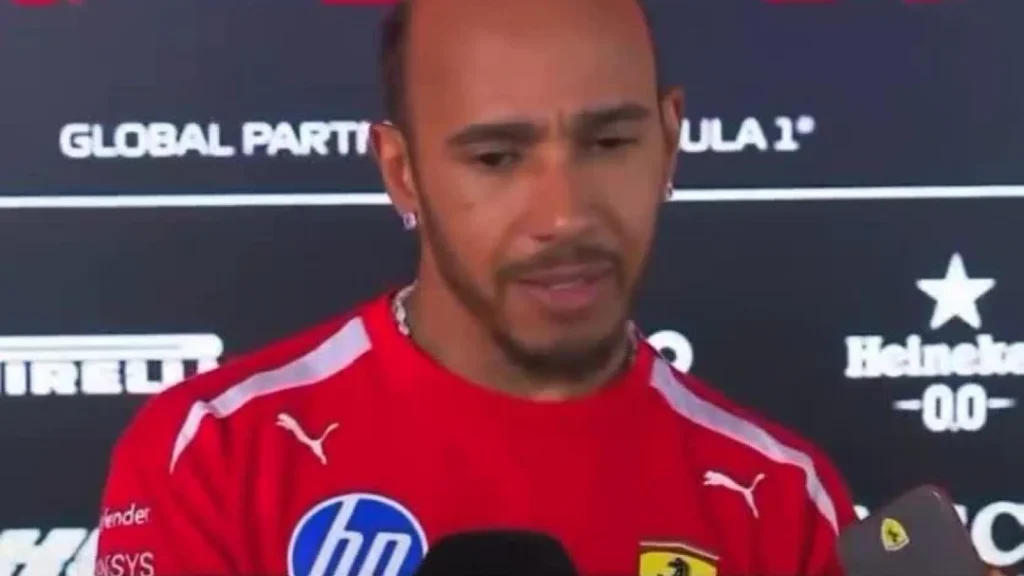
Lewis Hamilton’s tone has changed.
Rather than celebrating a single victory, the Ferrari driver is speaking like someone preparing for a championship fight.
“I’ve been here before,” Hamilton said when discussing the title race, stressing there’s still a “long, long way to go” and emphasizing that success comes from staying calm, keeping everyone working together and avoiding shortcuts.
For Ferrari, that’s exactly what they want to hear.
Hamilton isn’t declaring himself favourite. Instead, he’s drawing on the experience of seven world championships, reminding everyone that title fights are won through consistency rather than emotional highs after one victory.
Of course, Ferrari still have work to do.
Austria will provide a much better indication of whether Barcelona represented a genuine step forward or simply a circuit that suited the SF-26. Charles Leclerc also remains firmly part of Ferrari’s championship equation, meaning Hamilton may have to beat both Mercedes and his own teammate if this title challenge becomes reality.
Mercedes lose controversial floor ahead of Austria

Just as Ferrari’s optimism grows, Mercedes have suffered an unexpected setback.
The team has reverted to an earlier floor specification after the FIA determined the newer design could no longer be used.
The situation has generated significant discussion because Ferrari reportedly explored a similar concept earlier this season before being told it wasn’t legal. Mercedes then introduced their own interpretation, raced with it for two weekends, before the FIA ultimately decided it also fell outside what should be permitted.
Whether the two concepts were identical remains unclear.
What is clear is that Ferrari questioned why one team appeared able to run a solution they had previously been prevented from using.
The FIA’s response was to effectively close the loophole.
Now the spotlight shifts to Austria.
If Mercedes lose performance after reverting to the previous floor, Ferrari’s championship hopes receive another boost. If Mercedes somehow become quicker again, Formula 1’s technical department will have another mystery to solve.
Mercedes also face difficult decisions in the championship fight
Mercedes’ problems aren’t limited to the technical department.
Team principal Toto Wolff recently confirmed that Hamilton’s Ferrari is now effectively a third force in both championship battles, meaning George Russell and Kimi Antonelli may increasingly be asked to avoid costing each other time during races.
Antonelli explained after Barcelona that if one Mercedes has stronger pace while a rival is threatening from behind, the team will intervene.
When they’re simply racing each other, they’ll remain free to fight.
It sounds straightforward.
In practice, those are exactly the situations that have historically created friction inside Formula 1 teams.
Russell dismisses Verstappen speculation

Despite constant rumours linking Max Verstappen with Mercedes, George Russell insists nothing has changed.
“There is no announcement this weekend… I will be here next year. One hundred per cent.”
It’s a confident statement.
Whether Formula 1 contracts are ever quite that definitive is another matter.
Russell reportedly has performance clauses that strengthen his position, but history has repeatedly shown that contracts can be bought out if teams believe an extraordinary opportunity becomes available.
For now, Russell appears completely relaxed.
The paddock remains less convinced.
Alonso questions Aston Martin’s development strategy
Fernando Alonso also voiced growing frustration over Aston Martin’s lack of upgrades.
Looking through the FIA’s update documents each weekend, Alonso joked that rival teams appear to have “a money machine in the factory” while Aston continues waiting for its next major package.
His comments highlight a much larger question.
Aston Martin have invested enormous resources, recruited some of Formula 1’s biggest technical names and built world-class facilities.
Yet they continue struggling to improve the car during the season.
That has prompted increasing discussion about whether Aston’s problem is actually financial at all.
The old Force India operation became famous for achieving remarkable results despite tiny budgets. Since becoming Aston Martin, the team has often appeared to do the opposite—spending heavily without consistently finding performance.
Adding Adrian Newey alone was never likely to solve those deeper organisational challenges.
FIA president secures overwhelming backing
Away from the track, the FIA has passed proposals removing presidential term limits by a majority exceeding 90%.
The vote has generated immediate criticism from many within the Formula 1 community, with concerns centering on governance, accountability and whether the governing body is concentrating too much power at the top.
Supporters argue Mohammed Ben Sulayem continues to enjoy strong backing across the FIA’s wider membership, particularly from smaller national clubs benefiting from increased financial support.
Critics, meanwhile, believe the changes make meaningful leadership challenges increasingly difficult in future elections.
Either way, the FIA has once again become one of Formula 1’s biggest talking points before a wheel has even turned.
One year later, fans are still debating F1: The Movie

Away from the championship battle, Formula 1 fans also found themselves reflecting on another milestone this week.
F1: The Movie celebrated its first anniversary after exceeding expectations to become one of 2025’s biggest box office successes, finishing as the ninth highest-grossing film of the year while earning praise for its spectacular sound design.
Yet the biggest debate surrounding the film remains exactly the same.
Many fans still can’t get over the climax, where Sonny Hayes deliberately crashes to help his team secure victory—a storyline that inevitably drew comparisons to the real-life Crashgate scandal. Some viewers thought it was outrageous, others loved the Hollywood drama, while many simply laughed that the film essentially turned one of Formula 1’s biggest controversies into its heroic finale.
The wider discussion has settled into an interesting consensus.
Even many critics now acknowledge that the racing sequences, cinematography and sound design were among the best ever seen in a motorsport film. The biggest complaints centred instead on the romance subplot and the way Brad Pitt’s veteran driver often appeared to overrule experienced engineers throughout the story.
Perhaps that’s the best way to judge it.
As a realistic depiction of Formula 1, the film takes enormous liberties.
As a Hollywood blockbuster designed to showcase the spectacle, speed and emotion of Grand Prix racing, it succeeded in bringing millions of new fans into the sport.
For Formula 1, that may ultimately matter more than whether every strategy call would have survived a stewards’ investigation.
Austrian Grand Prix set for another pivotal weekend
All of that leaves Austria shaping up as one of the most important weekends of the season so far.
Ferrari need to prove Barcelona wasn’t a one-off.
Mercedes must show the floor change hasn’t slowed them down.
Aston Martin desperately need signs that their long-awaited upgrades are worth waiting for.
The FIA will hope the conversation returns to racing rather than governance.
And if Hamilton leaves Spielberg with another victory, the championship narrative could shift from “interesting comeback” to “genuine title challenge” in the space of a single afternoon.