

Formula 1 finds itself approaching the second half of the season with far more uncertainty than many expected just a few races ago. Ferrari are beginning to close on Mercedes, Aston Martin are preparing the biggest upgrade package of their season, the driver market continues to evolve, and one long-running Formula 1 dream has officially come to an end.
Here are the biggest talking points currently shaping the paddock.
Ferrari Are Improving — But Mercedes Still Control Both Championships
Ferrari’s momentum has changed noticeably over the past several rounds.
After Lewis Hamilton’s victory in Barcelona and another strong showing at Silverstone, the SF-26 is beginning to look like a genuine race-winning car rather than one that simply capitalizes on unusual circumstances. The question is whether that improvement has arrived soon enough. Mercedes still lead both championships and, despite recent reliability issues, continue to possess the benchmark package at most circuits. Ferrari have certainly narrowed the gap, but they still need to find additional performance in both outright power and energy management before they can consistently match Mercedes across every track type.
Fortunately for Ferrari, their development plan isn’t finished. The team is still expected to introduce another aerodynamic package before following it with its second major power unit upgrade after the summer break. If both developments deliver as hoped, Ferrari could find themselves fighting for victories far more regularly during the closing stages of the championship. Even then, the path remains difficult.
Mercedes’ recent reliability concerns have helped keep Ferrari within striking distance, but unless those issues continue, Ferrari will likely need near-perfect execution for the remainder of the season to realistically challenge for either title.
At this stage, the Constructors’ Championship appears slightly more attainable than the Drivers’ Championship, although neither can be considered out of reach with so much development still to come.
Aston Martin’s Entire Season May Hinge on Two Upgrades
No team has generated more curiosity ahead of the summer break than Aston Martin.
Reports suggest the team’s long-awaited Hungary chassis upgrade could be worth around two seconds per lap, while Honda’s revised power unit arriving at Zandvoort is expected to contribute another five tenths. If those numbers prove accurate, Aston Martin would finally climb back into the midfield behind Racing Bulls and Alpine. The scale of those gains also illustrates just how difficult Aston Martin’s season has been.
Recovering two-and-a-half seconds per lap sounds extraordinary, yet it would merely return the team to fighting for points rather than podiums. There remains understandable skepticism over whether any Formula 1 team can realistically unlock that much performance in a single development cycle. However, Aston Martin have spent much of 2026 running an early-season specification while many rivals continued bringing upgrades almost every race weekend.
The next two events should provide the clearest indication yet of whether Adrian Newey’s long-term rebuild is finally beginning to influence results.
Race Pace Data Highlights McLaren’s Biggest Difference
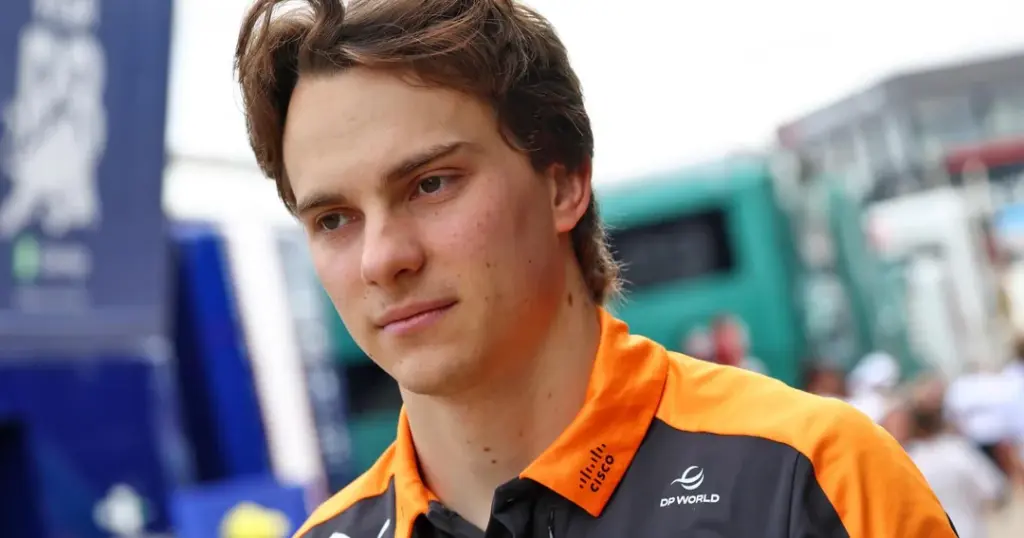
Updated teammate race pace figures after nine Grands Prix revealed one particularly striking statistic.
Despite Lando Norris and Oscar Piastri remaining extremely close over a single qualifying lap, Norris currently holds one of the largest race pace advantages over his teammate anywhere on the grid. The explanation appears to come down largely to tire management. Last year’s McLaren was exceptionally gentle on its tires, masking one of Piastri’s few remaining weaknesses. The lower-downforce 2026 regulations and more demanding Pirelli compounds have exposed that difference far more clearly.
Norris continues to extract consistent race pace over long stints while preserving his tyres, whereas Piastri has often struggled once removed from clean air or forced into recovery drives.
Elsewhere, Carlos Sainz continuing to edge Alex Albon on race pace, Lewis Hamilton matching Charles Leclerc almost exactly, and Oliver Bearman’s growing advantage over Esteban Ocon all attracted attention as the season approaches its midpoint.
Haas Could Become Ferrari’s Complete Driver Pipeline
Reports linking Ferrari junior Rafael Camara with Haas for 2027 would represent another significant step in Ferrari’s long-term driver strategy.
If the move materializes, Haas would field two Ferrari Driver Academy graduates alongside Oliver Bearman, effectively becoming Ferrari’s complete development team. The biggest consequence would likely be Esteban Ocon losing his seat. Ocon entered Haas as the experienced benchmark alongside rookie Bearman, but Bearman’s rapid development has steadily changed that dynamic. With Ferrari continuing to produce highly-rated academy drivers, Haas no longer appears to need an experienced reference driver if its primary objective is developing future Ferrari talent.
The arrangement would also create an intriguing internal battle.
Whenever Lewis Hamilton eventually retires, Ferrari’s next seat could effectively become a direct competition between Bearman and Camara, allowing Maranello to evaluate two academy graduates under identical circumstances before making its next long-term decision.
Pato O’Ward Has Officially Moved On From Formula 1
Pato O’Ward confirmed this week that he has asked McLaren to release him from his Formula 1 commitments, saying he is no longer excited by the opportunity.
The announcement simply formalizes what had become increasingly apparent over recent seasons. McLaren’s long-term commitment to Oscar Piastri dramatically reduced O’Ward’s chances of earning a full-time Formula 1 seat, while recent speculation surrounding Max Verstappen has only made that pathway appear even narrower. Rather than continuing to chase increasingly unlikely opportunities, O’Ward will instead focus entirely on IndyCar, where he remains one of Álex Palou’s closest challengers year after year.
Looking back, McLaren assembled an extraordinary collection of driving talent across both Formula 1 and IndyCar. Piastri reached Formula 1. Palou chose to remain where he was already winning championships.
Now O’Ward has officially done the same.
Formula 1’s Safety Car Procedures Are Under Fresh Scrutiny
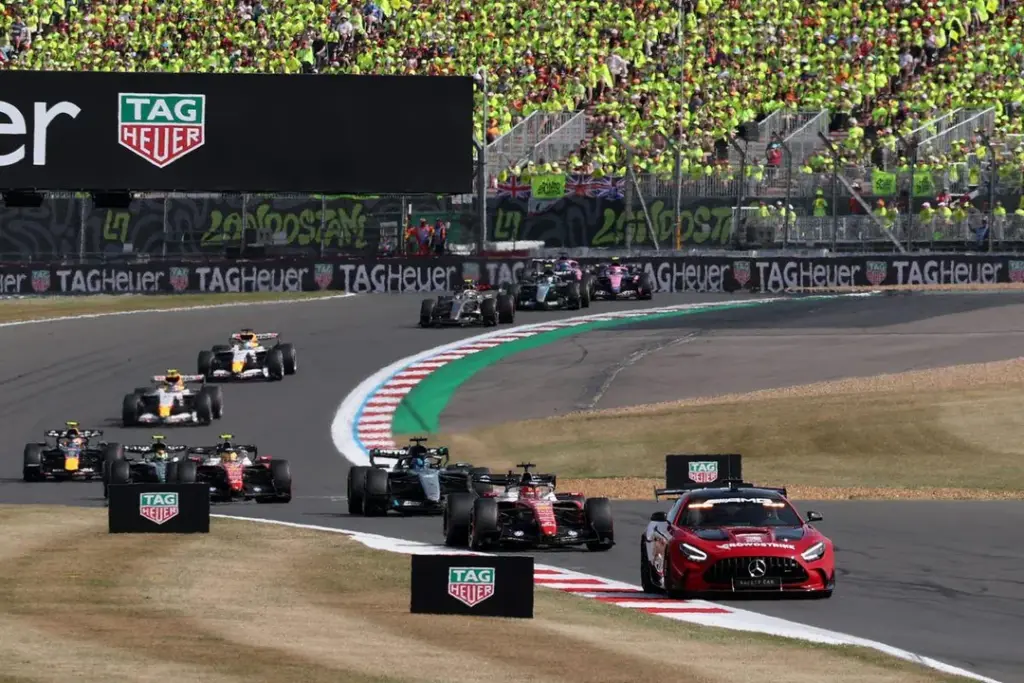
Silverstone’s Safety Car finish has reopened an old debate within Formula 1.
The issue isn’t necessarily races finishing behind the Safety Car. Those situations will always occur when incidents happen too late or require lengthy clean-up operations. Instead, attention has shifted toward whether Formula 1’s restart procedures unnecessarily consume valuable racing laps.
Current regulations require lapped cars to unlap themselves before the Safety Car can return to the pits, adding additional laps even after the circuit is already safe for green-flag running. Several alternatives have been suggested, including sending lapped cars through the pit lane to rejoin at the back or removing the mandatory extra lap before restarting. Any procedural changes would need to preserve sporting fairness while avoiding a repeat of the controversy created by Abu Dhabi 2021.
The challenge for the FIA is finding ways to maximize green-flag racing without compromising either consistency or safety.
Zandvoort’s Farewell Will Leave More Than Nostalgia
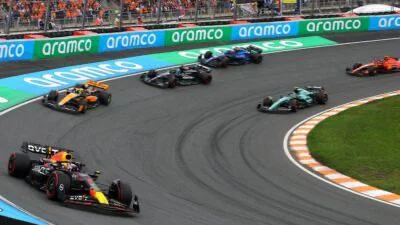
With Zandvoort scheduled to leave the Formula 1 calendar after 2026, its short modern era is already being viewed differently.
The circuit has often been criticized for limited overtaking opportunities, yet almost every Dutch Grand Prix since its return has produced memorable moments. Max Verstappen’s emotional home victories helped define the early years. Lando Norris ended Verstappen’s unbeaten streak there in 2024.
Oscar Piastri’s narrow pole and victory in 2025 further cemented the circuit’s place in recent Formula 1 history. Perhaps most memorable of all was the rain-soaked 2023 race, where rapidly changing weather transformed the event into one of the most unpredictable Grands Prix of the modern era.
Even those who criticize the racing often acknowledge that Zandvoort remains one of Formula 1’s most technically rewarding circuits to drive, with its flowing corners, elevation changes and dramatic banking making it a favorite among drivers and sim racers alike.
Red Bull’s Factory Visit Became the Internet’s Latest Joke
Red Bull’s latest social media video showing Max Verstappen arriving at the factory quickly became comedy material.
Coming amid continued speculation surrounding Verstappen’s future, the timing prompted countless jokes suggesting the entire visit had been staged simply to quiet the rumor mill.Others humorously claimed the footage had been created using artificial intelligence or filmed entirely on a green screen, while some poked fun at Verstappen’s appearance by insisting the jeans weren’t convincing enough to be authentic.
The clip ultimately achieved exactly what successful Formula 1 social media often aims to do: keep people talking.
The Bigger Picture
The championship battle feels increasingly open heading into the second half of the season.
Ferrari have genuine momentum but still need their remaining upgrades to deliver. Mercedes remain the benchmark despite growing reliability concerns. Aston Martin are betting heavily on two development packages to rescue an otherwise difficult campaign, while the driver market continues shifting as veterans and rising stars position themselves for 2027 and beyond.
With major upgrades, contract decisions and championship implications all arriving after the summer break, Formula 1’s next phase may prove even more unpredictable than its opening nine races.