

The Formula 1 paddock delivered another busy weekend of technical debates, driver market speculation, and intriguing storylines heading into the Belgian Grand Prix. From Ferrari becoming the center of another FIA discussion, to Carlos Sainz publicly questioning Williams’ development direction, to McLaren shutting down Oscar Piastri exit rumors once again, there was plenty to unpack.
Here’s everything you need to know.
Ferrari’s Rear Wing Debate Sparks Backlash
One of the biggest discussions this week surrounded Ferrari’s rotating rear wing after reports suggested the FIA was examining whether regulations around flap closing times may need clarification following Red Bull’s recent issues.
The discussion has quickly become controversial because Ferrari’s system has operated without any apparent reliability concerns, while Red Bull’s implementation has suffered multiple high-profile failures. That distinction has become the central talking point. Rather than viewing this as a Ferrari problem, many see it as a Red Bull engineering issue.
Several technical explanations have emerged over the past week. Ferrari’s design rotates in a way that keeps airflow attached to the underside of the wing as it closes, allowing downforce to return almost immediately. Red Bull’s version behaves differently, with airflow detaching underneath during the closing phase. If that airflow does not reattach quickly enough before braking, the rear of the car can momentarily lose stability.
The concern therefore isn’t necessarily rotating wings themselves—but one specific implementation. That has led many to question whether changing regulations would unfairly punish a team that simply executed the concept better. The comparison to previous FIA interventions has also resurfaced.
Several observers drew parallels to TD39, arguing Formula 1 has previously introduced sweeping changes because one team’s interpretation created safety concerns, even if other teams were unaffected. Others pushed back, noting this situation is fundamentally different because Ferrari’s wing has not exhibited the same dangerous behavior. The consensus emerging from technical discussions appears fairly straightforward:
- Ferrari’s concept works.
- Red Bull’s currently does not.
- The solution should likely focus on fixing Red Bull’s implementation rather than outlawing the entire concept.
With Spa featuring high-speed sections like Eau Rouge and Raidillon, attention will inevitably remain on Red Bull’s rear wing performance throughout the Belgian Grand Prix weekend.
Belgian GP Straight Mode Raises More Questions

The newly revealed Straight Mode activation map for Spa generated another wave of discussion.
The layout introduces activation zones before and after Eau Rouge/Raidillon, immediately prompting concerns about whether Red Bull’s problematic wing could once again become an issue at one of Formula 1’s fastest circuits. Several noted that if Red Bull cannot fully trust its wing to close consistently before braking zones, Spa may expose the weakness more than almost anywhere else on the calendar. Others pointed out an interesting side effect of the 2026 regulations.
Early simulator data suggested Spa could become significantly slower because of the new power management systems. Instead, recent simulations—and Silverstone’s unexpectedly strong performance—suggest teams may have underestimated just how fast these cars remain. Ferrari has reportedly found its simulator to be significantly underestimating real-world pace in recent races, and several teams are believed to be experiencing similar correlation issues.
As a result, expectations heading into Belgium remain highly uncertain.
Williams’ 2026 Development Is Raising Real Concern
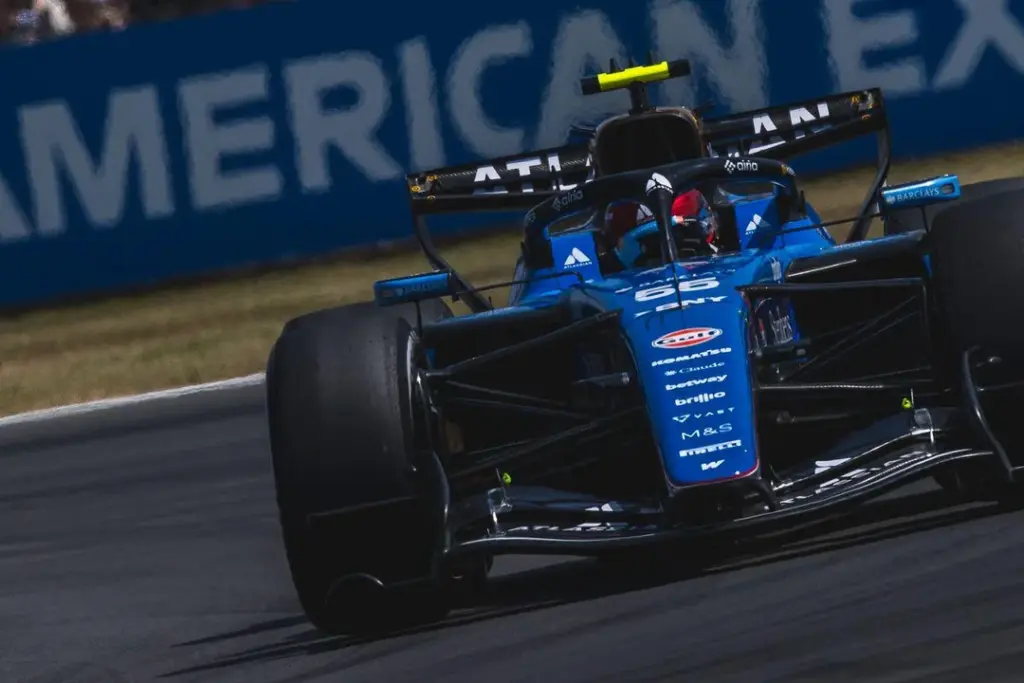
Carlos Sainz’s comments after Silverstone have become one of the biggest talking points surrounding Williams.
Despite introducing significant upgrades and reducing weight throughout the season, Williams has failed to gain the lap time it expected. Sainz openly questioned why simulation results are not matching reality. He noted that Williams expected the new front wing to represent a major performance gain based on simulator and wind tunnel work, yet the actual improvement never appeared on track.
More concerning was his comparison to Suzuka. Despite removing substantial weight from the FW48, Williams is now actually further behind the front than it was earlier in the season. That has naturally triggered questions about whether the team’s development tools are accurately predicting performance.
Another discussion that resurfaced involves Williams Technical Director Matt Harman. Harman previously led Alpine’s troubled 2026 project before moving to Williams, leading some to wonder whether the team’s current correlation issues reflect deeper engineering challenges rather than simply bad luck. Others caution against drawing conclusions too quickly.
Correlation problems have affected multiple teams under the new regulations, while Williams also continues using one of Formula 1’s oldest wind tunnels. Regardless of the cause, the timing is concerning. James Vowles committed extremely early to the 2026 regulations.
If those development tools are pointing the team in the wrong direction, it could undermine years of planning.
For Carlos Sainz, who joined Williams believing in its long-term project, the lack of progress understandably raises difficult questions.
Oscar Piastri Exit Rumors Shut Down Again
After another week filled with speculation linking Oscar Piastri to a potential McLaren exit, Mark Webber has publicly dismissed the reports.
Speaking to Chris Medland, Webber described the rumors as “fiction,” reiterating that Piastri remains fully committed to McLaren’s long-term future. McLaren has consistently maintained that it wants Piastri to remain part of the team’s future plans, while Webber emphasized Oscar’s complete focus on his current team. That hasn’t entirely stopped speculation.
Some believe the rumors originated as leverage within Max Verstappen’s camp during ongoing negotiations with Red Bull. Others argue that journalists are simply reporting information being fed to them by various sources throughout the paddock rather than inventing stories outright. Regardless of where the speculation originated, the situation illustrates how Formula 1’s driver market often functions.
Even if discussions occur between teams and drivers, public statements almost always remain identical until contracts are finalized.
For now, both McLaren and Piastri’s management continue presenting a united front.
Racing Bulls Face an Interesting Internal Dynamic

The Lawson-Lindblad situation from Austria continues generating discussion.
Arvid Lindblad ignored a direct instruction to hold position behind Liam Lawson before overtaking him while Lawson was managing brake temperatures and lift-and-coast as instructed. Lawson had specifically confirmed over team radio that Lindblad would not attack before easing his pace. Lindblad attacked anyway.
While Lawson eventually reclaimed position through strategy and finished ahead, the incident has prompted questions about how Racing Bulls manages two ambitious young drivers. From a performance perspective, Lawson still appears to hold the upper hand. Across recent races, he’s consistently demonstrated stronger tire management, better race execution, and the ability to rebuild gaps whenever required.
Several examples this season show Lawson allowing rivals to close before immediately pulling away once tire management objectives are complete. His overtaking has also become one of the season’s most underrated storylines, with several impressive moves receiving little television coverage. Lindblad’s aggression is understandable given Red Bull’s notoriously competitive driver ladder.
At just 18 years old, every race represents another opportunity to prove he deserves future promotion. However, ignoring team orders while failing to consistently outperform his teammate creates an awkward balance. Raw speed alone won’t determine future opportunities—teams also value discipline, race management, and trust.
That may become just as important over the remainder of the season.
Ferrari’s Rebuild Compared to Schumacher and Lauda
Lewis Hamilton’s influence at Ferrari continues fueling comparisons with previous legendary rebuilds.
Some see similarities between Hamilton’s arrival and Ferrari’s previous transformations under Niki Lauda and Michael Schumacher. Others argue the comparison oversimplifies history. Lauda wasn’t yet a Formula 1 legend when he joined Ferrari.
Schumacher arrived as a two-time World Champion but became an all-time legend only after building Ferrari into a dynasty. Perhaps more importantly, neither rebuilt Ferrari alone. Schumacher brought key personnel including Ross Brawn and Rory Byrne.
Hamilton likewise arrived alongside Loïc Serra while joining a Ferrari organization already undergoing major operational changes under Fred Vasseur. Many therefore view Hamilton as an important piece of Ferrari’s current resurgence rather than the sole architect. The same argument also applies when discussing Fernando Alonso and Sebastian Vettel.
Both are Formula 1 legends who came close to ending Ferrari’s championship drought without ultimately succeeding. Winning titles requires far more than one exceptional driver. It requires an entire organization moving in the same direction.
Ferrari hopes that combination may finally be coming together once again.
Lando Norris Admits F1 Doesn’t Let Drivers Have Fun
One of the lighter moments from Goodwood came courtesy of Lando Norris.
Attempting burnouts in McLaren’s MCL-HY hypercar, Norris quickly found himself stuck in the grass before laughing at his own mistake. Afterward he joked:
“Formula 1’s way too strict… we’re not allowed to have fun. We’re not allowed to do burnouts. So I need to practice.”
The comments resonated because they highlight how different modern Formula 1 has become. Drivers rarely perform celebratory burnouts today for several practical reasons:
- Limited power unit allocations.
- Gearbox durability restrictions.
- Cost cap considerations.
- Fuel sample requirements.
- Risk of expensive damage.
Even something as simple as a post-race burnout now carries financial and sporting consequences.
Goodwood offered Norris a chance to have some fun away from championship pressure—even if the grass got the final laugh.
Looking Ahead
Spa-Francorchamps now arrives with several fascinating storylines converging.
Can Red Bull solve its rear wing concerns before one of the fastest circuits on the calendar? Will Ferrari continue building momentum after another encouraging weekend? Can Williams finally understand why its development isn’t translating to lap time?
And perhaps most importantly, can Formula 1 finally enjoy a quiet driver market week?
History suggests probably not.