

Before a single championship point has been scored, Formula 1 2026 is already delivering peak off-track drama.
From Ferrari’s financial dominance to Drive to Survive’s soap opera villain, from Cadillac’s MAC-26 entrance to Honda’s vibration crisis at Aston Martin, the sport feels less like a calm pre-season build-up and more like a full-blown circus.
And as always, we love it.
Ferrari: Champions of the Balance Sheet
McLaren may have won the championship, but Ferrari walked away with the most prize money in F1 2025.
That’s not new, Ferrari has long received a significant legacy bonus written into Concorde agreements. In blunt terms, Ferrari gets paid just to stay in F1.
Call it a “please don’t leave” bonus. Call it royalty. Call it leverage. The reality is simple: Ferrari’s presence brings in enormous money. Red shirts routinely make up what looks like half the crowd at some Grands Prix. In a grid of ten teams, Ferrari often feels like five.
If you ask a random kid to draw a race car, it’s probably red.
Ferrari has been there since 1950 (well, technically day two, they skipped the first race). The racing team is deeply intertwined with the company’s identity. Historically, road cars funded racing. Today, racing is the marketing engine.
Some argue F1 couldn’t survive without Ferrari. Others argue Ferrari needs F1 just as much, walking away now would look like chickening out, especially given recent performance struggles. The relationship is mutual, even if the financial structure isn’t equal.
The 2012 Concorde Agreement created a layered bonus system, not purely historic, but politically driven. Ferrari, Red Bull, Mercedes, and eventually McLaren and Williams broke ranks from the teams’ union and were rewarded. Later agreements reduced or capped some of those payments, but Ferrari’s unique financial status remains.
Does it feel fair? Depends who you ask.
Winning doesn’t bring money, viewers and sponsors do. And Ferrari moves both.
The sport is healthier when Ferrari is competitive. 2017, 2018, 2022, those seasons hit differently. Whether fans tune in to see Ferrari win or to see them stumble, the Scuderia drives attention like no one else.
Drive to Survive Season 8: Documentary or Soap Opera?
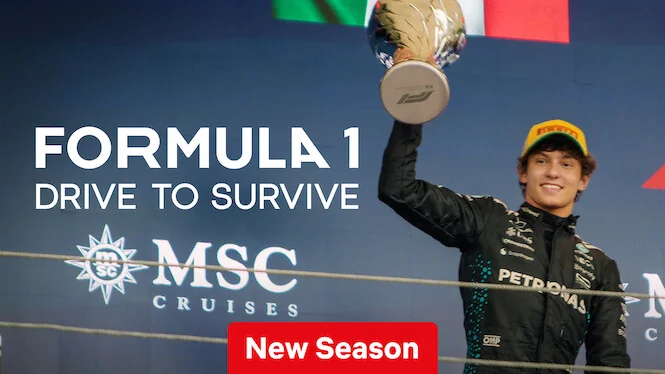
Season 8 of Drive to Survive has landed, and the identity crisis continues.
Is it a documentary? A season review? A scripted soap opera?
It tries to be all three, and arguably excels at none, yet still delivers moments that justify its existence.
The behind-the-scenes footage remains gold:
- Drivers backstage at the O2 chatting casually.
- Kimi not knowing to hold onto the rail on the Tube.
- Max and Lewis joking awkwardly about childbirth.
- Lando and Oscar roasting Ferrari’s reveal:
“It’s RED.”
“Looks like someone’s spilled some f***ing yoghurt over it.”
The Statler and Waldorf energy from Lando and Oscar alone is worth the runtime.
Yes, there’s fake tension and stitched narratives. Yes, the race edits can be over-dramatized. But eight seasons in, everyone knows what it is. It’s messy entertainment.
And sometimes the editing is chef’s kiss.
Flavio Briatore: F1’s Full Supervillain Arc
If Season 8 needed a villain, it found one.
Episode 2 (“Strictly Business”) turned Flavio Briatore into the sport’s cartoon antagonist. The vibe? Sinister. Intimidating. Gaudy décor. Golden bear statues. Tooth-brushing Hulk energy in contrast from Jonathan Wheatley.
Wheatley came off as the supportive boss you’d want to work for. Briatore? The polar opposite.
The portrayal was stark, perhaps intentionally so. The contrast wasn’t subtle.
And while some executives get framed as “old school mavericks,” the reaction to Briatore was far less forgiving. For many viewers, this wasn’t controversy, it was confirmation.
The show doesn’t need to manufacture villains when the characters supply the energy themselves.
Cadillac’s MAC-26: Redemption After USF1
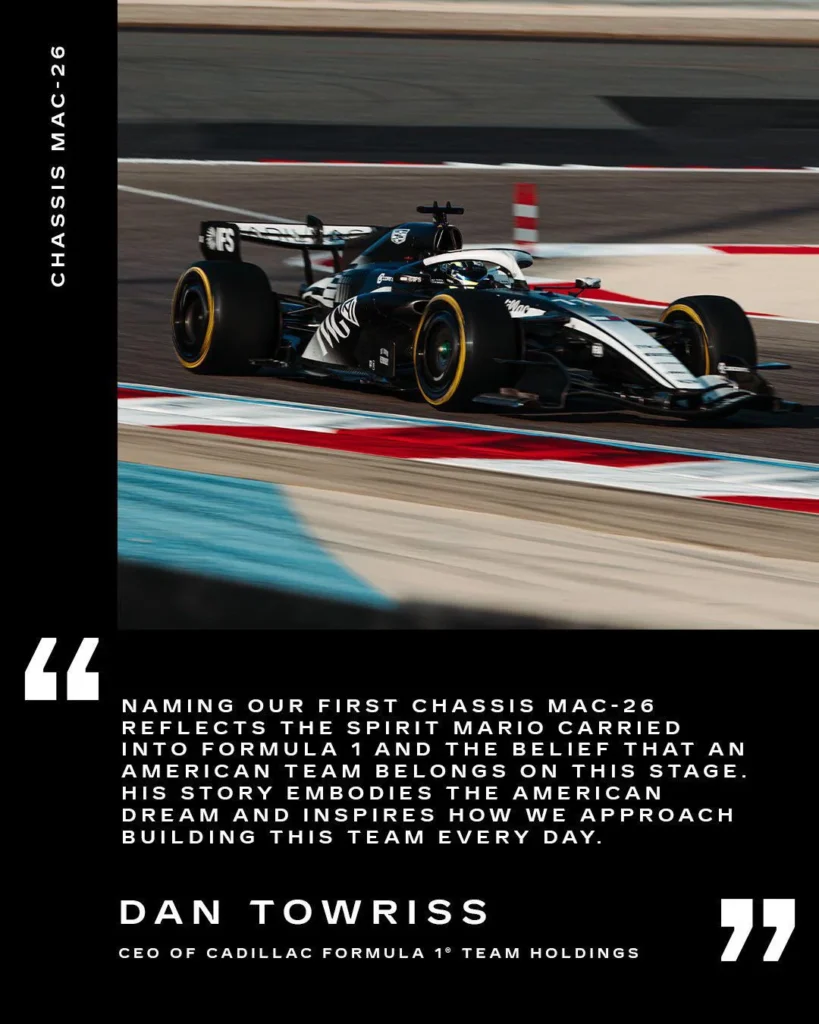
Cadillac has officially named its debut F1 chassis the MAC-26, “Mario Andretti Cadillac 26.”
It’s a symbolic nod to Mario Andretti’s influence on the project, and a sharp contrast to the failed USF1 attempt of 2010, remembered mostly for a slow-motion nose crash test video and a facility tour where the “car” turned out to be… essentially a front wing and a mold.
That era felt like expansion chaos. Bernie’s expansion push misjudged readiness and financial structure. Shoestring operations got entries they couldn’t sustain.
The current Cadillac project is very different.
Michael Andretti’s public push for entry created tension with FOM and teams. Entry fees escalated from $200 million to discussions around $600 million, with the final Cadillac-backed project reportedly settling around $450 million.
Crucially: engines.
Where Andretti’s original proposal lacked firm engine commitments, Cadillac’s fully committed works approach changed the dynamic. Once Cadillac and TWG Motorsports fully took control and structured it as a genuine manufacturer-backed effort, the tone shifted.
The MAC-26 name may spark jokes about MAC-10s and Big Macs, but beneath the memes is a properly funded, politically aligned works entry.
That’s what F1 wanted.
Honda & Aston Martin: Abnormal Vibrations, Familiar Echoes
Then there’s Honda.
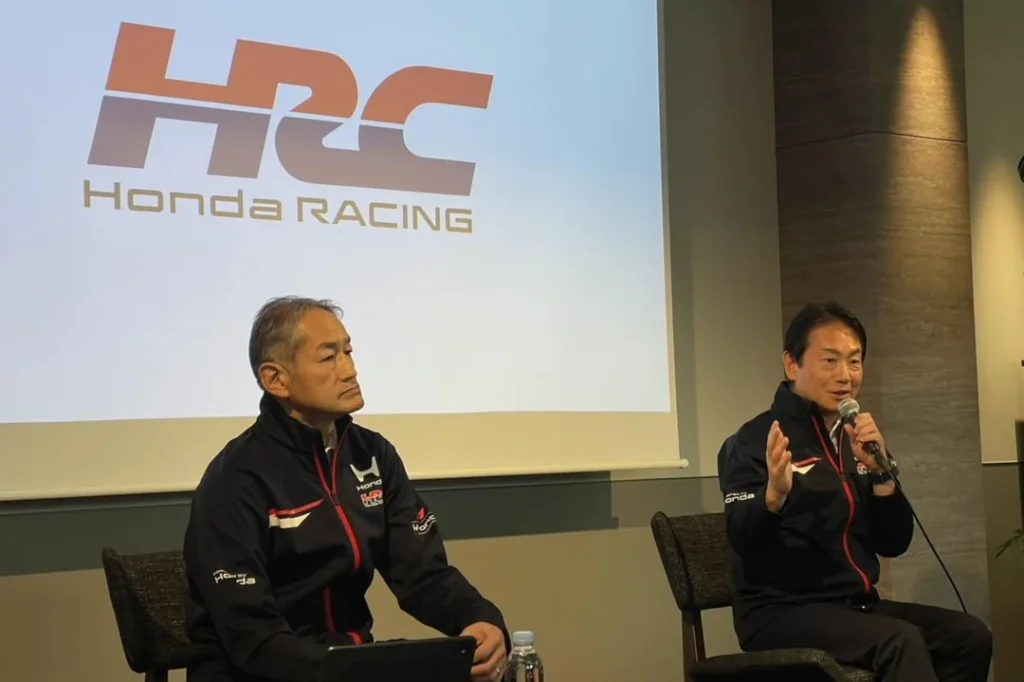
Honda Racing Corporation held an emergency press conference following Aston Martin Honda’s disastrous pre-season test. The core issue: abnormal vibrations damaging the battery system.
President Koji Watanabe was candid:
“Frankly speaking, the pre-season testing proved extremely challenging for us.”
Managing Director Ikuo Takeishi confirmed:
“Abnormal vibrations occurred, causing damage to the battery system.”
The Sakura test bench is now being used with a mounted monocoque to analyze and implement countermeasures. Both sides insist they will implement all possible solutions before the season opener.
And yes, they declared they will go for the win.
Optimism or hopium? Depends on perspective.
But the broader narrative is bigger than one failure.
Honda’s history is cyclical. Half in, half out. CEOs rotate. Commitment shifts. Programs reset. It’s not just F1, IndyCar, WEC, even other categories see similar manufacturer volatility.
Renault/Alpine’s history echoes this pattern. Audi, Porsche, Lamborghini, Aston Martin, sportscar racing is a revolving door. Manufacturers enter, exit, return, rebrand.
The difference in F1? The microscope.
Some argue Honda restarted late and was always behind on resourcing. The previous UK facility was sold and later reacquired. Staff turnover was significant. The current organization is not the same one that partnered with Red Bull during its peak.
Others question whether late design changes from Aston Martin, including mounting revisions, compounded the issue.
We don’t know the full technical truth.
But vibrations in a Honda hybrid program? The parallels to 2015 McLaren-Honda are hard to ignore.
Apple, 4K, and the Broadcast Arms Race
Meanwhile, in the U.S., Apple’s new F1 broadcast deal brings 4K Dolby Vision and 5.1 audio.
After years of ESPN 720p feeds, it’s a significant upgrade. Sky Sports viewers have enjoyed similar quality in the UK, but now U.S. fans finally join the party.
There are debates over 50fps vs 60fps, PAL legacy standards, compression, on-board camera limitations, and bitrate ceilings. True 4K vs compressed 4K. Surround vs stereo.
The production standard remains 50fps due to UK broadcast norms and electricity frequency constraints, and while onboards won’t be true 4K due to data limitations, off-board feeds are undeniably sharp.
The missing piece? Grid walk access. Fans want Brundle.
But the broader point stands: for a sport marketed as the pinnacle, broadcast quality matters.
The Circus Rolls On
Young drivers face unprecedented pressure. Social media noise. Media obligations. Toxic bosses. Culture shock moving from supportive environments to cutthroat ones.
Pre-season chaos. Manufacturer instability. Legacy bonuses. Streaming wars. Villains in documentary edits. Engineers chasing vibrations on a monocoque bench in Sakura.
Formula 1 remains what it has always been:
A circus.
A political battleground.
A marketing machine.
A soap opera.
And somehow, still the pinnacle of racing.
The season hasn’t started yet.
But the drama absolutely has.