

Formula 1’s latest news cycle captured the sport in full range: global fan passion, technical anxiety, manufacturer intrigue, driver mythology and even off-track family drama. From Franco Colapinto drawing an enormous crowd in Buenos Aires to Sebastian Vettel breaking the three-hour barrier in his first marathon, the week showed how F1 culture now stretches far beyond race weekends.
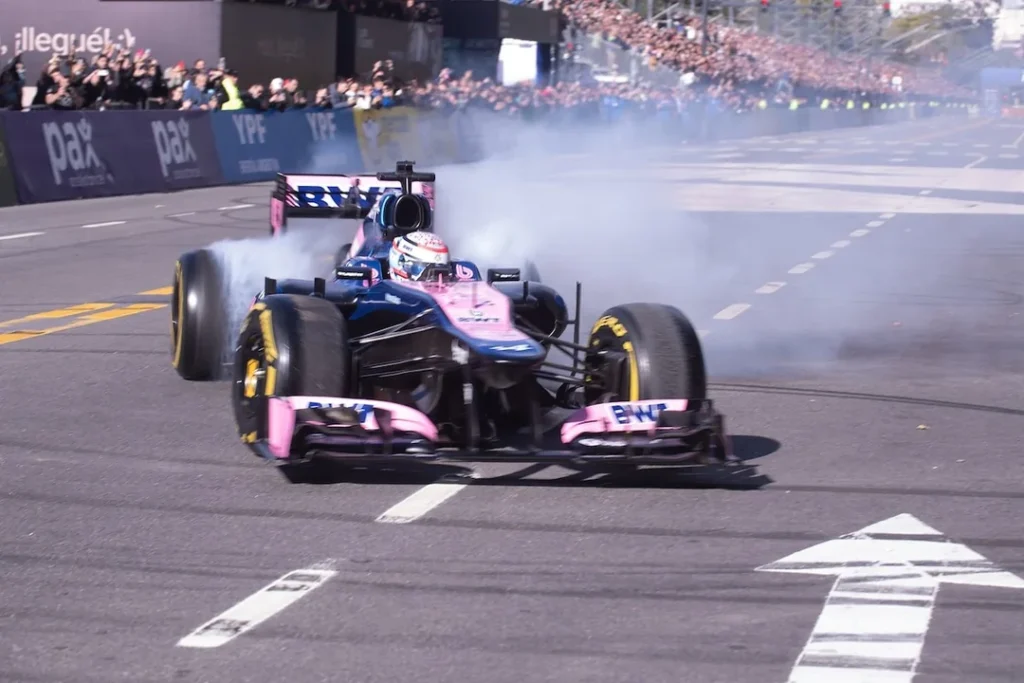
The biggest visual statement came in Argentina, where Franco Colapinto’s Buenos Aires roadshow reportedly drew more than 500,000 spectators across four hours. Even allowing for the fact that it was a free public event, the turnout was staggering. Roadshows often create impressive crowds, but this felt closer to a national sporting celebration than a promotional activation.
The event itself had the shape of a festival: live interviews, musical performances, sponsor activations, food trucks, multiple runs in the E20, a run in a replica Silver Arrow, and Colapinto spending time greeting fans on foot and by bus. The images of the crowd, the statue framing the show, and the car’s exhaust flaming after the run gave the whole thing a cinematic quality.
What makes the reaction even more powerful is that Colapinto is not being treated merely as a driver. In Argentina, he appears to represent something larger: perseverance, national pride and the rare feeling of seeing one of their own reach a stage that often feels structurally out of reach. The “che pibe” idea attached to him matters here — the image of someone who sacrifices, leaves home young, fights through limited resources and somehow reaches the top. That story resonates far beyond lap times.
It also reframes the scale of his popularity. This is not just hype for an F1 driver; it is the revival of a deep motorsport culture meeting a football-style national support system. Argentina has always rallied around figures who represent the country well internationally, especially when their story includes hardship and sacrifice. Colapinto’s rise fits that mold, which is why even a roadshow could feel historic.
The natural question is whether this strengthens the argument for F1’s return to Argentina. On crowd interest alone, the case looks obvious. The discussion around venue upgrades and the possibility of a future Grade 1 push only adds fuel to that idea. If a demonstration event can bring out this level of passion, an actual Grand Prix would likely be massive — though the sheer crowd size also raises real logistical questions.
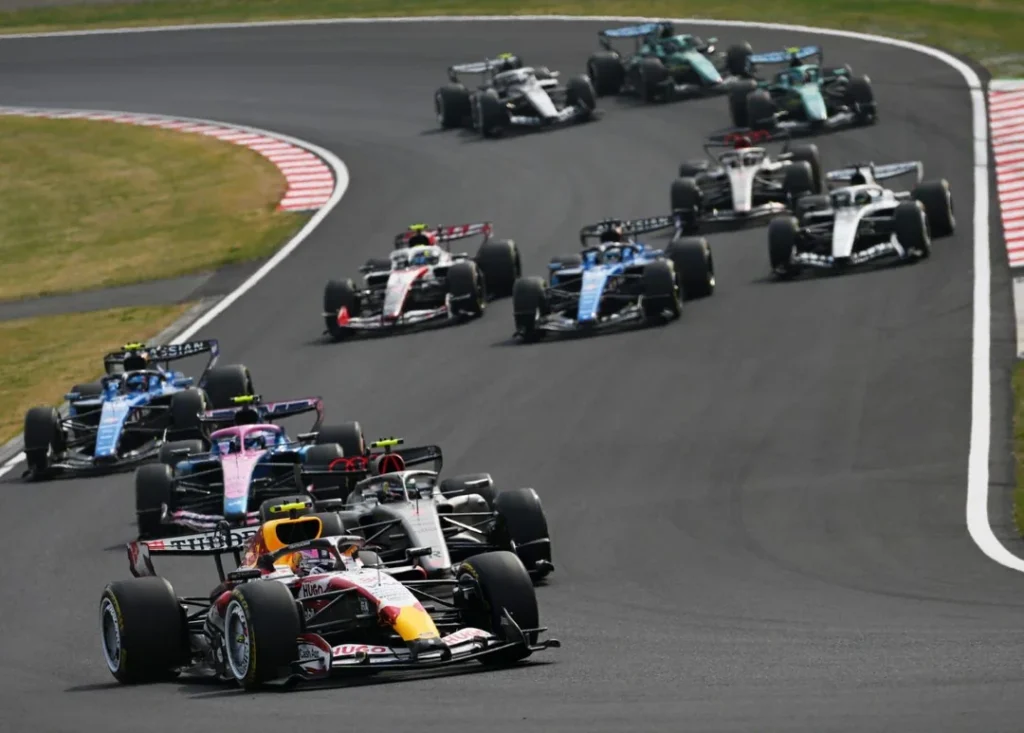
While Argentina showed F1’s emotional pull, the 2026 regulations debate showed its tension. The Race’s framing — why F1’s boss is confident most fans actually like 2026 — triggered the familiar split between online discourse and broader audience behavior. One of the strongest points in the discussion is that most fans do not live in Reddit threads, technical debates or comment sections. Many simply watch the cars race, enjoy the spectacle and move on.
That does not mean the criticism is invalid. The concern around speed differences, battery deployment, drivers not fully controlling power delivery and “accidental” overtakes remains central to why some fans dislike the new formula. There is a meaningful argument that F1 is effectively experimenting in public, and while that is part of prototype racing, the counterpoint is obvious: these rules have been simulated and discussed for years, and drivers had already raised concerns.
The more nuanced view is that both things can be true. The regulations may be flawed, but the racing can still be entertaining. Some fans see more overtakes, more unpredictability and more varied top 10s, and that is enough. Others see the same action as artificial, especially if passes are driven by clipping, lifting or deployment imbalance rather than wheel-to-wheel craft.
But F1 has always relied on artificial competitive mechanisms. DRS shaped the last era. Pirelli’s tire philosophy has long influenced strategy and pace. Refuelling once created speed offsets through fuel loads. The question is not whether racing is “pure” — it rarely is — but whether the chosen artificiality feels satisfying. For some, battery-based racing is less predictable than DRS and therefore more interesting. For others, it erodes the sense that drivers are controlling the contest.
The more important strategic issue is whether F1’s leadership is reading the right signals. If financial growth and global reach remain strong, the commercial side can argue the sport is healthy. But if online engagement, hardcore sentiment or driver frustration starts to predict broader cooling, then dismissing criticism as a loud minority could be risky. F1’s recent boom was built on a perfect storm: Drive to Survive, pandemic-era discovery, and the drama of 2021. The open question is whether that growth has become durable fandom or remains vulnerable to the next entertainment cycle.
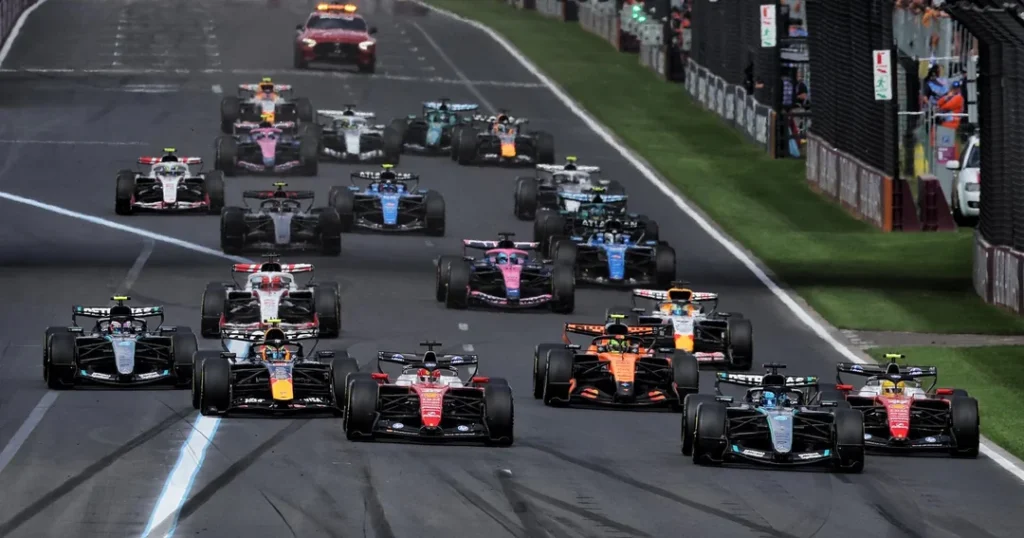
Manufacturer interest added another layer to the sport’s future. BYD’s reported F1 talks immediately sparked debate over what a Chinese automotive giant would actually want from Formula 1. The pronunciation jokes were inevitable, but the serious analysis is that BYD’s interest would make sense less as direct product marketing and more as global brand positioning.
Even though BYD is heavily associated with electrification and no longer produces ICE-only cars, that does not automatically make F1 irrelevant. F1 participation has always been a marketing, technology and soft-power exercise as much as a direct showroom link. Audi’s F1 move sits in a similar conceptual space: road-car strategy and racing strategy do not have to map perfectly.
For BYD, F1 could be about legitimacy in markets where Chinese EVs and hybrids face political, regulatory or consumer resistance. A presence in the world’s most visible motorsport series would not just sell cars; it would normalize the brand. That is why a Chinese F1 project could be about prestige and geopolitical automotive influence as much as motorsport ambition.
The bigger question is entry route. A 12th team would be the romantic answer, especially with arguments that circuits are supposed to have space for more teams. A purely Chinese-backed team could be enormous for F1’s growth ambitions. But the more likely path, if anything were to happen, would be buying into or replacing an existing team, with Alpine again emerging as the obvious speculative target because of its uncertain future.
The Geely discussion points in a similar direction. Lotus, Volvo, Polestar, Lynk & Co and Cyan Racing all offer different branding possibilities, though Lotus would carry the most obvious F1 heritage. Still, a Chinese group might not want to hide behind a British legacy badge if the real value is being seen as China’s first serious F1 team project. The same logic applies to BYD: the brand value may be in showing up as itself.
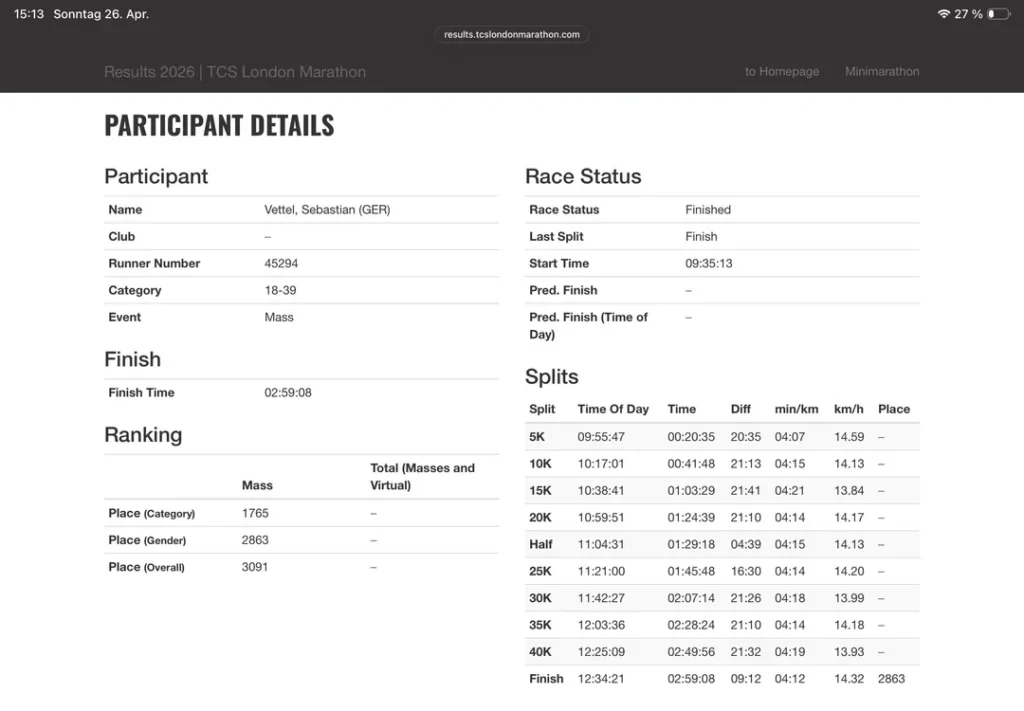
Elsewhere, Sebastian Vettel delivered the week’s most universally admired achievement by finishing his first London Marathon in 2:59:08, breaking the three-hour mark. The headline wording prompted plenty of jokes about explaining that 2:59 is, in fact, under three hours, but the performance itself was no joke.
A sub-three marathon is an excellent time, especially for a first attempt. Vettel’s pacing was part of what made it impressive, reportedly sitting around 4:10 per kilometer before some natural late-marathon fade. That immediately invited the obvious F1 metaphor: he was always good at managing degradation.
The result also revived the reminder that F1 drivers are elite athletes, even after retirement. Vettel may have been out of F1 for years, but modern drivers often carry intense fitness habits long after they stop racing. Cycling, endurance challenges, iron-distance events and other competitive hobbies are common across the paddock. The point is not just that drivers train because they are paid to; many are wired to keep competing.
Vettel’s run also raised the familiar regret that he has not yet committed to another racing category. The fitness is clearly still there, even if he has joked that his neck would be the limiting factor for an F1 return. Fans still want to see him in something — endurance racing, prototypes, anything that puts him back in a competitive setting.
Finally, Jos Verstappen’s Rallye de Wallonie ended early after a heavy crash during Sunday morning’s opening stage. His Skoda rolled after going off the road, but the key point is that both Jos and co-driver Jasper Vermeulen were unharmed.
The reaction had two layers. The first was relief, because rallying is unforgiving. Trees, drops and immovable roadside objects make it one of the harshest forms of motorsport when things go wrong. A rollover is serious, and the fact both crew members walked away is the only outcome that matters.
The second layer was the complicated public view of Jos himself. The jokes came quickly — “can’t park there,” Max being embarrassed by his dad, and references to Max’s own childhood stories — but beneath the humor was a sharper discomfort with Jos’s reputation. The supplied discussion repeatedly returned to his controversial personal history and the way Max has described parts of his upbringing. That tension meant the reaction was not the straightforward sympathy another former driver might have received.
Taken together, the week underlined how broad F1’s orbit has become. A retired champion can dominate conversation with a marathon time. A non-race roadshow can pull half a million people into the streets. A possible Chinese manufacturer can spark strategic debate about F1’s future ownership map. A regulation cycle can divide fans over what racing should even feel like. And a rally crash involving the father of the reigning star can become a flashpoint for memory, humor and moral discomfort.
It was not a race weekend, but it still felt like Formula 1: spectacle, politics, engineering, nationalism, personality and argument all happening at once.