

Formula 1 may technically be on vacation, but the championship has not exactly gone quiet.
If anything, the summer break has produced a surprisingly accurate snapshot of where F1 finds itself midway through 2026. Kimi Antonelli leads the championship. Ferrari is still searching for incremental gains to keep Lewis Hamilton involved in the title fight. Lando Norris is quietly rewriting McLaren’s record books. Oscar Piastri’s last victory is suddenly much further in the rearview mirror than most people realized. Max Verstappen is apparently spending his downtime making children’s days. Charles Leclerc is reminding everyone what the vacation portion of being a Formula 1 driver looks like. And naturally, with no race to argue about, fans have started debating everything else instead. Who has actually been the best driver this year?
What counts as “peak F1”?
Could we simply award the championship to whoever completes the most laps? And how is Fernando Alonso’s last victory now so old that entire Formula 1 careers can fit inside the gap?
Welcome to summer break.
Dad Max Has Apparently Arrived
One of the more wholesome clips making the rounds featured Max Verstappen stopping to take pictures with a group of young fans.
He posed for photos, fist-bumped the kids and generally looked like someone who had absolutely nowhere more important to be. It added another example to the growing collection of stories suggesting that the version of Verstappen encountered away from the circuit can feel dramatically different from the one wearing a helmet. One fan recalled meeting him in the Montreal paddock years ago. Verstappen was reportedly in a rush but stopped for a photo anyway. When the picture came out blurry because the camera shook, Verstappen came back and retook it.
Another story went even further back, to his Formula 3 days, when Verstappen and his father were playing miniature golf. Max apparently had a giant bag of candy and offered some to nearby children. There are also stories of Verstappen spending time with Red Bull mechanics and IT staff during race weekends rather than disappearing into a completely separate driver bubble. The contrast has become part of his public image.
Off track: patient, relaxed and apparently very good with kids. Helmet on: absolute menace. And maybe those things are not contradictory at all.
Some of Formula 1’s greatest competitors have been capable of separating the person from the racer. Sebastian Vettel is an obvious modern example. The later version of Vettel became one of the sport’s most universally loved personalities, but that can obscure just how ruthless he could be when he was fighting for championships. The same point applies to the legends further back. Ayrton Senna and Michael Schumacher were hardly known for politely surrendering opportunities because everybody deserved a nice afternoon. Extreme competitiveness is almost a prerequisite for reaching Formula 1’s highest tier. Verstappen just seems particularly good at turning it off when he gets out of the car.
It also means the recent jokes about his apparent “dad era” are getting increasingly difficult to ignore.
The short shorts probably did not help. Formula 1 fans, naturally, managed to turn a wholesome interaction with children into an extended discussion of Verstappen’s wardrobe and gluteus maximus.
Some traditions transcend championship battles.
Ferrari’s 2026 Strategy: Keep Adding Little Things
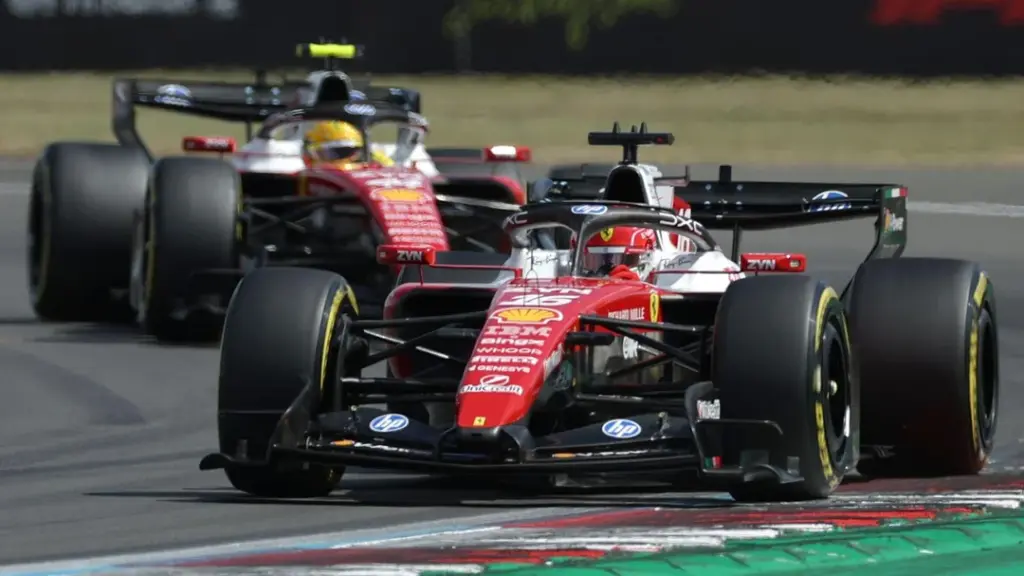
Meanwhile, Ferrari team principal Fred Vasseur has identified areas where Ferrari still needs to improve if Hamilton is going to remain in the championship fight.
The most encouraging part of Ferrari’s development this season may be that the team does not appear to be waiting for one enormous miracle upgrade. Instead, the approach has seemingly been about adding smaller but meaningful pieces every few races. And so far, that philosophy appears to be giving both Hamilton and Charles Leclerc something to work with.
There is already anticipation around another upgrade for Monza, although Ferrari fans have naturally simplified the technical development plan into four slightly more direct objectives: Go faster. Improve the starts.
Fix the strategy. Win. Hard to argue with any of that.
The bigger question is whether incremental development is enough when the opposition is also moving. McLaren’s approach has been contrasted with Ferrari’s because McLaren has been more willing to introduce larger packages. There is particular intrigue around the idea that its Hungary package represented more than simply another batch of upgrades and instead reflected a shift in development direction. If that direction is genuinely correct, Ferrari’s steady progression cannot merely continue.
It has to continue faster than everyone else’s. That is particularly important for Hamilton because Ferrari is no longer just trying to build toward next season. There is still a championship to chase. The slightly less technical suggestion is that Hamilton should simply be subscribed to some sort of podium loyalty program. Historically, winning lots of championships tends to involve standing on the podium fairly frequently.
Someone should probably tell Fred.
The Most Disturbing Statistic in F1 Right Now Belongs to Fernando Alonso
A list of the number of days since each current driver’s most recent victory produced one of those Formula 1 statistics that gets increasingly absurd the further down you scroll.
As of August 11: Lando Norris: 16 days. Kimi Antonelli: 23.
Charles Leclerc: 37. George Russell: 44. Lewis Hamilton: 58.
Max Verstappen: 247. Oscar Piastri: 345. Carlos Sainz: 653.
Sergio Perez: 1,199. Valtteri Bottas: 1,766. Esteban Ocon: 1,836.
Pierre Gasly: 2,165. Fernando Alonso: 4,839 days.
El Plan is apparently operating on geological time now. The number becomes even stranger when placed alongside other careers. Alonso’s last victory came during Bottas’ rookie season. Bottas is now scheduled to enter the top 10 for all-time Formula 1 starts this year.
Entire careers can fit inside Alonso’s victory drought. Kevin Magnussen’s complete F1 career fits inside it. And Alonso’s first victory happened 8,388 days ago, meaning there was a shorter gap between his first and most recent victories than between that most recent victory and today. At this point, asking when Alonso will win again feels less like motorsport analysis and more like astronomy.
We may need to consult the Age of Capricorn.
Oscar Piastri’s 345-Day Drought Is Almost More Shocking
Alonso’s number is enormous enough to become funny.
Piastri’s is uncomfortable for completely different reasons. His most recent victory came at Zandvoort last season, meaning he has now gone 345 days without winning. That is remarkable considering how strongly he was positioned during parts of 2025.
After Zandvoort, he failed to win any of the final nine races and managed only three podiums over that stretch. That period has also become central to the way people reassess the Norris-Piastri battle. There was a time when the narrative surrounding McLaren suggested Piastri had established himself as the stronger driver while Norris struggled with a car that did not suit his style.
But the actual championship gap was never quite as enormous as memory sometimes suggests. The biggest Piastri advantage was 34 points after Norris’ Zandvoort retirement. If that mechanical DNF is excluded, the largest advantage described as being on merit was 22 points after Canada. Once Norris became more comfortable, the trajectory changed substantially.
That does not mean everything that happened to Piastri afterward was his fault. Qatar remains one of the obvious painful examples, with McLaren’s decision not to pit both cars becoming part of the discussion surrounding victories that slipped away. Japan has also been mentioned as another potential win that never materialized.
But whatever combination of execution, strategy, reliability and driver performance created it, 345 days is an extraordinary number for someone who not long ago looked capable of taking control of a championship.
And Norris Is Quietly Becoming One of McLaren’s Most Significant Drivers Ever
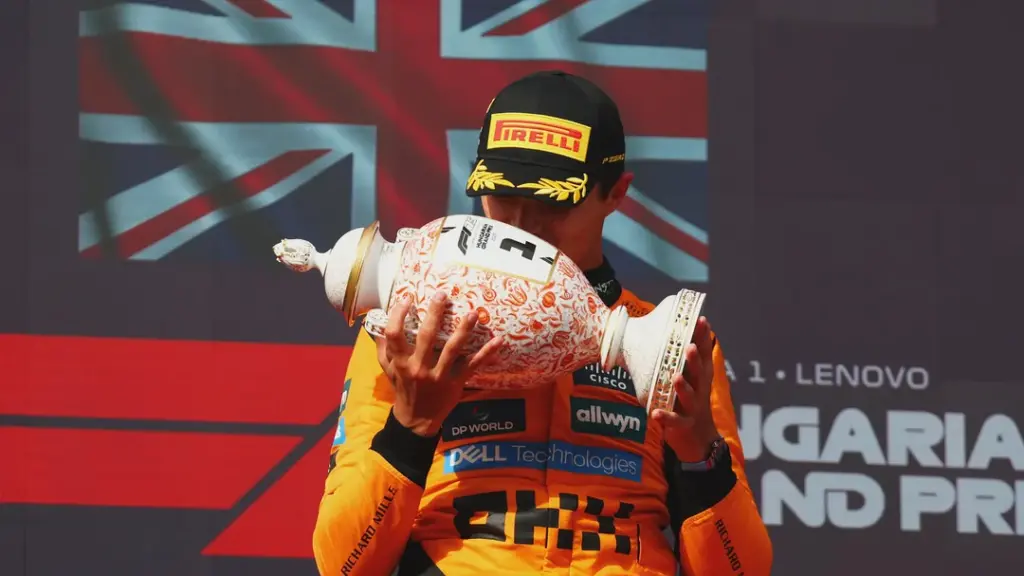
The other side of that equation is Norris.
His Hungarian Grand Prix victory gave him his 47th podium for McLaren. Lewis Hamilton recorded 49. That means Norris is now positioned to pass Hamilton’s McLaren podium total this season.
Beyond Hamilton sit David Coulthard and Mika Häkkinen on 51 each, Ayrton Senna on 55 and Alain Prost on 63. Norris could potentially reach Coulthard and Häkkinen before the year is over as well. He already has the most starts for McLaren and, following Hungary, has matched Coulthard’s McLaren victory total.
The numbers since McLaren’s major Austria and Silverstone upgrades in 2023 are even more striking. Across 72 races beginning with Silverstone 2023, Norris has recorded 41 podiums. That is a podium rate of 56.94 percent.
More often than not, Lando Norris has finished on the podium over that span. That is a remarkable transformation considering how much of his earlier McLaren career was spent waiting for the machinery to catch up with him. If Norris remains with McLaren through 2028, he would reach 10 seasons with the team and move beyond Häkkinen and Coulthard’s nine-season tenures.
Leclerc could eventually create something similar at Ferrari. If he remains there through 2030, that would give him 12 seasons with the team, surpassing Schumacher’s 11. That is a strange thought considering Norris and Leclerc can still feel like members of Formula 1’s younger generation.
They are rapidly becoming institutional figures at their respective teams.
So Who Has Actually Been Best in 2026?
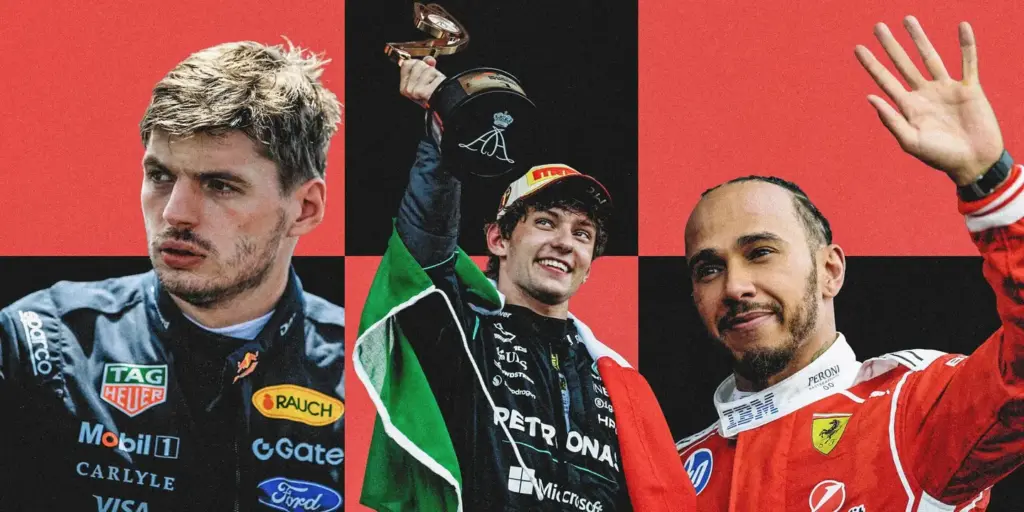
The Athletic’s midseason driver rankings put championship leader Antonelli at No. 1 and Norris at No. 2.
That part generated relatively little resistance. The bigger arguments began further down. George Russell being ranked fourth — ahead of Hamilton — proved particularly controversial, especially because Antonelli offers a direct benchmark in the same machinery.
Russell has unquestionably had poor fortune at points this year, and not every disappointing result belongs at his feet. But when your teammate is leading the championship in what is being described as the fastest car, ranking the other driver fourth-best in Formula 1 becomes difficult to separate from the performance of the machinery beneath him. That is the recurring flaw with driver rankings.
How exactly do you separate driver from car? Norris, Verstappen and Hamilton are especially difficult to arrange because each has a different unanswered question attached. Norris has looked excellent, but McLaren’s reliability and execution complicate the raw results.
Hamilton has produced very high peaks, although not always with complete consistency. Verstappen’s results have fluctuated significantly from weekend to weekend, yet there is little reason from what we have seen to assume he is leaving substantial performance unused. Leclerc being placed sixth also generated criticism, though his season has included some costly underperformances.
He and Hamilton are relatively close against each other: 6-5 in qualifying in Leclerc’s favor and 5-6 on race results. That makes placing them near each other reasonable. The stranger question becomes Russell sitting above both.
And beneath all of this sits the unavoidable problem that F1’s top teams tend to fill driver rankings with their own drivers. At some point, a driver ranking risks becoming slightly more sophisticated constructors’ championship fan fiction. If car performance determines too much of the ranking, why not simply look at the standings?
But completely correcting for machinery creates a different problem: it becomes possible to overcompensate so aggressively for poor equipment that the ranking turns into pure projection. There is no completely clean answer.
Which is why we will apparently continue making these rankings forever.
We Have Also Found a Better Championship Format
Or perhaps there is another solution.
Forget points entirely. Just award the World Drivers’ Championship to whoever completes the most laps during the season. Someone calculated what Formula 1 history would look like under that system, and the results are glorious.
Jean Alesi becomes 1997 world champion. Eddie Irvine gets 1999. David Coulthard takes 2000.
Tiago Monteiro wins 2005. Paul di Resta becomes 2011 world champion. Kimi Räikkönen takes 2012.
Carlos Sainz becomes the 2021 champion. Oscar Piastri wins 2024. George Russell takes 2025.
And somehow, even under an alternate championship system seemingly invented entirely to create chaos, Leclerc still cannot get a world title. That may be the cruelest statistic of all. The obvious highlight is 2021.
Years of arguing about Abu Dhabi can apparently be eliminated immediately. Hamilton? Verstappen?
No. Carlos Sainz was the true champion all along. Smooth Operator wins. Case closed.
Please direct all complaints to the number of completed laps.
Even Formula 1’s Alternate Universes Refuse to Give Leclerc a Championship
The Leclerc problem deserves emphasis.
Formula 1 fans have spent years inventing increasingly specific statistics capable of presenting their favorite driver in the best possible light. Most completed laps? No title.
Qualifying-based championship? Apparently he still finds a way to lose 2022 to Verstappen by two points, with Perez outqualifying him by three hundredths in the final round playing a role.
We are rapidly approaching the point where the only viable alternative championship is “most Monegasque driver.”
Charles should dominate that one.
Probably.
Leclerc Is at Least Winning Summer Break

Championships aside, Leclerc’s vacation photos provided their own annual reminder that Formula 1 drivers do not experience summer break quite the same way as the rest of us.
The immediate response was understandable: Why did none of us simply become Formula 1 drivers? Apparently we all made a terrible career decision.
Some blamed their parents for failing to put them into karting young enough. Others blamed their parents for failing to be sufficiently wealthy. The second complaint may actually be more relevant.
The path toward Formula 1 is extraordinarily expensive, and the discussion around Leclerc’s glamorous vacation quickly turned toward the number of talented young karters who likely never progress because they cannot secure enough financial backing. There are probably countless drivers who were fast enough to move further but disappeared anonymously from the ladder because the sponsorship money never arrived. So perhaps the real childhood mistake was not failing to start karting.
It was failing to be born with a karting budget. Easy oversight. Leclerc’s miniature dachshund Leo also remains one of the stars of the operation.
Fans with their own dachshunds remain confused about how Leo can appear so well behaved while their dogs operate like tiny domestic terrorists. The most convincing explanation is money. Perhaps Leo attended the Harvard of dog training.
Although accounts of him peeing beside the paddock, contorting himself into ridiculous positions and behaving like a completely normal dachshund suggest that wealth can only suppress the chaos temporarily. You can put a dachshund on a million-dollar yacht.
It remains a dachshund.
What Exactly Was “Peak F1”?
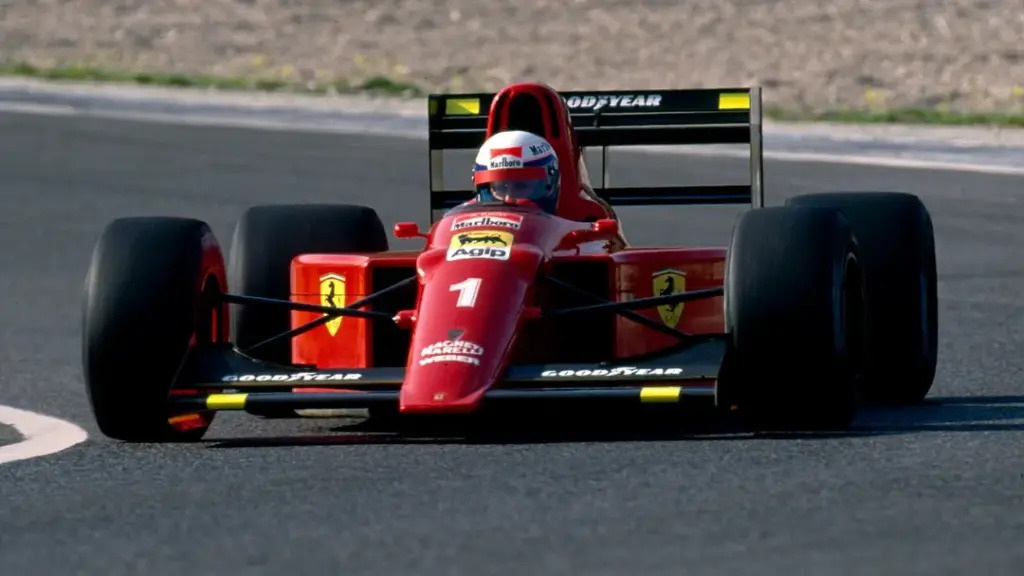
Summer break also means nostalgia season.
A discussion around three legendary drivers, three legendary cars, three famous liveries and three famous teams quickly became an argument about which period represented Formula 1 at its absolute best. And perhaps the most accurate answer was also the simplest: Peak F1 was when you were a kid, had no responsibilities and did not understand enough about the sport to ruin it for yourself.
The cars were loud. They were fast. The drivers were superheroes.
That was enough. For some, the late 1980s and early 1990s remain unbeatable for romance, aesthetics, personalities, sound and atmosphere. For others, the late 1990s through roughly 2001 represents the ideal.
Others extend that into 2007 and 2008. Some argue for 2009 through 2012.
And then there is 2021.
It Is Going to Be Very Hard to Ever Recreate 2021
For viewers who have watched Formula 1 for decades, 2021 continues to occupy a special place.
Not necessarily because the cars were the best-looking or because every individual race was spectacular. It was the structure of the championship. Lewis Hamilton against Max Verstappen.
Two drivers operating at an extraordinary level. Two teams that increasingly seemed to despise each other. Constant flashpoints.
Constant pressure. And the feeling that virtually every weekend mattered. There have been other extraordinary championship fights.
Senna and Prost provide the obvious historical comparison. In 1988, they were teammates in a McLaren that won 15 of 16 races, with the driver who accumulated the most raw points still not ultimately taking the championship under the scoring system. In 1989, the title fight produced a collision between the teammates.
Then they did it again in 1990 from different teams. In races where both finished, Senna and Prost reportedly averaged 1.5 finishing positions apart. For Hamilton and Verstappen in 2021, the corresponding average was 1.9.
So the intensity itself was not unprecedented. But for a modern audience — particularly the huge wave of people who discovered Formula 1 around 2020 — it was astonishing. Every week felt consequential.
Every contact mattered. Every stewarding argument exploded. The ending remains divisive, but the journey there was extraordinary.
There is even a belief that some viewers who arrived during the boom, experienced 2021 immediately and subsequently drifted away were effectively victims of terrible timing. Imagine discovering Formula 1 and assuming every season was going to be like that.
It is like attending your first concert and discovering afterward that the band happened to play its greatest performance ever.
But 2012 and 2010 Still Have Their Supporters
Not everyone agrees that 2021 represents the peak.
2012 offered a very different kind of championship, with a broader range of potential winners and a title fight that ultimately produced one of the sport’s most celebrated finales in Brazil. 2010 has its own compelling case. Three teams with genuine title-capable cars.
Five drivers still in contention until the penultimate race. Three drivers from three different teams reaching the finale with championship possibilities. Instead of the direct duel of 2021, those seasons created uncertainty through numbers.
The argument therefore depends on what you want Formula 1 to be. Do you want two giants repeatedly colliding at the center of the sport? Or do you want a grid where several drivers can realistically win on a given Sunday? There is no objective definition of peak.
There is only the version that made you fall in love with the sport.
Nostalgia Also Has a Habit of Editing Out the Bad Parts
That is particularly obvious when people remember previous regulations.
The refueling era looks fantastic in highlight reels. The cars were spectacular. Qualifying could be ferocious.
But entire races could also become exercises in drivers circulating while conserving fuel before attempting to gain position through pit-stop cycles. Fresh tires often arrived with heavy fuel. Low fuel arrived with worn tires.
And for a period, qualifying fuel loads even made it difficult to know whether pole position reflected outright pace or simply a lighter starting strategy. Every era has things its fans conveniently forget. The early 1990s cars may look pure and beautiful to one generation while younger viewers accustomed to complex modern aerodynamics see them as strangely simple.
The V10 era can sound like perfection while still producing races with limited passing. Even 2021, remembered for its incredible rivalry, contained plenty of stewarding controversy and questionable decisions.
Nostalgia is Formula 1 with the boring laps edited out.
And Sometimes Nostalgia Runs Into the Reality of Imola 1994
One discussion about the history of the sport took a much darker turn when a newer fan encountered the full sequence of events surrounding the 1994 San Marino Grand Prix.
Roland Ratzenberger died on Saturday. Ayrton Senna died during Sunday’s race. Rubens Barrichello had already suffered a major crash earlier in the weekend.
Looking back from the modern safety environment, it can be difficult to understand how the event continued. But motorsport’s relationship with danger has changed over time rather than through one single moment. Go further back and the contrast becomes even more extreme: cars without modern protective structures, photographers exposed close to the action and safety standards that would be unimaginable today.
Fatalities were tragically familiar enough that racing culture normalized risks modern Formula 1 would never accept in the same way. Senna’s death became one of the major forces that accelerated the push toward much greater safety. There were also criminal proceedings connected to his accident that stretched for years, with members of Williams involved in the case. The legal process was not fully resolved until 2007. The central question raised by Imola remains uncomfortable, however, because motorsport has never completely escaped it:
When should racing stop?
That Question Did Not End in 1994
Anthoine Hubert died during the Formula 2 race at Spa in 2019.
Formula 1 raced there the following day. Sebastian Vettel has since described Hubert’s death as the only time in his racing career when he did not want to get back into the car. That context made what happened at Spa in 2021 particularly chilling.
Conditions were severe. Vettel repeatedly argued over the radio that the session should be red flagged. Then Norris suffered a huge crash through the Eau Rouge-Raidillon sequence.
Vettel’s immediate reaction after learning about the crash was anger because he had already warned about the conditions, followed immediately by concern over whether Norris was okay. That weekend had already included a multi-car W Series accident at Eau Rouge that sent several drivers to hospital. Thankfully, those incidents did not produce another fatality.
But they reinforced the brutal truth of racing: modern Formula 1 is enormously safer, not completely safe. Romain Grosjean’s Bahrain crash made that obvious. So did Zhou Guanyu’s Silverstone accident.
The expectation created by modern safety is now that a driver can survive something visually horrifying. That is extraordinary progress.
It can also make the rare occasions when modern safety fails even more shocking.
Maybe That Is the Real Difference Between Old F1 and New F1
When people talk about peak Formula 1, they usually talk about sound.
Or liveries. Or personalities. Or rivalries.
But perhaps one of the greatest differences between the sport’s eras is what we now expect to happen when things go wrong. Older generations grew up watching drivers treated like superheroes partly because they genuinely appeared to be risking everything every weekend. Modern fans still understand the danger, but we have also become accustomed to seeing drivers climb out of crashes that would once have seemed unsurvivable.
That is not something worth trading back for nostalgia. Give us the V10 sound. Give us the beautiful liveries.
Give us Senna versus Prost. Give us Hamilton versus Verstappen.
Keep the modern survival cell.
Formula 1 Is Always Better in Retrospect
And that may be the theme connecting almost everything happening during this summer break.
Norris is approaching Hamilton’s McLaren records, turning what still feels like a young career into part of the team’s history. Alonso’s last win suddenly belongs to an era distant enough to contain entire careers. Piastri’s last victory feels recent until the calendar says 345 days.
Fans are debating whether 2021, 2012, 2010 or the late 1980s represented peak Formula 1. Verstappen, once cast primarily as the sport’s aggressive young villain, is now being described as the chill guy taking pictures with kids. Leclerc is already on a path that could eventually make him Ferrari’s longest-serving driver.
The present turns into history far faster than anyone notices. Maybe that is why Formula 1 fans are constantly arguing about which era was best. We rarely recognize an era while we are actually living through it.
We complain about strategy. We complain about regulations. We complain about the cars.
We complain about the FIA. Then 15 years pass and somebody posts a picture of the same cars. Suddenly they were beautiful.
The racing was pure. The drivers had aura. And everything was better back then.
So perhaps the real peak F1 is not 1990. Or 2001. Or 2012.
Or 2021. Peak F1 is approximately 15 years ago.
And apparently, it always will be.