

Formula 1 has entered its five-week pause with the sport pulling in two directions at once. On one side is the official optimism: teams promising upgrades, technical workarounds, and better days ahead. On the other is the far louder reality emerging from the grid, the garages, and the fan reaction around them — a championship increasingly defined by frustration over the 2026 regulations, concern over the consequences they are already creating, and a growing sense that too many of the sport’s biggest names are either defending the indefensible or simply trying to survive it.
That tension sat underneath nearly every major talking point heading into the break.
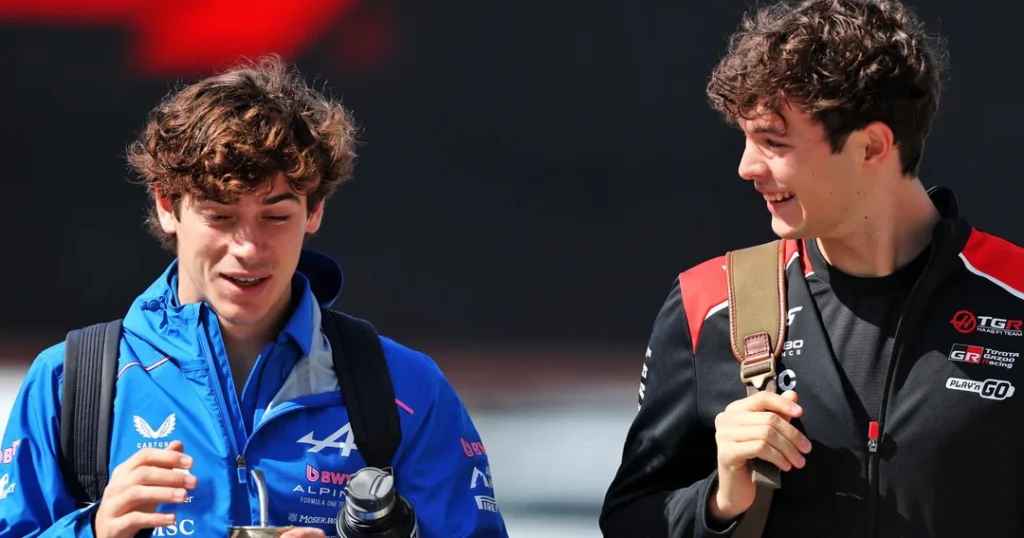
The most serious flashpoint came in the aftermath of the abuse directed at Franco Colapinto following Oliver Bearman’s crash. The reaction around that incident was not just disgust at the online pile-on, but exhaustion at how quickly attention shifted away from the bigger issue. The ugliness of social media was one story, but many saw a much more troubling one underneath it: two young drivers being caught in a system that appears to be creating dangerous closing-speed scenarios, then being left to absorb the blame when it goes wrong.
That was the core of the backlash. Rather than treating Colapinto as the villain of the moment, the stronger reading was that this looked like a racing incident shaped by regulations drivers cannot properly judge from the cockpit. The criticism was not merely that the rules are messy. It was that they are now producing situations in which a driver can appear comfortably far back in the mirror one instant and suddenly be there the next because of the way battery deployment and energy recovery are being managed. In that reading, Bearman and Colapinto were not the central problem. They were the latest people exposed by it.
That wider fear kept surfacing. Several reactions framed Bearman’s injury as the point at which the FIA could no longer avoid tweaking the rules, with the unsettling consensus being that this kind of accident had felt inevitable. Some went further and argued that the start in Australia should already have been enough warning. The recurring point was not that this was a freak event, but that the 2026 framework has been flirting with one for weeks.
The social response to the abuse itself was also telling. It was not written off as a few isolated bad actors. The stronger interpretation was that Formula 1 has helped create the conditions for it. A sport that increasingly markets its drivers as reality-TV protagonists and its season as serialized drama should not be surprised when parts of the audience respond in those terms. Add rage-driven algorithms, engagement farming, probable bot activity, and fanbases primed to turn every incident into a tribal war, and what emerges is a culture where the easiest storyline — “this guy almost killed someone” — travels much faster than any nuanced explanation about deployment curves, harvest strategy, or regulatory design.
That is why the Colapinto-Bearman aftermath mattered beyond one crash. It exposed not just a technical problem, but the communication vacuum around it. Too many fans do not understand the systems now shaping races, and when the sport itself struggles to explain them clearly, blame attaches to the most visible human target.
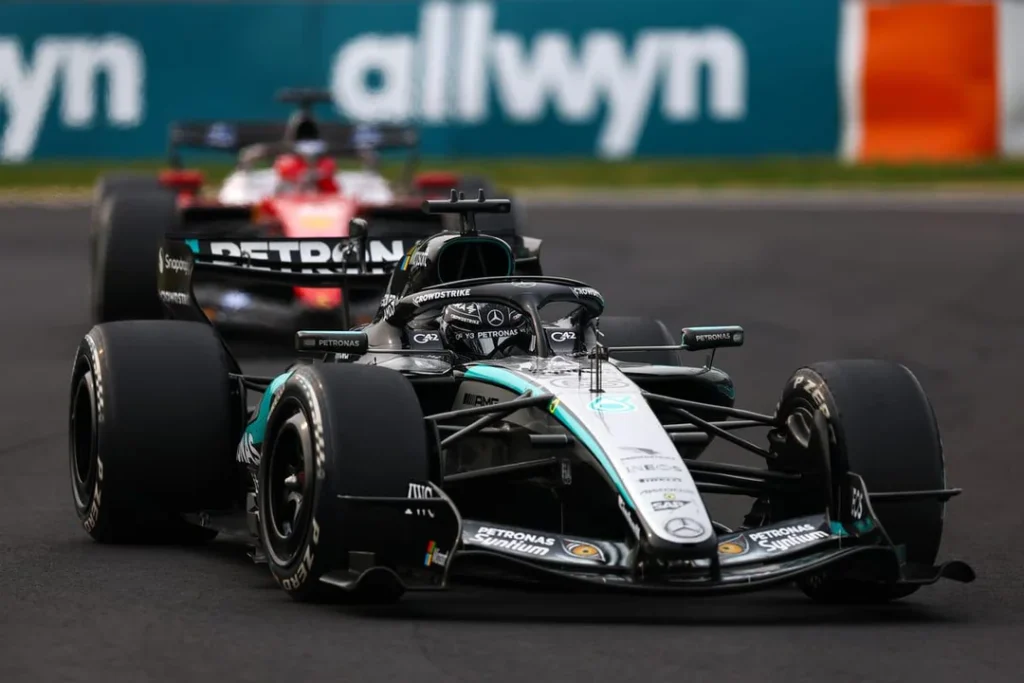
That confusion was visible again in the reaction to reporting around Mercedes and the latest engine loophole. The explanation itself was complicated enough to sound absurd: MGU-K usage rules normally require a stepped reduction from full deployment, but Mercedes and Red Bull-powered teams were described as exploiting an emergency shut-off mechanism to cut from full power to zero at the end of qualifying laps, effectively extending maximum deployment to the line while accepting the lockout penalty on the in-lap. In classic Formula 1 fashion, it was simultaneously ingenious and ridiculous.
The ingenuity was obvious. This was the kind of grey-area interpretation the sport has always celebrated when it comes wrapped in mechanical cleverness. The problem was that it also reinforced the broader criticism now hanging over the regulations: each new explanation makes the whole system feel even less like racing and more like software engineering wrapped in a race weekend.
That sentiment came through again and again. Engineers were saying the rules sounded like a nightmare. Mechanics were joking that software glitches in battery management were exactly what anyone should expect from a system this convoluted. Others reduced it to caveman language just to make it legible: press the pedal, sometimes electrical happen, sometimes it makes the car go fast, sometimes it makes the car go slow, and sometimes it helps cause a crash. The joke landed because the underlying point was serious. The more the sport explains the system, the less intuitive it sounds.
There was still admiration for the loophole itself. Some saw it as peak Formula 1 — smart people finding a legal exploit and using it better than rivals. But even that admiration tended to come with an asterisk. If an “emergency” function can be used strategically at the end of a qualifying lap, then the issue is not simply that Mercedes or Red Bull found a trick. It is that the framework itself appears to contain too many openings for workarounds that make the spectacle less coherent and the technical language more detached from what fans actually see on track.
That is also why Ferrari’s frustration landed. The annoyance was not just that a rival had found something clever. It was that the sport is drifting toward a formula where the important competitive gains are increasingly hidden in battery maps, software behavior, and management logic instead of visible driver control. The criticism was not anti-technology. It was anti-tedium.
That same sense of regulatory over-complication drove the discussion around ideas to fix the looming qualifying crisis. One proposed solution was to hand more active aero use to the drivers, effectively broadening how straight-line mode could be used to offset the problem of cars slowing so dramatically at the end of straights. On paper, that sounded like a quick patch. In practice, it immediately opened another argument about safety.
The objection was straightforward: if drivers are given more discretion over active aero, they will inevitably push it into places where the margin is too small. And if one driver can carry it open through a sequence and another cannot, the pressure to try anyway becomes immense. The comparison to early DRS experimentation came naturally, as did the warning that Formula 1 has already seen what happens when drivers chase theoretical gains through corners with aero devices still open.
Defenders of the idea argued that the current active aero concept is less dangerous than old-style DRS because it changes both wings and therefore does not create the same aero imbalance. Critics were unmoved. Their position was that leaving this to driver judgment is asking for sketchy decisions in high-speed sections, particularly when the entire conversation only exists because the underlying engine formula is flawed in the first place. That is what makes the debate feel so bleak: even the proposed fixes sound like attempts to choose which downside is least damaging.
The larger frustration is that none of this feels unforeseen. That theme came through repeatedly. These issues were discussed years in advance. MGU-H retention and front-axle regeneration were both floated and both would have helped reduce the severity of the current problems, yet both were vetoed amid manufacturer politics and competitive self-interest. Now the sport is circling back to ideas it either rejected or watered down, while pretending surprise that energy harvesting, clipping, and deployment behavior are distorting qualifying and creating new safety questions.
That context also shaped reactions to Toto Wolff’s latest defense of the incoming rules. His claim that Formula 1 is becoming “pure racing,” exciting because of where somebody harvests and where somebody deploys, was received less as a persuasive argument than as either provocation or self-serving rhetoric. The dominant interpretation was blunt: it is easy to praise the regulations when your team is on top of them.
That is why the response to Wolff was so cutting. He was framed as a master of ragebait, a team boss who knows exactly how to aggravate rival camps and drivers by enthusiastically celebrating the very thing they despise. And because he spent previous eras loudly criticizing regulations when they hurt Mercedes — porpoising being the obvious example repeatedly raised — the contrast only made the current praise look more opportunistic. In that reading, this was not principle. It was competitive convenience packaged as statesmanship.
The same gap between official messaging and public reaction showed up elsewhere on the grid.
At Williams, James Vowles’ call to “maximise these next five weeks” and draw “a line in the sand” after a painful day was met with heavy skepticism. The language sounded polished, managerial, and almost suspiciously corporate, to the point that it was mocked as the living embodiment of LinkedIn. The bigger issue, though, was not the tone. It was the lack of confidence that words alone mean much when the team has spent so long talking about the future. The feeling around Williams is that the team sold optimism aggressively, especially compared with the low-expectation messaging elsewhere, and is now paying for it.
That disappointment seems sharper because Williams was supposed to be one of the stories of the season, not one of its cautionary tales. The sense now is that they may claw back toward the rear of the midfield, but that the gap between their rhetoric and their actual trajectory has made the slide more jarring. Some even argued they have been a bigger letdown than Aston Martin because Aston had spent so long telling people not to expect miracles.
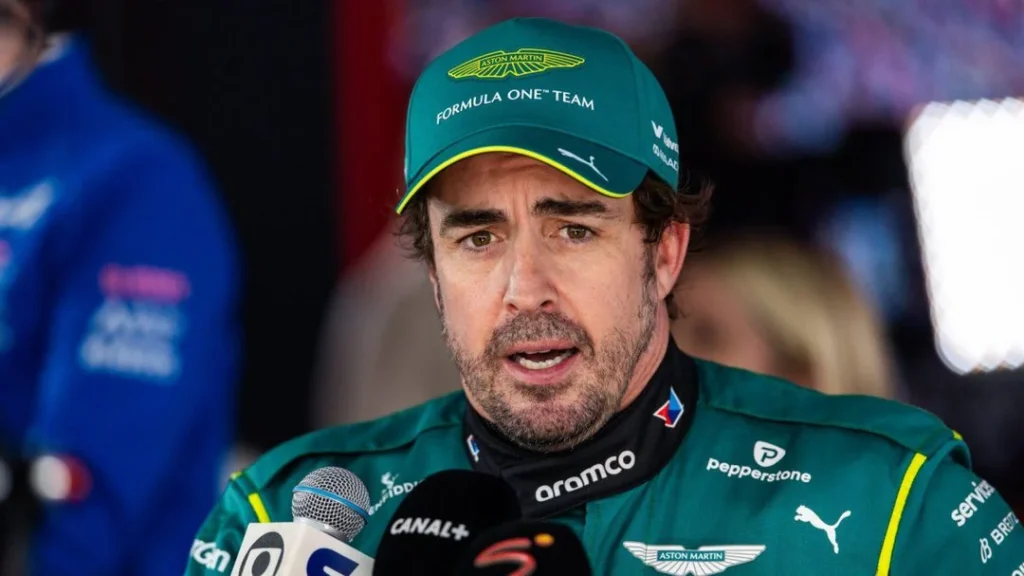
Aston, by contrast, has entered a much darker kind of realism. The line that the next 10 races could still be difficult landed like a punch. For a team that has already sunk enormous money into this project, the reaction was disbelief bordering on fatalism. Not because Aston is merely off the pace, but because the problems sound foundational: limited race mileage, missing data, the need to reduce vibrations just to limp through events, and a competitive position so bad that even scoring a point is being framed as something that might require chaos, weather, or sheer luck.
That is what has made Aston such a symbol of the current moment. Here is a team that has spent heavily, built aggressively, and yet appears nowhere near a breakthrough. The result is a perception that the whole year may already be a write-off, with the only realistic conversation being whether they can scrape past another struggling team in the standings rather than whether they can meaningfully join the fight ahead. Even the jokes reflected that resignation: if the next 10 races are going to be difficult, the season is basically gone.
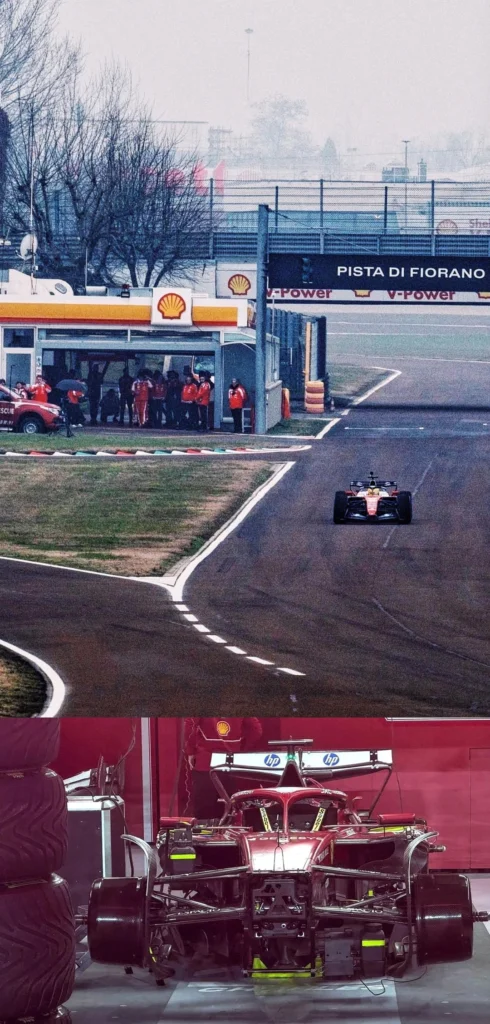
Ferrari’s five-week plan, meanwhile, was received through a different lens. There was intrigue around the estimated horsepower gap to the 067/6 engine benchmark, the possibility of an ADUO request, and the testing sessions at Mugello and Monza designed to help evaluate the SF-26’s high-speed energy recovery behavior. But the discussion quickly widened into a bigger argument about testing restrictions and the modern cost-capped sport.
The nostalgia was immediate. In another era, a gap like this would have triggered thousands of miles of running. Cars would have been on track constantly, sometimes in multiple places at once, development paths split and compared in real time, and race weekends themselves would have doubled as test programs. Instead, the modern system forces teams into a more constrained, bureaucratic version of problem-solving, even when there is obvious work to do.
That sparked the familiar split in philosophy. One side argued that if teams are under a cost cap, they should be free to choose how to spend inside it — more track time, less CFD, fewer simulations, more real-world data. The other side warned that relaxing testing would simply favor teams with the best facilities, especially Ferrari with its own track infrastructure. But even that argument often circled back to the same conclusion: the cap may have stabilized the field financially, but it has also made it far harder for anyone who gets the concept wrong at the start of a new era to recover quickly.
Cadillac, interestingly, has emerged as the team benefitting most from being judged against modest expectations. Valtteri Bottas joking that Mercedes should “watch out” because of a big Miami upgrade was treated with affection rather than ridicule, and that says a lot about where Cadillac currently sits in the paddock imagination. They are not expected to challenge the front. They are expected to gather data, learn, and quietly improve. In that context, their veteran lineup is not seen as passengers enjoying an easy life, but as experienced operators whose value lies in extracting useful feedback, maximizing limited performance, and helping shape the car’s direction without the weekly pressure of headline results.
That lighter mood around Cadillac also reflects another truth of the current grid: when expectations are low enough, competence becomes impressive. Several observers were struck by how few major issues Cadillac has had relative to what a new operation might reasonably have been expected to suffer. Their progress is being read as serious, even if it is still distant from competitiveness. In a field where established names are flailing, simply looking organized counts for a lot.
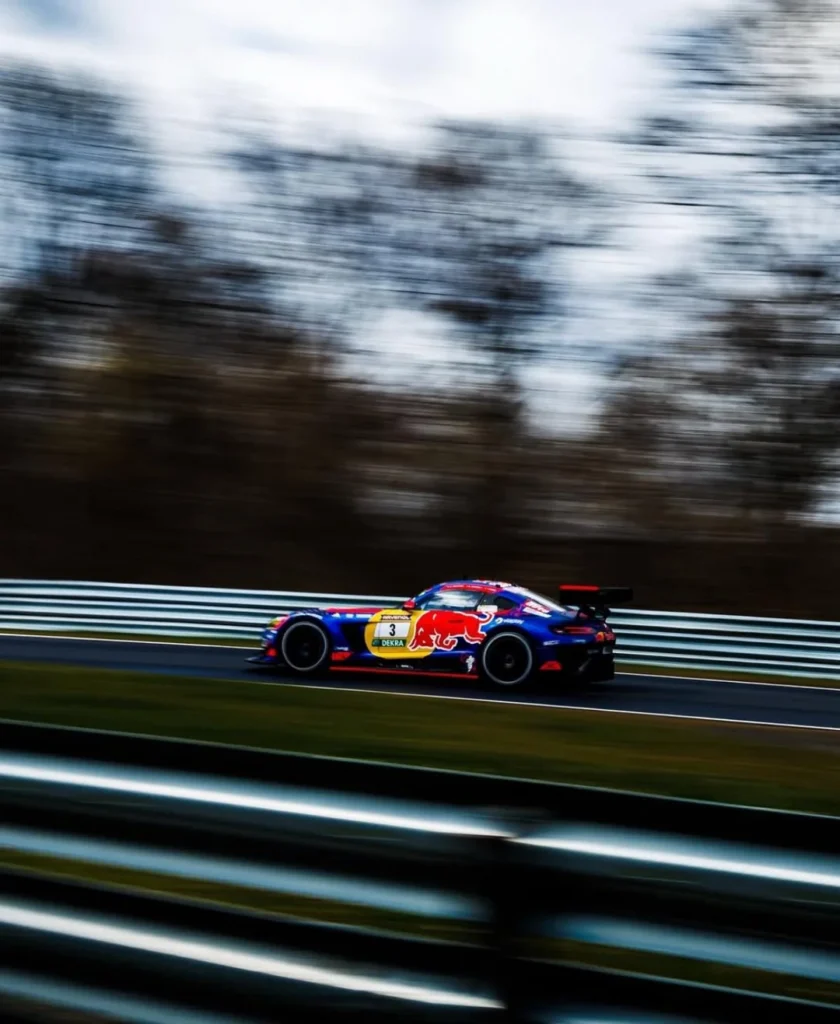
No driver better captured the emotional split of this phase than Max Verstappen. Just 48 hours after Suzuka, he was back at the Nürburgring in his Mercedes-AMG GT3, and the response to that appearance was revealing. More than anything, it looked like relief. He looked happy again. He looked like he was enjoying himself again. And in the eyes of many, that contrast with his F1 demeanor said more than any formal interview could.
The analysis almost wrote itself: Formula 1 is increasingly starting to look like Verstappen’s job, while GT racing and everything around it still looks like his joy. That does not automatically mean he is leaving, but it does feed the growing belief that the regulations, more than Red Bull’s performance itself, could eventually push him away. The suggestion is not that he has fallen out of love with racing. Quite the opposite. It is that he may be falling out of love with this version of Formula 1.
That explains why even casual posts from him at the Nordschleife carried more emotional weight than they normally would. “Enjoyed it” felt loaded because it came after a period where enjoyment has looked increasingly absent in grand prix machinery. The smiles in the GT3 paddock became, in a way, part of the wider indictment of what Formula 1 is becoming.
And that, ultimately, is why all of these seemingly separate stories fit together.
Colapinto-Bearman was about safety, blame, and the inability of the current system to make sense to the people watching it. The Mercedes loophole story was about ingenuity colliding with absurdity. The active aero debate showed the sport searching for patches instead of solutions. Wolff’s comments exposed how political and self-interested the rhetoric around these rules has become. Williams and Aston embodied two different forms of disappointment: one still speaking in managerial optimism, the other staring at a lost stretch of season. Ferrari’s break plans reopened the argument over whether the sport has made it too hard to fix mistakes once they are baked into the car. Cadillac showed how much goodwill can still be earned through steady, quiet progress. Verstappen at the Nürburgring showed where the joy still is — and where it might no longer be.
Five weeks is a long time in Formula 1. Long enough for upgrades to arrive, for narratives to shift, for teams to sell hope again. But it is also long enough for the sport to sit with what this first phase of the season has already revealed.
Right now, the overwhelming impression is not of a championship marching confidently into the future. It is of one trying to convince itself that the future it designed still makes sense.