

Formula One’s 2026 regulations were always going to reshape the competitive order.
Nine rounds into the season, they have done much more than that. Mercedes has emerged as the benchmark. Kimi Antonelli leads the championship ahead of George Russell. Lewis Hamilton is mounting a serious title challenge with Ferrari. McLaren has fallen from championship contention to fighting behind the leading teams. Max Verstappen’s season has been repeatedly interrupted by reliability problems, while Red Bull continues to confront the consequences of an organizational transformation that began long before the current car reached the track. The cars themselves have also changed the way races are understood.
They can follow more closely. They can race side by side through corners more consistently. Yet energy deployment has become so influential that viewers are often left wondering whether a pass was created by driving skill, car pace, battery management, software strategy, or simply one driver reaching a straight with more electrical energy available. The result is a season that can be entertaining and confusing at the same time.
The racing has improved in several important ways. The spectacle has not always become easier to follow.
The cars are slower, but that is not the real problem
Comparisons between the 2025 and 2026 British Grand Prix highlighted the reduction in cornering speed created by the new regulations.
The cars have significantly less downforce, with estimates suggesting a reduction of as much as 30 percent. They do not attack several of Silverstone’s great corners with the same visual violence as the previous generation. For many viewers, however, the difference between a car travelling at approximately 280 kilometers per hour and one travelling at 260 is difficult to detect on television. The larger difference is audible.
Drivers lifting through sections that once sounded flat-out can make the cars appear more cautious than they actually are. The engine note communicates the energy-management challenge in a way that the television pictures often cannot. This is why the criticism cannot simply be dismissed as nostalgia for faster lap times. The frustration is not that the cars are marginally slower. Formula One cars are commonly slowed at the beginning of a new regulatory cycle. The 2022 cars were slower than the 2021 cars before development gradually recovered much of the lost performance.
The real issue is that drivers are sometimes rewarded for deliberately reducing their speed through one part of the lap to preserve or recover energy for another. Modern Formula One has created situations in which accelerating less can ultimately make the car faster.
That may be technically fascinating, but it is not always visually intuitive.
Formula One needs to show viewers what the batteries are doing
The most obvious broadcast problem of the season is the lack of a clear battery or energy-deployment graphic.
A driver can follow another car for several laps, suddenly gain an enormous speed advantage, complete a pass, and then become vulnerable later in the same lap. Without access to the energy levels of both cars, that sequence can resemble a random boost rather than a strategic exchange. The underlying battle may involve considerable skill. A driver might pressure the car ahead into using energy defensively at the beginning of a lap, remain close enough through the corners, and then attack once the leading car no longer has sufficient deployment available. That is not simply pressing a button. It requires timing, positioning, and an understanding of how the opponent has used the battery.
Kimi Antonelli’s pass on Hamilton at Silverstone illustrated the debate. The most critical interpretation was that Antonelli simply had more energy and passed a helpless car. The stronger interpretation is that Antonelli’s pace forced Hamilton to deploy earlier in defense, while Antonelli remained close enough to take advantage later. Both interpretations can appear plausible because the broadcast does not provide enough information.
Formula One previously displayed energy information during the KERS era. A similar graphic now feels essential. Teams may not want their deployment strategies exposed, but the competitive product cannot become incomprehensible to the people watching it. Certain information should be made available because it helps explain the race. Tire degradation can often be observed through pace loss, onboard behavior, visible tire condition, and commentary. Battery depletion can create an almost immediate straight-line speed difference that is much harder to interpret.
Without better data, the viewer is asked to guess whether a driver is attacking, defending, harvesting, clipping, struggling with traction, or simply following a pre-programmed energy strategy.
That is too much uncertainty for something that now plays such a central role in overtaking.
Better racing has come with an artificial feeling
The 2026 cars have produced better wheel-to-wheel racing than many expected.
They are smaller, less sensitive to dirty air, and capable of following through corners for longer. Silverstone produced a much stronger race than predictions of extreme clipping and F2-like straight-line behavior suggested. The previous ground-effect era had become increasingly poor for close racing. As teams recovered downforce, they also increased the amount of disturbed air produced behind the cars. What began as a promising regulation set gradually returned to the familiar problem of drivers losing performance when they followed closely. The new rules have reset that cycle.
For now, cars can remain closer. Drivers have fought through corners rather than waiting exclusively for the next straight. Battles involving Leclerc and Hamilton, Antonelli and Russell, and several others have been more sustained than much of what the previous generation produced. Yet the battery regulations sometimes drag the racing back toward artificiality. The following car receives greater energy capability, helping offset the aerodynamic disadvantage of driving in turbulent air. That can preserve a battle, but it can also create a situation in which the car behind carries a power advantage for much of the lap.
The system risks overcorrecting. A close fight can become difficult to appreciate when one driver suddenly drives past with what visually resembles a video-game power-up. The pass may have been constructed over several corners, but the final speed difference can make it look automatic. The regulations therefore have two very different qualities.
The chassis rules have generally improved the racing. The energy rules have made that racing harder to understand.
A small adjustment to energy deployment, combined with clearer broadcast data, could transform the current formula into something much more compelling. The fundamental racing product is stronger than the criticism sometimes suggests. It is the presentation and the magnitude of the energy offsets that remain problematic.
Mercedes has turned the reset into a championship advantage
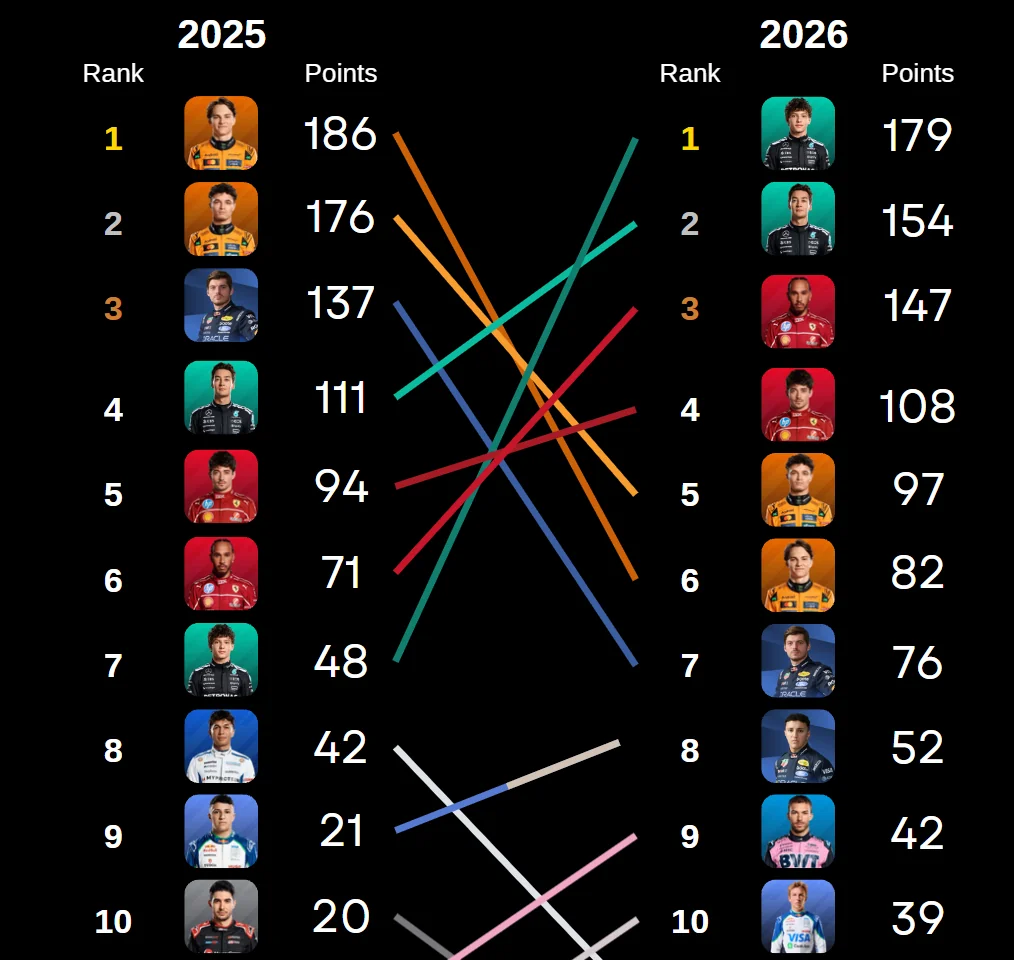
The championship standings after nine rounds show just how dramatically the order has changed.
After nine rounds in 2025, Oscar Piastri led with 186 points. Lando Norris had 176, Verstappen 137, Russell 111, Leclerc 94, Hamilton 71, Antonelli 48, Alex Albon 42, Isack Hadjar 21, and Esteban Ocon 20. After nine rounds in 2026, Antonelli leads with 179 points. Russell has 154, Hamilton 147, Leclerc 108, Norris 97, Piastri 82, Verstappen 76, Hadjar 52, Pierre Gasly 42, and Liam Lawson 39. The leading three from last season are now effectively fighting over fifth place.
Meanwhile, the drivers who finished fourth, fifth, sixth, and seventh in the corresponding 2025 standings have become the central figures in the 2026 title picture. Antonelli’s rise has been the defining development. He is not simply leading because Mercedes has the fastest car. Russell is in the same machinery, and Antonelli has established a 25-point advantage. Mercedes reliability has not been perfect, yet Antonelli is still beginning to create separation.
Hamilton is close enough to remain a genuine threat. Leclerc’s position is more complicated. He is 71 points behind Antonelli and 39 behind Hamilton. More than half the season remains, but Ferrari would need to improve enough to challenge Mercedes consistently while Leclerc simultaneously closes the internal gap to Hamilton. Mechanical retirements have played a role in his deficit, although the causes remain disputed. Monaco included brake problems before his crash, while questions remain over whether damage from his Barcelona qualifying accident contributed to the later power-steering failure.
What is clear is that Leclerc cannot rely on theoretical pace alone. If Hamilton remains approximately 30 to 40 points ahead as the season moves toward its final stages, Ferrari’s championship priorities could naturally shift toward the driver with the stronger mathematical opportunity.
Leclerc outpaced Hamilton at Silverstone, showing that the internal contest is not settled. But he now needs a sustained run of races rather than isolated reminders of his potential.
The championship order looks neat, but the races have not been boring
The top eight being arranged almost perfectly by team makes the season appear more predictable than it has felt on track.
That visual order reflects the first year of simultaneous aerodynamic and engine regulations. Large differences between power units and chassis packages can overwhelm smaller differences between drivers. However, it would be misleading to describe the season as a parade. Mercedes has not recorded a one-two finish since China. Both Ferrari drivers have won. Both McLaren drivers have reached the podium. Verstappen has also finished in the top three. Nearly every race has featured at least one meaningful wheel-to-wheel battle.
The championship may currently be divided into clear performance bands, but the individual races have produced variety. This is not a season of identical Antonelli-Russell-Hamilton podiums with an occasional Leclerc appearance. There is also reason to expect the field to converge.
Teams will recover downforce. Power-unit manufacturers and customers will better understand deployment. The current advantages will become more difficult to maintain as knowledge spreads.
That same development process could eventually damage the close racing by increasing dirty air again, but in the short term it should reduce some of the enormous gaps between teams.
McLaren’s championship defense has become an engine-integration problem
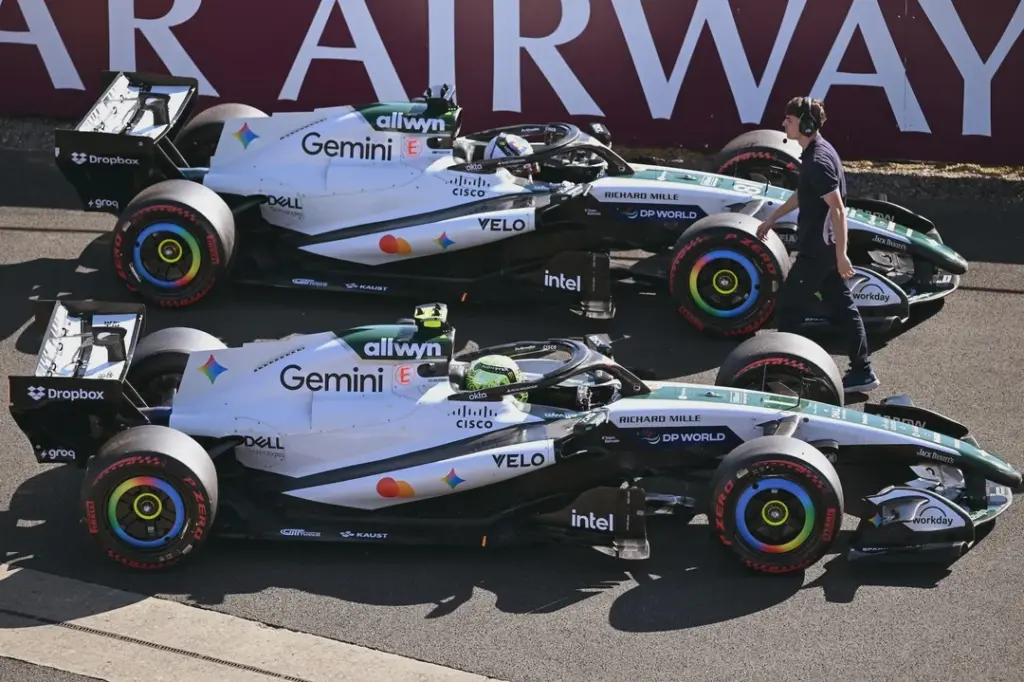
McLaren entered the season with one of the most promising cars from testing, but it has not consistently challenged Mercedes and has often fallen behind Ferrari.
Andrea Stella has attributed approximately 70 percent of McLaren’s gap to aerodynamic downforce and 30 percent to power-unit utilization. That final 30 percent has become increasingly important. Mercedes is not merely supplying a competitive engine. Its factory team appears to understand the complete power unit, hybrid system, recovery strategy, and deployment software better than any of its customers.
At Silverstone, Mercedes demonstrated a technique that allowed the drivers to recover and deploy additional energy in the final section of the lap by lifting before the finish line. Antonelli reportedly gained approximately 0.86 seconds on Piastri in the closing section of qualifying. Antonelli lifted fully, while Piastri remained above 80 percent throttle. It was the clearest possible example of the new Formula One paradox: the Mercedes driver gained time by accelerating less.
Stella admitted that McLaren had not expected the technique and may not be able to reproduce it with its current configuration. The problem extends beyond one qualifying trick. McLaren remained competitive in top speed at Silverstone but lost heavily through traction and acceleration. Across all acceleration zones, the deficit was estimated at approximately six tenths, with the largest losses occurring below 240 kilometers per hour.
The explanation appears to involve several overlapping factors: McLaren has less aerodynamic load. The Mercedes W17 has better traction. The factory team has better integration between chassis and power unit. McLaren’s gearbox parameters remain tied to information provided during the winter, while Mercedes has been able to evolve its setup through direct experience. McLaren has also continued using an older power-unit specification because its current engines still have mileage available.
That has created an unusual consequence of its early reliability problems. Failures reduced the mileage accumulated on several engines, allowing McLaren to extend the life of its existing pool and delay the introduction of the newest specification.
The problems that hurt McLaren early in the season are now indirectly delaying access to the latest version of the Mercedes power unit.
The power-unit rules have exposed the customer disadvantage
Mercedes reportedly introduced an updated specification primarily for reliability. Alpine and Williams have received the newer version, while McLaren has continued with the previous unit.
Because the change was categorized as a reliability update rather than a pure performance upgrade, Mercedes had greater flexibility over how it was introduced. The rules require an updated unit to be made available to each customer team when the specification first appears, but the practical requirement may extend only to one unit being theoretically available. A manufacturer can satisfy that obligation while still advising a customer not to use it immediately because of engine-pool management, spare parts, or mileage considerations.
That creates a grey area. A reliability improvement can also produce performance. A stronger component allows the engine to operate harder and for longer. During previous engine freezes, reliability changes were one of the few remaining routes to additional power. McLaren therefore has reason to be frustrated even if Mercedes has followed the written regulations.
The situation demonstrates why the first year of a new power-unit cycle naturally favors works teams. Mercedes designed the engine, understood its final specifications earlier, and could integrate the car around it more directly. Customer teams received less complete information during the design and homologation process. That disadvantage is not necessarily permanent.
McLaren beat Mercedes during the final two seasons of the previous regulations. As power units matured and knowledge became more widely available, the customer could build a better overall car. The same may happen again. McLaren’s current issues are not necessarily embedded into the entire regulatory cycle. It should improve its deployment strategy, refine gearbox settings, introduce the new engine specification, and better integrate the package in 2027.
Nine races are not enough to declare that a customer can never again defeat its supplier.
Building a McLaren engine is not a simple solution
The immediate response to McLaren’s frustrations has been to suggest that the team should build its own engine.
That is unlikely to be realistic in the short term. McLaren does not currently possess the facilities, specialist manufacturing capability, or workforce required to produce a competitive Formula One power unit internally. Even McLaren’s road-car engines have involved outside manufacturers. An F1 program would require hundreds of employees, dedicated dynos, specialist equipment, and years of research before the first competitive unit appeared.
The cost could reach hundreds of millions of dollars before meaningful development even began. Red Bull Powertrains is not a simple model that McLaren can copy. Red Bull recruited heavily from Mercedes HPP and benefited from unusual circumstances surrounding Honda’s previous involvement, even though the current RBPT engine did not simply inherit Honda’s intellectual property. McLaren would be starting from a very different position.
The team reportedly indicated that producing an engine for 2031 would only be feasible if the project had already begun. A works partnership with another manufacturer may be more realistic than creating an entire engine division. McLaren previously sought Honda’s works arrangement before Honda chose Aston Martin. A future manufacturer alliance could become possible if the next engine formula is cheaper and less dependent on the complex battery-management strategies of the current regulations.
For now, the most likely outcome is less dramatic.
McLaren will better understand the Mercedes unit, close part of the gap, and remain a customer.
The Max Verstappen-to-McLaren rumours do not currently make competitive sense
McLaren’s power-unit disadvantage also weakens the argument that Verstappen should leave Red Bull for Woking.
At present, McLaren is clearly behind Mercedes and has no guarantee of eliminating the works-team advantage. The team has struggled for traction, downforce, and energy integration, while Mercedes leads both championships. A move would therefore need to be justified by the future rather than the current car. McLaren has demonstrated strong correlation between simulation, wind tunnel, and track performance. It has recruited significant technical talent, including personnel who have not yet started. The organization has also developed a more stable internal culture than several of its rivals.
Those qualities could make McLaren a stronger long-term project than Red Bull. However, Verstappen is unlikely to be attracted by the possibility of finishing second instead of fifth. He is not searching for a marginal improvement. He would need confidence that McLaren can become the benchmark. The non-F1 opportunities would also have to be substantial.
McLaren could theoretically offer endurance racing, limited media obligations, sponsorship flexibility, and an enormous salary. Yet joining its new WEC program would not guarantee immediate success. Recent manufacturers have struggled during their first Hypercar seasons, even with Balance of Performance designed to control performance differences. McLaren’s history across multiple disciplines gives it more institutional knowledge than a completely new organization, but experience does not eliminate the difficulty of entering an established championship. Verstappen has also repeatedly expressed concern about the risks of the Indianapolis 500. The idea that McLaren can simply offer him the Triple Crown may therefore be less persuasive than it sounds.
The most credible interpretation is that McLaren provides leverage.
Verstappen may remain with Red Bull in Formula One or eventually move to another category. McLaren can still be used to test Red Bull’s commitment, Mercedes’ intentions, and the value of his next contract.
Verstappen’s number change has become the easiest explanation for a difficult season
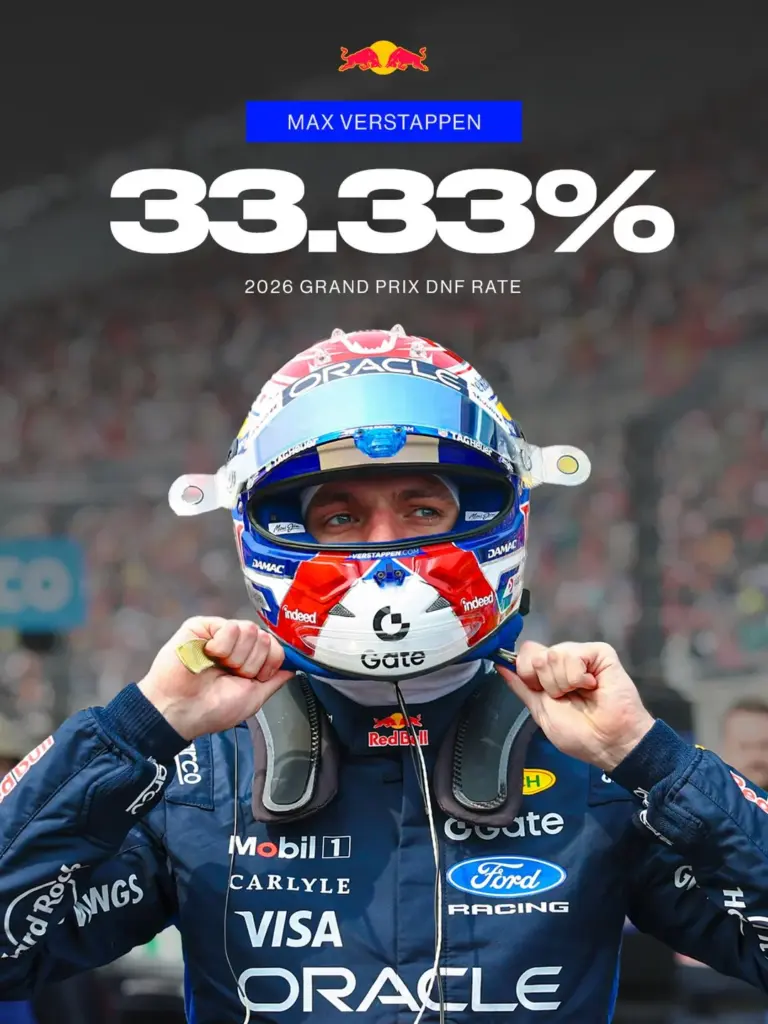
Since switching from number 33 to number 3, Verstappen has suffered three retirements in nine races.
That produces a perfectly unfortunate DNF rate of 33.33 percent. The obvious solution is to restore the double luck of number 33. Verstappen previously described 33 as double luck, making the decision to reduce it to a single 3 look increasingly questionable. Number 3 may contain a more concentrated form of luck, but so far it has not improved Red Bull’s reliability.
The number is not actually responsible. Verstappen experienced 29 retirements while racing as number 33, many of them caused by mechanical failures. His 2017 campaign alone contained enough Renault problems to disprove the idea that the old number was protective. Still, the coincidence fits the season perfectly.
Verstappen has retained the skill associated with number 33. What he needs is the luck that once came with it.
Red Bull’s real crisis is organizational
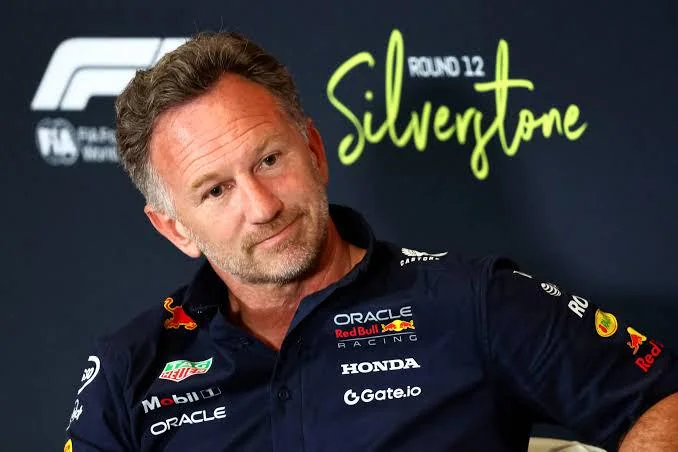
One year after Red Bull announced Christian Horner’s departure, the team remains difficult to evaluate.
Horner brought controversy and internal conflict, but he was also the only consistent leader across almost the entire evolution of the organization. Removing him may have reduced one source of drama. It did not create a clear succession plan.
That appears to be the central failure. Red Bull did not merely lose a team principal. It lost the person who had acted as the public defender, political operator, internal motivator, recruiter, and central authority for most of the team’s history. Laurent Mekies is a highly respected engineer, but the role requires more than technical understanding.
Horner operated with the mentality that Red Bull had to win. Mekies sometimes appears to operate with the more measured expectations of a midfield organization, where fourth place can represent a successful weekend. That may be unfair after only one year. Mekies inherited a team already dealing with power-unit integration, staff departures, technical instability, and a major regulatory change. He deserves time to reshape the organization.
But Red Bull needed more than competence. It needed someone capable of immediately filling one of the largest leadership voids in Formula One. Jonathan Wheatley may have provided greater continuity because he understood the team internally, but Red Bull allowed him to leave.
The result is an organization that removed a powerful leader without replacing the authority he represented.
Red Bull removed the drama but kept the toxicity
Horner’s leadership was not gentle.
Red Bull under his control could be aggressive, political, confrontational, and exhausting. That environment produced championships but also created the conditions for eventual internal collapse. Cutthroat structures can succeed for long periods. They also take a cumulative toll. The problem is that Red Bull now appears to have retained much of the instability without receiving the same competitive benefits.
The team went from a toxic environment that won to a toxic environment that is struggling. Horner’s strength was not necessarily that he threatened engineers into working harder. It was that he publicly absorbed pressure and convinced the organization that every battle was worth fighting. He challenged rivals, criticized decisions, protected drivers, and made employees feel that leadership would defend the team.
That kind of personality can encourage people to work longer because they believe they are part of a shared campaign. Mekies is less confrontational and more realistic. Those qualities can build a healthier environment, but only if the organization around him is stable enough to support it.
Red Bull is not currently stable.
Much of Red Bull’s 2025 recovery began before Horner left
Red Bull improved significantly during the second half of 2025, but that progress does not provide a simple verdict on Horner’s removal.
F1 development does not happen instantly. Many upgrades, processes, and technical changes that appeared after his departure were likely initiated while he was still in charge. It is therefore possible to credit Mekies with improving setup methodology while also recognizing that the underlying development program remained connected to the previous leadership.
The 2026 car offers a clearer test because more of the project developed outside Horner’s direct control. So far, that test has not been encouraging. Red Bull has built a powerful internal-combustion engine, but the complete car lacks performance in several areas. Verstappen has become increasingly frustrated, and the organization continues to lose experienced personnel.
Staff movement was already happening under Horner. Successful teams naturally lose people, particularly under a cost cap that limits promotions and salaries. Rivals can offer championship-winning engineers larger roles and greater financial rewards. However, Red Bull’s ownership conflict accelerated that process. The departure of Dietrich Mateschitz removed the figure who had allowed Horner to run the operation with broad authority. The subsequent struggle involving ownership, Helmut Marko, Horner, and the Verstappen camp destabilized the entire structure.
There was no single good side in that conflict.
There was only an organization losing the system that had made it successful.
Verstappen no longer owes loyalty to the Red Bull he originally joined
Anonymous criticism that Verstappen should remain loyal because Red Bull has paid him enormous sums ignores how completely the team has changed.
When Verstappen committed his future, Red Bull had Horner as team principal, Marko overseeing the driver program, Adrian Newey leading technical development, and Mateschitz providing ownership stability. That structure no longer exists. Verstappen can reasonably argue that his loyalty was to those people and that organization, not to the badge alone.
Red Bull has also repeatedly discarded other drivers when they no longer served its immediate goals. It is difficult for the team to demand unconditional loyalty after operating with such little sentiment toward its own roster. Verstappen has outperformed flawed cars and kept Red Bull competitive beyond its natural level. In 2025, he remained in contention until the final race despite driving an inferior package. If he leaves, Red Bull risks losing its final dominant personality.
The upside could be a more neutral car that is easier for two drivers to operate. Yet the greater likelihood is that the team loses the driver currently disguising several of its weaknesses.
Hadjar’s results should not be used as proof that Red Bull has solved its second-car problem. The gap to Verstappen remains substantial, and the wider field spread makes his finishing positions look stronger than similar pace deficits did for Sergio Perez or Yuki Tsunoda.
The Verstappen meeting in Amsterdam looked more like theatre than surveillance
Verstappen’s manager Raymond Vermeulen and father Jos were photographed meeting former Red Bull executive Helmut Marko in Amsterdam.
What they discussed remains unknown. What is more obvious is that the image did not resemble a covert discovery. The photographer appeared to be sitting only a few feet away. The angle looked staged. The number of glasses on the table suggested that the person taking the picture may have been part of the conversation.
The most believable interpretation is that the meeting was intended to be seen. The Verstappen media operation has become active because visibility creates leverage. A photograph of Jos, Vermeulen, and Marko allows every rival, sponsor, and Red Bull executive to interpret the gathering however they choose. The image says that discussions are happening.
It does not reveal what those discussions involve. The person who took the photograph may know far more than was published, but genuine negotiation details are rarely released before the parties involved want them public.
For now, the photograph is less a leak than a signal.
Antonelli’s visit with Ferrari engineers inevitably created another future-driver fantasy
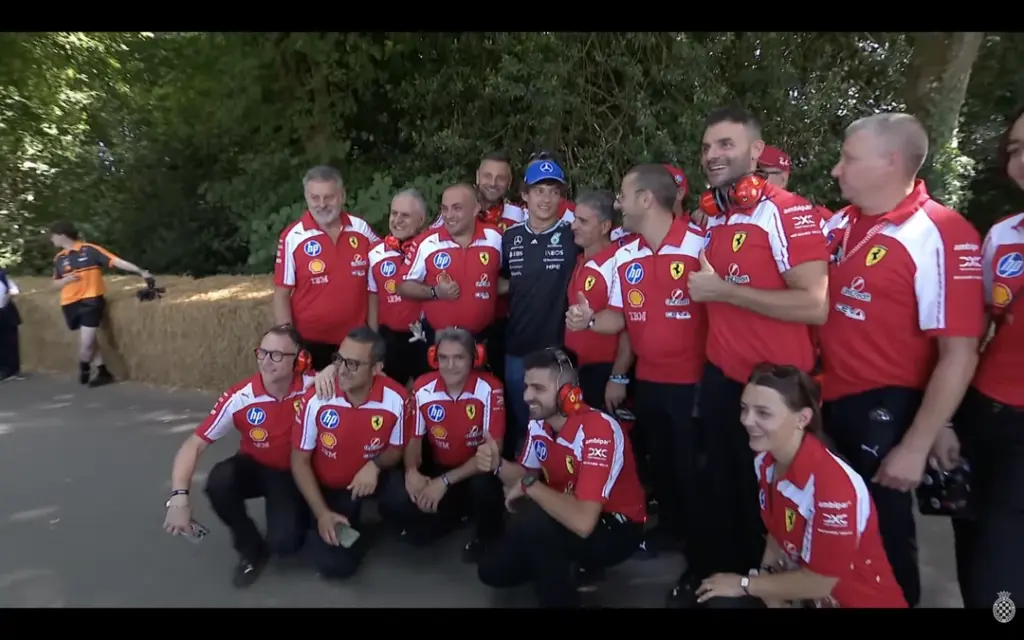
Kimi Antonelli was photographed with Ferrari test-team engineers at Goodwood.
That was enough to create an entire fictional driver market. Verstappen goes to McLaren. Piastri joins Mercedes. Antonelli signs for Ferrari. Leclerc goes to therapy. Russell goes to the asylum. Hamilton moves to Los Angeles or somehow ends up at Red Bull. None of that follows from a Goodwood photograph.
Still, the idea of Antonelli eventually driving for Ferrari is not difficult to imagine. He is Italian, leads the world championship, and could become the defining driver of his generation. Ferrari passed on the opportunity to bring him into its academy at an unusually young age, while Mercedes was willing to support him from approximately age 12. Mercedes had learned from watching Verstappen’s rise. Ferrari followed its traditional academy structure.
That decision may eventually become expensive. Antonelli could one day replace Hamilton at Ferrari, allowing him to succeed the seven-time champion at both Mercedes and Maranello. Another long-term possibility is a Ferrari lineup of Antonelli and Oliver Bearman. For the moment, the speculation ignores the strength of Antonelli’s position.
He leads the championship in a Mercedes. Toto Wolff has invested years in his development. Leaving would make little competitive sense unless Ferrari eventually offers something Mercedes cannot. Ferrari’s emotional pull is powerful, particularly for an Italian champion. But that conversation belongs to the future. Hamilton is currently third in the standings and leading Ferrari. Leclerc remains under contract and capable of competing at the highest level for several more seasons.
The Goodwood appearance was interesting.
It was not a transfer announcement.
Aston Martin’s B-spec car does not need to reach Q3 to be a success
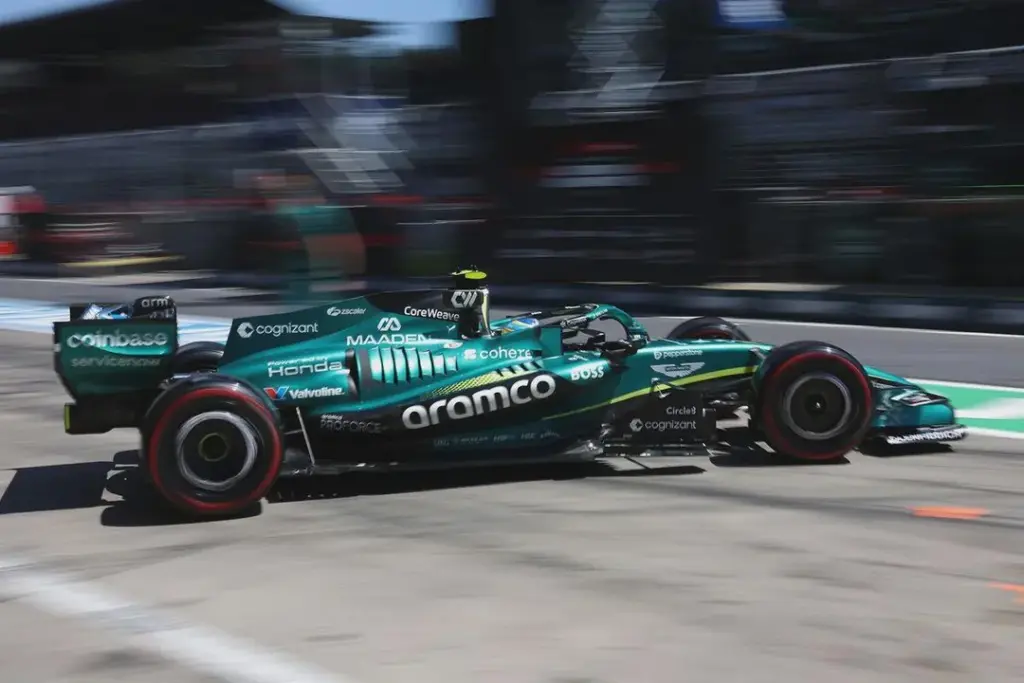
Aston Martin plans to introduce the AMR26B in Hungary with claims of a substantial performance improvement.
The expected total gain has been discussed at approximately 2.5 seconds, although that reportedly includes around half a second from a later Honda upgrade. That would leave the Hungary package itself closer to a two-second improvement. Even if the full gain arrives, Aston Martin may still remain approximately 1.5 seconds behind the leaders. That would not make the team a Q3 contender.
It could, however, move Aston Martin from occupying the final two positions to fighting around 12th, 13th, or 14th. That would be meaningful progress. The team currently needs to beat Cadillac before thinking about challenging the leading midfield teams. Cadillac began from scratch as an organization and factory, yet Aston Martin has frequently finished far behind it.
Aston’s task is complicated by its own reliability problems. A faster car that cannot complete the race would not represent a complete recovery. The realistic objective is not a front-row lockout in Hungary.
It is to reach Q2 consistently, compete with the lower midfield, validate the simulator and wind-tunnel correlation, and create a usable foundation for 2027.
Aston Martin’s current failure began with a correlation crisis
The AMR26 that Aston originally planned was reportedly abandoned after Adrian Newey identified severe simulator-correlation problems during the middle of 2025.
The concept had to be restarted. The AMR26B is therefore closer to the car Aston intended to introduce at the beginning of the season than a normal mid-year update. That explains both the scale of the expected gain and the enormous risk.
The team is attempting to correct a fundamental concept during the season while its rivals continue developing their own cars. Even a full second of improvement may leave Aston last if everyone else progresses. A two-second gain could move it into the midfield without making the season anything other than a major disappointment.
The value of the AMR26B lies in what it proves. If the new car correlates properly and responds to development, Aston can begin building a credible 2027 program. If it fails, the team will face much deeper questions about its facilities, technical leadership, Honda partnership, and overall direction. The pressure is particularly intense because the Honda engine has also struggled. The current design has reportedly suffered from vibration and performance issues after a major conceptual change.
Aston therefore attempted to introduce a new chassis philosophy and new works engine at the same time.
The result has been one of the slowest cars on the grid.
Herta’s F2 struggles show why Cadillac was right not to rush him
Colton Herta’s Formula Two season has not gone according to plan.
His results have remained near the back, he trails teammate Ritomo Miyata, and the expected flashes of front-running pace have been too rare. Cadillac has publicly said it is not judging him primarily on the results, but it would be difficult to believe the team is ignoring them completely. Herta’s challenge was always likely to require two years.
Cadillac signed Sergio Perez and Valtteri Bottas to two-year contracts without break clauses. That gives Herta time to learn F2, complete FP1 appearances, work in the simulator, and evaluate his readiness for Formula One. The current season should be treated as acclimatization rather than a championship campaign. That does not make the results irrelevant.
Hitech finished second in the teams’ championship last season. Although ownership changes and the wider Oakes situation may have affected the team, the organization cannot simply be dismissed as uncompetitive. Miyata is experiencing his strongest F2 season after finishing 17th and 19th in his previous campaigns. He has already matched roughly the points total of those seasons and has been more consistent than Herta. The most balanced conclusion is that both team and driver have underperformed.
Hitech has taken a step backward.
Herta has also failed to maximize the available car.
F2 results do not always predict F1 performance, but Herta still needs improvement
Formula Two is not a perfect meritocracy.
Different teams extract different levels of performance from supposedly equal cars. The Mecachrome engines have produced long-running concerns about inconsistency. Recent seasons have shown that results can misrepresent a driver’s eventual F1 potential. Bearman finished 12th in his second F2 season yet has gone on to outperform Ocon in Formula One. Hadjar struggled in his first F2 season before earning a Red Bull seat.
Antonelli was widely described as needing another year before immediately becoming a title contender in F1. That history prevents a simple conclusion that Herta’s poor F2 results prove he cannot succeed at the next level. Yet Bearman still won races. Herta has not seriously challenged for a podium.
His F2 record therefore cannot be completely dismissed as noise. Herta has entered a series with unfamiliar Pirelli tires, less practice, new circuits, and an operating environment much smaller than the IndyCar organization he left. The European ladder drivers around him have spent most of their careers learning those exact cars, tires, and procedures. That learning curve is real.
It also explains why placing him directly into Cadillac’s F1 car would have been disastrous. Instead of struggling in F2 away from the center of Formula One attention, he could have become the American face of Cadillac while repeatedly qualifying at the back and dealing with a car still suffering reliability problems.
F2 is providing a protected environment in which to fail, learn, and decide whether the path remains worthwhile.
Cadillac must protect its credibility as well as Herta’s opportunity
Cadillac has wanted Herta involved since the organization’s earlier efforts to enter Formula One.
He has spent close to a decade within the wider Andretti and TWG structure. His American identity and IndyCar background make him a valuable marketing figure. But marketing value does not last if the driver cannot compete. Cadillac is still trying to establish itself as a serious long-term contender. Perez and Bottas provide credibility because they understand Formula One, can help develop the car, and offer a reliable performance benchmark.
Promoting Herta without evidence that he is ready would create unnecessary risk. The team should judge him through F1 testing, simulator work, and FP1 performance rather than F2 results alone. Still, a stronger second F2 season would remove doubt and protect the organization from accusations that the seat was awarded for nationality rather than performance. The safest plan is clear.
Keep Perez and Bottas. Give Herta another year in F2. Use private testing and additional FP1 sessions to evaluate whether his speed translates to the F1 car.
Consider a promotion only when he looks capable of contributing rather than merely surviving.
The “Carlos Sainz effect” is exactly the kind of F1 statistic that proves almost nothing
Since 2014, every British Grand Prix has been won by Carlos Sainz, one of his former teammates, a driver whose seat he took, or a driver who eventually took his seat.
Hamilton won in 2014, 2015, 2016, 2017, 2019, 2020, 2021, and 2024 before taking Sainz’s Ferrari seat. Sebastian Vettel won in 2018 before Sainz replaced him at Ferrari. Sainz won in 2022.
Verstappen won in 2023 after partnering Sainz at Toro Rosso. Norris won in 2025 after partnering Sainz at McLaren. Leclerc won in 2026 after partnering Sainz at Ferrari.
The pattern is technically correct. It is also another way of saying that Sainz has driven for several major teams, partnered numerous leading drivers, and has become connected to much of the grid. Hamilton’s eight Silverstone victories do most of the work.
The statistic can be expanded almost indefinitely. It can include drivers who replaced someone who replaced someone connected to Sainz, drivers who raced against Sainz in karting, or drivers who once spoke to him in the paddock. More than half of the current grid can be connected to Sainz through teammates or seat changes. The same races have also all been won by drivers who raced against Fernando Alonso, drivers who raced against Lance Stroll, and human beings driving Formula One cars.
That is the real Carlos Sainz effect. He has been around long enough, moved often enough, and partnered enough important drivers that almost any modern F1 event can be connected back to him with sufficient creativity. It may not reveal anything meaningful about Silverstone.
It does reveal how easily Formula One can turn coincidence into mythology.
The 2026 season is not broken, but it is unfinished
Formula One’s new era has created a better racing platform and a more confusing competitive system.
The cars can follow. The drivers can fight. The field has been reset.
But battery deployment is too opaque, customer teams are still learning how to integrate unfamiliar power units, and several major organizations are attempting to rebuild their leadership structures while simultaneously developing new cars. Mercedes has handled that transition best. McLaren is learning the cost of being a customer in the first year of an engine cycle.
Red Bull is discovering that replacing a controversial leader is easier than replacing the system he controlled. Aston Martin is trying to introduce the car it should have built during the winter. Cadillac is wisely allowing Herta to struggle somewhere less damaging than Formula One.
And Verstappen’s future remains deliberately surrounded by just enough uncertainty to keep every option valuable. The 2026 regulations have not produced a perfect Formula One.
They have produced a far more interesting one than the standings alone suggest.