

If Formula 1 wanted conversation before a wheel has even turned in Melbourne, it has certainly achieved it.
From chief designers departing days before a season launch, to drivers warning of anti-stall-style race starts, to fans already bracing for “regen corners” and energy-starved deployment battles, the 2026 era is arriving with intrigue, skepticism, and a heavy dose of political undertones.
And as ever in F1, the throughline isn’t just engineering, it’s power.
Starts, Scapegoats, and the Verstappen Perception Shift
Oscar Piastri has already warned that 2026 race starts could resemble F2 chaos, not five meters lost, but six or seven positions gone in a blink if anti-stall-style issues creep in. That alone has triggered an avalanche of comparisons to Mark Webber’s front-row fumbles, with many noting that if social media had existed in 2010, his starts might have defined his legacy.
The broader anxiety is clear: if energy recovery and battery management create a sharp qualifying-race disparity, fans may once again misdiagnose technical shortcomings as driver failings. A poor launch becomes “choking.” A bogged-down getaway becomes a narrative.
That dynamic feeds directly into a larger, long-running discussion around Max Verstappen.

Liam Lawson’s recent praise, describing Verstappen as “super nice,” “helpful,” and supportive even amid Red Bull’s internal turbulence, reinforces something that teammates have consistently echoed for years. Verstappen has repeatedly defended Red Bull’s second drivers, publicly pushing back against the idea that they are the core problem.
The perception gap is striking. On track, Verstappen is described as ruthless, a “heartless killer.” Off track, he is increasingly framed as straightforward, mentoring, even welcoming to rookies. He has been labeled the “Dad of Rookies,” praised for sharing setups openly and avoiding political maneuvering.
The contrast between aggression in competition and normalcy outside the cockpit is not new in motorsport. But the consistency of teammate testimonials complicates the simplified villain archetype.
If anything, the recurring theme is this: drivers are brutal within the white lines, but rarely beyond them.
Red Bull Upheaval and the Politics of Departure
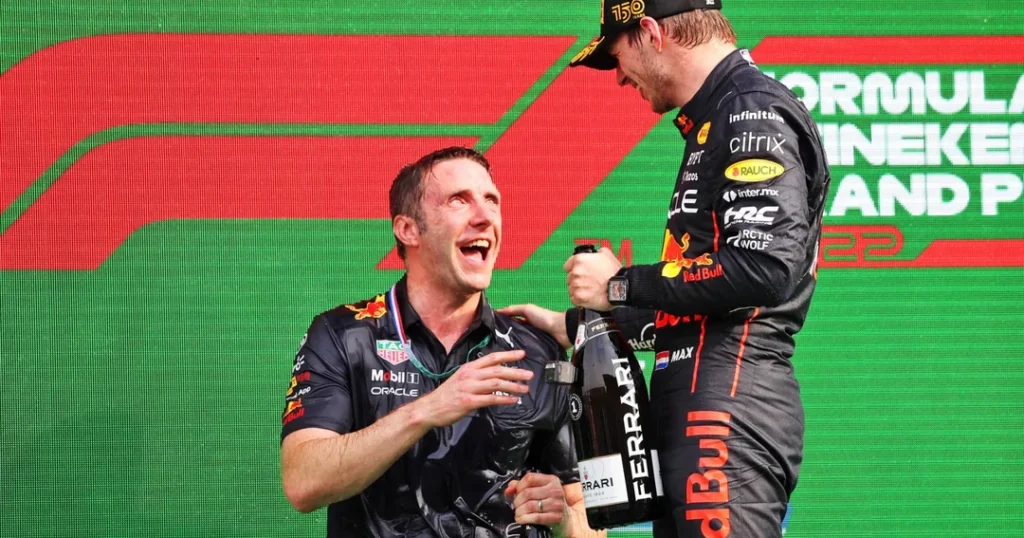
Red Bull’s chief designer stepping down on the eve of the season added to the sense of instability, or at least perception of it.
Some argue the timing is odd. Others counter that the foundational design work is already complete, that correlation and development cycles are well underway, and that this is in fact one of the least disruptive moments to leave. In modern F1, there is never a “good” time.
The speculation machine, of course, has filled in the gaps. Horner assembling “Horner’s Eleven.” Engineers being poached. Alpine rebirth scenarios. Even the idea that Red Bull’s recent success, including its powertrains project rising from a literal grass field in Milton Keynes to a competitive operation, is underappreciated.
Amid the noise, one point keeps resurfacing: F1 teams act in self-interest. Always.
That lens becomes critical when evaluating 2026’s most controversial regulatory choices.
The 2026 Powertrain: Compromise, Conflict, and “Frankenstein” Engineering
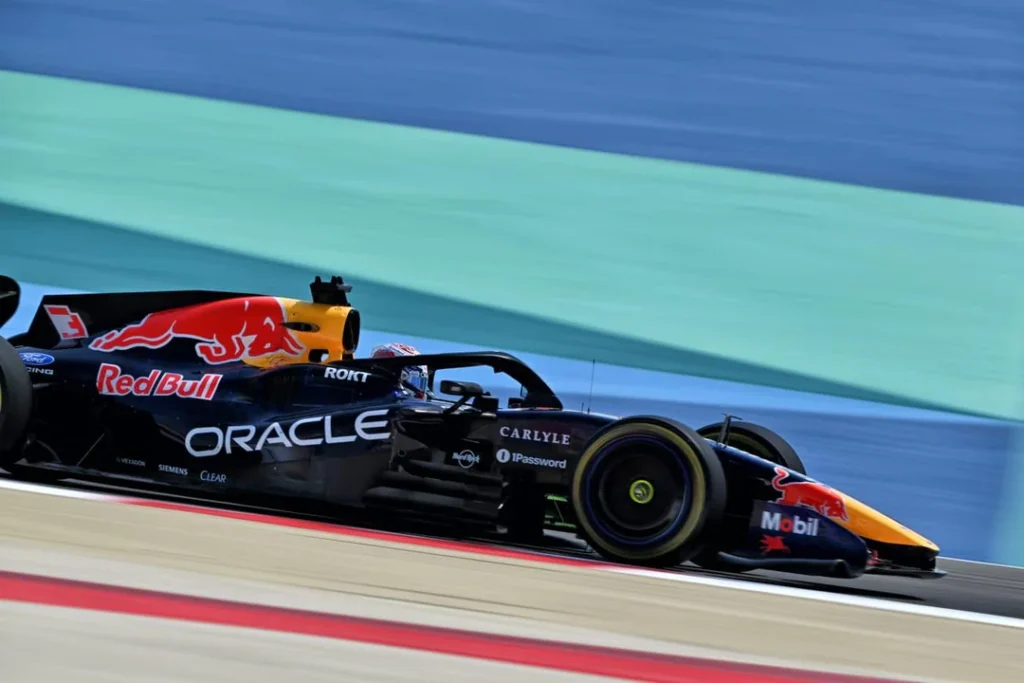
The frustration around 2026 is less about speed and more about philosophy.
Cars appear energy-starved. Drivers are managing deployment, regen, downshifts for charge, and active aero modes simultaneously. Power is sometimes withheld through corners not because of grip limits, but because of battery constraints. In certain scenarios, cars are reportedly losing seconds per lap if energy management is misjudged.
The term “Frankenstein powertrain” has been used to describe the result: manual-feeling hybrid complexity layered over increasingly restrictive frameworks.
A major flashpoint is regenerative braking.
Front-axle regen was reportedly considered early in the regulatory discussions. It was ultimately rejected, notably by incumbent manufacturers concerned that Audi and Porsche (with WEC hybrid experience) would gain too strong an advantage.
Simultaneously, the MGU-H was removed to entice new entrants, because Audi and Porsche required it as a condition for joining.
The result is what one might call a camel designed by committee: a compromise drivetrain balancing old manufacturers, new manufacturers, and political leverage.
Adding front regen now would not be simple. It would require chassis redesign, additional motors, axles, electronics, and weight. It would flirt with all-wheel-drive territory. And politically, it remains implausible before the end of the cycle.
So for now, the energy management puzzle remains.
Some see it as chess on wheels. Others see artificial scarcity, like fueling a race for 80kg when 60kg is provided and calling it strategic depth.
The jury, as several have pointed out, is still out. No one has raced yet. But the anxiety is real.
“Regen Corners” and the Fear of Artificial Limits
Nowhere is the concern more visual than in the idea of the “regen corner.”
In Bahrain, Turn 12 reportedly became a case study: instead of pushing at the limit, drivers were constrained by deployment strategy, lifting through what should be a high-speed challenge. With less grip than previous seasons, that corner might have demanded skill. Instead, it risked becoming a straight in disguise.
Fans are already projecting forward to Melbourne’s Turn 12 and beyond. The worry is not slower lap times, the times are not dramatically slower, but visible withholding of performance. A sense that the driver is not attacking the corner, but managing a spreadsheet.
The broader fear is that racing becomes shaped less by grip and bravery and more by energy arithmetic.
Others counter that lift-and-coast, fuel saving, and tire management have always existed, in the turbo 80s, in LMP1 hybrids, in every endurance formula. Even Senna managed engine life within a lap.
The difference, critics argue, is perception. Maximizing a lap within limits feels different than visibly downshifting mid-straight to charge a battery.
Calendar Politics: Barcelona, Spa, and the Street Circuit Divide
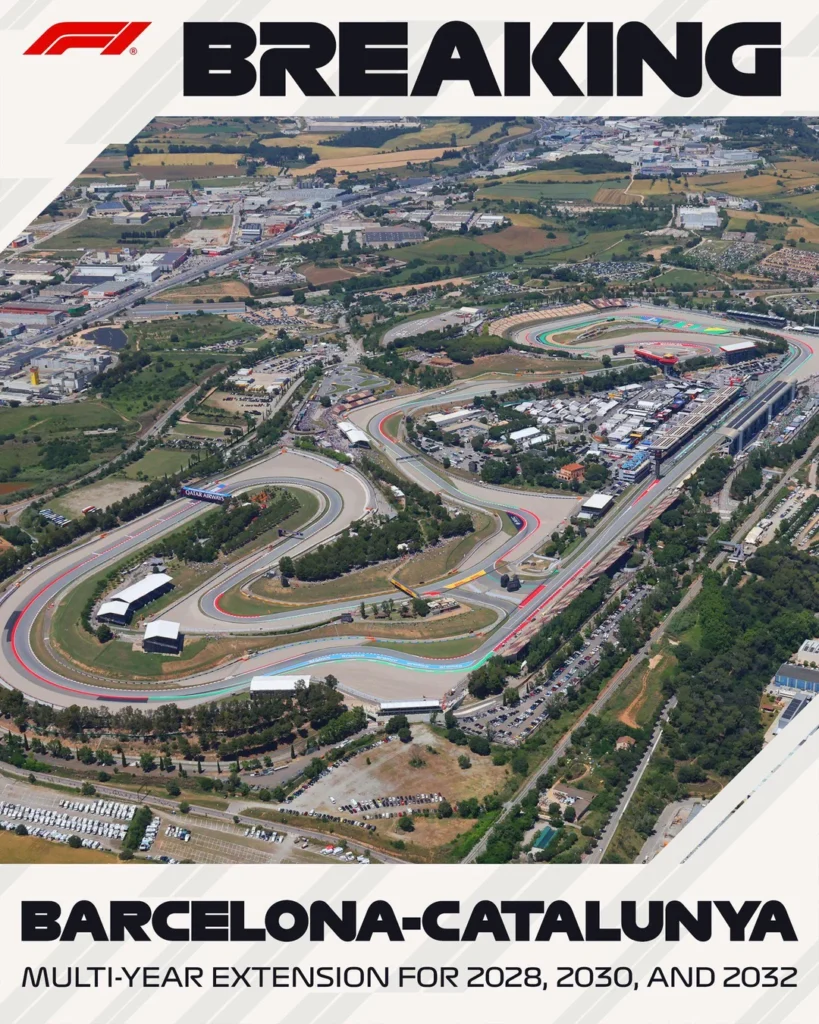
Off-track politics continue to define the sport’s direction.
Barcelona securing alternating slots with Spa sparked backlash from those who view Spa as untouchable. Some argue Barcelona improved after removing its final chicane and remains a “real racetrack.” Others see alternating legendary venues while expanding street circuits as a betrayal of identity.
The critique is not subtle: street track addiction, following the money, prioritizing cities that can pay enormous hosting fees.
Defenders note that Spa itself relies on government backing and may not afford annual fees. Critics argue that heritage should outweigh short-term revenue.
The tension reflects the broader 2026 dynamic: commercial viability versus sporting purity.
Aston Martin, Newey, and the Return of “Eventually™”
Fernando Alonso remains publicly bullish: Aston Martin will “eventually have the best car.” But he acknowledges a likely difficult first half of 2026.
The phrase “Eventually™” has already been rebranded as the new “Next Year™.”
The optimism rests on Adrian Newey’s arrival, a new gearbox, rear suspension, wind tunnel, and Honda’s renewed partnership. But even within that hope, realism creeps in: Newey is 67. Honda started late. The infrastructure is still bedding in.
Some see a McLaren-style rebound arc. Others fear a repeat of McHonda trauma. And lurking behind it all is the Alonso paradox, that perhaps the car becomes a title contender only after he leaves.
For now, it remains a waiting game.
Red Passes and Racing Legacy
In a lighter moment amid regulatory tension, Sky Sports F1 reminded viewers of the red paddock pass, lifetime, all-access credentials granted to world champions.
It’s a symbolic contrast to the uncertainty elsewhere: some achievements in F1 are permanent.
Whether it’s Vettel wearing his champion badge, jokes about Kimi leaving his pass on a yacht in Monaco, or speculation about future Raikkonens, it underscores a truth: titles endure. Political cycles and regulation sets do not.
The Big Picture
The 2026 regulations are not universally condemned, but they are universally debated.
They are the product of negotiation between incumbents and entrants, cost caps and innovation, sustainability optics and performance spectacle. They may produce chaos. They may produce strategy-rich drama. They may need mid-cycle tweaks.
But the defining word of the moment is not speed.
It’s politics.
From regen braking decisions shaped by manufacturer leverage, to calendar rotations shaped by hosting fees, to internal team restructures shaped by long-term power plays, F1’s next era is as much about boardroom calculus as it is about brake points.
Melbourne will offer the first real answers.
Until then, it’s all energy management, on track and off it.