

If the first weeks of the 2026 season have proven anything, it’s that Formula 1 exists in a permanent state of emotional whiplash.
One moment we’re debating fuel homologation chemistry and aero packaging compromises. The next, we’re deep in philosophical discourse about toilets.
And somehow, it all makes sense.
“We All Sh*t on the Same Toilet”
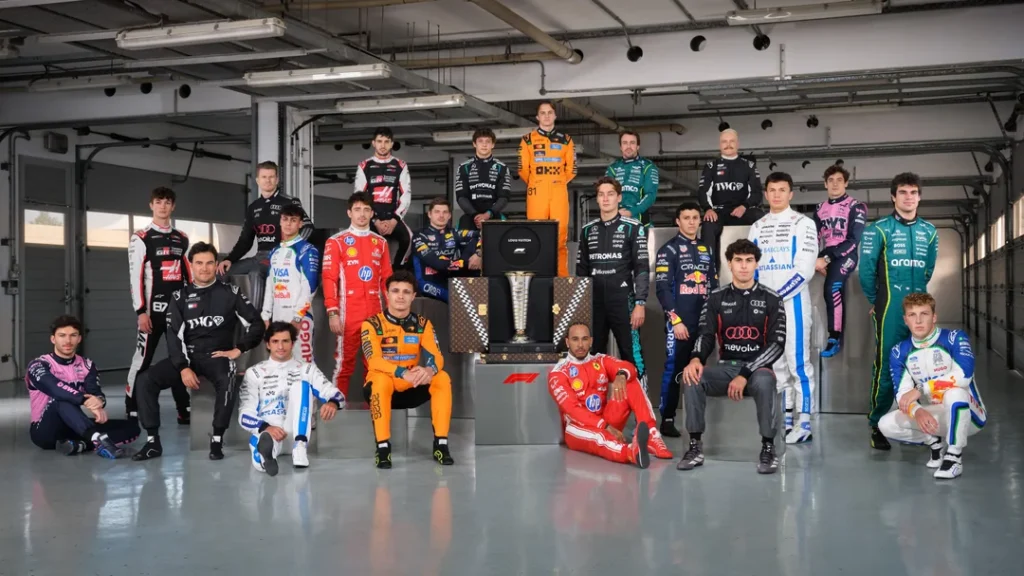
When Max Verstappen dismissed red carpet culture, saying he has no interest in turning up in a suit to “act important while we all sh*t on the same toilet,” it instantly became the defining quote of the preseason.
The line landed because it was so unmistakably him: blunt, irreverent, and oddly poetic.
It also sparked an unexpectedly serious cultural analysis. Many of Verstappen’s one-liners, we’ve noticed, sound like direct translations of Dutch proverbs. In fact, the sentiment echoes a well-known Dutch saying that roughly translates to: king, emperor, admiral, they all sht.* No matter rank or status, everyone is human.
What fascinates us isn’t the shock value, it’s the consistency. Verstappen’s communication style hasn’t changed. The world has simply grown more accustomed to Dutch directness. For some, that’s refreshing honesty. For others, it’s abrasive. But it’s authentic.
And authenticity, in modern F1, is currency.
Lando’s Celebration and the Myth of the Lone Prodigy
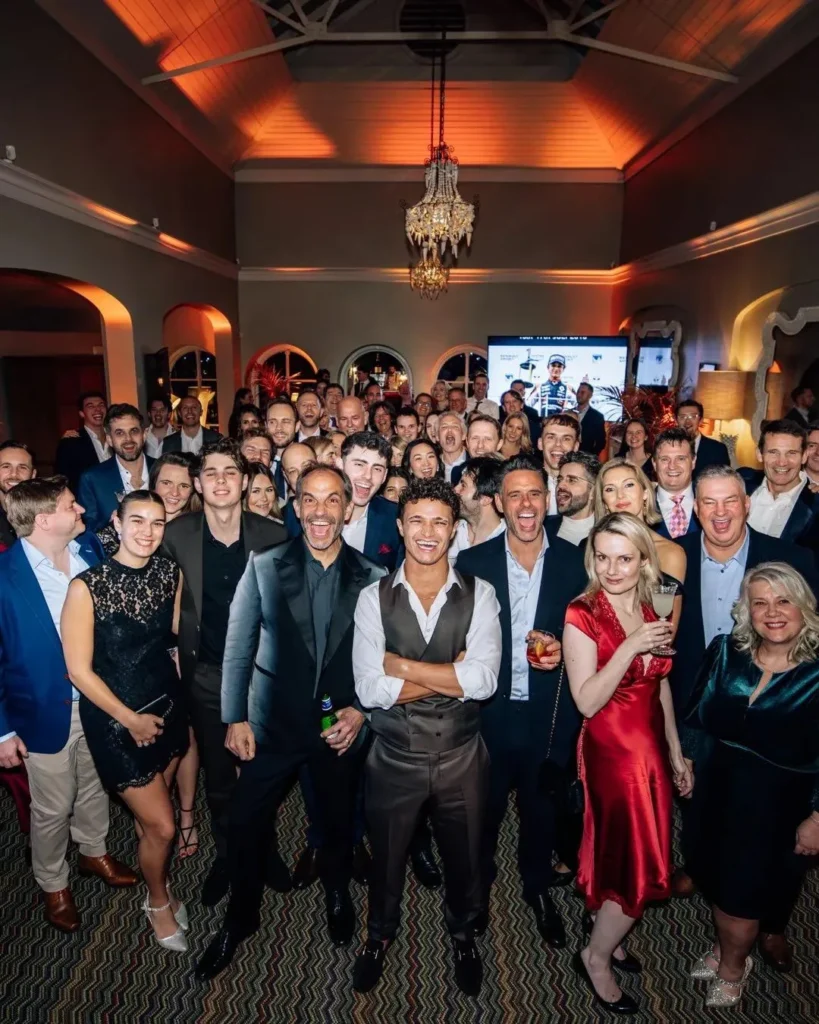
While Verstappen distances himself from celebrity culture, Lando Norris went in the opposite direction, inviting key figures from his entire racing journey to his championship celebration dinner.
What stood out wasn’t glamour. It was infrastructure.
Behind every elite driver is a network: mentors, mechanics, sponsors, trainers, early investors, and often family who relocate across countries to support development. We’re reminded that elite motorsport success is rarely solitary. It is engineered socially long before it is engineered mechanically.
The romantic notion of raw talent clawing its way to the top doesn’t hold up under scrutiny. Karting, junior formulas, international relocation, all demand capital and connections.
Even comparisons across drivers highlight how uneven that support can be. Some grew up surrounded by motorsport infrastructure. Others moved continents alone at 15. Some programs encourage external support systems. Others absorb drivers entirely into their own ecosystem.
The reality? F1 is not just a driving competition. It is an access competition.
Which is why efforts to legitimize sim racing as a development pipeline matter. It lowers the financial barrier, even slightly, in a sport where money is often the first qualifying session.
2026 Fuel: Ferrari and Audi Quietly Make a Statement
Beneath the memes and hopium, the most technically significant development so far may be fuel homologation.
Only Shell (Ferrari) and BP (Audi) have secured FIA approval for their 2026 fuels. Ferrari has already run its approved Shell biofuel in Bahrain testing. Audi is similarly ahead on certification.
The regulation shift is substantial: fuels must now be derived from bio or synthetic sources, with full supply-chain certification overseen by Zemo in the UK. This is not a trivial paperwork exercise, it alters production, storage, and contamination protocols.
Two strategic questions emerge:
- Did Ferrari sacrifice testing performance by running the final-spec fuel while others optimized with interim blends?
- Or does early homologation provide Ferrari and Audi with superior engine correlation data heading into Melbourne?
Either way, Ferrari’s experience with biofuel research, including years of second-generation sugarcane-based renewable development, suggests this wasn’t improvised.
The tifosi response? Predictably measured.
“Move in silence” has become the meme of the moment, a preseason mantra urging fans not to overhype. It never works. But they try.
Because Ferrari’s history under regulation changes is complicated. They’ve built front-running cars before, only for mid-season interventions or strategic errors to derail campaigns.
This year feels different to some. Drivers smiling in preseason doesn’t guarantee performance, but it does suggest internal confidence.
And that matters.
Newey, Aston Martin and the Packaging Debate
If Ferrari are riding controlled optimism, Aston Martin are riding scrutiny.
Adrian Newey’s move was treated by many as a guaranteed championship shortcut. But early noise suggests deeper integration problems, cooling compromises, gearbox fragility, power unit packaging constraints.
We think the bigger issue isn’t whether Newey can design a great car.
It’s whether people have misunderstood what “designing a great car” actually means.
Formula 1 design is not the pursuit of subsystem perfection. It is the pursuit of equilibrium. Aero, powertrain, cooling, gearbox, weight distribution, optimizing one at the expense of others is easy. Optimizing all simultaneously is brutally difficult.
Newey has said repeatedly this project would take time. Yet the myth that “Newey equals instant dominance” persists.
If Aston struggle, it won’t erase his legacy. But it will remind everyone that F1 is not a one-man show, and never has been.
Hamilton, Communication and Ferrari’s Seriousness Problem
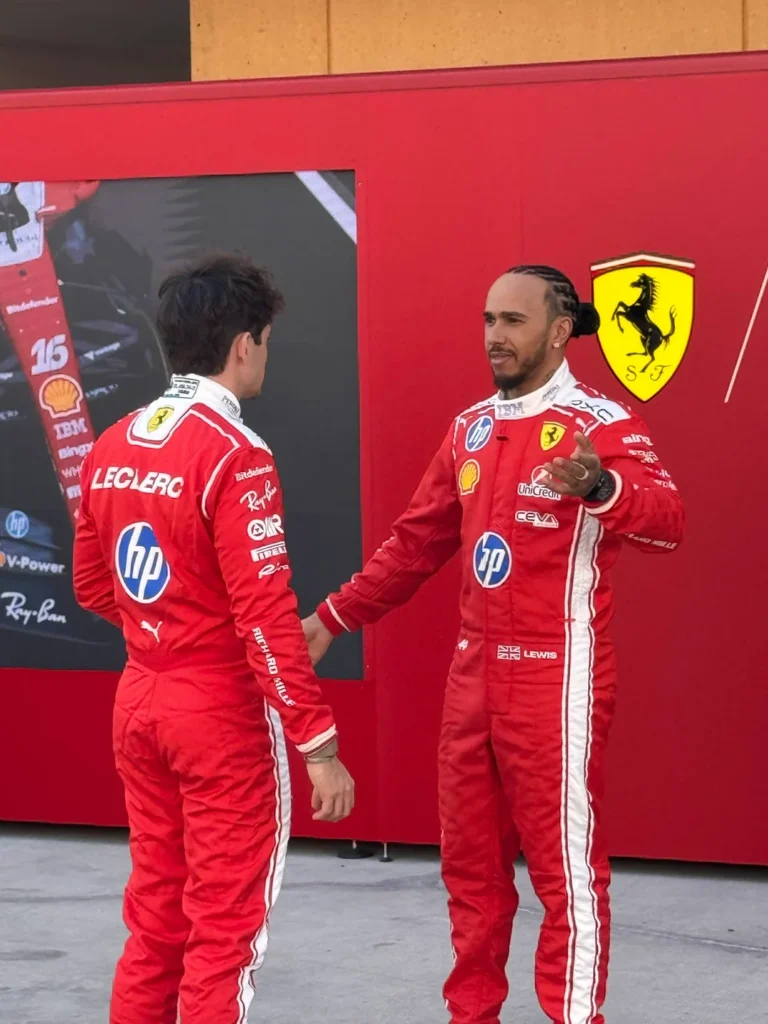
Few things in recent memory have united viewers like frustration over race radio communication.
Rob Smedley’s criticism, that “we’ll get back to you” is unacceptable when a driver is operating at ten-tenths, resonated because it reflects a broader truth: race engineers are not call center agents. Immediate clarity is performance.
Repeated radio moments where questions went unanswered, lap counts were miscommunicated, or empathy seemed absent painted a damaging picture. Even if an engineer is technically excellent in setup and analysis, communication under pressure is a separate discipline.
At this level, that discipline is non-negotiable.
For many, the comparison to Mercedes’ historically sharp radio execution only amplified the perception gap. Whether fair or not, Ferrari’s image problem isn’t pace, it’s operational trust.
That’s harder to fix than horsepower.
Vettel Picks Russell
Sebastian Vettel predicting George Russell for the 2026 title, while seated in front of a Red Bull car, isn’t controversial when you examine context.
Red Bull themselves have acknowledged Mercedes’ early strength. Russell is widely viewed as a leading contender. Bookmakers agree.
More interesting is Vettel’s broader pattern: he adjusts predictions as form shifts. He previously backed Norris mid-season when momentum changed. That isn’t inconsistency , it’s responsiveness.
And notably, no one seems to predict McLaren confidently. The reigning momentum car somehow keeps getting downplayed.
That alone may be worth monitoring.
The Perennial Question: How Do You “Fix” F1?
Every regulation cycle reignites the same debate: how to improve wheel-to-wheel racing without turning F1 into a spec series.
Some advocate tighter aero boxes, longer braking zones, linear tire degradation. Others argue engineering freedom is the soul of the sport — that dominance cycles are inherent to technical competition.
There is no easy solution.
Even spec categories produce dynasties. Even golden V10 eras lacked constant overtakes. The tension between engineering excellence and sporting parity has defined F1 for decades.
What’s different now is transparency. Fans dissect fuel chemistry, aero philosophy and gearbox failures in real time.
Which brings us full circle.
Aura, Hopium and Emotional Cycles
Preseason F1 exists in three currencies:
- Aura
- Copium
- Delusion (affectionately branded as “delulu”)
Ferrari are “aura champions.”
Aston are on the Newey hype train.
Mercedes are “holding something back.”
Audi are the disciplined newcomers.
McLaren are suspiciously ignored.
And somewhere in the background, Verstappen reminds us that hierarchy is an illusion because — ultimately, we all use the same toilet.
In 2026, new fuels, new power units, new predictions and old emotional scars collide.
And the only true constant?
Nobody knows anything.
Which is exactly why we watch.