

The early phase of Formula 1’s 2026 season is already producing a familiar kind of tension: one where performance, politics, and perception are all colliding at once. Across the latest wave of paddock reporting and fan discussion, three themes stand out. First, Mercedes’ apparent power unit advantage continues to shape almost every serious conversation about the competitive order. Second, Ferrari’s anger over the race start procedure is becoming a bigger story in its own right, because it cuts to the heart of whether teams are being asked to build to the rules or lobby to rewrite them. Third, Aston Martin’s much-hyped future project is being discussed less as a sleeping giant and more as a team trapped in leadership churn, Honda frustration, and what Fernando Alonso himself effectively framed as a battery-era shortfall.
At the center of the engine discussion is a claim from Julianne Cerasoli that Audi calculates it is losing one second per lap from the engine alone and is waiting for FIA approval to update its power unit. That immediately fed the broad paddock mood that nearly everyone except Mercedes is now looking toward ADUO as a possible escape hatch. The reaction to that claim was striking not just because of how dramatic the alleged deficit sounds, but because many observers still do not believe even a green light on upgrades would be enough to close the gap to Mercedes. The prevailing read is blunt: even if the rest of the field gets relief, that still does not guarantee anyone actually catches the benchmark.
That helps explain why ADUO has become such a central point of discussion. In the comments around the report, it was repeatedly described as the mechanism that can allow manufacturers lagging behind the leading internal combustion engine performance level to receive additional development and upgrade opportunities. The shared understanding across the discussion was that the FIA assesses the gap at intervals during the season, with thresholds around 2% and 4% determining the extent of any allowances. Several commenters also emphasized that the extra upgrade windows are especially significant because the regulations otherwise sharply restrict engine development. In practical terms, the mood around the system is that it exists precisely for a year like this one, where one manufacturer appears to have broken clear and everyone else is looking for regulatory relief rather than simply waiting out the freeze.
But the conversation around ADUO is not only about whether it will arrive. It is also about whether the system itself can be gamed, or at least distorted, if the leading manufacturer is not showing full potential on track. That suspicion surfaced repeatedly in the reaction, with several commenters openly arguing that this is the inherent weakness of a catch-up mechanism if the front-runner can influence how large its advantage appears. Others pushed back by noting that the FIA’s methodology is not public and that the governing body can demand additional information from teams and manufacturers, meaning the index may rely on more than visible race-weekend performance alone. Even so, the suspicion remains part of the atmosphere now: a sense that the field is not merely behind Mercedes, but potentially at the mercy of how that lead is measured.
That uncertainty is also why Alpine drew attention in the discussion in a slightly different way. One line of argument suggested Alpine may be among the first teams to make meaningful gains, not because it needs a radical engine rescue, but because it seems to be understanding the Mercedes package relatively quickly and has so far avoided major reliability trouble aside from a few smaller slowdowns. There was also speculation that Alpine may effectively be shortcutting some of the learning curve by following Mercedes’ lead closely. Whether that is a serious technical theory or just fan exaggeration, it fits the broader climate of the moment: if one package is clearly ahead, the temptation to mirror it as closely as the rules allow becomes part of the sport’s logic.
That same logic was framed by some as “Racing Point all over again,” only translated into the software and deployment era. The idea is not simply that customer teams benefit from a strong supplier, but that if Mercedes’ advantage persists, at least one of its associated teams will push the legal boundaries of imitation as far as possible. This is important because it shows how the 2026 regulation debate is already expanding beyond outright pace into questions of philosophy. Should a new engine era be one where the answer is aggressive development under a cost cap, or one where everyone waits for permission to fix what they got wrong?
That question sits at the heart of Ferrari’s anger over the start procedure. Fred Vasseur’s comments, carried by Sky Sports F1, gave the issue a sharper edge. His position was that Ferrari raised concerns last year, was told to design the car to the regulations rather than expect the regulations to be altered to suit the car, and then did exactly that. Ferrari, by this reading, accepted the challenge, made a design choice around the rules as written, and is now watching others push for the rules to move after the fact. That is why his “enough is enough” line resonated so strongly.
The reaction to Vasseur’s stance was emphatic. The dominant argument was that Ferrari built around the existing framework, accepted the trade-offs involved, and should not be penalized because others did not solve the same problem as effectively. Several commenters went even further, arguing that if a team believes its car is unsafe in this area, the answer is not a new rule change but a simple sporting consequence: fix the car or start from the pit lane. In that framing, Ferrari’s start performance is not a loophole or an anomaly; it is the reward for a successful design compromise.
What gave that argument even more force in the discussion was the repeated claim that Ferrari’s solution came with downsides elsewhere. More than one commenter pointed to the idea that Ferrari sacrificed top-end power through a smaller turbo choice in exchange for better launch behavior. Whether or not that trade-off proves decisive across a season, it has clearly become central to the political case Ferrari’s supporters are making. Their point is that Ferrari did not stumble onto a free gain. It accepted a compromise, optimized for one area under the written rules, and is now being asked to surrender that benefit because rivals do not like the outcome.
That is why many of the reactions treated this not as an isolated procedural gripe, but as another example of a larger F1 pattern. The comparisons to 2022 porpoising and earlier mid-cycle rule interventions were frequent. The feeling running through those comments was that when certain teams encounter a design disadvantage, political pressure can become a substitute for engineering correction. Whether or not that view is fully fair, it is clearly the lens through which a large part of the fan conversation is now reading the current start controversy.
George Russell’s suggestion that there may need to be another tweak only intensified that backlash. For those siding with Ferrari, the existing modification was already a major concession. Asking for more was seen not as prudent rule stewardship, but as a direct attempt to engineer away Ferrari’s advantage. The fact that Vasseur had apparently raised the problem earlier and been told to live with the regulations only sharpened the sense of inconsistency. If Ferrari was told to adapt its car, why should others now get relief because they failed to do the same?
This has also led to an adjacent debate over whether Ferrari could or should push back more aggressively if further changes arrive. In the discussion around whether start procedure changes could open the door to an early Ferrari engine update, most responses were skeptical that Ferrari would have a straightforward path to compensation or leverage if the FIA frames any action under safety grounds. The consensus was that safety language gives the governing body broad cover, much as it did in previous technical controversies. Still, that did not erase the anger. The sporting objection remained the same: if some cars are clearly able to launch safely and effectively, then the problem looks less like a regulation failure and more like a design failure for the others.
That point was reinforced by those who argued there is not yet a convincing safety case at all. The reasoning there was straightforward: poor starts and even stalls have always existed in Formula 1, and the incidents seen so far do not automatically prove the rules themselves are dangerously flawed. Several commenters drew a line between a genuine systemic hazard and the normal variability of race starts, arguing that the current push feels more like teams trying to claw back a disadvantage than a reaction to an intolerable safety pattern.
The political dimension of all this matters because it feeds directly into another growing debate: whether the 2026 rules are actually producing good racing, and if so, what kind of good racing they are producing. One of the shared discussion prompts tackled that head-on, with a fan asking why anyone likes overtaking under the new regulations if so much of it appears driven by battery management and predictable straight-line flybys. The criticism was that passes can feel artificial, pre-scripted, and less tied to classic ideas of driver skill because the energy state often dictates who can attack and who will be repassed.
Yet the responses to that critique were some of the most revealing of all. The strongest defense of the current racing was not that the battery-heavy behavior is inherently beautiful, but that it has reopened a style of wheel-to-wheel interaction that fans had been missing. Multiple commenters pointed to the ability of cars to follow more closely as the real gain, not merely the existence of deployment-driven passes on straights. That distinction mattered. The praise was not for “flybys” in isolation, but for battles that are sustained through multiple corners, multiple laps, and multiple attack points.
The Charles Leclerc versus Lewis Hamilton fight in China was the example cited most often. Commenters described it as a battle defined not simply by one car blasting past another in a straight line, but by repeated pressure, close following, and repeated sniping into corners. The Alpine-Haas battles were also raised as evidence that not all of the action can be reduced to simplistic energy-aided drive-bys. This is the strongest pro-2026 argument emerging from the discussion so far: the regulations may be awkward, and the energy management may be extreme, but the on-track product is not reducible to that alone.
There was also a broader historical pushback in those replies. Some argued that F1 fans often romanticize earlier eras without acknowledging how artificial or compromised overtaking used to be in those periods as well, whether through refueling, DRS, vast reliability swings, or field spread. In that view, complaints about what is “real” racing often ignore how many forms of overtaking in F1 history have depended on regulatory devices, strategic asymmetries, or structural imbalances. The current era, for all its flaws, is just the latest version of that tension.
Still, even several people who defended the current spectacle accepted serious downsides. The strongest critique from within the pro-racing camp was that the battery clipping and management burden are too severe, especially because they can make the causes of an overtake opaque to the audience. If a driver gets passed, is it because the rival was braver, better positioned, or simply in a more favorable energy phase? If a driver lifts early or brakes more to service regeneration, is that clever racecraft or just the unavoidable logic of the formula? Those questions do not disappear just because there is more action.
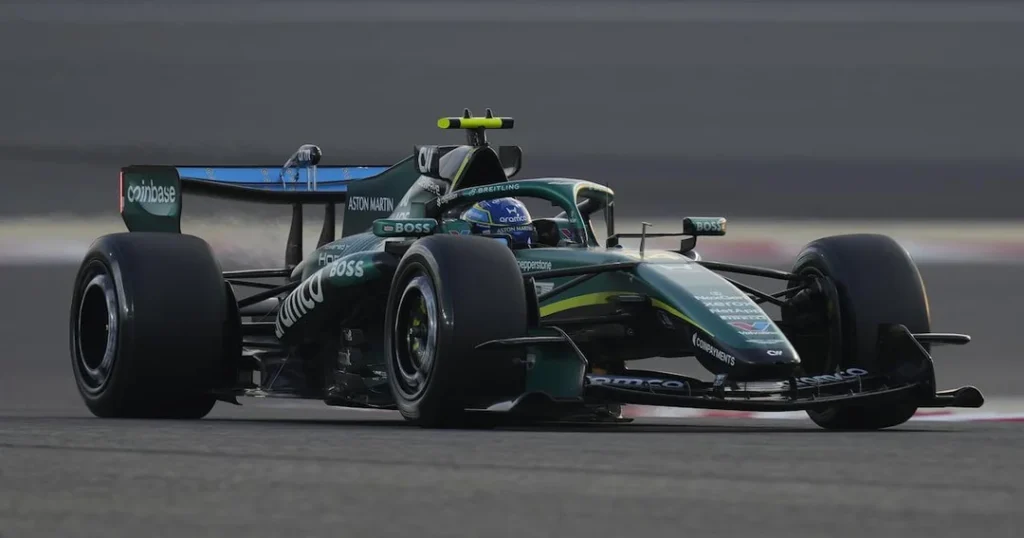
That is where Alonso’s comments about Aston Martin become especially telling. His line about lap one being enjoyable because everyone starts with a full battery, before the race turns into what he effectively described as a battery championship that Aston is losing, landed because it captured both the sporting and technical frustrations of this era in one shot. The reaction to the wording was almost as interesting as the substance. Several Spanish-speaking commenters stressed that his original word choice was more mocking and dismissive than the English version made it sound, implying not just a battery-driven championship but something closer to a toy-battery world.
That phrasing resonated because it reflects a broader discomfort with what some fans and drivers feel the formula has become. Alonso was still acknowledging that others have done a better job in this area, but he was also plainly diminishing the character of the contest itself. In the comments, some accepted that as a fair shot at the current rules, while others noted that Formula 1 has always rewarded whichever engineering domain becomes decisive in a given era. To them, this is no different in principle from past periods dominated by aero efficiency or engine architecture. To Alonso’s defenders, though, that misses the emotional point: the current formula can ask drivers to lift, brake, and harvest in places that used to reward full commitment, and that changes how the racing feels at a visceral level.
That Aston Martin backdrop makes the team’s leadership situation look even more unstable. Two separate Thomas Maher reports laid out an extraordinary picture: Adrian Newey is not only leading the hunt for a new team principal, but GianPiero Lambiase was reportedly among those approached and declined the opportunity. The reaction to that second point was almost universally unsurprised. Many commenters argued that moving from a secure and highly valued engineering role at Red Bull into Aston Martin’s current environment would mean accepting more responsibility, less stability, and a higher probability of being blamed if the project continues to struggle.
Aston Martin’s recent leadership churn was central to that reaction. The comments repeatedly painted the team as a place where titles shift, responsibilities move, and long-term clarity is lacking. Andy Cowell’s changes in role were cited as part of that picture, and Lawrence Stroll drew a large share of the blame in the harsher interpretations. The most critical read was that Aston has too many powerful figures learning new jobs, changing jobs, or being used outside their best area of expertise, with Newey now seemingly pulled into principal-hunting rather than focusing solely on technical leadership.
That is why the Lambiase rejection was interpreted less as a missed opportunity and more as an understandable career choice. Many pointed out that he appears to have substantial job security already, including responsibilities beyond simply engineering Max Verstappen. Others noted that, with everything going on in his private life, taking on an even more demanding and public-facing role may simply make little sense right now. On top of that, the move itself was seen by some as a poor fit in skill terms. A race engineer and a team principal do not perform the same function, and not every elite technical or sporting figure is automatically suited to front-office leadership.
The other Aston Martin conversation, around Newey leading the principal search more generally, revealed just how far confidence in the project has slipped. The jokes were constant, but the underlying point was serious: Aston has immense resources, elite facilities, and still looks disjointed. That has led many to conclude that money alone is nowhere near enough in Formula 1, a point commenters reinforced by invoking examples such as Toyota, BMW, and other well-funded efforts that failed to convert spend into titles. Aston, in that reading, is just the newest proof that infrastructure and budget do not automatically create a functioning championship organization.
The speculative discussion about possible principal candidates showed how desperate or combustible the situation is perceived to be. Christian Horner’s name came up repeatedly, sometimes as pure chaos theory and sometimes more seriously. Those entertaining that possibility argued that Horner would bring proven team-building experience, Honda familiarity, and enough charisma to rally a workforce. Others countered that any such move would come with obvious baggage and could drive away some people even if it attracted others. What mattered more than the name itself was the mood behind it: Aston is being discussed like a team hunting not just for leadership, but for an identity that currently feels unsettled.
All of this loops back to Alonso, because he has become the clearest voice connecting Aston Martin’s organizational disappointment to the technical realities of the new rules. The comments around his “battery world championship” remark quickly widened into reflections on his career, his long and unhappy history with Honda-powered disappointments, and the irony that what looked on paper like one of the most exciting projects in the paddock now risks being framed as another chapter in that story. Some described it as cruelly comic that a driver of Alonso’s caliber keeps finding himself in projects that promise renaissance and deliver frustration.
That discussion drifted into broader assessments of Alonso’s career choices and misfortune, but the more immediate Aston point was simpler. Right now, the team is not only off the pace; it is being talked about as a team whose grand plan is colliding with the realities of a battery-sensitive formula, a troubled engine partnership, and leadership uncertainty. That is an alarming combination for a project that was sold as the sport’s next great rise.
Taken together, these seven strands paint a clear portrait of the 2026 season’s early identity crisis. Mercedes appears to have forced the rest of the field into a waiting game over ADUO. Ferrari believes it played by the rules and is now being punished for succeeding where others failed. Aston Martin is being treated as a cautionary tale about how hard it is to turn resources into coherence. And the sport at large is still arguing over whether the new era’s racing is cleverly modern, fundamentally artificial, or both at the same time.
That may be the defining truth of this moment: Formula 1 has not settled on a consensus about what 2026 is yet. To some, it is a promising but flawed formula that finally allows cars to race each other closely again. To others, it is a political and technical mess where battery states, procedural lobbying, and engine indexing matter more than they should. What is undeniable is that the arguments are no longer isolated. The ADUO debate, Ferrari’s start fury, Aston’s instability, and Alonso’s battery-era contempt are all different faces of the same underlying issue. In this new regulation cycle, the teams that guessed right early have power, the teams that guessed wrong want relief, and everyone else is left arguing over whether the sport should reward adaptation or rescue.