

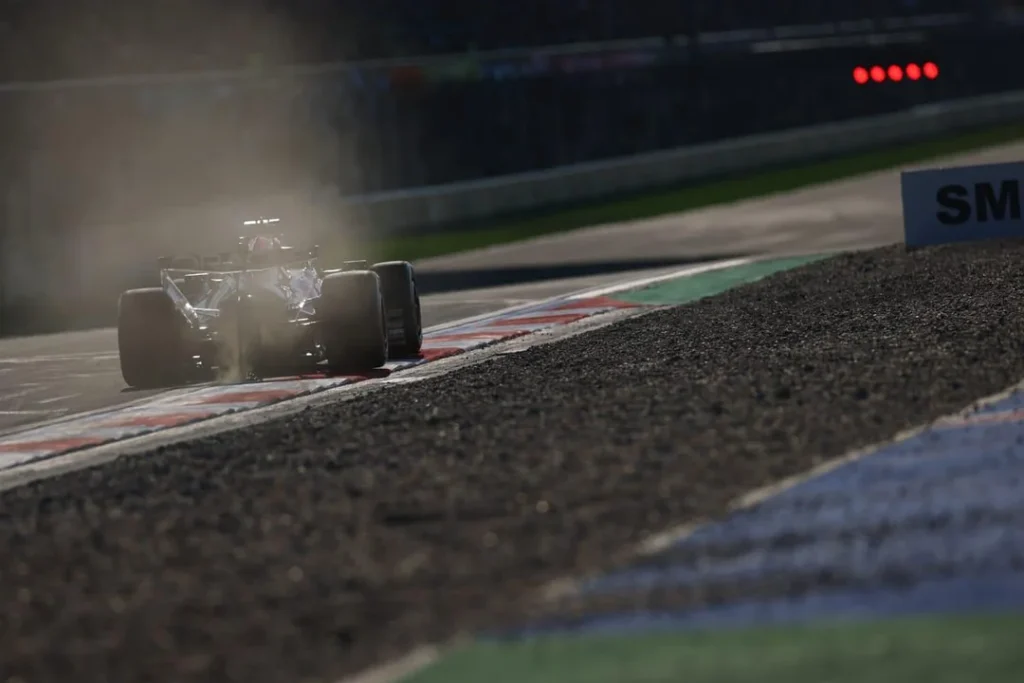
Formula 1’s build-up to the Japanese Grand Prix has turned into a collision of three very different storylines: a fresh flashpoint around Max Verstappen and the media, a growing push to revise how the 2026 rules affect qualifying, and Mercedes somehow managing to dominate both the competitive and cosmetic conversation at the same time.
If there is one common thread running through all of it, it is this: the sport is still trying to decide what it wants the opening phase of the new era to feel like. Right now, the answer seems to be equal parts tense, improvised, and deeply online.
Verstappen’s latest media standoff shifts the focus from the question to the reaction
The sharpest off-track moment came when Verstappen reportedly refused to begin a media session until The Guardian’s representative left the room, stemming from a clash months earlier in Abu Dhabi over a question about whether he regretted his collision with George Russell in Spain and the penalty that followed.
What stands out here is that much of the reaction has moved away from relitigating the original Abu Dhabi exchange and toward the present-day behavior itself. The central reading is straightforward: this was not a case of a provocative question being asked again. It was Verstappen seeing a journalist he did not want to deal with and drawing a line before anything even began.
That distinction matters, because it changes the story from one about media fairness to one about control. The pushback has not really been, “Was the old question fair?” It has been, “Why are people missing what actually happened now?”
That has fed into another familiar contradiction around Verstappen’s public image. For a driver who is often framed as someone who does not care what others think, this looked to many like a very visible sign that he does care—at least when it comes to specific people, specific narratives, and specific perceived slights. The reaction to the incident has therefore not just been about the journalist involved, but about the gap between the image of indifference and the effort it can take to protect that image.
At the same time, the episode also became an indictment of the wider F1 discourse machine. There is obvious fatigue with how quickly these situations get swallowed by driver tribalism, where the actual event is eclipsed by argument over everything around it. In that sense, the Verstappen story became another example of modern F1’s tendency to turn every conflict into a referendum on fandom itself.
Mercedes wins the attention battle even before the cars hit the track
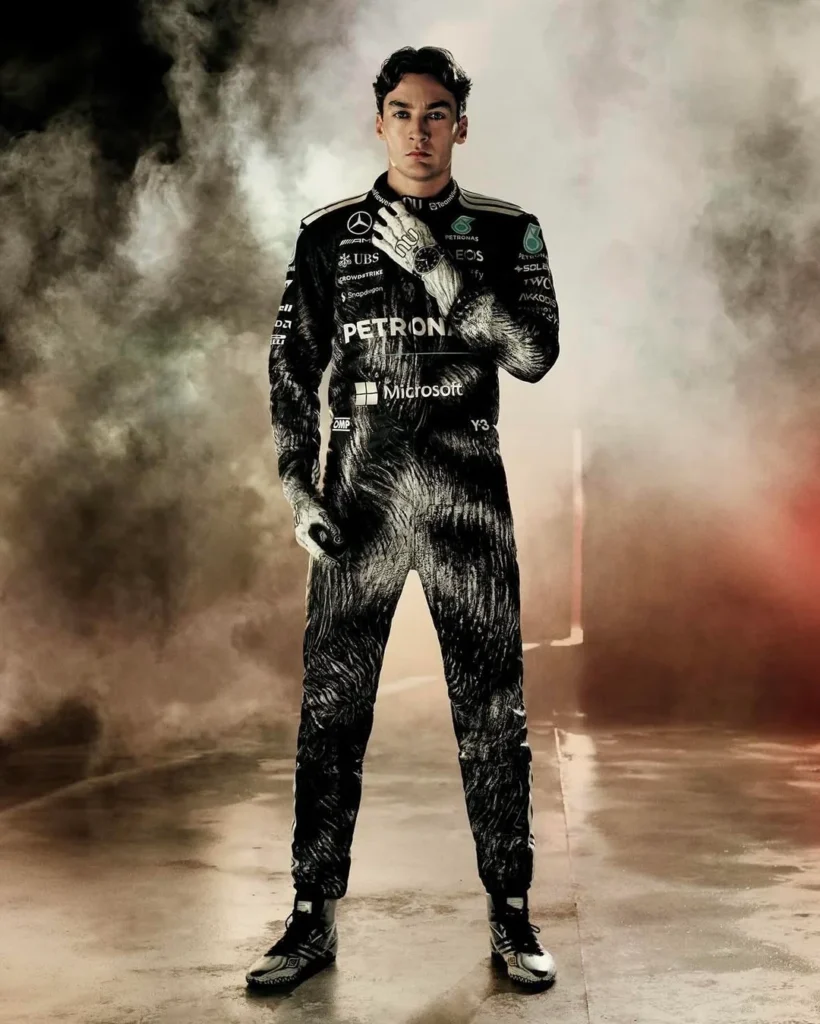
No team generated more chatter heading into Japan than Mercedes, and not all of it was about lap time.
The special suits were supposed to be a statement. Instead, they became a punchline.
The reaction to Mercedes’ special Japan suits was overwhelmingly hostile. Rather than reading as stylish, high-concept, or culturally resonant, the design was widely viewed as messy, awkward, and unintentionally ridiculous. The dominant comparisons were not to precision, performance, or fashion, but to painting accidents, flour explosions, chalk dust, or clothes dragged through the street.
Just as damaging as the negative reception was the confusion around the idea itself. A lot of fans did not seem to understand what the design was meant to represent or why it existed in the first place, which left the team vulnerable to mockery instead of admiration. Even those aware of the Y-3 collaboration often felt the execution on the suits and car failed to communicate anything clearly.
There was also a strong sense that Mercedes had missed an opportunity. Instead of a design that felt thematically tied to Japan in a way fans immediately recognized, the outcome felt abstract in the wrong way. Suggestions that something like kitsune or kintsugi-inspired styling would have landed better reflect how much the response was shaped by disappointment rather than just dislike. This did not feel like a bold risk that divided opinion. It felt, for many, like a swing and a miss.
The front wing livery drew a similar response: attention first, approval second
The team’s special front wing livery sparked another round of visual scrutiny, with debate over whether the design was off-center or merely being distorted by camera perspective. Even that small discussion says something about the current Mercedes moment: nothing from this team is being glanced at and forgotten. Everything is being zoomed in on, argued over, memed, and re-examined.
The design was not universally disliked, but even people who thought it looked cool still seemed drawn to what looked odd about it. Whether the asymmetry was real or just a trick of the angle, the fact that fans immediately started seeing a “lazy eye” or a crooked “tooth” showed how quickly the aesthetic conversation turned from admiration to inspection.
Mercedes are clearly still commanding attention. The question is whether that attention is being converted into admiration or just fascination.
Meanwhile, Mercedes’ wing controversy shows how little trust there is in the system
That scrutiny became much more consequential when talk intensified around Mercedes’ front wing and the earlier reporting about a possible FIA look into the team’s aerodynamic design.
By the time Kym Illman said there was no investigation and that it was “business as usual,” the bigger issue had already become source credibility. A significant part of the reaction was not really about whether the claim was true or false, but about whether a photographer known more for images and paddock lifestyle gossip should be treated as a reliable source for technical regulatory developments.
That skepticism went in two directions. One side questioned why Illman was being used as an insider voice on a technical enforcement matter at all. The other side pointed out that earlier reporting had already muddied the waters by using ambiguous language about the FIA “looking into” Mercedes after Ferrari requested clarification. In that reading, the rumor cycle had already outrun the facts before Illman stepped in.
So the conversation became less “Is there definitely an investigation?” and more “How much of this story was ever concrete in the first place?”
Even beyond the reporting debate, the reaction revealed something else: there is very little baseline trust when it comes to Mercedes and regulatory gray areas. Plenty of fans remain primed to assume that if a Mercedes innovation looks questionable, the FIA will either move too slowly or not move at all. Others pushed back by arguing that a team already leading the way is unlikely to risk something blatantly illegal, especially when the scrutiny would be immediate and intense. But even that defense carried an implicit concession: everyone expects teams to live right on the edge.
That is why this story lingered. Not because there was a confirmed bombshell, but because it sat perfectly in the space F1 now inhabits—where technical innovation, rumor, fan forensics, and mistrust of process all blend together before an official statement can settle anything.
Hamilton is making the strongest case yet for the new style of racing
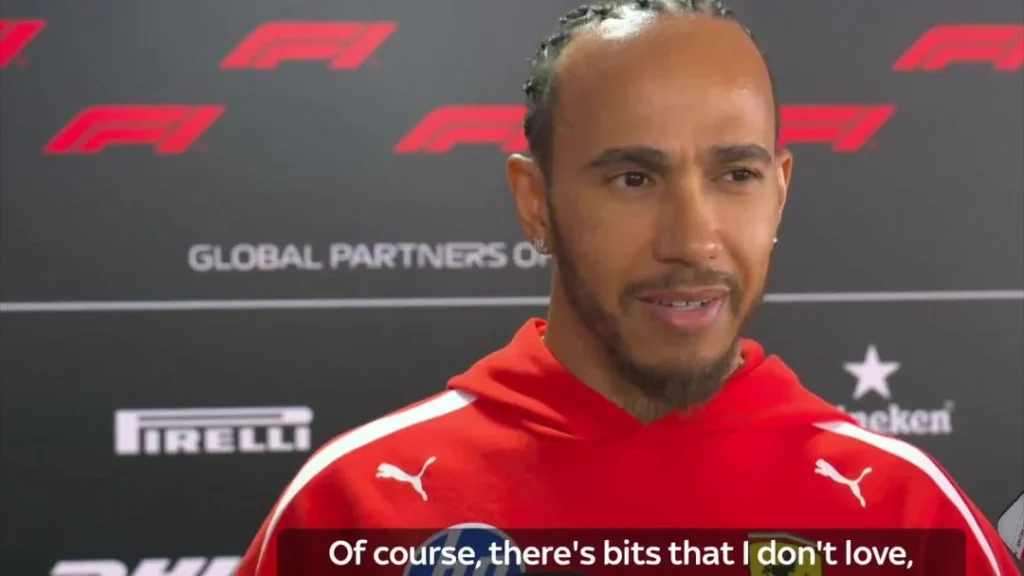
If Verstappen embodied the combative side of the current moment, Hamilton became the most prominent defender of what the 2026 racing product is actually offering.
His comments on the “yo-yo racing” debate were a blunt rejection of the label. He argued that the kind of back-and-forth fighting now being seen is real racing and likened it to karting, while also noting in the same clip that he does not enjoy the deployment and lift-and-coast side of the regulations even if he finds the wheel-to-wheel action more enjoyable.
That balance is what made the reaction to his comments so revealing. Many fans clearly agree with Hamilton’s broad point while still sharing some of his reservations. The emerging consensus is not that the system is perfect. It is that the racing can be compelling even if the mechanism producing it still feels awkward.
That is why the debate has become so polarizing. One side sees repeated overtakes, close following, and real positional exchanges and says the regulations are delivering drama that F1 has often lacked. The other sees a structure in which energy state, not pure driving input, is creating too many of those swings and argues that this makes the action feel more manufactured than earned.
The most interesting reaction may be the middle ground. Plenty of viewers appear willing to live with the oddity of super-clipping and energy management if the trade-off is more action. Others are not defending the technical concept so much as defending their own enjoyment of what they are watching. In other words, there is a growing “I know it is weird, but I’m having fun” faction.
Hamilton’s later remark that his race with Charles Leclerc was one of the most fun races he has had—comparing it to the kind of battle he once had with Nico Rosberg—only reinforced that theme. The idea that repeated, back-and-forth combat is more satisfying than a single clean pass landed strongly with fans who have grown tired of overtakes that are effectively completed before the corner even arrives.
That Rosberg reference also triggered a wave of nostalgia and reopened all the usual arguments about 2016, equal machinery, reliability swings, and who really had the upper hand. But underneath all of that was a simpler point: Hamilton invoking Rosberg was enough to remind people that he sees this kind of prolonged duel as one of the purest forms of racing. That is a notable endorsement for a ruleset still under heavy criticism.
The problem is not the races. It is qualifying.
While the race product remains divisive, the strongest consensus forming around the new regulations is that qualifying is where the system looks the most broken.
The FIA’s confirmation that the maximum permitted energy recharge for qualifying at Suzuka would be reduced from 9.0 MJ to 8.0 MJ made that clear. The official language presented it as a minor, targeted refinement based on feedback from drivers and teams, with the goal of preserving qualifying as a performance challenge. But the public reading was much sharper: this looked like a rapid adjustment because the existing setup was already producing something visually and competitively unsatisfying.
The simplified explanation that resonated most was straightforward. Less recharge demand means less need for the cars to do intrusive recharge work during the lap, which should reduce the mid-straight clipping and awkward lift-and-coast behavior. In exchange, the cars may be a bit slower overall, but they should look more like they are being driven normally.
That trade-off was widely accepted. Most people did not seem especially worried about a modest reduction in pace if it removed the most visibly unnatural elements of the qualifying lap. The bigger concern was not losing speed; it was preserving the image of what an F1 qualifying lap is supposed to be. A qualifying lap should look like an all-out attack, not like a puzzle where taking a corner too quickly might compromise the next straight because the system deploys or recharges at the wrong point.
That is why talk of post-Japanese GP rule changes has focused so heavily on qualifying. There appears to be broad agreement that this is the first area needing deeper revision, whether through changes to battery deployment, ICE contribution, or simplification of the wider power-delivery framework.
There is far less appetite for changing the races immediately. Even critics of the technical logic behind the current energy system often concede that the races have produced action, variety, and repeated battling. Qualifying, by contrast, seems to be where the regulations most obviously undermine the traditional idea of driver-led performance.
F1 is now openly patching the rules in public
One of the most striking things about the reaction to all of this is how quickly people have moved from debating the 2026 rules in theory to watching them be patched in real time.
The FIA says the first events under the new regulations have been operationally successful, and the Suzuka tweak is being framed as part of a normal process of validation and optimization. But the public mood is more skeptical. There is a widespread sense that the sport is already revising the framework because the original version exposed too many visible problems too quickly.
That does not necessarily mean the rules are a failure. But it does mean the rollout is no longer being judged solely on competitiveness or lap time. It is being judged on aesthetics, on feel, on whether the sport still looks like itself.
This is why the technical discussions have become so philosophical. Should F1 prioritize peak power figures, even if that power arrives in awkward bursts? Should it prefer slightly slower but flatter, cleaner-looking laps? Is repeated overtaking a sign of better racing or proof that the cars are behaving in a more synthetic way? The argument is no longer only about engineering. It is about identity.
Aston Martin remains the symbol of everything that has gone wrong
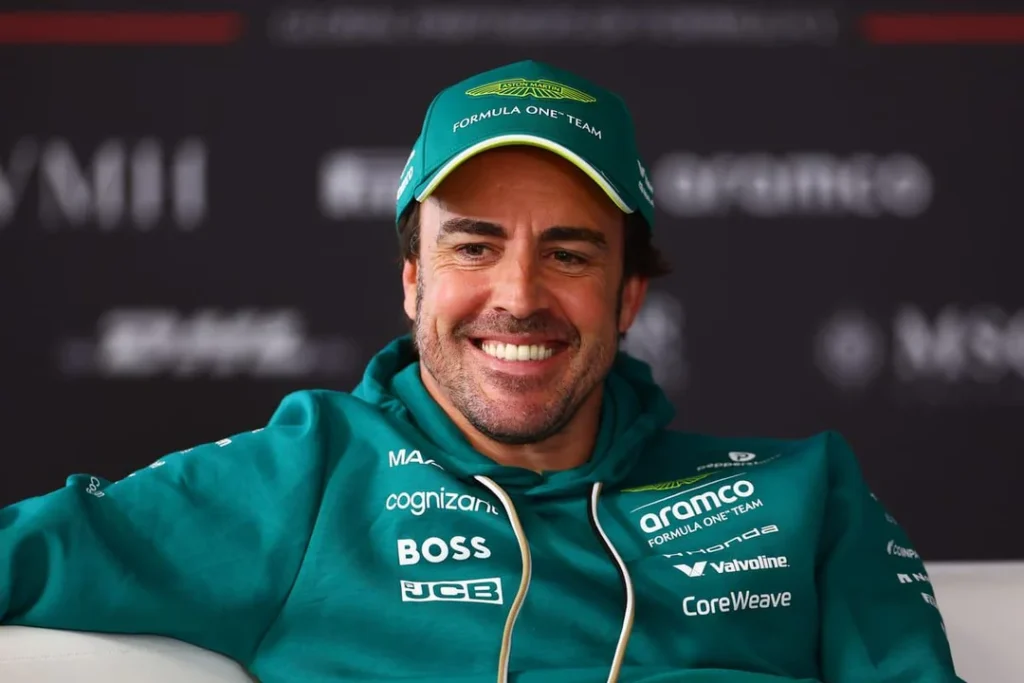
All of this regulatory turbulence is playing out against the backdrop of Aston Martin’s ongoing struggles, which continue to color almost every major discussion around the new era.
That context shaped the reaction to Alonso missing Thursday in Japan because his first child is due. The dominant response was overwhelmingly supportive: not only should he skip media day, many felt he should skip the entire weekend if needed. A large part of that support, though, was inseparable from the state of Aston Martin’s car. The sentiment was not just “family comes first.” It was also “what exactly is he rushing back to?”
That car is now being described less as a disappointing machine and more as a genuinely punishing one. The jokes about Alonso retiring from the weekend early, parking it somewhere funny, or being “assaulted by” the car rather than driving it are still jokes, but they are rooted in a very real sense that Aston Martin’s package is currently miserable to handle and scarcely worth the sacrifice.
The same goes for the running Aston/Newey “prophecy” theory that resurfaced after the qualifying recharge change. The joke is that Newey supposedly anticipated the rules would be softened and designed Aston Martin around that future scenario. Most people seem to understand that the theory is more fan fiction than hard logic, yet it keeps coming back because it expresses something the fanbase wants to believe: that there is a hidden master plan behind a car that otherwise just looks broken.
That theory survives because the alternative is much simpler and much harsher—Aston Martin may just be in a hole, and the rest of the sport is already moving on without them.
Japan feels like a checkpoint for the whole 2026 project
Taken together, these stories make Suzuka feel like more than just another race weekend. It feels like an early checkpoint for the entire 2026 direction of travel.
Verstappen’s media standoff showed how brittle relationships around the paddock still are. Mercedes’ visual choices and technical whispers showed how one team can be both envied and mocked at the same time. Hamilton’s defense of the new racing reminded everyone that the on-track spectacle may be healthier than the discourse around it suggests. And the FIA’s quick qualifying adjustment confirmed that the sport is already willing to intervene when the product no longer looks right.
That may be the clearest truth of all heading into Japan: F1 does not seem especially panicked about the racing, but it is deeply concerned about presentation. The cars can be a little slower. The system can be a little strange. The fans can argue endlessly. But qualifying, above all, still has to look like F1.
Right now, that is the part the sport seems most determined to protect.