

Formula 1 finds itself navigating two very different kinds of pressure at once: geopolitical instability threatening the calendar, and technical intrigue threatening to reshape the competitive order.
Middle East Conflict Puts Calendar Under Immediate Strain
A missile strike hit a naval base in Bahrain just 21 kilometers from the Bahrain International Circuit. For a sport built around the slogan “Drive to Survive,” the irony wasn’t lost on anyone. The phrase was never meant to be literal, but the situation suddenly feels uncomfortably close to that line.
Bahrain is a small country, roughly 50 km long and 17 km wide, and the circuit sits near the middle of the island. In practical terms, anything hitting Bahrain is close to everything in Bahrain. That geographical reality is hard to ignore when airspace closures, active strikes, and escalating regional tensions are in play.
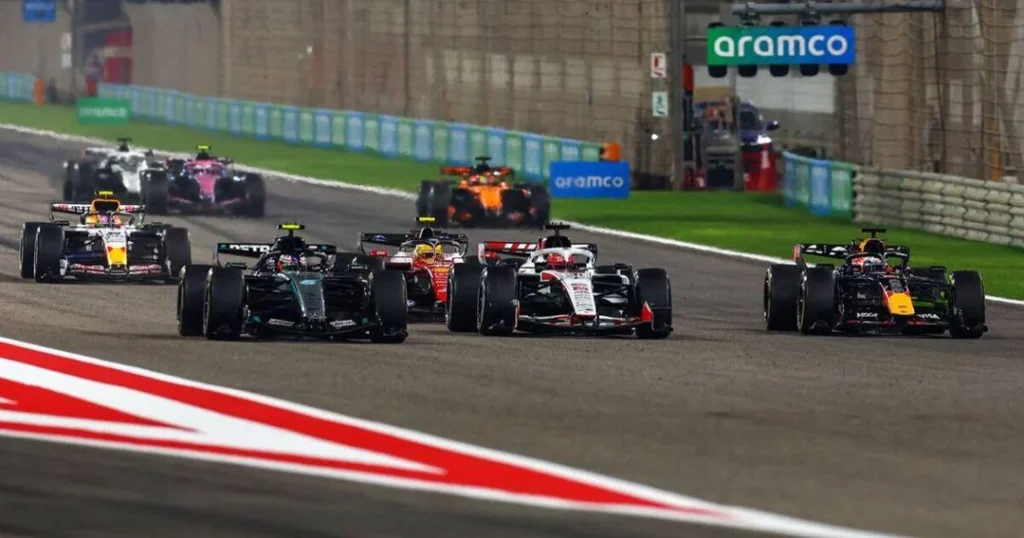
The immediate problem is not just whether a race can be held safely, it’s whether teams and freight can physically get there.
Personnel are already traveling to Australia. Many routes hub through the Gulf. Flights have been canceled or turned back mid-air. Wet-weather Pirelli testing scheduled in Bahrain was canceled. Engineers and mechanics were preparing to run cars when events overtook logistics. Some personnel are reportedly stranded. Freight, especially non-critical equipment stored in the UAE, could be delayed. Even sea freight passing through the Strait of Hormuz becomes a concern in a deteriorating security environment.
This is not the same scenario as racing while already on-site during a localized strike. This is about transporting the entire traveling circus into an active conflict zone.
Bahrain and Saudi Arabia are due to host races in April. That’s not far away in F1 logistics terms. Advance freight typically arrives weeks prior. Decisions cannot be made on the Thursday of race week; rerouting cargo and personnel requires clarity now.
Some argue Saudi could proceed if airspace remains open and distance from direct conflict is sufficient. Others point out that recent strikes have expanded the scope of risk. Bahrain appears significantly more exposed in the short term.
And then there’s precedent.
F1 raced in Saudi Arabia with missile smoke visible from onboards. Bahrain raced amid the Arab Spring in 2012 after a cancellation in 2011. The perception then was that once teams were on-site, departure became complicated. That dynamic does not apply yet, nothing is there. Which makes the decision simpler in theory.
But Formula 1’s financial ties to the region are deep. That reality has shaped the calendar for years. Fans have openly questioned whether revenue considerations could outweigh safety optics again. The sport now faces a moment where it must balance contractual obligations against reputational and ethical scrutiny.
If races cannot proceed, contingency circuits are already being discussed. Imola is often cited as ready-to-go at short notice. Hockenheim, Nürburgring, Portimão, Istanbul, Sepang, even Fuji have all been floated as possible stand-ins. European substitutions offer logistical advantages due to ground transport flexibility. A quick pivot within Europe is far simpler than reengineering a flyaway.
There is also a broader recognition that this isn’t abstract geopolitics, it’s real places, real people, real engineers who just spent weeks testing in Bahrain and are now watching strikes hit areas they recently walked through. That proximity changes tone quickly.
The coming weeks will determine whether this becomes postponement, cancellation, or uneasy continuation.
Engine Compression Ratio Debate Intensifies
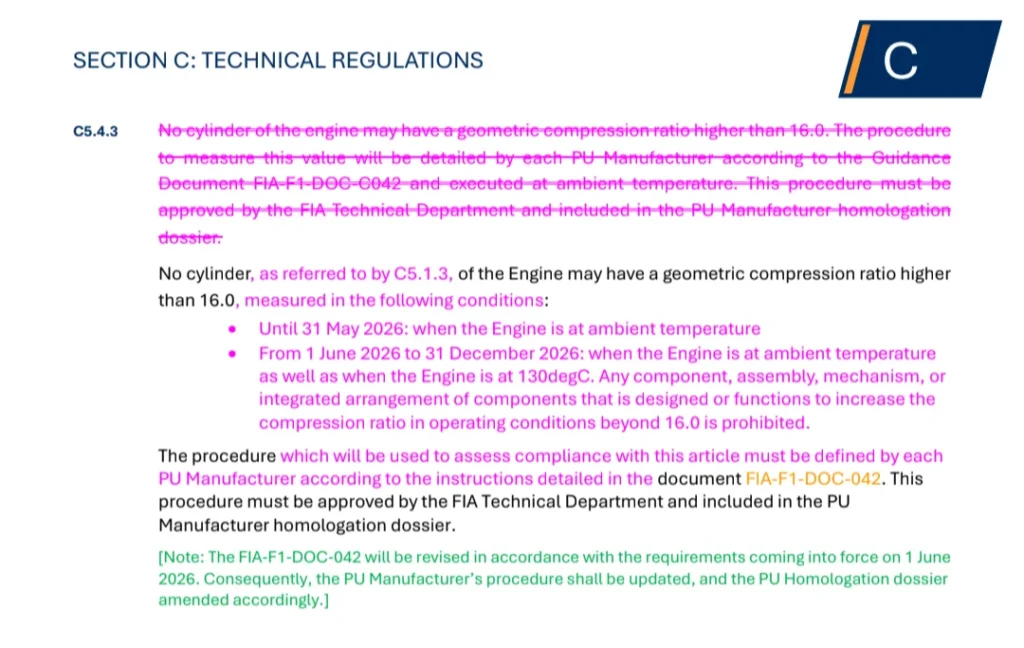
While the calendar faces uncertainty, a separate technical storyline is unfolding around the 2026 power unit regulations.
From June 1, the engine’s geometric compression ratio will be measured at 130°C. The FIA’s updated regulation states:
“Any component, assembly, mechanism, or integrated arrangement of components that is designed or functions to increase the compression ratio in operating conditions beyond 16.0 is prohibited.”
The key phrase is “in operating conditions.” The rule does not merely limit what is measured, it prohibits exceeding 16.0 under real-world operation, whether measurable or not.
The debate centers on whether teams, widely rumored to include Mercedes, found a method to maintain or increase compression at higher temperatures while passing earlier ambient-temperature tests.
Historically, compliance in F1 has often revolved around passing the prescribed test, not necessarily matching the spirit of the regulation. Flexi-wings passed static load tests while flexing dynamically. Measurement defines enforceability.
Here, however, the FIA appears to be shifting emphasis from a specific measurement method toward a broader compliance principle, engines must not exceed 16.0 in operation, period.
Questions remain about enforceability. If you cannot directly measure the compression ratio under live operating conditions, how do you police it? Some argue post-season strip-downs or document reviews could expose intent. Others note that once an engine has been declared compliant through official tests, retrospective disqualification becomes legally and politically complex.
There are two competing interpretations of the rumored loophole:
- A deliberate circumvention of measurement, akin to a defeat system.
- Or clever exploitation of thermal behavior and gas dynamics within the combustion chamber, more in line with legal innovation.
Speculation suggests the mechanism may involve high-temperature gas flow effectively sealing small openings, rather than simple thermal expansion. That would make it an engineering solution exploiting operational physics rather than material growth alone.
The temperature debate itself is revealing. Ambient testing reportedly occurred at much lower temperatures previously. Now testing shifts to 130°C. While combustion temperatures inside an F1 engine are vastly higher, with piston crowns reaching 300-400°C, exhaust valves 700-900°C, and combustion itself exceeding 2300°C, uniform heating of an engine block to 130°C is a standardized proxy, not a replication of internal operating gradients.
F1 engines operate under extreme conditions: very lean mixtures approaching 30:1 at high revs, boost pressures up to 3.5 bar (50 psi), and tightly controlled thermal management. Even small dimensional changes can alter effective compression.
If one manufacturer has solved the problem of compression loss at temperature while others struggle, the competitive implications are significant. Rivals fear a repeat of extended dominance cycles. Supporters argue innovation should not be penalized if within the rulebook.
The FIA’s June timing, earlier than initial August reports, suggests urgency. Whether the revised test meaningfully changes anything remains to be seen. Some believe the rumored engine has already passed high-temperature validation.
Monaco Reverts, Norris Pushes Back, and Leclerc Marries in Style
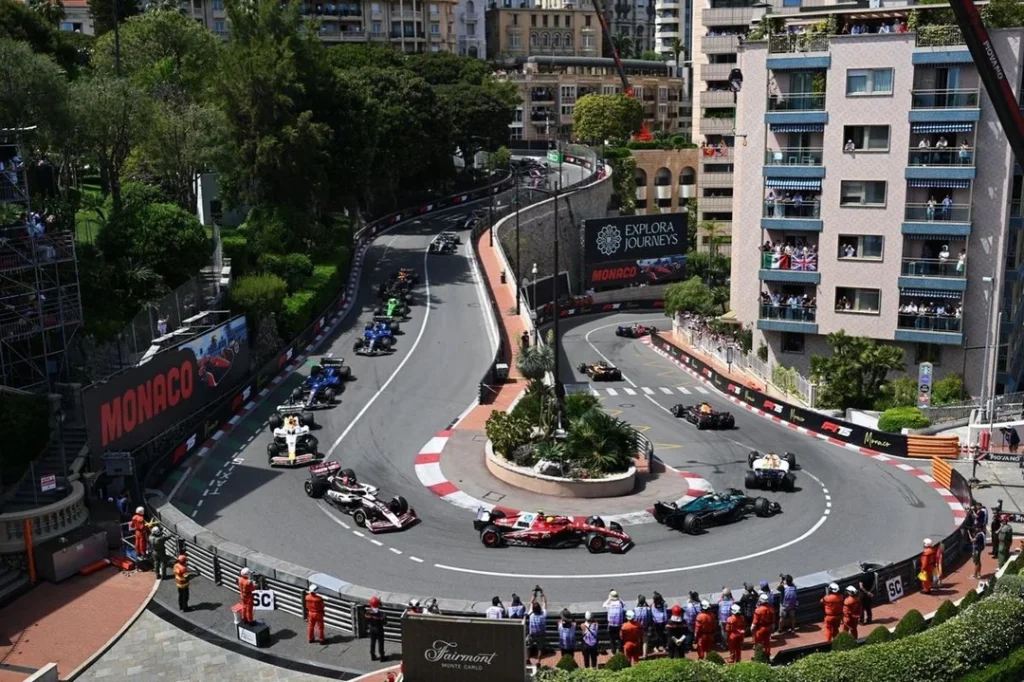
Elsewhere, F1 quietly confirmed that Monaco will revert to a standard one mandatory compound change for 2026, scrapping the two-stop experiment. Q3 expands from 12 to 13 minutes. Cooling vests remain optional, with ballast penalties of 2kg in qualifying and 5kg in races for drivers who opt out, ensuring no performance incentive pressures driver comfort decisions.
Monaco’s strategic debates continue. Some call for ultra-soft, high-degradation compounds to force variability. Others suggest mandatory multi-stop chaos. But the core issue remains traffic and overtaking limitations, something an extra Q3 minute may help marginally.
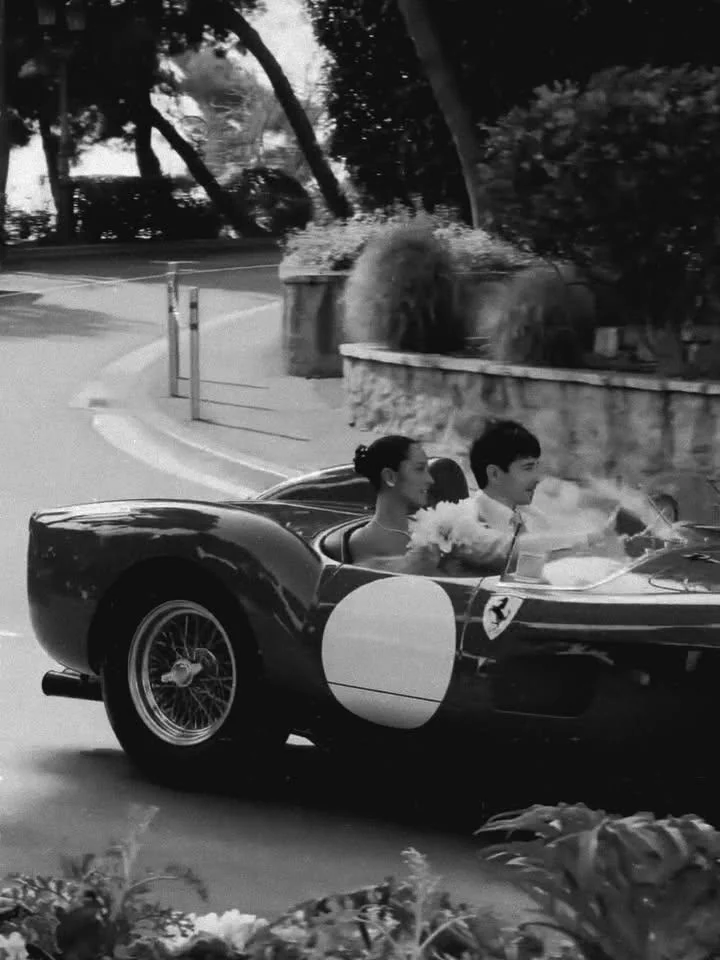
On the personal front, Charles Leclerc married Alex in spectacular fashion, departing in a Ferrari 250 Testa Rossa, a 1957/58 pontoon-fender model worth an estimated $30-40 million. Ferrari does not own 250 TRs outright; such a car would likely be loaned, potentially from a private collection closely linked with Ferrari Classiche.
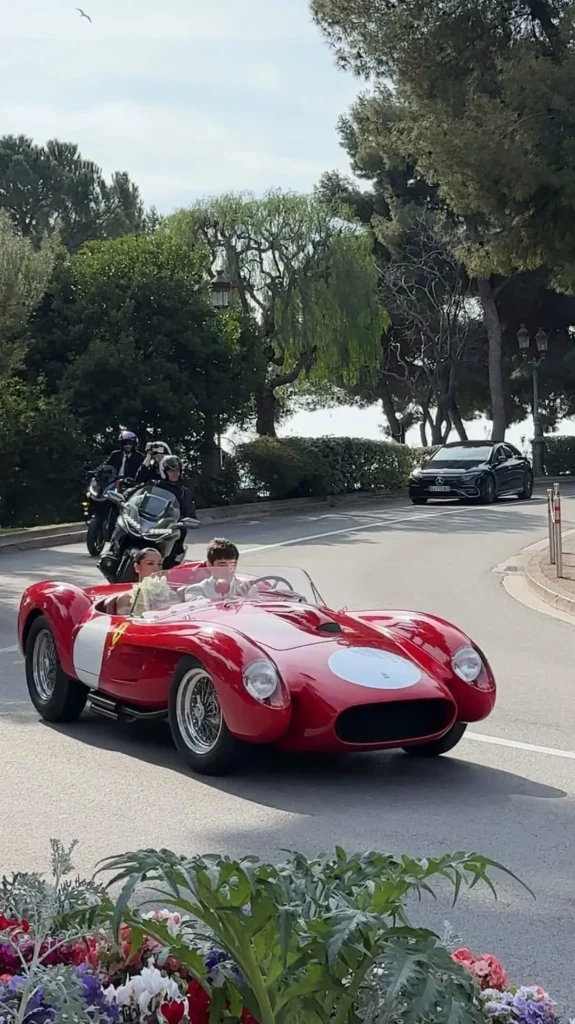
Hypercar ownership at that level often involves manufacturer-managed storage and logistics. Whether borrowed or privately sourced, the image of Leclerc driving a 250 TR from his wedding is already destined to age like a Steve McQueen photograph.
In contrast, Lando Norris finds himself navigating a different type of scrutiny. An article quoting his determination to prove himself again sparked outsized online reaction. The disproportionate volume of commentary relative to engagement highlights how polarizing presence alone can be. In a digital ecosystem that amplifies clickbait, even neutral positivity can trigger backlash.
Through all of this, missile headlines, regulatory cat-and-mouse, calendar reshuffles, wedding glamor, Formula 1 continues to operate at the intersection of spectacle, engineering brinkmanship, and real-world instability.
The next few weeks will test not just compression ratios and freight routes, but the sport’s decision-making under pressure.