

Formula 1 has not yet turned a racing lap in anger under the 2026 regulations, and yet the sport already feels like it’s standing at an inflection point.
Between Max Verstappen openly acknowledging he’s “closer to the end” of his Formula 1 career than the beginning, Ferrari experimenting with a reverse rear wing concept, Red Bull being accused of sandbagging, and the FIA quietly testing reduced electrical power behind the scenes, the conversation around F1 is shifting from hype to existential questions.
Let’s unpack what’s actually happening.
Verstappen and the “End” of an Era
When Max Verstappen suggested he doesn’t want to “live only to race” and prioritizes family and life beyond F1, the off-season machine went into overdrive.
Strip away the headline panic, and the reality is simpler: he’s been in F1 for 11 seasons. Statistically, he is closer to the end than the beginning. If he raced another 11 years, he’d be well into his 40s, something he has repeatedly said he doesn’t want.
What makes this different is context.
Unlike Sebastian Vettel, who left after a few uneven seasons, Verstappen remains widely regarded as the best driver on the grid in current form. On pure skill level, few see him falling off in the next five years. If he walked away in 2027 or 2028, he would likely still be a championship contender.
That’s what fuels the intrigue: imagine the current benchmark driver simply… leaving.
History tells us what comes next. Mika Häkkinen called his exit a “sabbatical.” Nico Rosberg shocked the world by retiring immediately after winning his title. Niki Lauda once quit because he was “tired of driving around in circles,” then came back. The off-season speculation machine would feast for a decade on “Will Max return?” narratives.
But the bigger theme here isn’t comeback speculation. It’s sustainability.
Rosberg admitted 2016 took everything out of him, extreme weight management, lifestyle sacrifices, even altering sleep patterns away from family. That title required total optimization of life. He exited at the peak because the cost was unsustainable.
Verstappen’s framing feels different. Less burnout. More recalibration. He’s openly interested in other categories, endurance racing, Nürburgring, Le Mans, even events like Bathurst. If the new regulations make F1 less enjoyable, the gravitational pull of “the pinnacle” may not be enough.
And that matters.
Because the 2026 regulations are already raising questions about whether this version of F1 will still feel like the sport drivers grew up dreaming about.
Ferrari’s Reverse Wing: Innovation or Risk?
Testing in Bahrain introduced one of the most talked-about technical ideas of the pre-season: Ferrari’s reverse rear wing concept.
Data indicates it generates positive lift, effectively lightening the rear by several kilograms. That shifts the aero platform, reduces drag, and increases straight-line speed.
It’s legal. The FIA approved it for 2026. This isn’t a DAS-style loophole that materialized overnight. Other teams reportedly looked at similar concepts but Ferrari pursued it.
The real debate isn’t legality, it’s reliability.
The mechanism must complete its rotation within a strict time window (400 milliseconds). Fail once, and you risk disqualification. In a race where it could activate 50-150 times, that’s not trivial.
Some argue it’s a manageable engineering problem, step motors and servos can operate with millisecond precision. Others point out that in F1, everything operates at extreme stress. Engines survive 11,000 RPM and combustion violence for hours. Why wouldn’t two “flippy bois” survive?
Then there’s the Ferrari caveat: optimism and heartbreak often coexist. Many fans openly admit they won’t celebrate anything until the final scrutineering document is signed.
But strategically, the concept could shine at high-speed tracks like Baku and Monza, where lower drag and deployment efficiency matter most.
And that’s where the 2026 power unit debate collides head-on with Ferrari’s philosophy.
2026 Engines: The Hybrid Ratio Problem
Behind the scenes, F1 is reportedly testing reductions in maximum electrical power, possibly cutting 15-30% of deployment to extend usable energy over the lap.
Why?
Because the 50/50 split between electric and internal combustion power may be too aggressive given the available recovery potential.
The removal of the MGU-H, which previously harvested up to 80% of recovered energy and eliminated turbo lag, fundamentally changed the equation. Without front axle regen (which was originally proposed but politically shelved), there simply isn’t enough energy recovery to sustain full electric deployment across a lap.
The result?
Drivers may need to lift in high-speed corners to preserve battery for straights. That’s the real concern, not lap time, but driving style. If drivers aren’t pushing through fast corners because energy management dictates restraint, then the spectacle changes.
Some insiders reportedly believe the regs were poorly conceived and politically compromised. A “three-legged table” balance. A compromise where “nobody got what they wanted.”
Front axle regen was discussed. Mercedes reportedly resisted, concerned about giving Audi an advantage due to WEC experience. Others proposed 60/40 splits earlier in development. Now, after testing, emergency Plan B discussions are happening.
Ironically, reducing electric power might extend boost duration (from ~11 seconds to ~14 seconds) and make overtakes more usable, even if peak power drops.
This is the tension at the heart of 2026:
Less peak, more usable?
Or Frankenstein cars?
Christian Horner once warned of the latter.
Sandbagging Season (As Usual)
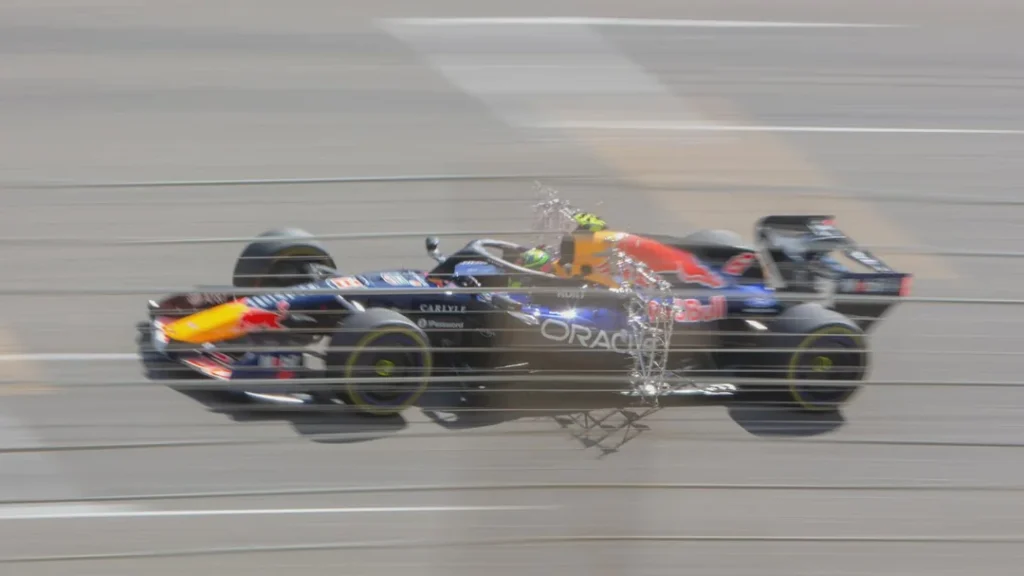
Meanwhile, Red Bull are “accused” of sandbagging.
But that’s preseason F1 tradition.
Every year, someone is hiding pace. Every year, someone else looks like a hero in testing only to be exposed in Q3 in Australia. Long-run pace tends to correlate more than single laps, but the hype cycle resets annually.
Ferrari often appear to run closer to full power in testing, whether for data, sponsors, or narrative stabilization, while others hold cards close.
As one cynical observation put it: accusing a team of sandbagging is like accusing a poker player of bluffing.
We won’t know real pace until qualifying in Melbourne.
We never do.
Slower Cars, Or Just Different Ones?
Comparison videos show 2026 testing laps roughly two tenths slower than 2022 preseason benchmarks (1:31.9 vs 1:31.7). That sounds dramatic until you remember 2022 was year nine of mature hybrid engines and four years of aero development.
At the start of a major regulation reset, being only 0.2s off is hardly catastrophic.
And lap time isn’t the disease. It’s the symptom.
The real debate is whether drivers can push to the edge, or if energy deployment maps and battery preservation reduce that knife-edge tension. Modern tech means the mechanical limit is often the driver’s body, not the car. But if strategy overrides commitment in high-speed sections, some fear we’ll see fewer mistakes and fewer moments of brilliance.
Others counter: F1 has often been a procession outside starts and pit stops. V10 nostalgia aside, overtaking was hardly abundant in the 90s either.
Ultimately, racing quality will define the verdict.
Not testing graphics.
The Business of F1: From $8m to $80m
While technical uncertainty swirls, commercially F1 has never been stronger.
Claire Williams noted the sport likely has enough money to support 15 teams, but won’t allow it.
Before the cost cap, teams like Mercedes and Ferrari reportedly spent close to $600m annually. Philip Morris allegedly paid Ferrari north of $100m per year at one stage, even during the “Mission Winnow” era where branding was deliberately abstract.
Today, title sponsorships can exceed $80m. Teams are worth over $1 billion. A decade ago, Force India sold for roughly $90m. Williams’ Rokit saga underlines how precarious finances once were.
The Concorde Agreement caps teams at 12 (24 cars), though FIA Grade 1 certification requires circuits to accommodate up to 13 teams (26 cars). Logistically, 30-car grids would require qualifying cutoffs, financially unrealistic for modern entrants.
Expansion isn’t technical. It’s political and commercial.
Silverstone Dreams and Generational Shift
There’s something poetic about Lando Norris openly backing Lewis Hamilton to fight for wins again.
We’re now at the point where current drivers grew up watching Hamilton win titles. Arvid Lindblad was barely a year old when Lewis won his first championship. Hadjar reportedly described sharing a track with him as the coolest part of his debut.
Silverstone 2024 was described as magical. Emotional. Unexpected.
There’s a generational shift underway, and yet Hamilton remains central to the narrative. Ferrari red at Silverstone. Monza redemption. It’s cinematic.
And cinema sells.
Progress, PR, and Perception
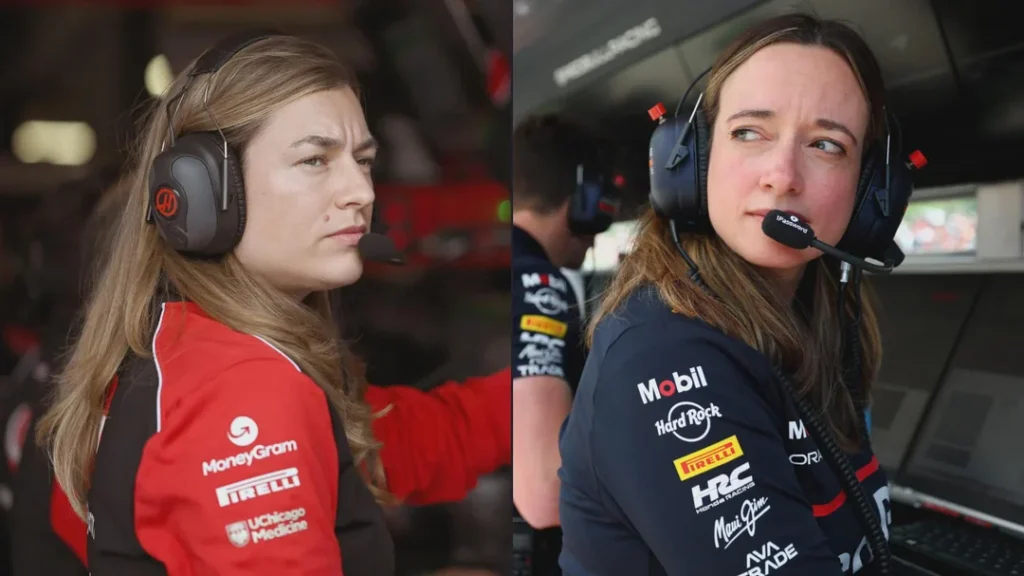
At the Australian Grand Prix, Laura Mueller and Hannah Schmitz became the first women to have a corner named after them at the event as part of an initiative aimed at inspiring future engineers.
Some applauded. Others questioned whether recognition should come solely on long-term merit. Comparisons were drawn to figures like Sabine Schmitz, Monisha Kaltenborn, Susie Wolff, and others.
The tension reflects a broader F1 reality: commercial optics, representation, and genuine achievement intersect constantly.
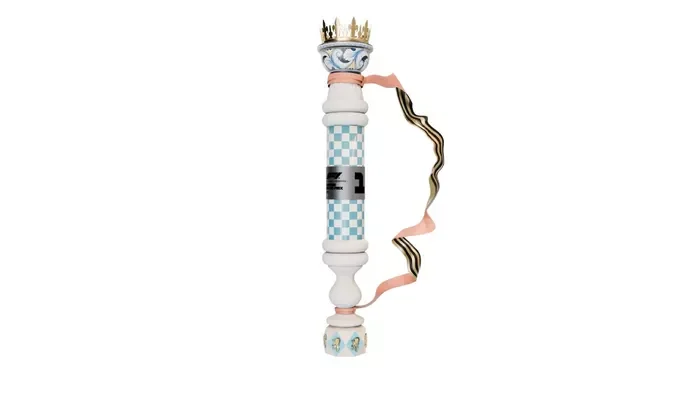
Similarly, the Spanish GP trophy finalists sparked ridicule and memes, lightsabers, broken exhaust pipes, corporate churros. F1’s aesthetic choices rarely escape internet scrutiny.
And then there are the human moments.

Carlos Sainz finally meeting Thea, the fan who inspired the unicorn sticker, was universally celebrated. A small gesture, but emblematic of something F1 does well: personal connection. James Vowles’ earnest interaction. Alex Albon’s goofy-classy vibe. Those moments matter.
Because amidst political engine debates and hybrid ratios, the sport still runs on people.
So Where Is F1 Heading?
2026 was meant to represent a cleaner, lighter, more agile Formula 1.
Instead, we have:
- Hybrid ratio uncertainty
- Emergency electric power testing
- Political accusations around front regen
- Ferrari gambling on unconventional aero
- Verstappen openly contemplating life beyond F1
And yet, commercially, F1 is booming.
The sport has never been wealthier.
It may never have been more politically complex.
And competitively, it might be entering its most volatile reset in a decade.
The real answer won’t come from preseason testing, engine whiteboards, or trophy mockups.
It will come when the lights go out.
And when we find out whether the drivers are still allowed to race at the edge, or if the edge has been engineered away.