

The early phase of the 2026 Formula 1 season is already exposing a fundamental tension at the heart of the new regulations: while the cars may be closer in theory, the way they achieve lap time is reshaping both competition and perception across the grid.
From evolving qualifying dynamics to technical gambles and shifting leadership structures, the paddock is grappling with a version of F1 that feels markedly different—sometimes in ways that are difficult to ignore.
A Slower Kind of Speed: How the New Cars Are Changing Qualifying
Alex Albon’s blunt assessment captures a growing sentiment: the high-speed edge of Formula 1 has been dulled. With cars arriving into corners more slowly, what were once defining high-speed sections now behave more like medium-speed compromises.
The downstream effect is clear—driver differentiation is becoming harder to spot. When corners are no longer taken at the limit of bravery and precision, the margins between teammates compress. The idea that raw skill is being masked by the current technical framework is gaining traction.
There’s also a sense that qualifying is becoming less about outright driving excellence and more about execution within tightly defined constraints—particularly energy deployment. The emerging belief is that drivers are converging toward an “optimal” way to extract performance, rather than pushing beyond it.
At the extreme end of that thinking, the concern is that racing could drift toward efficiency over instinct—where following another car for slipstream, saving tyres, and managing energy becomes more valuable than fighting on track.
Even among differing viewpoints—whether lap time is made in corners or on straights—the broader takeaway is consistent: something about the balance feels off. The spectacle of drivers attacking high-speed corners appears diminished, and with it, a key visual signature of Formula 1.
Regulations Under Fire: Aero Gains vs Power Unit Limitations
If the cars can follow more closely, why does the racing still feel constrained?
A recurring explanation centers on the disconnect between aerodynamic improvements and power unit limitations. While the aero package appears to allow closer racing, the hybrid systems are forcing drivers into lift-and-coast phases—even during qualifying laps.
The result is a form of “yo-yo racing,” where bursts of performance are dictated not by driver intent, but by battery state. Instead of continuous attack, drivers cycle between deployment and recovery, disrupting rhythm and reducing opportunities for sustained battles.
There’s also a growing perception that teams are compromising cornering performance in favor of straight-line efficiency, further reinforcing the idea that these cars are not being pushed to their full aerodynamic potential.
Critically, attempts to tweak deployment—such as adjusting energy limits for qualifying—are being viewed with skepticism. These changes appear incremental rather than transformative, and in some cases, simply part of normal track-by-track adjustments rather than meaningful intervention.
The broader critique is becoming sharper: the aerodynamic rules may be an improvement, but they are being undermined by power unit constraints that dictate how the cars can actually be driven.
The Compression Illusion: Are Teammates Really Closer?
One of the early narratives of the season has been that teammates appear unusually close in qualifying. At face value, this supports the idea that driver differences are being minimized.
But there’s a counter-argument gaining traction: the grid is actually spreading out between teams, not compressing within them.
In this view, teammates look closer simply because the performance gaps between different teams are larger. A small intra-team delta is no longer enough for another team to slot in between, creating the illusion of tighter competition.
At the front, this dynamic is particularly visible.
Mercedes vs Ferrari: The Gap That Won’t Go Away
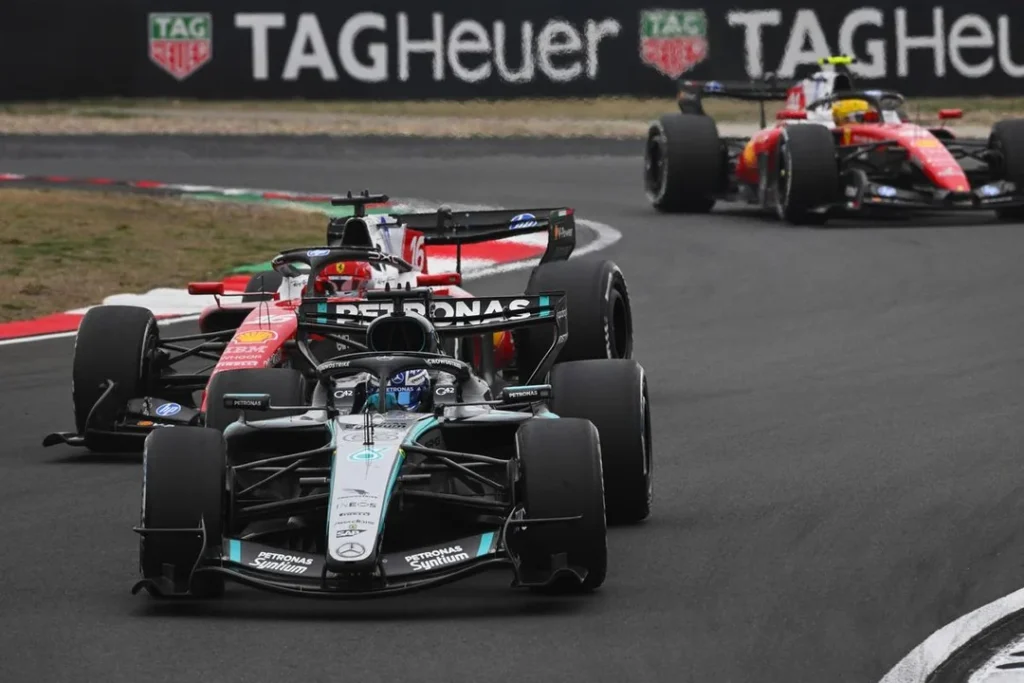
Despite occasional flashes—particularly strong starts—Ferrari’s perceived proximity to Mercedes is increasingly being framed as misleading.
The pattern is familiar: Ferrari can challenge early in races, but over longer stints, Mercedes consistently pulls away, often without appearing to push to the limit. Safety cars and opening-lap dynamics have helped mask this gap, but only temporarily.
There’s a sense that the true competitive order hasn’t changed as much as some narratives suggest. In fact, the expectation is that as the season progresses, Mercedes’ underlying advantage will become even more apparent.
Ferrari’s early-race strength is acknowledged, but it’s being framed as a narrow window—one that closes quickly once race pace stabilizes.
Aston Martin’s AMR26: Engineering Brilliance or Fundamental Flaw?
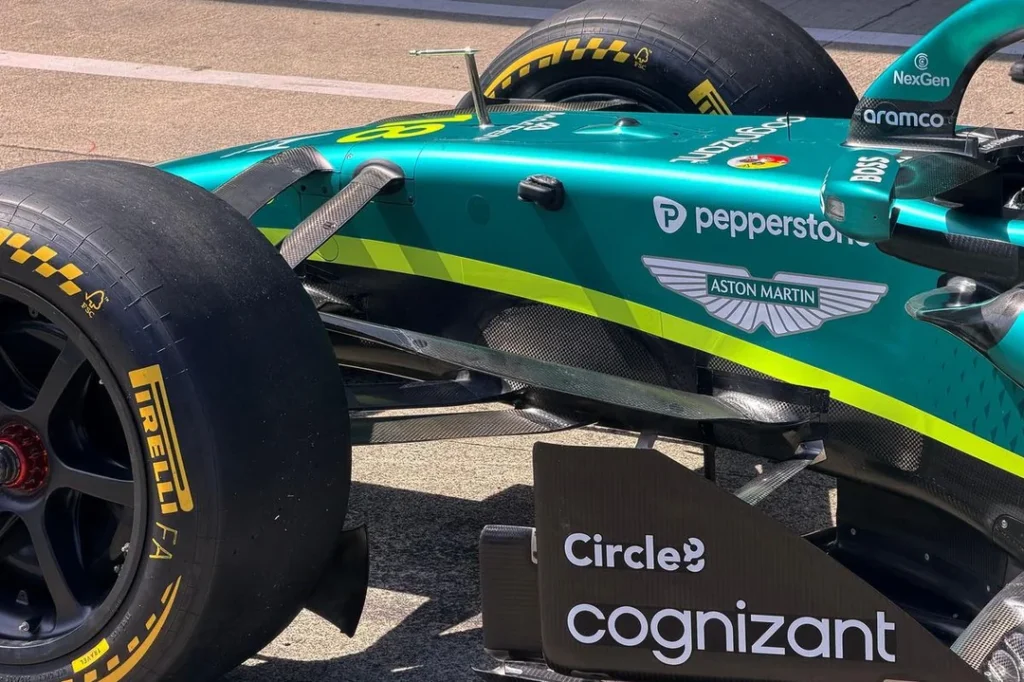
Few cars embody the contradictions of this season more than the Aston Martin AMR26.
On paper—and certainly on inspection—it is one of the most radical designs on the grid. Its aggressive sidepod shaping, extreme downwash philosophy, and unconventional suspension architecture signal a willingness to push boundaries.
The front suspension, in particular, stands out. By abandoning traditional wishbone geometry and rethinking the spatial arrangement of its components, Aston Martin has created something that challenges conventional F1 design principles.
But innovation without execution is proving costly.
The car has been plagued by severe vibrations—issues that were reportedly not evident in dyno testing but emerged once the power unit was integrated into the full chassis. This disconnect between development environment and real-world performance has raised questions about correlation and system-level integration.
There’s a growing suspicion that the problem lies not in isolated components, but in how they interact—engine mounting, gearbox, and chassis behaving differently as a complete system than they do in controlled testing.
The reaction is split.
On one hand, there is appreciation for the ambition. Radical designs have historically failed before eventually influencing future trends, and the AMR26 could fall into that category.
On the other hand, there’s a blunt reality: a car that cannot finish races undermines any theoretical brilliance. The idea of a “potential car” is gaining traction—one that looks extraordinary but delivers little on track.
Even internal adjustments—such as visible modifications to suspension mounting points—suggest that Aston Martin is already in reactive mode, attempting to solve problems that are deeply embedded in the car’s architecture.
Honda’s Vibration Issue: A Symptom of Integration Complexity
The AMR26’s struggles are closely tied to broader concerns around Honda’s power unit behavior.
While vibrations were deemed acceptable in dyno conditions, real-world performance has told a different story. The key distinction appears to be installation—how the engine interacts with the chassis and gearbox under load.
This highlights a recurring challenge in modern F1: components cannot be evaluated in isolation. A power unit that behaves predictably in testing can produce entirely different dynamics once integrated into a full car.
The situation has fueled skepticism around development processes, with some framing it as a classic case of “it worked in development” failing to translate into race conditions.
It also underscores a more uncomfortable truth: responsibility is shared. Blaming a supplier or a chassis team in isolation oversimplifies a problem that is fundamentally systemic.
McLaren’s Internal Strength: Piastri’s Growth and Team Cohesion
Amid the technical uncertainty, McLaren is finding strength in something less tangible—driver mentality.
Oscar Piastri’s response to a difficult start has drawn significant praise internally. Rather than unravel under pressure, he has demonstrated resilience and composure, turning adversity into a source of motivation for the team.
This psychological stability is being framed as a competitive asset. A driver who can absorb setbacks without emotional volatility contributes to a more focused and unified team environment.
There’s also a sense that McLaren’s driver pairing is evolving. Increased collaboration between Piastri and Lando Norris suggests a shift toward a more cohesive internal dynamic—one that could pay dividends over a long season.
Piastri’s approach, in particular, is being characterized by an ability to move on quickly from setbacks—treating incidents as closed chapters rather than lingering frustrations. In a season where variables are difficult to control, that mindset may prove critical.
Human Moments: Alonso’s New Chapter
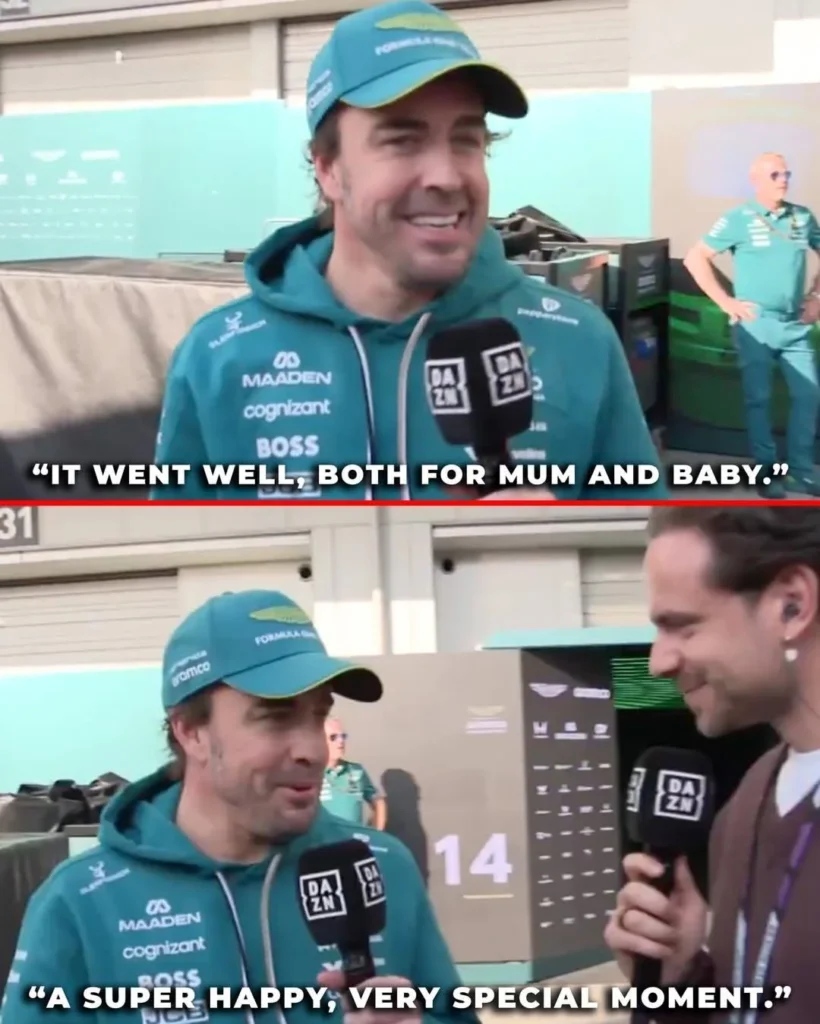
Away from the technical debates, one of the most universally positive stories comes from Fernando Alonso, who has become a father for the first time.
His own description—“a super happy, very special moment”—is reinforced by the visible joy he’s carrying. The reaction is immediate and widespread: a sense that his happiness is contagious, that this is a different kind of milestone in a career defined by intensity.
There’s also an undercurrent of curiosity about what comes next. The idea of a future where Alonso could one day share the track with his child is being treated with a mix of humor and fascination, but it speaks to something deeper—the longevity and evolving identity of drivers in modern F1.
Leadership Uncertainty: Aston Martin and Audi in Flux
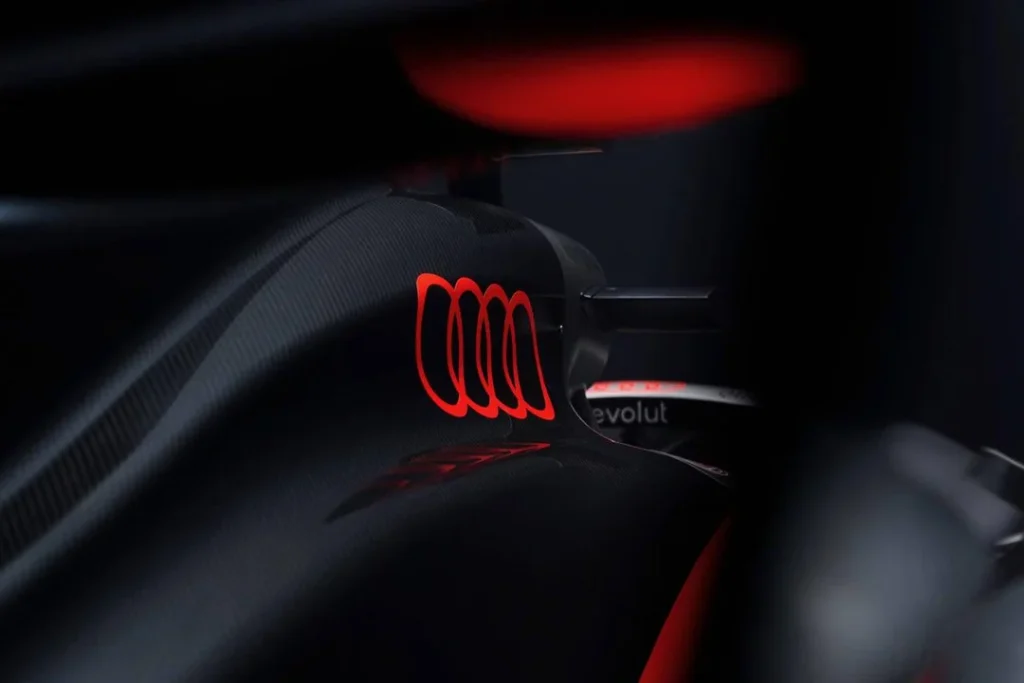
Off-track, leadership dynamics are adding another layer of intrigue.
Aston Martin has firmly dismissed speculation around potential changes, reiterating its commitment to its current structure and leadership. The message is clear: stability, at least publicly, remains the priority.
Audi, however, presents a contrasting picture.
The departure of its team principal after less than a year has left a vacuum—and a series of unanswered questions. With no immediate clarity on succession or direction, the project’s trajectory is uncertain.
Speculation is inevitable. Whether it’s internal restructuring, external hires, or contractual complexities like gardening leave, the lack of transparency is fueling debate rather than resolving it.
What is clear is that Audi’s long-term ambitions remain intact. The challenge now is aligning leadership with those ambitions in a way that avoids further disruption.
A Season Defined by Contradictions
The early 2026 season is not lacking in intrigue—but it is defined by contradictions.
- Cars that can follow more closely, yet struggle to race consistently
- Designs that are revolutionary, yet unreliable
- Drivers who appear closer, yet teams that may be further apart
- Regulations that promise improvement, yet introduce new limitations
The question is not whether Formula 1 has changed—it clearly has.
The real question is whether these changes are moving the sport forward, or simply shifting its challenges into a different form.
For now, the grid is adapting. But beneath the surface, the sense remains that something more fundamental may still need to evolve.