

The opening race of Formula 1’s new regulatory era delivered one thing above all else: chaos.
With the 2026 cars debuting in competitive conditions for the first time, the Australian Grand Prix produced frantic overtakes, unusual strategic dynamics, and a race that felt radically different from what fans have grown accustomed to in the hybrid era.
Drivers themselves acknowledged the unfamiliar nature of the racing. Speaking after the race, Lando Norris described the experience simply as “chaos,” warning that the closing speeds created by energy deployment differences could lead to major accidents if drivers misjudge their moves. Esteban Ocon echoed the sentiment, describing overtaking as “painful” due to the constant cycle of deploying energy to attack and then immediately needing to recharge, while Sergio Perez went even further, saying the new style of racing “is not the F1 I knew.”
From a viewer perspective, however, the reaction was far more divided.
The “Mario Kart” Effect
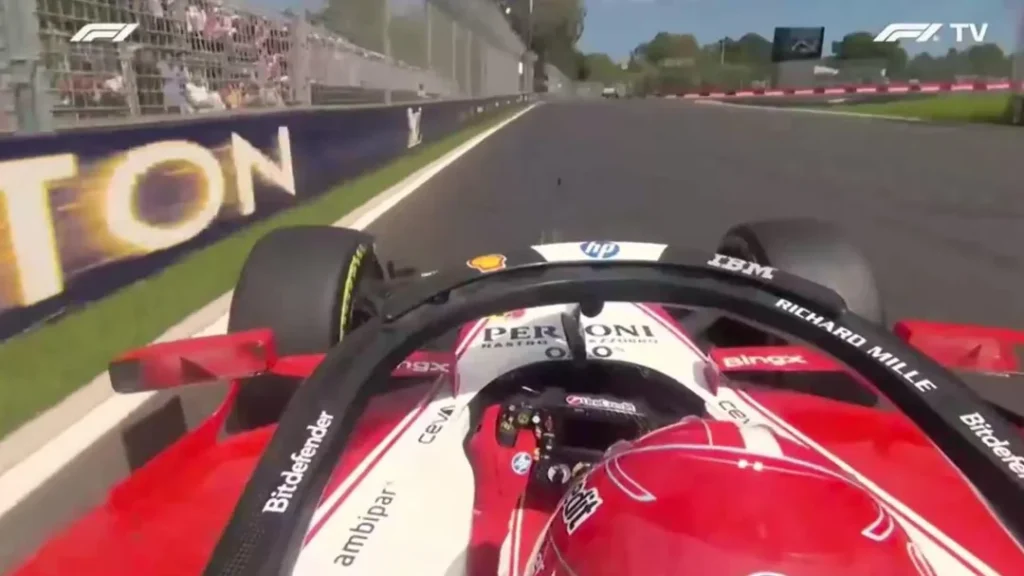
The most immediate takeaway from Melbourne was how dramatically the new energy deployment system changes the rhythm of overtaking.
Drivers now experience massive swings in speed depending on whether their battery is deploying or harvesting. This created a pattern where cars could attack aggressively for one sector, only to be vulnerable moments later as they entered a recharge phase.
The effect was particularly visible in the opening laps of the race, where position changes happened repeatedly between the same drivers.
From an analytical standpoint, the dynamic resembled a game of tactical energy timing rather than traditional racecraft. Drivers who deployed energy to complete an overtake often found themselves immediately exposed to a counterattack on the next straight once their battery reserves dropped.
The phenomenon prompted comparisons to video game mechanics, particularly Mario Kart, where boosts, timing, and sudden swings in momentum define the action.
Ferrari’s lightning-fast starts effectively functioned as the equivalent of a “starting boost,” while several drivers appeared to surge past rivals with dramatic speed advantages when deploying energy. At times, the racing felt less like gradual pressure building toward an overtake and more like momentary bursts of speed allowing drivers to breeze past rivals.
At the same time, the system also introduced an additional strategic layer. With every driver operating under the same energy limits, overtakes became less about raw speed and more about predicting when a rival would deploy or recharge.
In theory, the new system rewards anticipation and racecraft. In practice, Melbourne suggested that the racing may eventually settle into predictable energy cycles once teams and drivers fully understand the optimal deployment patterns.
Chaos Early, Stalemate Late
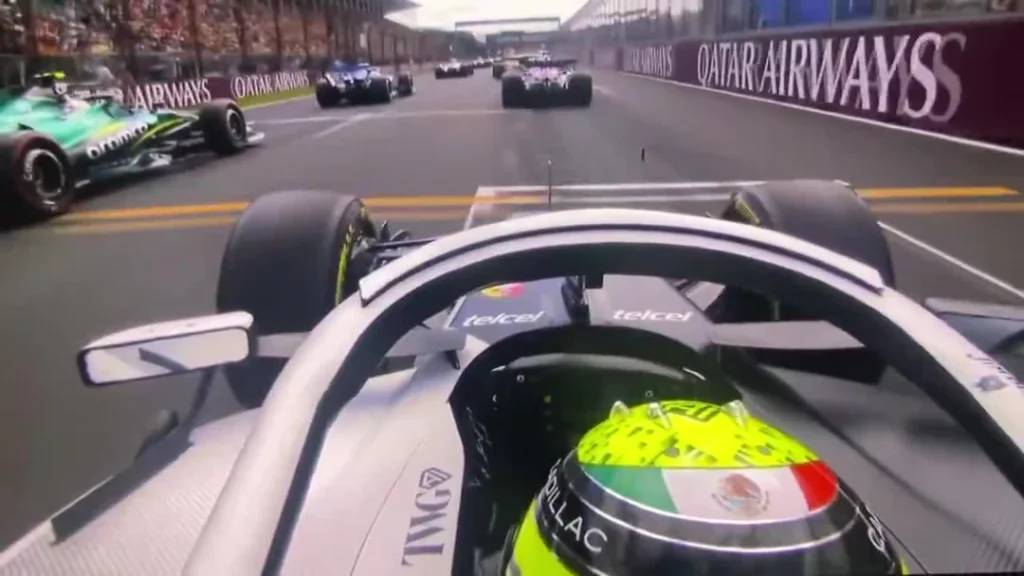
The contrast between the opening phase of the race and its closing stages illustrated this perfectly.
Early on, drivers traded positions frequently as teams experimented with energy deployment strategies and struggled to balance attack and defense.
But by the second half of the race, many of those battles disappeared. Drivers running similar pace and energy strategies became locked into stalemates, unable to find meaningful advantages.
This was particularly evident in several midfield fights where drivers followed each other closely for multiple laps without a realistic overtaking opportunity.
Once two drivers matched each other’s energy deployment patterns, the opportunity to attack essentially vanished.
The result was a race that started with unpredictable action but gradually settled into a more familiar strategic rhythm.
That dynamic may become the defining characteristic of the new regulations: chaotic openings followed by calculated energy management once teams converge on optimal strategies.
Piastri’s Pre-Race Crash Highlights New Challenges
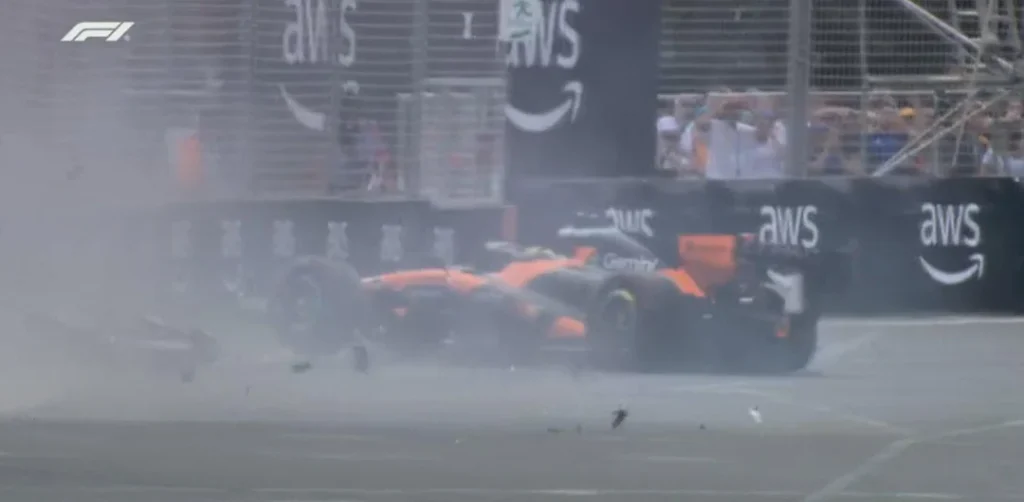
One of the weekend’s most surprising incidents came before the race had even started.
Oscar Piastri crashed on his lap to the grid after experiencing a sudden loss of control exiting Turn 4.
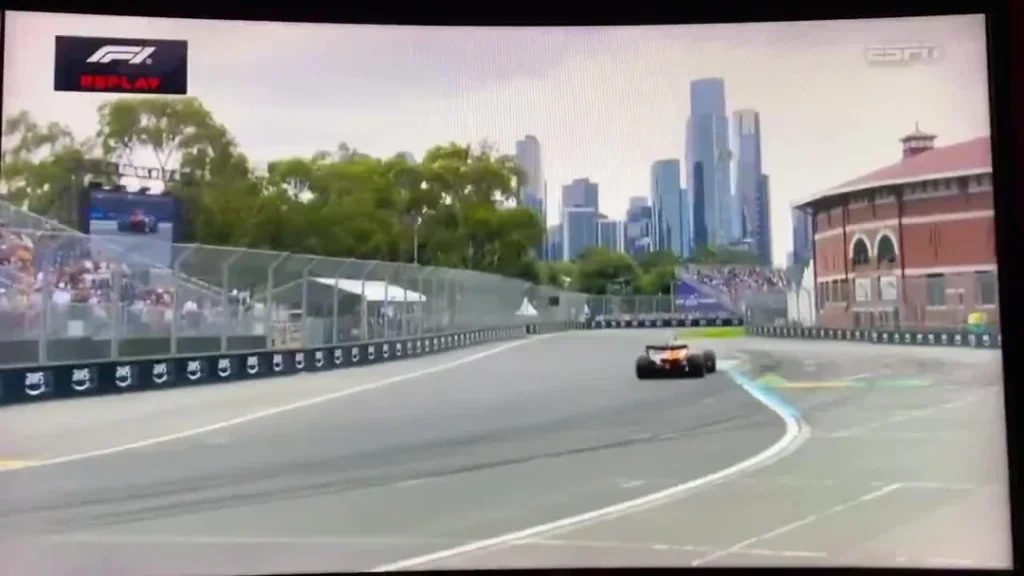
The McLaren driver later explained that the car “snapped so fast” that he was “backwards before I’d even really had a chance to react.” While acknowledging that cold tyres and aggressive kerb usage played a role, Piastri also revealed that he encountered roughly 100 kilowatts more power than expected from the engine.
“It would almost be easier if it was just cold tyres and me being a bit too greedy,” Piastri said, emphasizing that the power surge made the incident particularly frustrating.
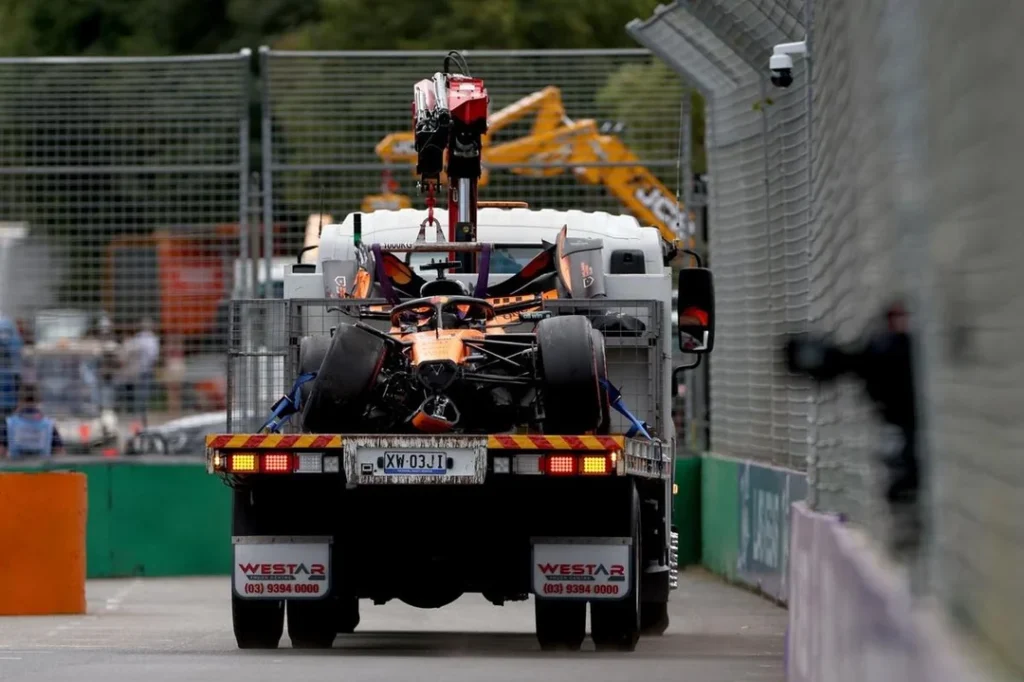
The explanation raised important questions about how predictable the new power units are in real-world conditions.
Drivers must now manage complex energy systems while navigating corners at over 300 km/h, meaning even small miscalculations in deployment timing can produce dramatic consequences.
Piastri’s crash served as an early example of how steep the learning curve may be for the entire grid.
Mercedes Pace Raises Eyebrows
Another major talking point from the race centered on Mercedes’ apparent pace advantage.
While the Silver Arrows looked competitive but not dominant in qualifying, their race performance suggested that they had significantly more performance in reserve once running in clear air.
After taking the lead, the Mercedes drivers appeared to control the race rather than extend their advantage aggressively.
This raised speculation that the team may have been deliberately managing their pace rather than showcasing the full performance of the car.
Historically, dominant teams have occasionally chosen to minimize visible performance advantages early in new regulation cycles to avoid triggering regulatory scrutiny.
However, the more straightforward explanation may simply be tire management.
With long stints on hard compounds and minimal degradation, pushing harder than necessary would have offered little strategic benefit while increasing the risk of punctures or mechanical stress.
Regardless of the reason, Mercedes left Melbourne looking like the benchmark team in race trim.
Lindblad Impresses in His Debut
Amid the chaos, one of the weekend’s most universally praised performances came from rookie Arvid Lindblad.
At 18 years and seven months old, Lindblad became the third-youngest points scorer in Formula 1 history, joining Max Verstappen and Kimi Antonelli in the record books.
More impressive than the statistic itself was the maturity of his performance.
Lindblad demonstrated strong racecraft in several wheel-to-wheel battles, defending assertively without crossing the line into reckless driving. For a driver making his Formula 1 debut under brand new regulations, the composure he showed was notable.
His success also reignited discussion about Red Bull’s aggressive approach to driver development.
The organization’s willingness to promote young drivers quickly, supported by its ability to place them in affiliated teams, continues to produce results, even if it remains a controversial strategy within the sport.
Colapinto’s Eventful Race
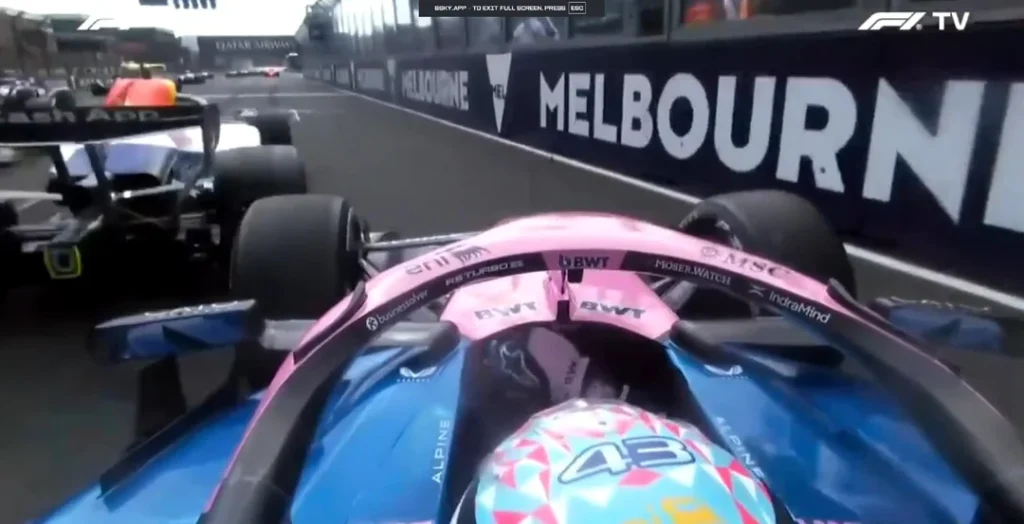
Few drivers experienced as much drama in Melbourne as Franco Colapinto.
At the start, he narrowly avoided a major collision with Liam Lawson when a slowing car ahead forced him to react at the last possible moment. Onboard footage later revealed just how close the incident came to ending both drivers’ races within seconds of the lights going out.
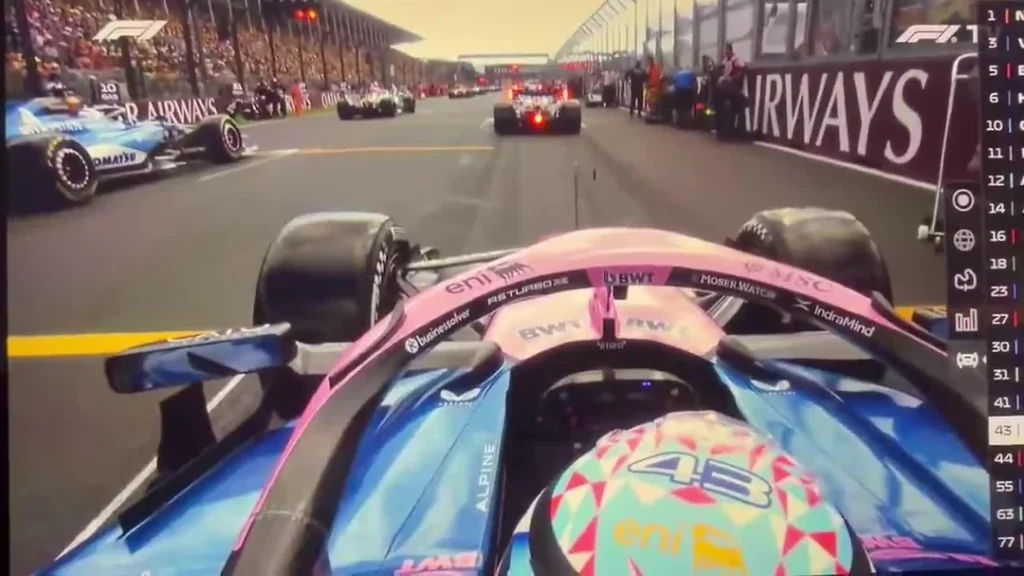
The Argentine’s reflexes prevented what could easily have been the first safety car of the season.
Unfortunately for Colapinto, the rest of his race proved equally chaotic.
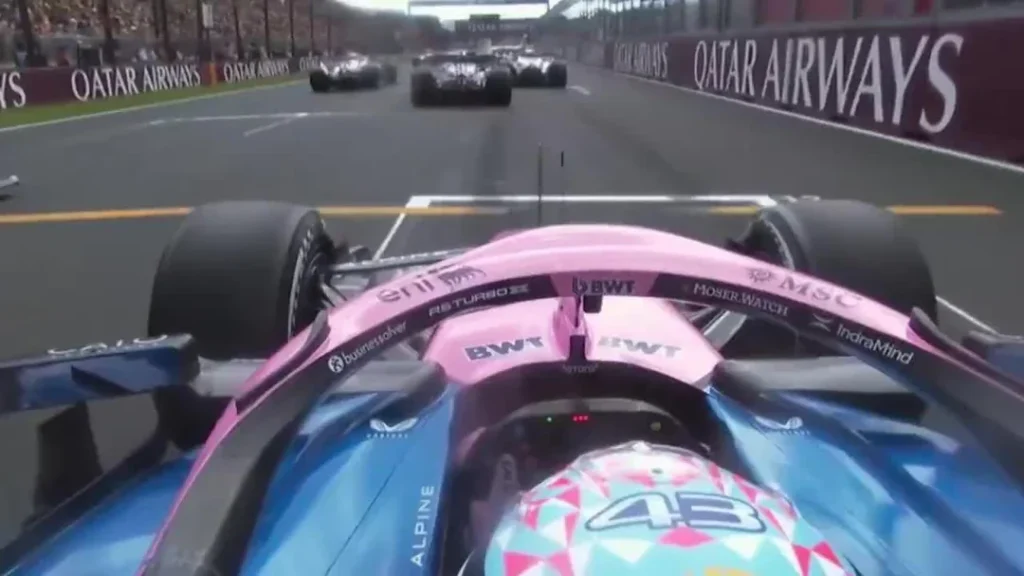
He later received a stop-and-go penalty after stewards determined that team personnel were still touching his car on the grid after the fifteen-second signal had been shown.
The FIA confirmed the violation in their official ruling:
“The Stewards reviewed video, timing, and in-car video evidence and determined that team personnel were touching Car 43 on the grid after the fifteen second signal had been shown and the car failed to start the Race from the Pit Lane in breach of Article B5.5.5 a) i) of the FIA F1 Regulations. A mandatory Stop-and-Go Penalty is prescribed for such a breach.”
The moment also produced one of the race’s most memorable broadcast mistakes when the on-screen graphic briefly labeled the penalty as a “Colapinto-and-go.”
Aston Martin Begins With Damage Control
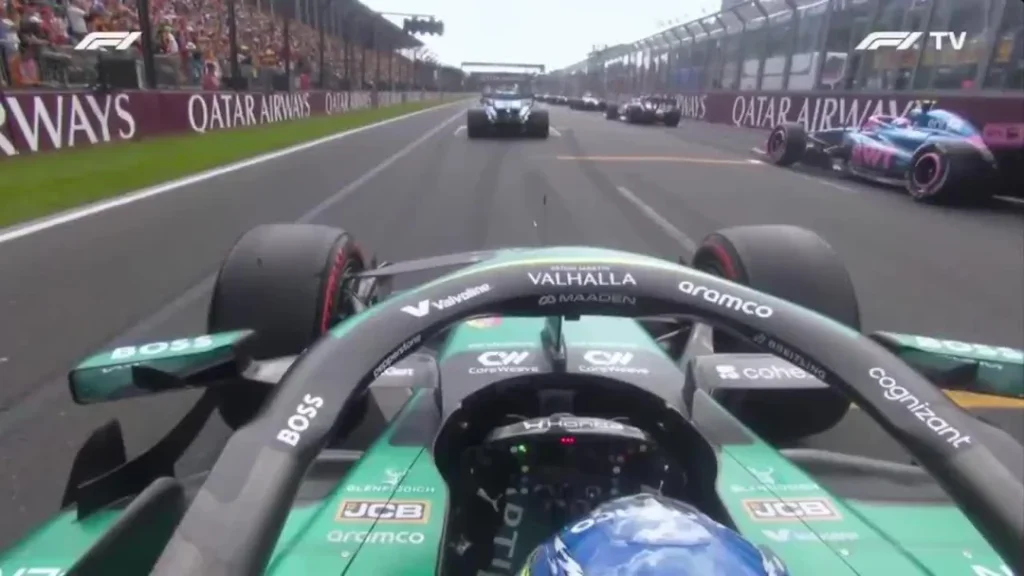
While the spotlight focused on the race leaders, Aston Martin quietly endured a difficult opening weekend.
Team technical director Adrian Newey acknowledged that the race primarily served as a data-gathering exercise for the AMR26.
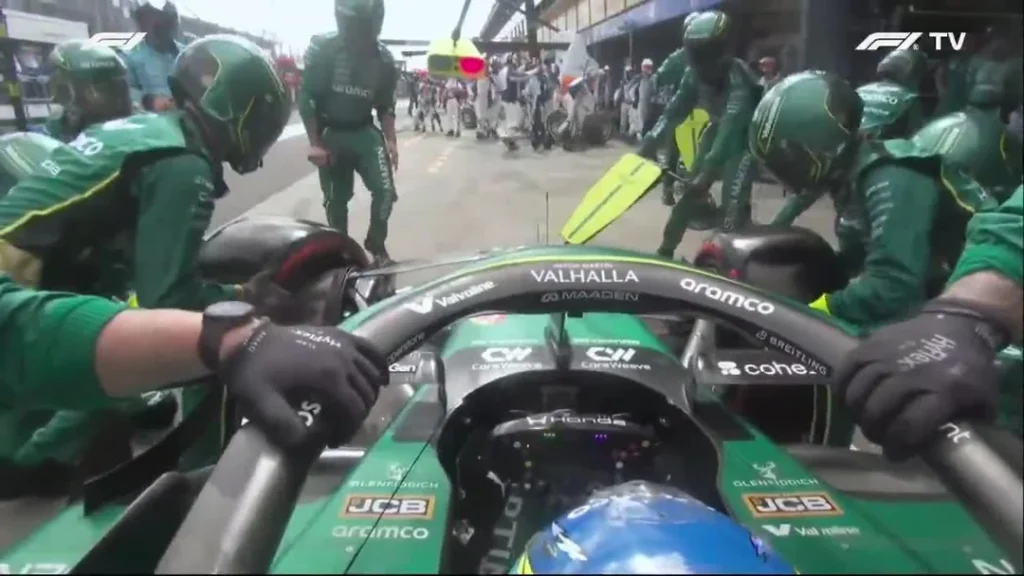
“Today was primarily an opportunity to learn more about the AMR26,” Newey said after the race. “Both cars took the start and, when it became clear we could not compete for points, we chose to pit and check the cars over. The team then asked Fernando to retire the car to preserve components.”
Despite the disappointing result, Fernando Alonso’s start offered a brief highlight as the veteran surged forward several positions in the opening laps before the car’s limitations became clear.
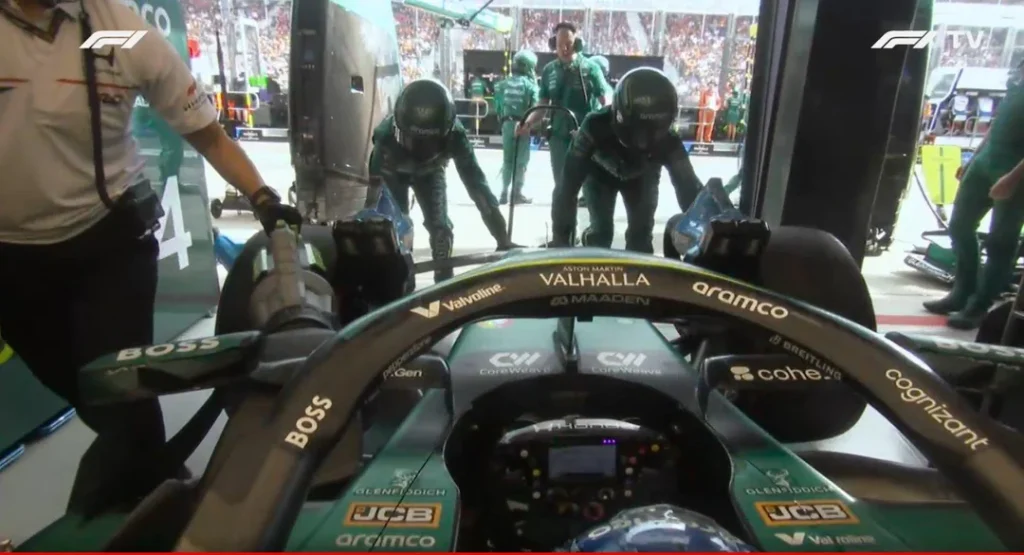
For a team that entered the season with ambitious expectations, beginning the year with what effectively amounted to a test session was far from ideal.
A New Era Still Finding Its Identity
The 2026 Australian Grand Prix ultimately felt like the first chapter of a story still being written.
The new regulations have clearly introduced new variables into the racing, particularly around energy deployment, but whether those variables improve the spectacle remains an open question.
Early laps delivered dramatic action and constant overtakes. Later stages revealed the possibility that optimal strategies may eventually reduce that unpredictability.
For now, the sport stands in a transitional moment.
Teams are still learning the cars, drivers are still adjusting to the new systems, and the competitive balance remains uncertain.
What Melbourne proved is that the new era of Formula 1 will not look like the one that came before it.
Whether that proves to be a step forward, or simply a different set of challenges, will become clearer in the races ahead.