

Formula 1 returns on August 23, and judging by the state of the conversation during the final stretch of summer break, that return probably can’t come soon enough.
In the absence of racing, fans have spent their time debating everything from Cadillac’s American ambitions and the financial questions surrounding its ownership to whether COTA is destroying an apparently beloved skyline that nobody seemed to realize was beloved until somebody decided to build something there. Meanwhile, IndyCar accidentally created what might be the best worst hairpin in motorsport, Formula E crowned Pascal Wehrlein after an extraordinarily messy finale, Nigel Mansell’s moustache received a long-overdue aerodynamic analysis, and F1 itself managed to turn five starting lights into a marketing campaign that confused the exact people who already know what five starting lights mean.
Summer break remains undefeated.
Cadillac Has Two Very Different Questions Hanging Over It
Cadillac generated two separate conversations this week, and together they raise a much bigger question about what building a genuinely American Formula 1 team is actually going to mean.
The first is a rumor that Cadillac’s UK employees are being required to relocate to the United States or leave the team. The immediate problem with that claim is that it doesn’t align particularly neatly with comments attributed to Dan Towriss during a recent media session. Towriss described Cadillac as entering a more US-centric phase after initially concentrating recruitment in the UK because that’s where much of Formula 1’s existing talent is located.
But importantly, he reportedly characterized that expansion as “not by moving people”, instead describing an organization that would continue growing in other locations while drawing on American expertise in areas such as aerospace and integrating more of GM’s available resources.
So we’re treating the relocation claim for exactly what it currently is: a rumor. The underlying debate it created, however, is interesting regardless of whether the specific claim proves accurate. Cadillac wants to be an American F1 team.
How American can it realistically become without creating a competitive disadvantage?
Formula 1’s Talent Pool Isn’t Distributed Evenly Around the World
There certainly isn’t a shortage of talented American engineers.
That’s not really the issue. Formula 1 is an unusually specialized industry, and a huge amount of its experienced workforce is concentrated in the UK. That makes establishing a major technical operation elsewhere a fundamentally different challenge from simply finding qualified engineers. The concern is that Cadillac could force itself to choose between its identity and its talent pool.
Being based around Indianapolis gives the team access to an established American motorsport ecosystem, but IndyCar and other forms of racing already compete for talent in that area. Recruiting someone already embedded in Britain’s F1 industry and asking them to relocate across the Atlantic is another proposition entirely. Formula 1 history even provides an interesting example from the least British team imaginable. Ferrari twice established technical operations in England around John Barnard, who was unwilling to relocate to Italy. Whatever anyone thinks about how those arrangements ultimately worked, the broader lesson remains fascinating: even Ferrari has, at points, accommodated Britain’s concentration of Formula 1 expertise when pursuing personnel it wanted.
That doesn’t mean Cadillac can’t create something different. In fact, doing so could eventually become one of its greatest strengths. A genuinely American technical pipeline drawing from industries like aerospace and GM’s wider engineering operation could introduce expertise that isn’t simply recycled through the existing F1 ecosystem.
But there’s a difference between expanding the talent pool and voluntarily cutting yourself off from the deepest existing one. That’s why Cadillac’s eventual balance between its UK and US operations could become one of the most interesting experiments on the grid. And if it works, everyone will call it visionary.
If it doesn’t, expect approximately 7,000 headlines explaining why building an American team in America was obviously doomed from the beginning. At least the United States can offer one undeniable technical advantage.
Feet and inches.
The More Complicated Cadillac Story Is About TWG
There is another Cadillac conversation that potentially carries much larger implications, although the information shared around it is considerably more complicated and needs to be treated carefully.
Questions are being raised about TWG and Mark Walter following reports of financial and legal scrutiny involving businesses within Walter’s wider empire. According to the information circulating around the discussion, insurance companies owned by TWG allegedly made significant loans to affiliated companies elsewhere under the TWG umbrella. The concern centers on the exposure of insurance businesses to related investments and whether those relationships were properly disclosed. Walter has also reportedly sold his interest in the Los Angeles Lakers, with the discussion suggesting the move is connected to efforts to raise capital as TWG restructures and unwinds some affiliated investments.
The important distinction for F1 is that none of the material presented here says Cadillac F1 itself has been accused of wrongdoing. It hasn’t. That makes speculation about the team’s future just that: speculation. But given TWG’s involvement with Cadillac, it is reasonable to wonder whether financial problems elsewhere in the ownership structure could eventually affect the F1 operation.
And that’s where the discussion has become almost as much about Formula 1 journalism as Cadillac itself.
Why Isn’t F1 Talking About It?
One argument is simply that this is an extraordinarily complicated financial story.
Sports reporters aren’t necessarily insurance-law specialists, and responsible coverage would require understanding interconnected corporate structures, loans, regulatory requirements and potential legal exposure before trying to explain what any of it means for an F1 team. That’s a fair defense. There is a huge difference between reporting that businesses connected to Cadillac’s ownership are under scrutiny and declaring that Cadillac’s F1 project is suddenly in danger.
The latter isn’t supported by the information we have. There is also a scale issue. Walter’s other sports interests include properties considerably larger and more established than a new Formula 1 team, making it unsurprising that financial and general sports-business coverage would focus elsewhere first. But the broader criticism of F1 media is harder to dismiss.
Formula 1 is increasingly a business story disguised as a sporting one. Team valuations, ownership structures, manufacturer commitments, commercial agreements and enormous investment funds increasingly determine what the grid looks like. Yet much of the daily content surrounding the championship still revolves around extracting another headline from a driver quote or converting social media speculation into a transfer rumor. Deep financial reporting takes considerably longer than producing another story about what Max Verstappen might do next.
The incentives aren’t exactly mysterious. Still, Cadillac provides a perfect example of why the business deserves greater scrutiny. TWG’s financial position might ultimately have absolutely no meaningful impact on the F1 team. Perhaps GM’s commitment makes the entire question irrelevant.
But somebody still has to ask the question before we can know the answer.
Meanwhile, F1 Has Five Lights
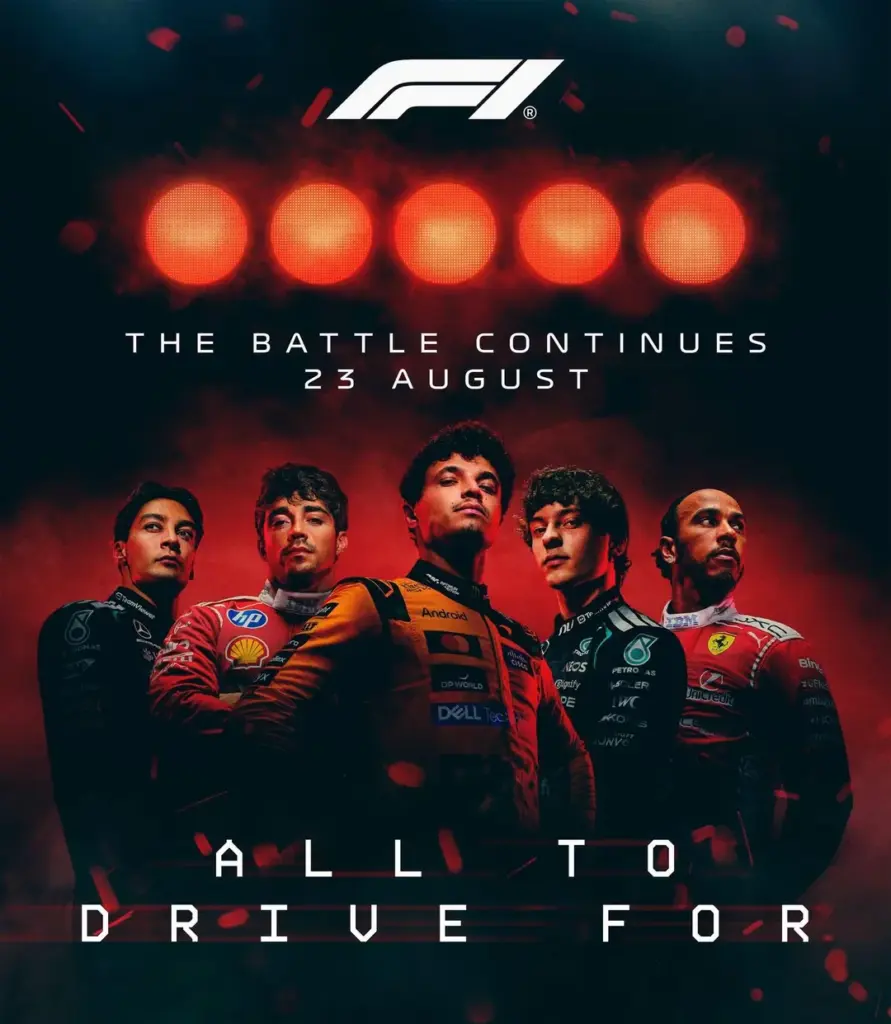
Formula 1’s own marketing department decided to remind everyone that racing returns August 23 with a campaign centered around five lights and five race winners.
George Russell. Charles Leclerc. Lando Norris.
Kimi Antonelli. Lewis Hamilton. Who’s next?
Potentially Oscar Piastri or Max Verstappen, if the more realistic predictions are correct. Fernando Alonso after a new engine, if you prefer faith-based forecasting. Lance Stroll after everyone else crashes, if you prefer something considerably more ambitious.
The campaign itself produced a wonderfully strange reaction because it apparently managed to occupy the exact middle ground between mysterious and obvious. It was cryptic enough that established fans wondered what Formula 1 was teasing. Then the reveal was essentially: Formula 1 races are coming back.
Oh. The five starting lights also inspired an unexpectedly niche crossover with NFL quarterback Jayden Daniels and the controversy surrounding the use of his former No. 5 at LSU. Five lights?
Somewhere, apparently, a cease-and-desist letter is being prepared. Ultimately, this probably wasn’t the marketing catastrophe some made it out to be. Sometimes a social campaign is simply a social campaign and an idea that seems clever internally doesn’t translate perfectly once released into the wild.
But as summer-break hype goes, getting diehards excited about a mysterious five-light teaser only to remind them of the calendar they already obsessively monitor is extremely Formula 1.
Perhaps F1 Should Steal IndyCar’s Hairpin Instead
If F1 really wants something to promote, we have a suggestion.
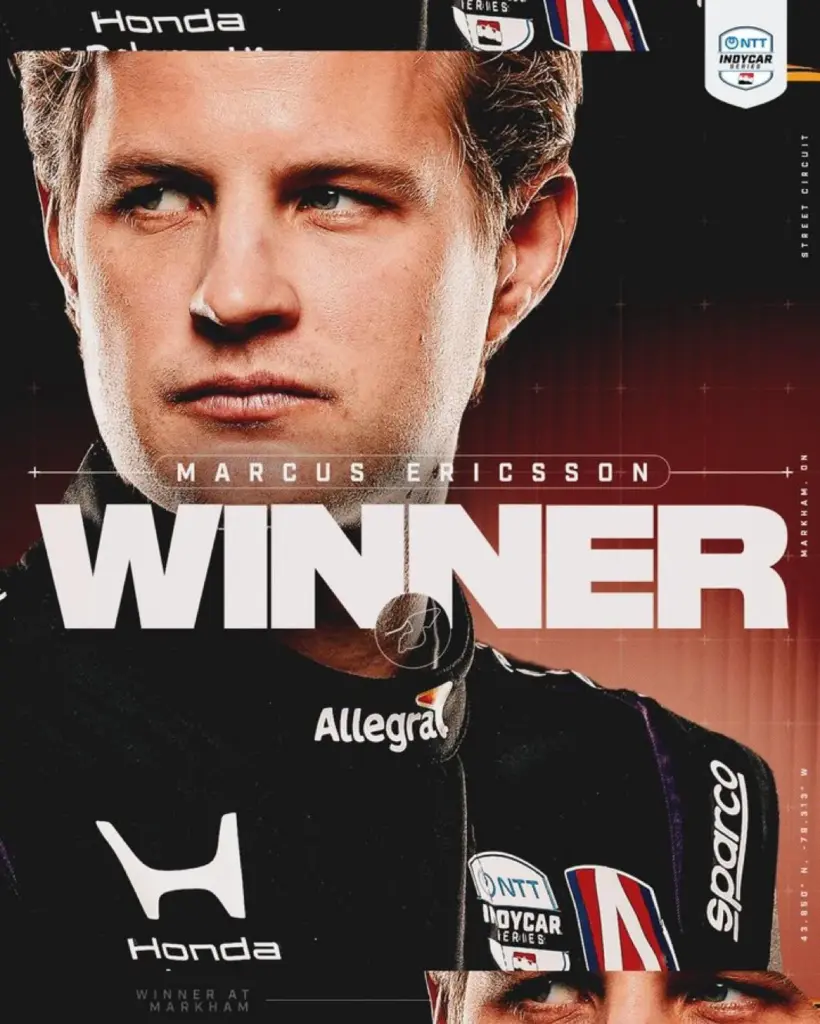
Put Markham’s ridiculous hairpin everywhere. IndyCar’s inaugural Ontario Honda Dealers Indy at Markham became absolute chaos after its first full-course yellow, with Marcus Ericsson eventually winning ahead of Romain Grosjean and Will Power. Power’s result was particularly remarkable considering he started 25th — last on the grid — and finished on the podium.
But for F1 fans watching from afar, the real star was arguably the corner that looked like somebody had accidentally included a three-point turn in the circuit layout. Cars stacked up. Cars stalled.
Cars collided. Drivers attempted multiple lines. At one point the entire thing resembled a normal morning commute more than professional motorsport.
It was magnificent. The story surrounding how the hairpin ended up that way somehow makes it even better. According to the discussion around the event, the corner was originally intended to have a more pronounced spoon-like shape. Construction delays reportedly contributed to changes, while another claim circulating among fans was that organizers simply ran out of barriers before completing the intended configuration. We cannot independently establish from the information provided that running out of barriers was actually the reason, so it shouldn’t be treated as confirmed.
But the fact that everyone looked at the finished corner and collectively thought, “Yeah, that explanation seems plausible,” tells you plenty about the weekend.
Friday’s free event had already been canceled amid construction issues, with attendees criticizing communication after some reportedly arrived without realizing cars wouldn’t be running. And then the race happened.
Suddenly the terrible hairpin became beloved.
The Best Worst Corner in Motorsport
F1 fans immediately began asking why their own championship couldn’t have more corners like it.
There is something deeply satisfying about a corner that forces drivers to negotiate actual physical limitations rather than having acres of runoff available when something goes wrong. No track-limits arguments if the track limit is a wall. Markham’s hairpin was described as simultaneously stupid and one of the greatest corners in motorsport, which feels about right.
There were comparisons with Macau. Montreal entered the discussion. Someone wanted roundabouts. Parallel parking was suggested as the logical next evolution. And beneath all the jokes was a legitimate point. Unusual corners create unusual problems.
The Markham hairpin gave drivers multiple theoretical approaches, although the outside line could reportedly become dirty and slippery enough to punish anyone attempting it. Its tight radius also created obvious difficulties for the cars. F1 might have an even bigger problem attempting something comparable given the turning requirements involved, with Monaco already demanding accommodations for its famous hairpin. But conceptually?
More weird corners, please. Modern circuits don’t all need to look like they were designed by an optimization algorithm.
Sometimes the best thing a racetrack can possess is a corner everyone hates driving and loves watching.
COTA’s Apparently Iconic View of Nothing Is Changing
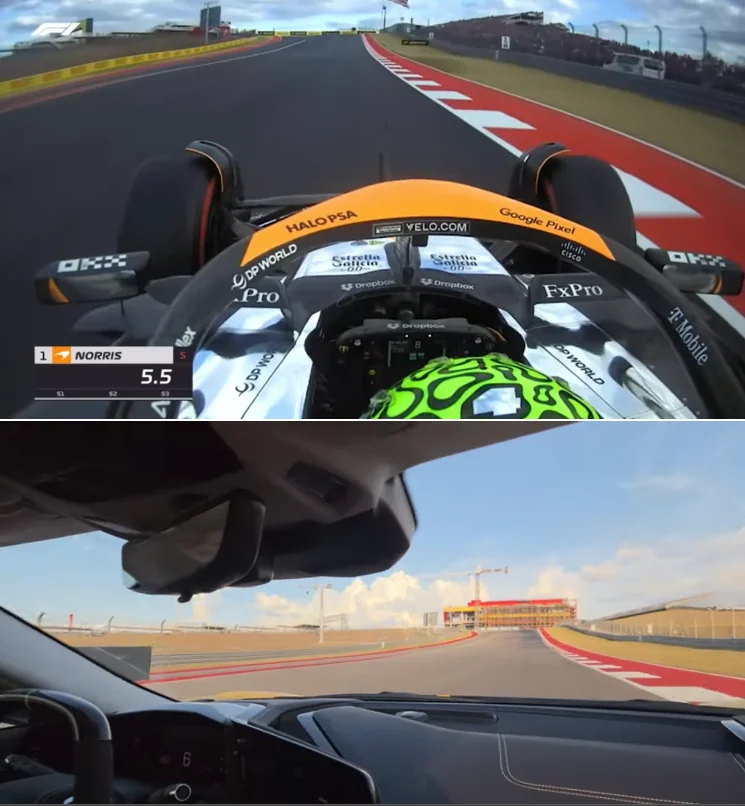
That brings us to another circuit-design controversy, although “controversy” might be generous.
A private members’ club is being constructed at Circuit of the Americas and will alter the skyline visible around the approach to Turn 1. The reaction from much of the fanbase was essentially: What skyline?
Turn 1 itself is unquestionably one of COTA’s defining features. The steep climb creates one of the most recognizable approaches on the calendar and regularly produces action. But the idea that the existing background itself constitutes some sacred visual identity was met with considerably more skepticism. There was, after all, not much there.
If you’re going to build premium viewing facilities somewhere around a racetrack, putting them near a corner where interesting things routinely happen makes obvious commercial sense. The development also reportedly isn’t replacing a major existing spectator area or temporary grandstand. So while nobody particularly enjoys watching every square inch of Formula 1 become increasingly premiumized, this particular battle feels difficult to elevate into an existential crisis.
COTA is a racetrack. Racetracks change. If anything, regular attendees seemed considerably more interested in improvements that could provide additional shade. Spending an entire hot Austin race day exposed to the sun in general admission is a much more tangible spectator concern than preserving an empty horizon.
There are also much bigger reported plans around COTA, including additional development and discussion of future transportation infrastructure. Whether all of that materializes is another question. For now, Turn 1 will have a building behind it.
We think civilization will survive.
Nigel Mansell’s Moustache Remains Undefeated
If we’re talking about things Formula 1 should actually preserve, however, let’s discuss Nigel Mansell’s moustache.
On this day in 1992, Mansell became Formula 1 World Champion. The timing sounds almost absurd through a modern lens. August.
There were 16 races that season, and Mansell won the first five and eight of the first ten. His advantage when he clinched the championship was reportedly worth more than five race victories under the scoring system of the time. Then there was qualifying. Fourteen poles in 16 races.
That remained the record for total poles in a season until Sebastian Vettel reached 15 across 19 races in 2011, while Mansell’s percentage remains an extraordinary illustration of how comprehensively he and Williams controlled Saturdays. At the 1992 British Grand Prix, the figures shared in the discussion are almost comical: Mansell reportedly qualified 1.919 seconds ahead of teammate Riccardo Patrese, 2.741 seconds ahead of Ayrton Senna and more than three seconds ahead of Michael Schumacher. The last car on the grid was reportedly 7.413 seconds slower.
Different era or not, that’s absurd. Obviously, the FW14B deserves enormous credit. But our analysis has uncovered the factor traditional historians have overlooked.
The moustache. It added downforce. Possibly vortex generation.
Potentially intimidation. No follow-up questions. Valtteri Bottas has attempted to reproduce the technology, but unfortunately the accompanying mullet may be creating enough straight-line drag to cancel out the moustache’s aerodynamic benefits.
Further wind-tunnel testing is required.
Mansell’s Career Was Somehow Even Wilder Than the Moustache
The more serious Mansell stories shared by fans make the 1992 title even more remarkable.
According to the accounts provided, Mansell raced through 1992 with a broken foot because surgery could have jeopardized his championship opportunity. Then he went to IndyCar in 1993, suffered a huge accident at Phoenix and sustained an injury that would become associated with his name as a “Mansell lesion,” before returning to competition and winning that championship as well. Another story goes even further back.
In Formula Ford in 1977, Mansell reportedly broke his neck and was warned that continuing to race could risk permanent paralysis. His response was apparently to discharge himself from hospital in a neck brace and continue competing. There are reasonable debates about where Mansell belongs among Formula 1’s greatest drivers. There is considerably less room for debate about whether the man was built differently.
After all the crashes, injuries, disappointments and career drama, perhaps the most remarkable achievement is that Nigel Mansell somehow remains Nigel Mansell.
Oscar Piastri Has Joined Rubens Barrichello in a Very Strange Club
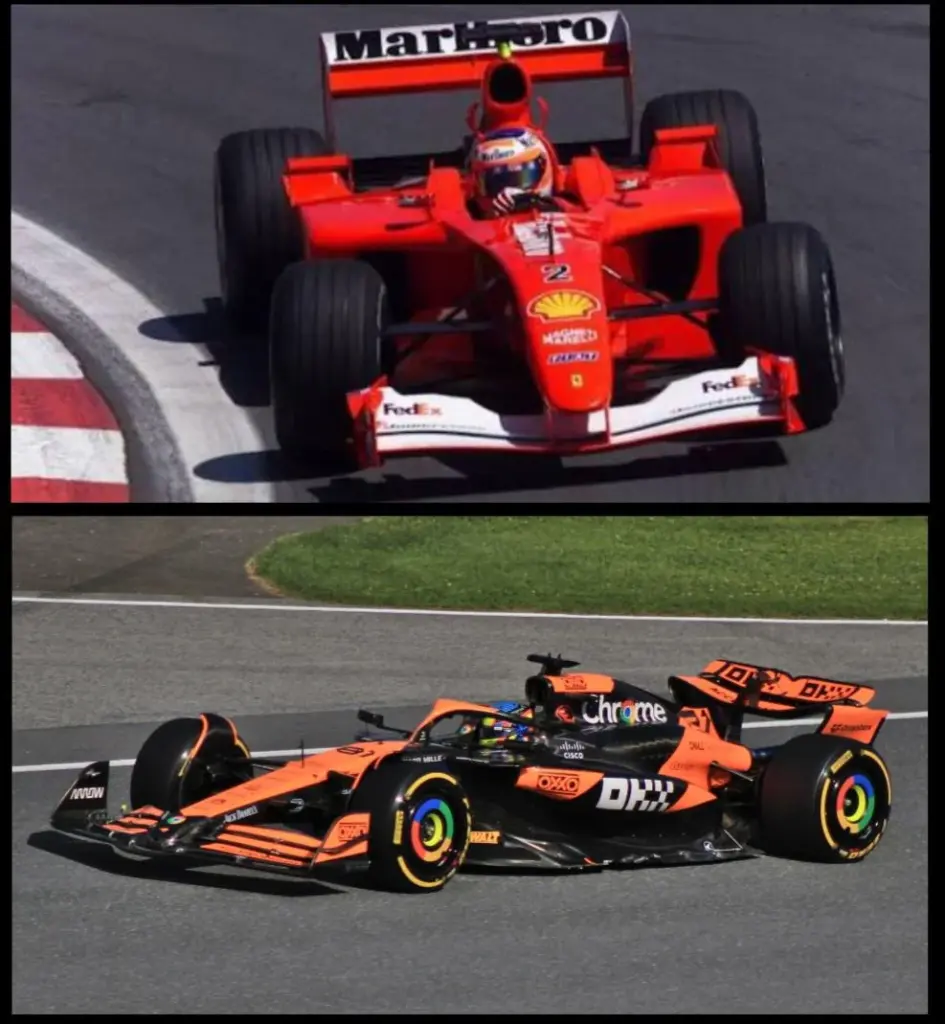
Another historical statistic emerged this week, although Oscar Piastri probably won’t be putting this one on his résumé.
Piastri in 2024 and Rubens Barrichello in 2001 are the only two drivers of the 21st century to spend the season driving for the eventual Constructors’ Championship-winning team without taking a pole position. For Barrichello, there was a fairly significant mitigating factor. Michael Schumacher was in the other Ferrari.
For Piastri? Lando Norris was in the other McLaren — and took eight poles. That’s what makes the statistic interesting.
It doesn’t mean Piastri was driving the outright fastest car throughout the entire season. The discussion itself points out that McLaren wasn’t necessarily in that position for the opening portion of 2024, while Max Verstappen remained an enormous factor. But eight poles versus zero between teammates is still difficult to ignore. It also revived an interesting argument about how we remember the 2024 Constructors’ Championship.
Some fans described McLaren’s title as strangely forgettable. We’re not sure that’s fair. McLaren, Ferrari and Red Bull were involved in the broader fight, McLaren had to recover from a slower start, and the championship ultimately went down to the final race against Ferrari.
If Carlos Sainz had won instead of Norris in that finale, the outcome would have changed. That’s hardly an uneventful championship. Perhaps the problem is that Constructors’ Championships are frequently overshadowed whenever the Drivers’ Championship tells the more dramatic story. The same phenomenon came up regarding Mercedes’ 2021 constructors’ title amid the considerably louder fallout surrounding Lewis Hamilton and Max Verstappen. The team championship matters enormously inside Formula 1.
Fans just don’t always emotionally process it the same way.
And Then There’s Niki Lauda
The Piastri statistic also produced a reminder that historical Formula 1 gets much stranger the further back you travel.
Eddie Irvine reportedly finished runner-up in the 1999 Drivers’ Championship without taking a pole all season — and, remarkably, never took an F1 pole at any point in his career. But Niki Lauda managed something even better. He won the 1984 World Championship without taking a pole.
According to the historical discussion provided, he didn’t even start on the front row that season, with third at Brands Hatch his best qualifying position. A World Champion without a front-row start.
Try explaining that one using modern F1 discourse, where a single imperfect qualifying session can apparently establish that someone’s entire career is collapsing.
Palou-to-F1 Discourse Has Arrived Right on Schedule
The Markham weekend also prompted the inevitable question about Álex Palou:
What would he do in Formula 1? Would he contend with Max Verstappen? George Russell? Lando Norris? Charles Leclerc? Oscar Piastri? The least exciting answer is also the correct one.
Nobody knows. Palou is extraordinary in IndyCar. That doesn’t automatically tell us what he would do in a current Formula 1 car.
Different regulations reward different strengths. Different tires require different approaches. Even established World Champions have looked dramatically different when the machinery beneath them changed. The examples raised in the discussion included Lewis Hamilton during the ground-effect era, Sebastian Vettel away from the blown-diffuser period and Kimi Räikkönen outside the tire-war era. Palou’s junior record doesn’t provide a clean answer either.
The results shared from his earlier career weren’t comparable to the dominant junior trajectories associated with drivers such as Leclerc, Russell, Norris or Piastri. But there was also an argument that he frequently competed with weaker equipment and performed better than the raw championship positions suggest. What we know is that Palou has developed into an exceptional IndyCar driver. Anything beyond that is fantasy matchmaking.
Which, to be fair, is exactly what summer break was invented for.
Formula E Somehow Made Its Champion Look Miserable

While Formula 1 was debating hypothetical Palou championships, Pascal Wehrlein actually became a World Champion.
The 2026 Formula E title was decided after a chaotic final race involving Wehrlein, Jake Dennis and Mitch Evans. Dennis appeared capable of taking the championship before an incident ultimately left both him and Wehrlein outside the points, while Evans was too far behind to capitalize sufficiently. The controversy centered heavily around driving designed to influence the championship fight.
António Félix da Costa was accused by fans of deliberately slowing and allowing cars through in a way that disadvantaged Wehrlein, while others quickly pointed out that similar tactics were being used to assist Wehrlein, including blocking involving Müller. In other words, everyone was furious with everyone. Exactly how much responsibility da Costa carried for the decisive incident itself was also disputed heavily in the discussion, although he was said to have received a penalty.
The result was perhaps one of the least joyful championship celebrations imaginable. The race winner looked happier than the new World Champion.
Formula E: come for the electric racing, stay because apparently the championship finale has turned into vehicular political warfare.
Mitch Evans Might Be Motorsports’ Most Cursed Nearly-Champion
Then there is Mitch Evans.
The statistics shared around his recent Formula E seasons are painful: 2020/21: fourth, nine points short. 2021/22: second, 33 points short.
2022/23: third, 32 points short. 2023/24: second, six points short. 2025/26: third, nine points short.
He also reportedly owns the most victories in Formula E history without a championship. That isn’t a near miss anymore. That’s a recurring appointment with disappointment.
The comparison made with Fernando Alonso’s Ferrari years feels appropriate in spirit: constantly close enough to make you believe it could happen, never quite close enough for the trophy to actually arrive. For New Zealand fans, the frustration is compounded by Nick Cassidy also repeatedly coming close without securing the championship.
Somewhere, the racing gods apparently have a problem with Kiwis.
Thankfully, Racing Is Almost Back
After all of this, perhaps F1’s five-light campaign actually communicated the most important message perfectly.
Please remember that the cars are going racing again. Because summer break has now given us aerodynamic moustaches, hypothetical Álex Palou championships, Cadillac LEGO résumés, a private club threatening COTA’s famous empty skyline, financial questions involving one of F1’s newest owners, a Formula E finale where everyone appeared angry, and demands that Formula 1 import an IndyCar corner that occasionally functions as a parking lot. We’re ready.
Five lights. August 23.
Whatever happens next, at least we’ll finally have actual racing to argue about.