

Formula 1 hasn’t even reached the green flag in Melbourne, yet the early narrative around the 2026 season is already taking shape, and it’s a strange mix of technical concerns, broadcast changes, fan behavior, and paddock intrigue.
From Aston Martin’s deeply troubling car issues to a shake-up in Sky Sports’ commentary lineup and an ever-present swirl of fan speculation, the buildup to the season opener has produced a surprisingly chaotic news cycle.
Aston Martin’s Alarming Technical Problems
The biggest storyline heading into the Australian Grand Prix centers on Aston Martin, where early signals suggest the team may face an extraordinarily difficult start to the season.
Adrian Newey acknowledged that the car’s severe vibration problems are already creating reliability issues. According to him, the vibration is strong enough to shake components loose, including mirrors and tail lights, but the more concerning issue is the effect on the drivers themselves.
The vibrations travel through the chassis and into the steering wheel, ultimately reaching the drivers’ hands and fingers. Because of that, the team may have to heavily restrict how many laps the car can run during races until the root cause is identified and fixed.
Fernando Alonso reportedly said he could only manage around 25 consecutive laps before risking nerve damage, while Lance Stroll suggested 15 laps could already be pushing the limit.
The situation has produced a wave of disbelief around the paddock and among fans. After all, a slow car is one problem, but a car that physically limits how long drivers can safely run introduces an entirely different level of concern.
The scale of the issue has led many observers to conclude that Aston Martin’s start to the season could be worse than initially feared. If a car cannot complete full race distances without risking driver injury or mechanical failure, it effectively turns race weekends into extended test sessions.
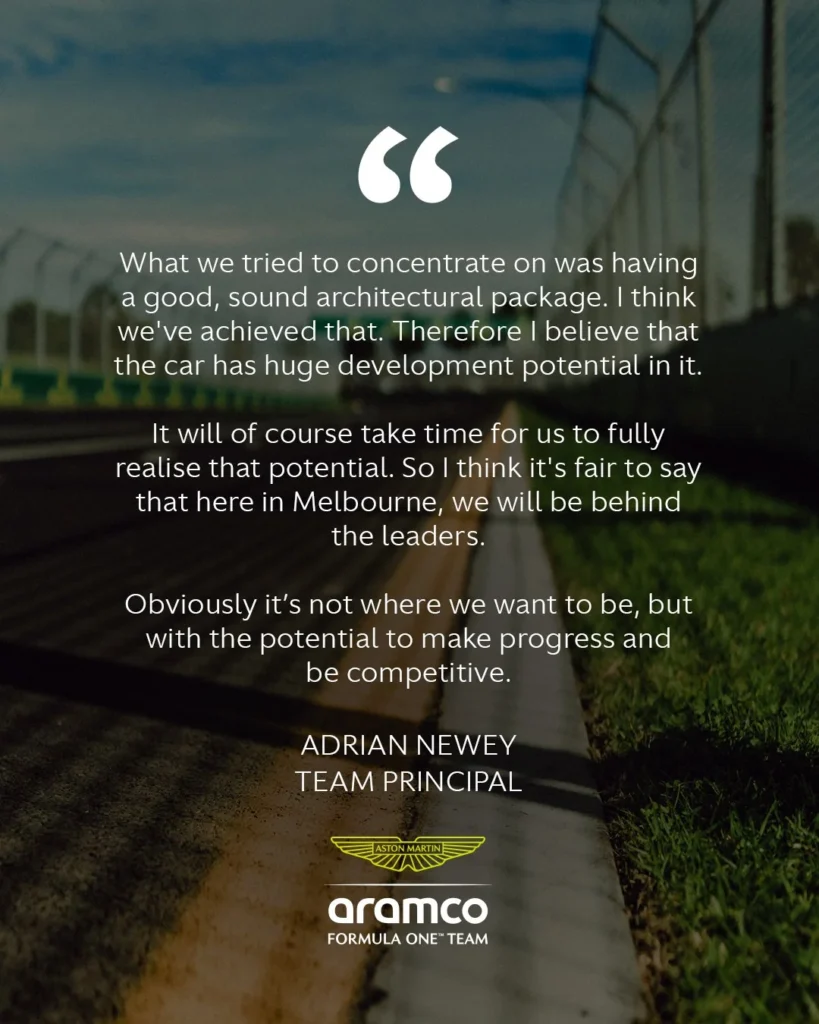
Even Aston Martin’s own messaging hints at a difficult start. In a team update featuring Newey and Honda’s Koji Watanabe, the expectation was blunt: the team will be behind the leaders early in the season.
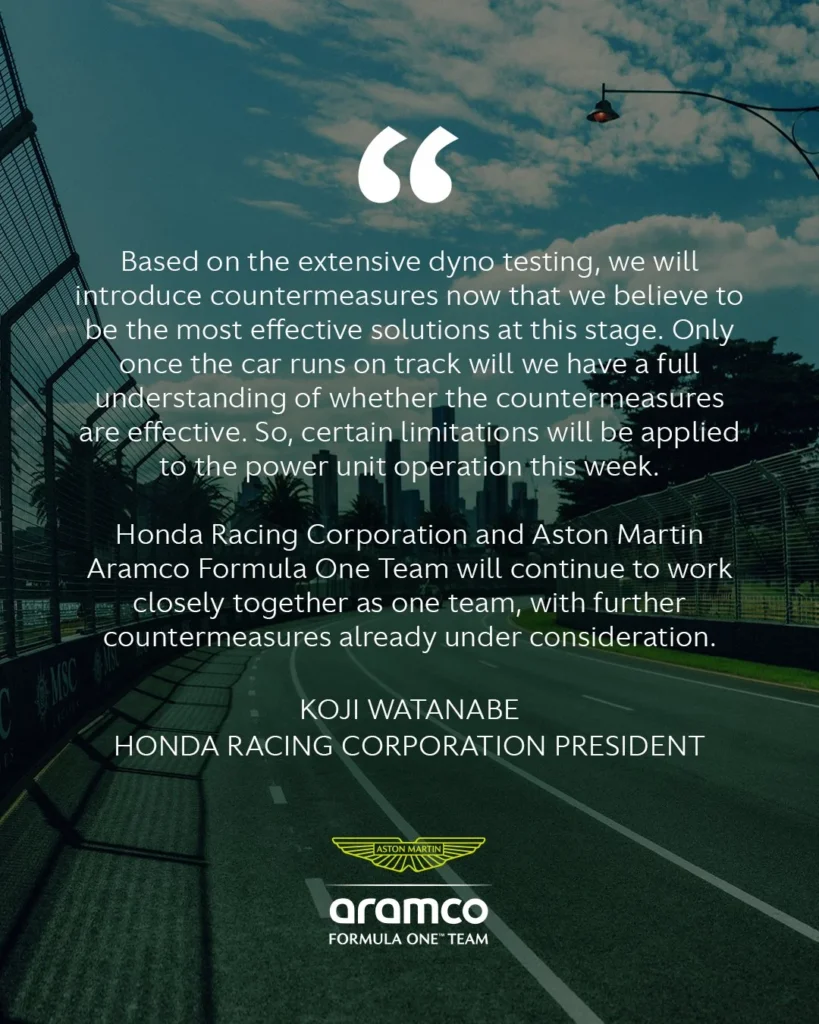
That understated phrasing did little to calm speculation. If anything, it reinforced the sense that Aston Martin may be bracing for a painful opening phase while it works through the car’s fundamental issues.
When Engineering Ambition Goes Wrong
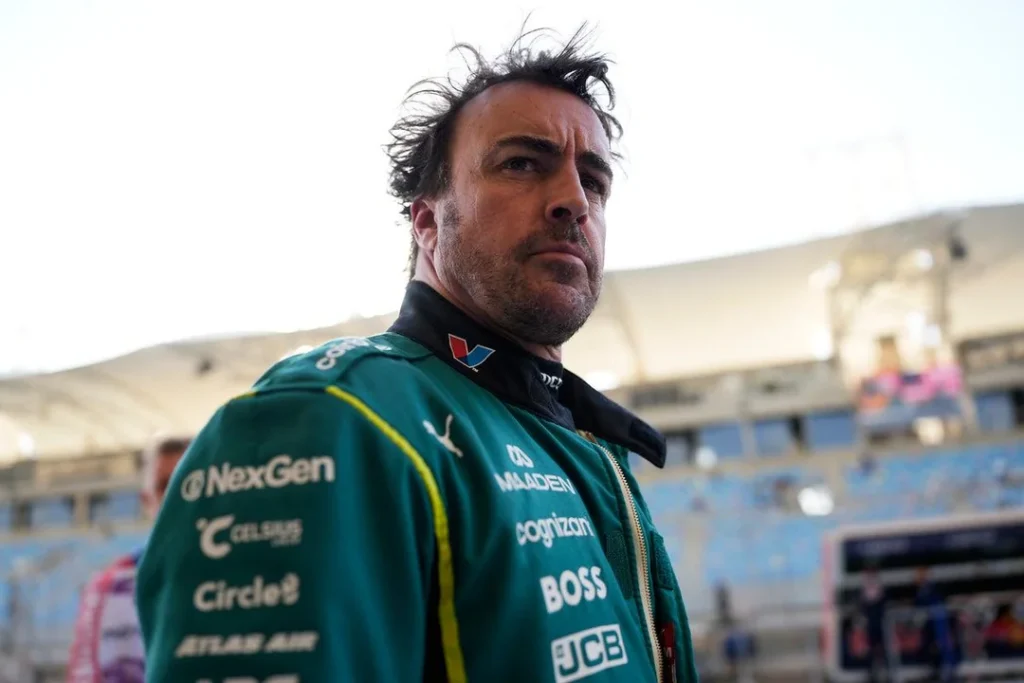
The list of problems linked to the vibration issue appears extensive.
Reliability concerns involving the power unit, gearbox, and chassis have all been mentioned alongside the vibration problem, suggesting the root cause may run through multiple systems in the car.
Even if the chassis itself is competitive, Newey reportedly believes it could still be among the stronger chassis on the grid, the surrounding issues may prevent the team from fully exploiting it.
In modern Formula 1, vibration control is far from a trivial challenge. Engineers spend enormous effort isolating and dampening harmonics in high-performance vehicles, and small design interactions can amplify forces dramatically. When those vibrations travel through a rigid carbon-fiber structure with limited isolation, the driver becomes part of the system absorbing those forces.
Until Aston Martin identifies the source and installs effective countermeasures, the team’s early season could revolve around managing the problem rather than fighting for results.
Sky Sports Drops Danica Patrick from F1 Coverage
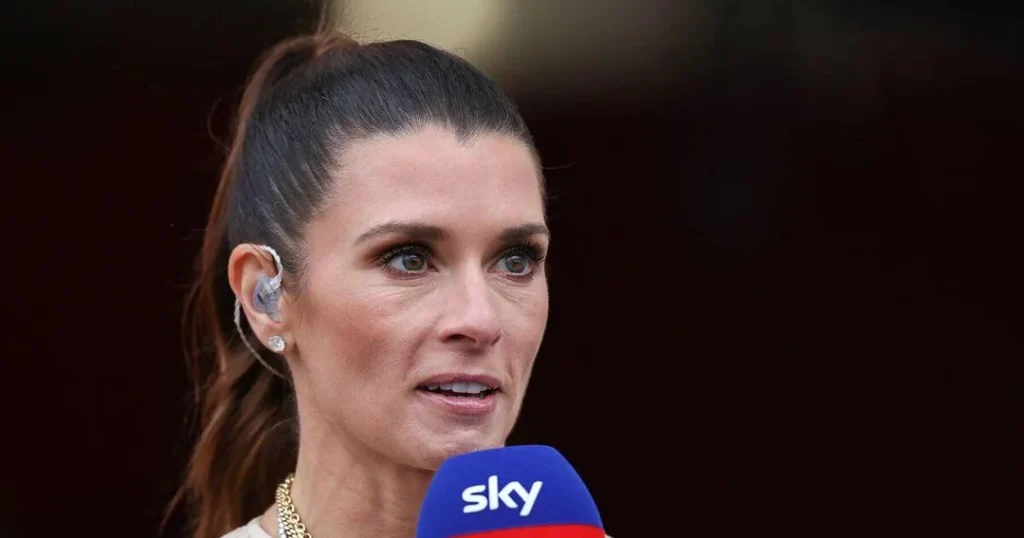
Away from the technical side of the sport, the media landscape around Formula 1 has also shifted.
Sky Sports confirmed its 2026 Formula 1 broadcast lineup, and Danica Patrick will no longer be part of the coverage team.
The new lineup includes experts and analysts such as Martin Brundle, Jenson Button, Nico Rosberg, Naomi Schiff, Bernie Collins, Karun Chandhok, Jamie Chadwick, Jacques Villeneuve, and Anthony Davidson. Presenting duties will remain with Simon Lazenby, Natalie Pinkham, Ted Kravitz, Rachel Brookes, and Craig Slater, while commentary will be handled by David Croft and Harry Benjamin.
The reaction among fans has been overwhelmingly blunt.
Across many discussions, the consensus was that Patrick simply didn’t bring the level of technical insight expected in Formula 1 broadcasting. Many pointed out that the Sky panel already includes former world champions, experienced drivers, and highly technical analysts who regularly break down strategy, driver psychology, and race dynamics in detail.
Against that backdrop, Patrick’s contributions were often perceived as surface-level observations rather than deep analysis.
For many viewers, the most memorable moments involving her on-screen presence weren’t the commentary itself, but the visible reactions from her co-presenters, particularly Jenson Button, who occasionally struggled to hide his expressions during certain discussions.
With the 2026 lineup now confirmed, Sky appears to be leaning more heavily into technical expertise and experienced drivers as the backbone of its coverage.
Fan Behavior Under the Spotlight
The start of the Australian Grand Prix weekend also produced an uncomfortable reminder of how intense Formula 1 fandom can become.
Charles Leclerc was reportedly mobbed by fans outside his hotel in Melbourne, with a crowd forming large enough that he had to run to escape the situation.
The incident sparked widespread criticism of how some fans approach driver interactions in public spaces. While Formula 1 drivers are accustomed to attention during race weekends, many observers noted that chasing someone through a hotel crosses a clear boundary.
For many long-time followers of the sport, the incident highlights a broader trend in modern fan culture, one where social media visibility sometimes drives behavior more than genuine appreciation of the sport.
Drivers have historically been accessible to fans in controlled environments, but incidents like this inevitably push teams toward stricter security measures and more tightly controlled interactions.
The Return of the African Grand Prix Dream
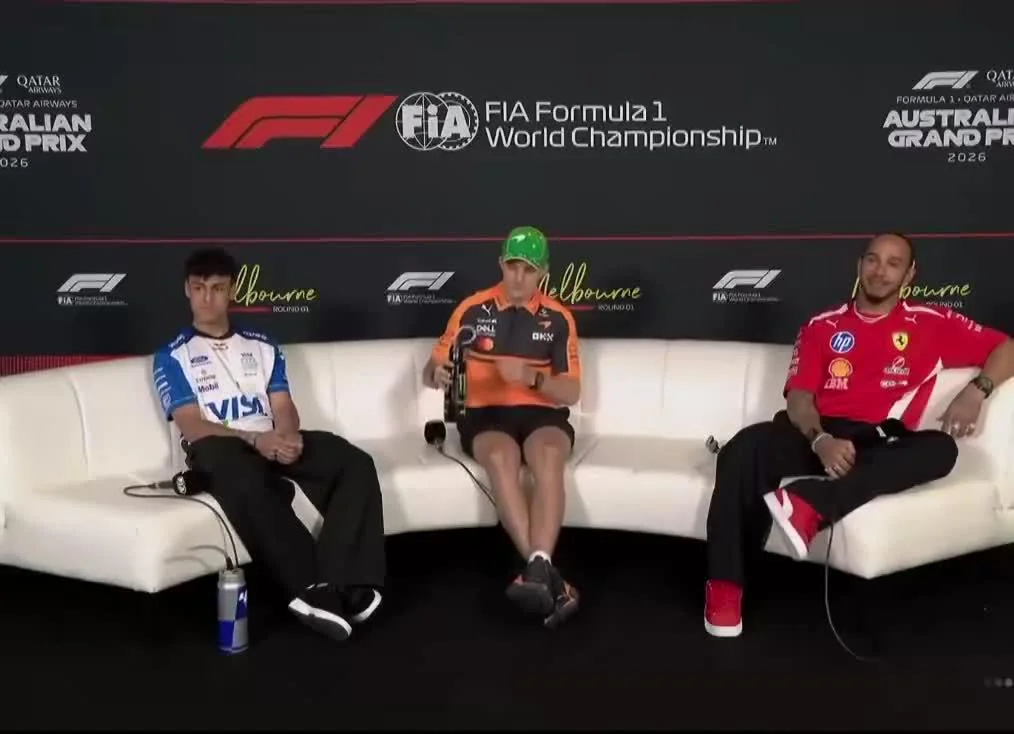
Elsewhere in the paddock conversation, Lewis Hamilton made it clear he still has unfinished business in Formula 1.
The seven-time world champion reiterated that he does not intend to retire until he has raced in Africa, a continent absent from the modern Formula 1 calendar.
That statement has revived long-running discussions about where an African Grand Prix could take place. South Africa’s Kyalami circuit remains the most frequently mentioned candidate, but other proposals, including street circuits in cities such as Kigali, Marrakech, or Cairo, continue to circulate in speculation.
Hosting fees, infrastructure requirements, and the complex logistics of the F1 calendar remain major obstacles. Still, Hamilton’s insistence on the importance of racing in Africa keeps the conversation alive.
Early Title Predictions Spark Debate
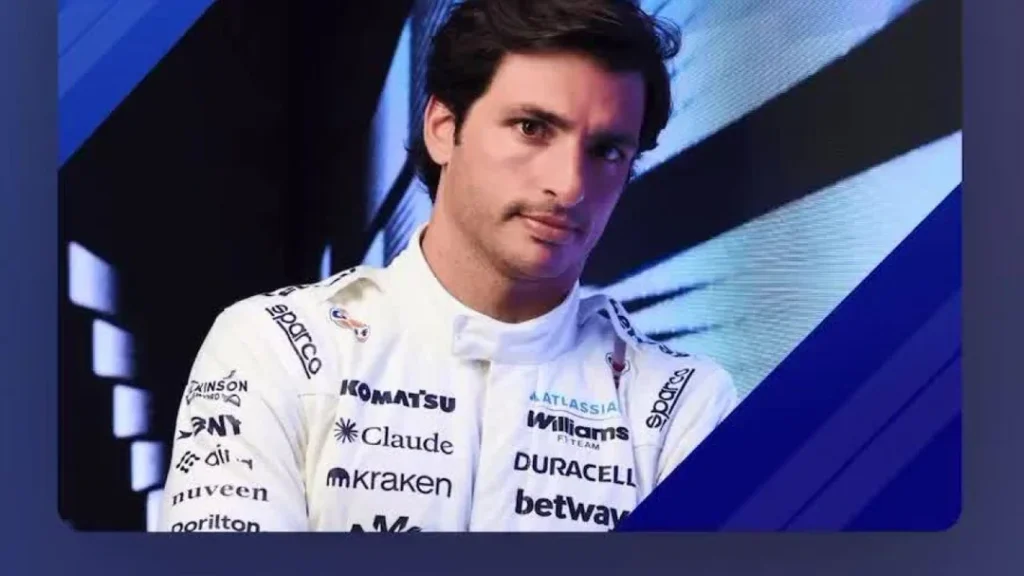
Meanwhile, drivers have already begun weighing in on the potential title contenders for 2026.
When asked who might win the championship, Carlos Sainz offered a characteristically tight-lipped response. He named George Russell and Max Verstappen as his two picks, but declined to explain why.
That simple answer has sparked plenty of interpretation.
Some see it as a straightforward assessment: Verstappen remains the benchmark driver in the sport, while Russell’s consistency and Mercedes power unit could make him a major contender under the new regulations.
Others read it as a subtle commentary on the competitive landscape. Sainz notably avoided mentioning Ferrari or McLaren, despite both teams showing promise during testing.
Whatever the reasoning, the idea of a Russell–Verstappen championship battle has already ignited anticipation, and, for many fans, concern about the intensity of the debate that would follow.
Even the Sponsors Are Getting Involved
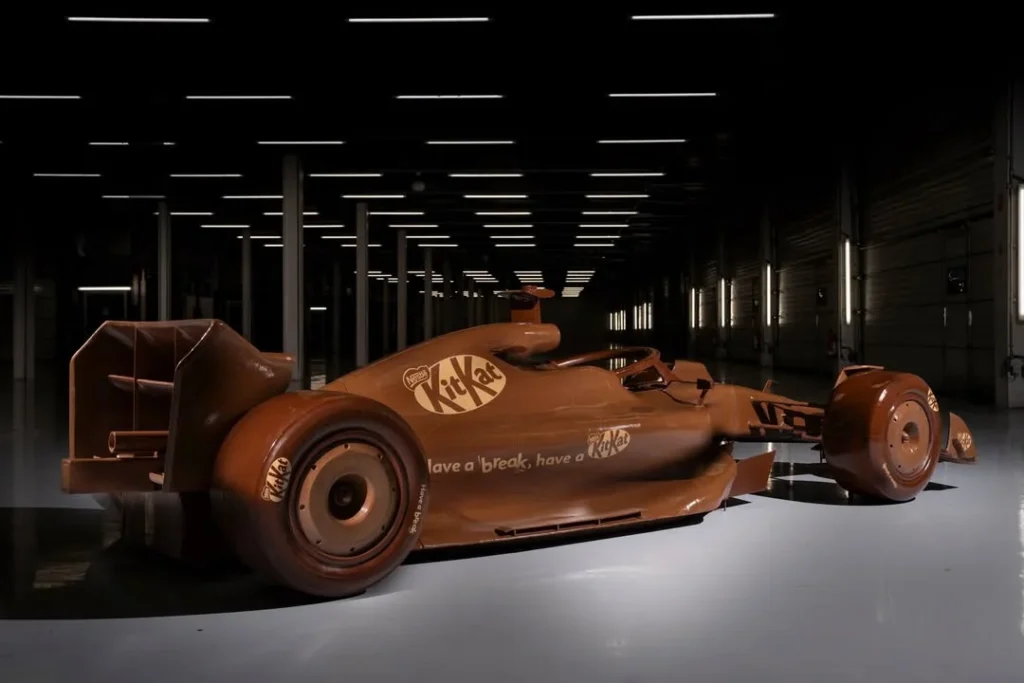
Not all the headlines surrounding the Australian Grand Prix have been serious.
KitKat unveiled a life-sized chocolate Formula 1 car as part of a promotional campaign, adding a lighter moment to an otherwise intense build-up to the season opener.
The stunt immediately sparked jokes about reliability, overheating, and whether the chocolate car might actually last longer than some early-season machinery.
In a week where technical concerns and competitive uncertainty dominate the conversation, the absurdity of a chocolate race car felt oddly appropriate.
A Season Already Full of Storylines
Before the first race of the year has even begun, the 2026 Formula 1 season already has its share of narratives:
- Aston Martin facing serious early-season technical challenges
- A reshaped Sky Sports broadcast lineup
- Ongoing debates about fan behavior and driver access
- Renewed discussion about a long-awaited African Grand Prix
- Early predictions for what could become a volatile championship fight
Whether those storylines develop into defining themes of the season remains to be seen.
But if the chaotic buildup to Melbourne is any indication, the year ahead may be anything but predictable.