

Formula 1’s build-up to Japan is being driven by three very different but strangely connected conversations: Aston Martin’s apparent search for a new team principal, Charles Leclerc’s measured defense of the 2026 racing product, and Ferrari’s reported plan to bring back its much-discussed “Macarena wing.” Taken together, they paint a picture of a paddock still trying to define itself under the new rules, politically unstable in some places, cautiously optimistic in others, and still hunting for technical answers everywhere.
The Aston Martin story, as framed by Antonio Lobato’s report that the team is looking for a new team principal, immediately sent the conversation in one obvious direction. The online reaction treated the vacancy less like an abstract management opening and more like a loaded setup for a very specific name. The reasoning was simple enough: if a team wants someone with experience running a Formula 1 operation, someone familiar with Adrian Newey, and someone with Honda history, then the candidate practically writes himself into the rumor mill. The reaction was less “could this happen?” than “this feels inevitable,” which says plenty about how naturally this possibility fits the current Aston Martin narrative.
That reaction also revealed how Aston Martin is increasingly being viewed as a team built for grand, dramatic moves. The idea of combining Lawrence Stroll, Fernando Alonso, Adrian Newey, Honda, and a new heavyweight team boss was immediately framed less as ordinary team restructuring and more as a full-blown paddock power play. The tone was half awe, half dread. There was a real sense that Aston Martin could be assembling a team designed not just to compete, but to dominate headlines, stir politics, and bring old rivalries roaring back into the center of the sport.
At the same time, the discussion around Aston Martin exposed a broader belief that the current leadership arrangement may never have been intended as permanent. A recurring line of analysis was that Newey as team principal always looked transitional, either because the role did not really suit the demands of modern race-weekend management or because larger structural issues elsewhere in the project forced a temporary solution. Several versions of the same theory appeared: that Newey was heavily involved because of the complexity of the 2026 power-unit relationship, that Andy Cowell’s attention was needed elsewhere, and that Aston Martin may have been buying time until a more conventional long-term principal could be installed.
That part of the debate mattered because it shifted the focus away from simple gossip and toward organizational design. The skepticism was not really about Newey’s intelligence or stature. It was about the reality that being a brilliant technical figure and being an effective full-spectrum team principal are not the same job. The reaction treated that distinction as obvious. Running the whole team, handling the media every weekend, balancing sponsors, financiers, internal politics, and technical departments, and dealing with competing priorities from every corner of the business is a fundamentally different assignment from leading design or technical direction. In that reading, Aston Martin’s issue is not that it chose someone unqualified in a general sense, but that it may have confused technical eminence with operational fit.
That is what makes the Horner speculation so sticky. Even the people framing him as a villain were also framing him as an operator. The analysis was blunt: whatever baggage comes attached, he is widely seen as someone who knows how to run a Formula 1 team, navigate political battles, and turn funding into results. In other words, he fits the job description in a way that makes the rumor hard to dismiss. The caveat, though, is just as revealing. If he wants power, control, or even shares, then Aston Martin would not simply be hiring a principal. It would be inviting in another center of gravity. That prospect makes the story compelling because it suggests Aston Martin’s next decision could solve one problem while creating several more.
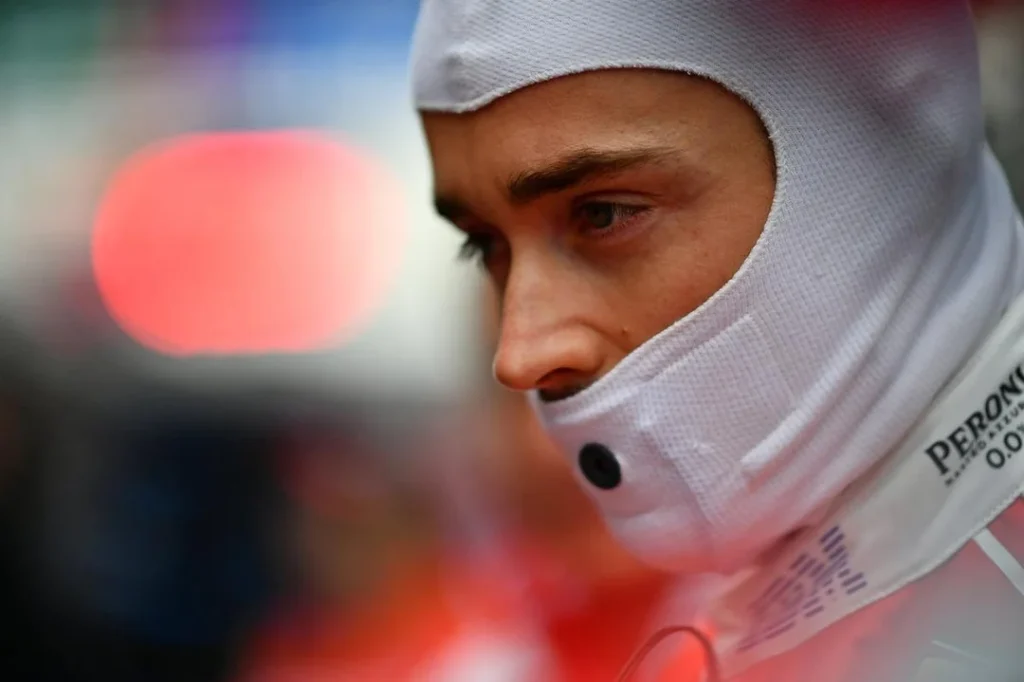
While Aston Martin’s situation looks like an off-track identity crisis, Ferrari’s current conversation is more layered. On one front, Leclerc is pushing back against the broad-brush criticism of the 2026 regulations. His assessment, based on the material provided, is notably more balanced than the loudest reactions surrounding the new era. He said he enjoys it and that it does not feel so artificial from inside the car, even while admitting that some overtakes can look artificial when one driver mismanages the battery and creates an enormous speed differential. That distinction is important. It is neither a full endorsement nor a full condemnation. It is a driver recognizing that the system can produce both legitimate skill expression and moments that feel exaggerated.
That nuance seemed to resonate because it matched what many viewers think they are seeing. The strongest consensus in the reaction is that the racing itself has been good, in some cases surprisingly good w,hile qualifying is where the regulations are losing people. The common complaint is not that the races are lifeless, but that qualifying no longer feels like the purest test of drivers operating right on the limit of grip and commitment. The phrase that keeps surfacing in different forms is that something is missing. The concern is not just pace; it is texture. Fans appear willing to accept new energy-management battles in races far more readily than they are willing to accept onboards and one-lap runs that feel less raw and less intuitive.
That split between race appeal and qualifying dissatisfaction is now one of the clearest themes of the early 2026 season. The defense of the race product is straightforward: battery deployment, boost, and overtake modes are being viewed by many as simply a new overtaking mechanism, different from DRS in form but not necessarily more artificial in principle. In fact, a lot of the reaction argues that this system is more interesting because it opens overtaking opportunities across more of the lap rather than funneling everything into predetermined zones. That, in turn, produces a more varied and less scripted kind of attack. Instead of waiting for a known activation point, drivers can shape battles more dynamically. For many, that alone makes the racing feel fresher.
There is also a strong counter to the “artificial” criticism embedded in the reaction: if a driver runs out of battery at the wrong moment, that is being interpreted by some not as automation gone wrong but as a mistake in racecraft. The argument is that energy management under pressure is now part of the skill set. If a driver fails to anticipate an attack a few corners earlier, spends the energy in the wrong place, or does not preserve enough to defend later in the lap, then being overtaken is not some fake outcome imposed from outside the contest. It is a consequence of mismanaging a critical resource. That line of thought is important because it reframes the entire conversation. Instead of asking whether the system is artificial, it asks whether people are refusing to recognize a new kind of driver input because it does not look like the old one.
Still, the criticism has not gone away, and Leclerc’s own remarks leave room for it. The objection is that the energy swing can at times be so large that the overtake becomes inevitable rather than contested. That matters because Formula 1 fans are not just attached to overtakes as events; they are attached to the shape of the fight. If a pass feels too easy, too sudden, or too detached from visible buildup, then it risks feeling less satisfying even if it technically comes from skill or strategy. One of the sharpest viewer complaints is that the audience lacks a clear live visual cue for battery state. With DRS, the approach was visible and legible. With battery deployment, the action can happen anywhere, which is exciting, but it can also appear arbitrary if the viewer cannot immediately see why one car suddenly has an overwhelming advantage.
That may be why the current public verdict on the 2026 cars remains so unsettled. There is genuine enjoyment of the races, and even optimism that the regulations could produce close, strategically rich competition once the rough edges are smoothed out. But there is also a recurring belief that qualifying has been “neutered,” that the cars lose some of the magic people associate with Formula 1 at absolute maximum attack, and that super-clipping and the way speed tails off on straights are undercutting the visual thrill of a qualifying lap. Even the more positive reads of the new era tend to come with the same caveat: fix qualifying, and the package suddenly looks much stronger.
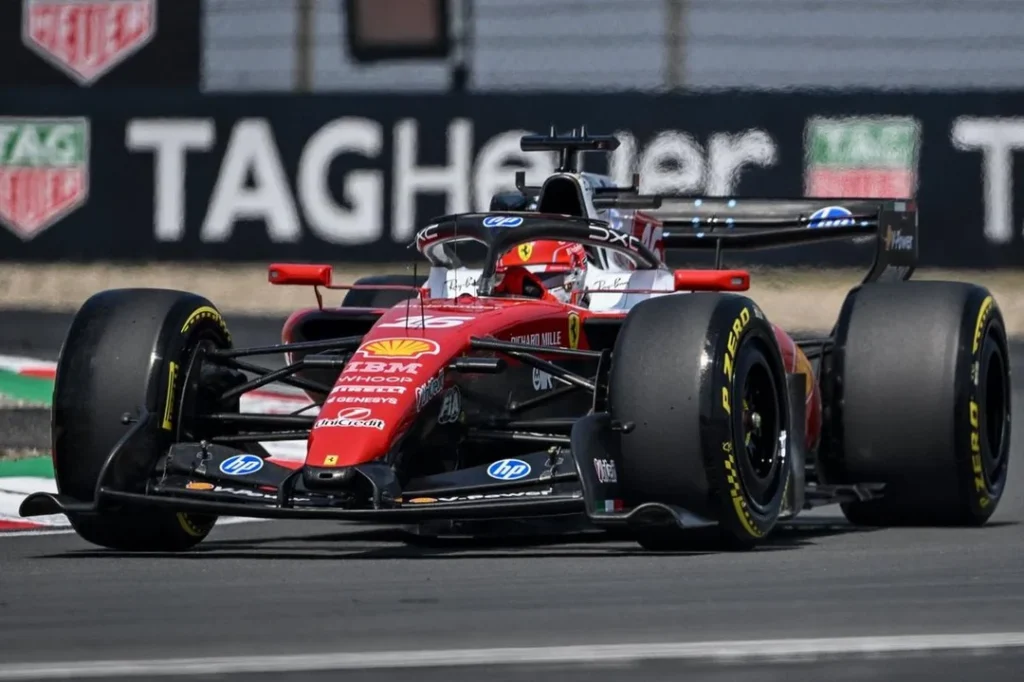
That brings the conversation neatly back to Ferrari, because Ferrari currently sits right at the intersection of technical experimentation and regulatory interpretation. According to the Autosport item provided, Ferrari’s so-called “Macarena wing” is set to return in Japan. The headline alone was enough to trigger a wave of jokes, but beneath the humor was a more serious point: Ferrari appears eager to make this concept work, which suggests its data is pointing to meaningful upside. The most repeated reading of the situation is that Ferrari wants to use the wing badly, but has not yet fully optimized or validated it. The issue, in this telling, is not lack of promise but lack of readiness.
The reaction around the wing captures the tension perfectly. On one hand, there is obvious amusement at the name, the repeated delays, and the increasingly sequel-like framing of its return. On the other hand, there is a consistent belief that Ferrari would not be pushing this hard if the performance potential were trivial. Even in a joke-heavy thread, the wing is being treated as a serious piece of development. The underlying idea is that Ferrari sees a real opportunity to claw back straight-line competitiveness, or at least reduce the scale of the problem enough to change how vulnerable the car is in wheel-to-wheel situations.
That vulnerability is central to how the Ferrari discussion is being framed right now. The analysis supplied in the reaction paints Ferrari as a team with strong cornering performance and powerful starts, but with a notable power deficit to Mercedes at the top end. That deficit, whether described as 20-25 horsepower or viewed more skeptically as somewhat smaller, is being treated as the structural problem Ferrari is trying to engineer around. In that context, the “Macarena wing” is not being viewed as a magic bullet. It is being viewed as a potentially meaningful compensator. A few kilometers per hour on the straight may not erase an engine gap entirely, but it could change whether a Mercedes attack is straightforward or difficult, whether Ferrari can hold position after a strong launch, and whether its existing strengths become more strategically useful.
There is also a sense that Ferrari’s entire early-season identity may depend on exactly that kind of offset. The supplied analysis repeatedly describes Ferrari as very strong in corners and at race starts. If that is true, then a rear-wing solution that makes the car harder to pass on straights could amplify those strengths disproportionately. A car that launches well, corners well, and becomes less vulnerable in the places where it is currently exposed starts to look like a much more complete threat, even if the underlying engine difference remains unresolved.
At the same time, the reaction shows that nobody really believes a wing alone can settle the larger Ferrari-Mercedes question. The more serious technical discussion quickly spills into wider debates about power-unit advantage, turbo choices, development windows, and whether Ferrari is trying to position itself for future regulatory relief. There is clear skepticism around the idea that one aerodynamic device can fully neutralize a systemic top-speed disadvantage. But there is also a recognition that Formula 1 seasons are often swung by the accumulation of smaller gains. If Ferrari can trim just enough drag, get just enough stability from the system, and combine that with superior starts and stronger cornering, then the gap may stop feeling insurmountable.
That is what makes Japan such a compelling next chapter in the current conversation. Aston Martin may be approaching a leadership decision that says a great deal about its real priorities and internal balance of power. Ferrari may be bringing back a wing that has become both a meme and a serious technical subplot. And Leclerc’s comments have given the 2026 debate something it badly needed: a middle position. Not blind enthusiasm, not reflexive doom, but an acknowledgment that the new rules can produce exciting racing while still demanding urgent refinement in qualifying.
In a way, all three stories are versions of the same question. Formula 1 is in a period where everyone is trying to separate what is temporary from what is fundamental. Is Aston Martin’s leadership structure a short-term workaround or evidence of a deeper instability? Are the 2026 regulations producing an awkward transition phase before a stronger long-term product, or are the flaws more embedded than supporters want to admit? Is Ferrari’s “Macarena wing” an overhyped curiosity, or an early sign that the competitive picture can still be reshaped by clever engineering before the season’s hierarchy hardens?
Japan will not answer all of that in one weekend. But it does look like the next place where all three conversations could move from theory to evidence.