

If FOX wants someone who can explain how an Indy Lights driver gets a shot at IndyCar, Sarah Fisher can talk about the call she made to Josef Newgarden. If the network wants someone who can break down a race on live television, Simona de Silvestro has already done that work. And if it wants a driver who can take viewers inside the Indianapolis 500, Katherine Legge deserves a call.
Danica Patrick brings something few of her peers can match: recognition among people who might watch only one IndyCar race a year. That helps explain her appeal to a broadcaster. But once those viewers tune in, there’s a lot more to tell them about the sport than any one driver can cover.
Sarah Fisher can explain both sides of a driver signing
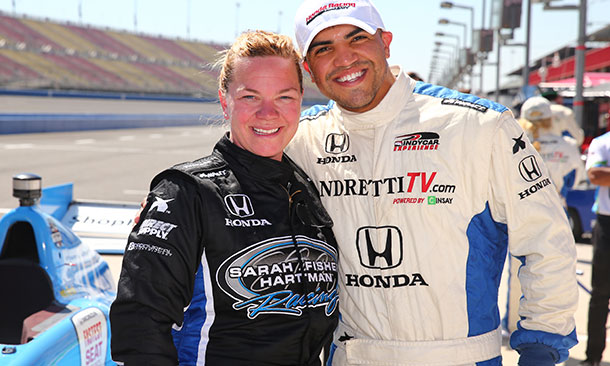
Fisher has perhaps the most distinctive résumé of the group. She raced in IndyCar, tested McLaren’s MP4-17 Formula 1 car in 2002 and became a race-winning IndyCar team owner. She was also the owner who brought Newgarden up from Indy Lights. When the subject is what a team sees in a young driver, Fisher can explain what she saw in him and why she was willing to put him in her car.
That perspective would be especially valuable during an offseason when so much of the conversation comes down to who gets the next available seat. From the outside, we can compare two drivers’ results. Fisher has had to decide which one gets the phone call. She already works with the series, though whether she wants a regular television commitment is a question for her. A conversation with Fisher about signing Newgarden would be worth airing even if it were the only segment she did all year. De Silvestro has the clearest case for a regular analyst role. She was frequently in the top-10 fight in 2013. After racing her at St. Petersburg that year, Tony Kanaan compared the experience to racing Alex Zanardi. It’s a revealing compliment from someone who shared the track with both of them, and a good starting point for asking de Silvestro what she saw from her own cockpit that day.
Her experience also extends to a Sauber F1 test, Australian Supercars and a Bathurst wildcard appearance with DJR. More to the point for FOX, she has worked on Swiss F1 coverage and contributed to Sky’s Indianapolis 500 coverage in the UK. She’s already had to do the difficult part of the job: see something happen at speed, decide what matters and explain it before the race moves on. Her availability for a U.S. broadcast schedule is the open question.
Katherine Legge and the value of asking a better question
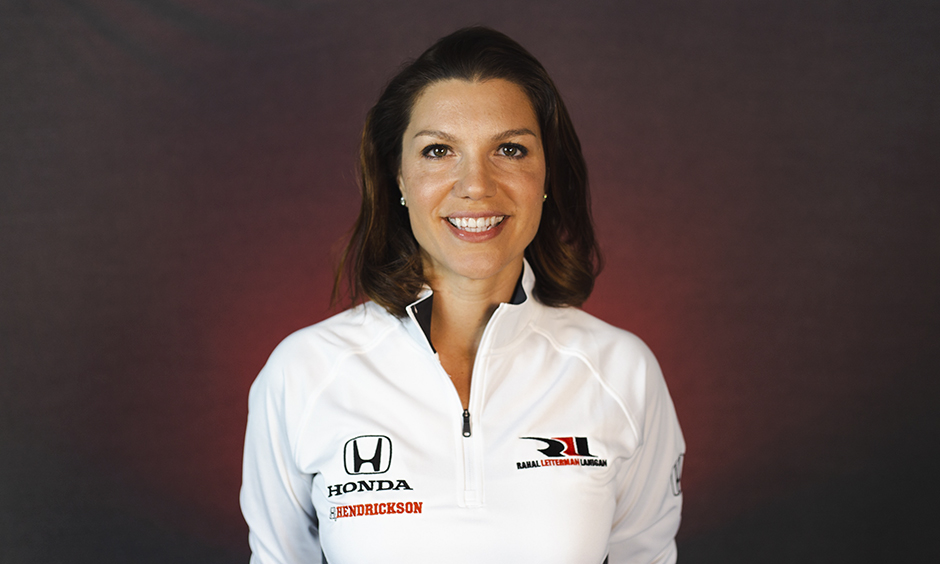
Legge makes particular sense for May. She has driven the 500 for several teams and knows what it takes to put an Indianapolis entry together. Much of the buildup follows full-time drivers and their preparations for one race. Legge could explain what that same month looks like to someone who first has to find a team and assemble the backing to get on track. As our look at the possible 2027 field illustrated, some of the most interesting decisions about the 500 happen well before qualifying.
Pippa Mann brings another perspective through her advocacy for women in open-wheel racing and her work with Shift Up Now. A segment with Mann could follow the money behind a prospective ride: what support a driver already has, what she still needs and where a promising deal can fall apart. Jamie Chadwick belongs in that conversation as both an Indy NXT race winner and an experienced voice on Sky’s F1 coverage. She can speak firsthand about winning on the ladder and reaching the point where a seat and the funding for it have to materialize together. There’s room for history, too. Janet Guthrie’s competitiveness is reason enough to revisit her driving. Her Dinner with Racers interview gives anyone who wants to hear that story in her own voice a place to start. Lyn St. James also belongs in a broader account of women in IndyCar. Neither needs to be a candidate for a weekly broadcast job for her experience to have a place on television.
For FOX, our first call for a race analyst would be de Silvestro. For a feature on how teams choose drivers, it would be Fisher. For an Indianapolis one-off, we’d want Legge to walk us through how the deal came together. Those are three different assignments, and viewers would get something different from each.
Does Álex Palou’s OpenAI suit mean DHL is leaving?
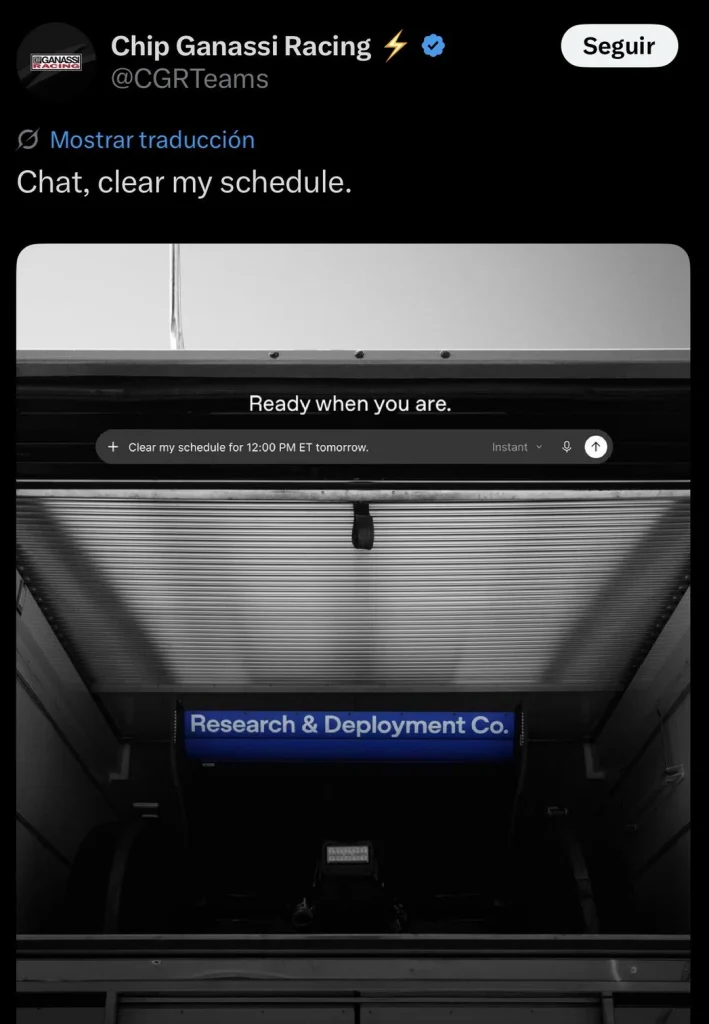
Elsewhere in the offseason, Álex Palou’s apparent repeated use of an OpenAI suit during postseason testing has raised a question about DHL’s future as his primary sponsor. The suit puts OpenAI in view. It tells us little about how Chip Ganassi Racing has divided its race weekends for 2027.
Andretti’s agreement with zone offers a useful comparison. We know the brand will be on Will Power’s No. 26 for 13 races in 2027 because Andretti announced the number. In Palou’s case, an OpenAI livery for a few races and a larger primary sponsorship would both be consistent with the same testing photos. There’s no comparable announcement here establishing a race count or a DHL departure. It’s easy to see why the possibility has struck a nerve. DHL’s red and yellow echo the Spanish flag, giving the pairing a visual connection to Palou that works even for a viewer who knows little about the sponsor. Red and yellow also have a history on the IndyCar grid that extends beyond DHL to the McDonald’s cars. And there would be some irony in a longtime international sponsor stepping away just as the prospect of IndyCar racing in Europe is drawing interest again.
OpenAI already has a look of its own on Palou’s car, and he has worn a black OpenAI suit as well as a white one. The curiosity about which version might appear next is understandable. The more consequential question is how often each sponsor will appear when races count. Until Ganassi or its partners put a number on those weekends, the red-and-yellow car’s future remains open.